



As technology continues to infiltrate nearly every corner of modern athletics, combat sports have not been left behind. Over the past few years, the market has seen a surge of boxing punch trackers, sensors, and performance-monitoring platforms promising to revolutionize training routines. Pitched as tools to enhance performance, increase motivation, and provide critical feedback, these devices command price tags ranging from under a hundred dollars to several hundred, often supplemented by monthly app subscriptions.
To determine whether these digital innovations genuinely aid a fighter or simply serve as another expensive fad, a comprehensive evaluation of the industry’s leading options—including PunchLab, FightCamp, Hykso, Corner, Everlast PIQ, and StrikeTec—offers a realistic look from the perspective of an experienced boxer with over two years of hands-on testing.
The core premise behind boxing punch trackers, performance trackers, and fitness trackers is deceptively simple. In much the same way a standard wearable pedometer measures daily steps, boxing trackers aim to record the number of punches thrown during a workout. While broader health devices monitor sleep, heart rate, and body mass index, dedicated boxing tech focuses strictly on output volume and hand speed. Some manufacturers attempt to categorize straight punches versus curved strikes like hooks and uppercuts, while others incorporate metrics meant to estimate G-force or power. However, these power calculations often lack precision, functioning primarily as supplementary data points designed to make the device feel more comprehensive.
Enthusiasts of these gadgets generally point to two main user groups: professionals and beginners. Diehard professional fighters are often willing to explore any training methodology or tool that might offer a competitive edge, no matter how small. For a professional, having an automated punch count can occasionally provide useful metrics during conditioning work, assuming the hardware registers the data accurately.
Meanwhile, beginners and casual fitness enthusiasts find the concept of boxing technology inherently engaging, particularly when training independently without structured drills or coaching partners. Syncing physical movements with a mobile device introduces a gamified element to otherwise repetitive workouts, transforming solo heavy bag sessions into an interactive experience.
Despite the marketing hype, serious practitioners often harbor significant reservations regarding the actual utility of these devices. Critics argue that boxing trackers measure quantity rather than quality. In a traditional training environment, a qualified coach rarely focuses on how many punches an athlete throws; instead, the trainer scrutinizes defensive flaws, such as dropped hands, improper foot pivot on a cross, or incorrect elbow alignment on a hook.
Because current sensor technology cannot evaluate technique or tactical strategy, these trackers cannot improve a fighter’s skill level. They merely record frequency and speed, occasionally combining the two into a generic intensity rating. Furthermore, critics suggest that relying on trackers can inadvertently encourage poor form. When users become fixated on beating a digital high score or increasing their punch count, they are often tempted to sacrifice proper technique in favor of speed.
Another notable limitation is that punch trackers are almost exclusively optimized for heavy bag work and shadowboxing. They are rarely utilized during live sparring or mittwork, where fighters must constantly adapt to unpredictable opponents, varying paces, and complex defensive angles. Because these devices struggle to register short inside punches, double-jabs, or rapid, subtle movements, their practical application is largely restricted to straightforward bag workouts.
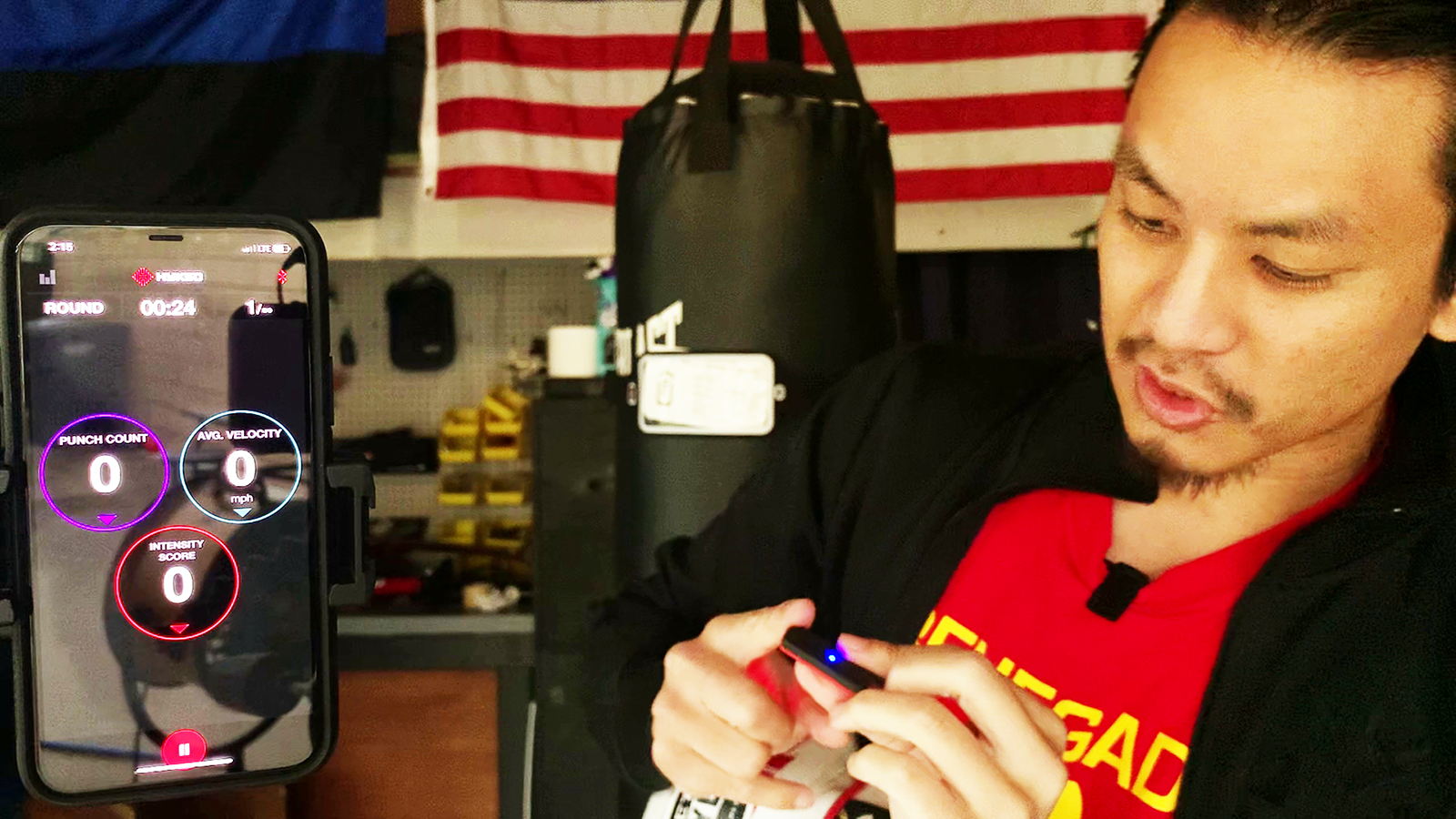
Beyond functionality, hardware ergonomics can present persistent hurdles. Strapping sensors onto handwraps or securing them over gloves often feels cumbersome, adding an unnecessary step to the pre-training routine. Additionally, interacting with a mobile app while wearing sweaty boxing gloves proves inconvenient and unhygienic, often forcing athletes to rely on a training partner to operate the phone or manage audio playlists.
Despite these drawbacks, several brands have carved out distinct positions in the market, offering varying degrees of performance and app functionality.
PunchLab approaches the category from a unique angle, functioning primarily as an application that uses a belt to secure the user’s smartphone directly to the heavy bag. Eschewing traditional wearable sensors, this setup eliminates the need to purchase separate hardware or attach devices to the hands. The app provides instant visual feedback directly on the bag while offering structured workouts and instructional guidance from recognized boxing coaches. By integrating a screen into the striking surface, PunchLab creates an interactive training environment that performs reliably even in noisy commercial gyms.
FightCamp, formerly operating under the Hykso banner, represents one of the most established brands in the performance tracker space. Backed by polished marketing and sleek hardware design, the brand utilizes slim trackers that distinguish between left and right hands through color-coded LED lights. While early iterations focused purely on tracking straight punch counts and speeds through a basic app, the modern FightCamp ecosystem has evolved into a comprehensive home-fitness platform. Featuring high-production-value video workouts, performance leaderboards, and integrated music options, it delivers a premium digital experience, though it remains among the more expensive investments on the market.
Corner positions itself similarly within the home-fitness sector, offering well-designed hand trackers paired with an app centered on virtual fitness classes. While the hardware is user-friendly and affordable, the software experience leans heavily toward general fitness rather than purist boxing instruction, integrating elements like yoga alongside striking workouts. For dedicated boxers, this broader focus can make the platform feel less specialized, though the inclusion of curated music integration appeals to casual gym-goers.
Everlast PIQ enters the market with robust sensor technology capable of capturing a wide array of detailed metrics. Developed in partnership with experienced sports-tracking engineers, the hardware is technologically advanced, though the physical trackers are bulkier than competing models. The accompanying app offers extensive statistical reports, charts, and gamified leaderboards reminiscent of a sports video game. However, practical adoption is often hindered by poor battery life, finicky device pairing, and a limited library of instructional training content, which can lead users to abandon the system over time.
Other market entrants, such as StrikeTec, encountered significant developmental and logistical hurdles, including delayed software releases and limited platform compatibility, which hampered their ability to establish a firm foothold. Meanwhile, a proliferation of generic, low-cost trackers available through online retailers continues to populate the market, though user reviews generally caution against their reliability.
Ultimately, while the current generation of boxing punch trackers demonstrates notable ambition, the technology remains in a developmental phase. Bridging the gap between simple fitness data and the nuanced demands of serious boxing training will require continued innovation, leaving both manufacturers and fighters searching for the ideal balance between high-tech metrics and authentic pugilistic development.