

When discussing the greatest heavyweights in boxing history, the conversation often revolves around speed, power, and knockout ratios. However, in the case of Mike Tyson, there was an invisible weapon that was just as devastating as his right hook: his mastery of psychological warfare. Before a single punch was thrown, Tyson had often already won the fight by systematically dismantling his opponent’s will to compete. This article delves deep into the mental tactics that made ‘Iron Mike’ the most feared man on the planet during his prime.
The Philosophy of Fear: Cus D’Amato’s Influence
To understand Tyson’s psychological approach, one must look at his mentor and father figure, Cus D’Amato. D’Amato was a student of the human mind as much as he was a boxing trainer. He taught a young, insecure Tyson that fear was like a fire; it could either cook your food or burn your house down. D’Amato instilled in Tyson the belief that he was a gladiator, a superior being designed for combat. This wasn’t just a confidence boost; it was a complete restructuring of Tyson’s psyche to weaponize his own fear and project it onto his opponents.
D’Amato emphasized the importance of the ‘character’ of Mike Tyson. They built an aura of invincibility that was carefully cultivated. This involved studying the history of warfare and the psychology of past champions like Jack Dempsey and Sonny Liston. Tyson learned that intimidation wasn’t just about looking scary; it was about convincing the other man that he was stepping into a cage with a wild animal that had no regard for human safety.
Minimalism as a Weapon: The Visual intimidation
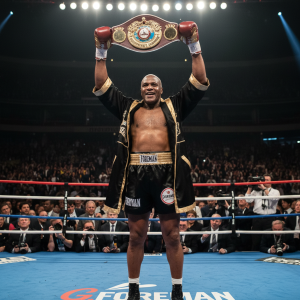
In an era of flashy robes, tasselled boots, and elaborate ring entrances, Mike Tyson stripped everything away. This was a calculated psychological move. He entered the ring wearing a plain white towel with a hole cut in it instead of a robe. He wore simple black trunks and low-top black shoes with no socks. This minimalist aesthetic sent a chilling message: strictly business. It suggested that he didn’t need the pageantry because the violence he was about to inflict was pure and unadulterated.
The lack of socks became a signature look that unsettled opponents. It gave him an executioner-like appearance, differentiating him from the ‘athletes’ across the ring. While his opponents were dressed for a sporting event, Tyson looked like he was dressed for a street fight. This visual dissonance created anxiety, forcing opponents to question whether they were playing by the same rules.
The Sound of Terror
Tyson’s ring walks were often accompanied by a singular, droning noise or aggressive, raw hip-hop, but sometimes, the sound that frightened opponents most was the specific sound of the impact of his punches during warm-ups. Stories circulated in locker rooms about Tyson punching holes in walls or the terrifying sound of his gloves hitting the pads. This auditory conditioning meant that opponents were listening to the legend of Tyson before they even saw him.
The Stare-Down: Breaking the Spirit
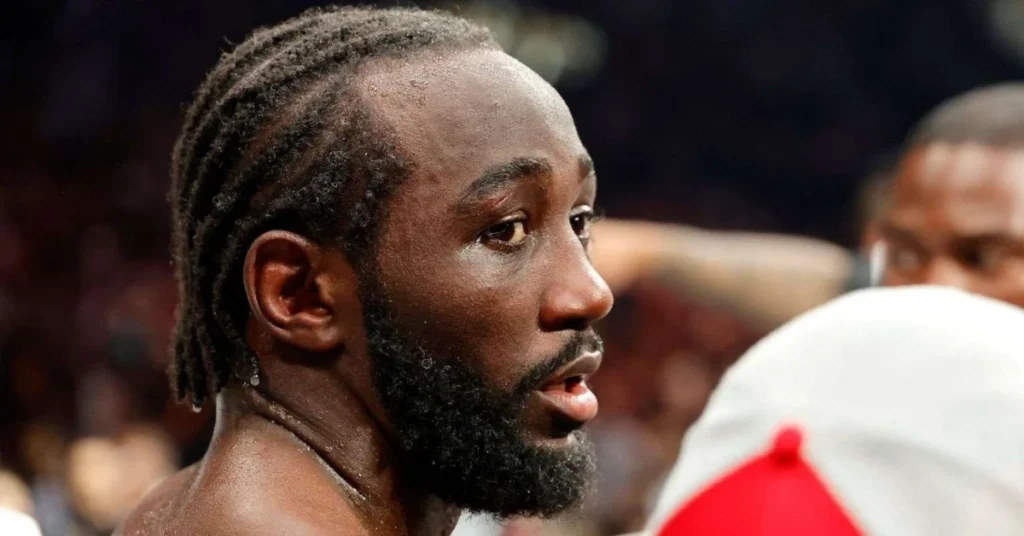
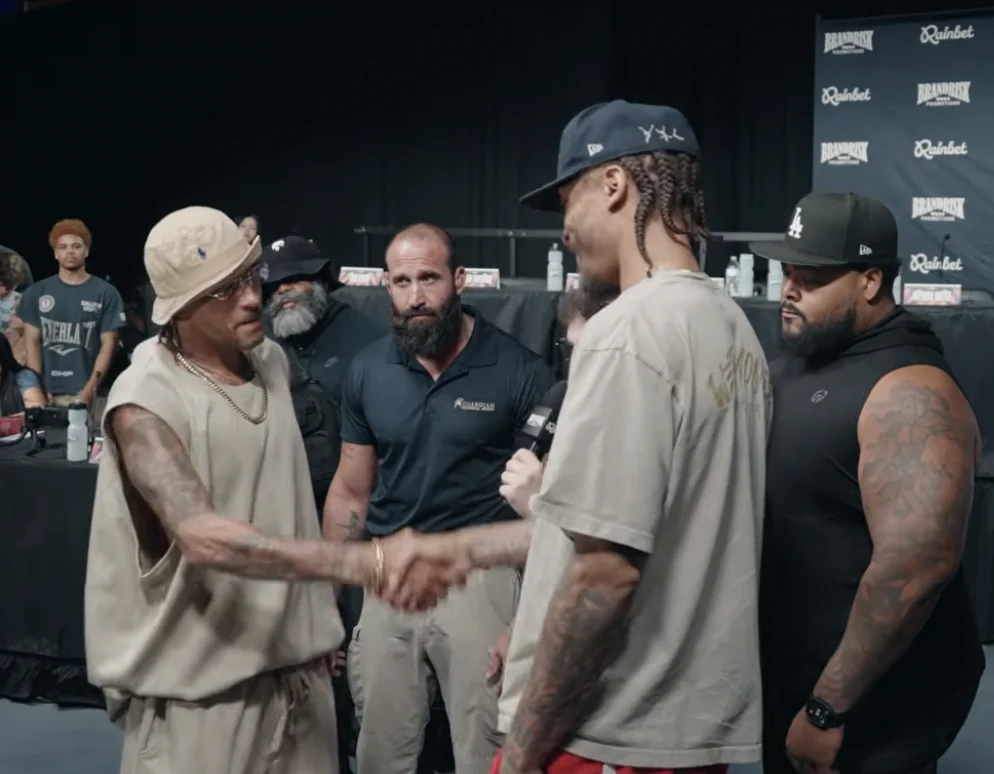
Perhaps the most iconic element of Tyson’s psychological arsenal was the pre-fight stare-down. While the referee gave instructions, Tyson would often fixate his eyes on his opponent’s forehead or bridge of the nose, refusing to blink. He wasn’t just looking at them; he was looking through them. He described this process as stripping their soul.
Tyson famously stated in interviews that he would look for signs of fear—a twitch, an aversion of the eyes, a heavy swallow. Once he detected that fear, he knew the fight was over. This intense scrutiny forced opponents to expend nervous energy trying to maintain their composure, leaving them exhausted before the bell even rang. It was a battle of wills that Tyson rarely lost in his prime.
Case Study: The Destruction of Michael Spinks
The 1988 fight against Michael Spinks is the textbook example of Tyson’s psychological dominance. Spinks, an undefeated champion, was visibly terrified before the fight began. Tyson’s camp had allegedly created turmoil over glove selection moments before the bout, keeping Spinks in a state of high anxiety. By the time Spinks walked to the ring, his body language screamed defeat. He looked like a man marching to the gallows. Tyson sensed this fear immediately, attacking with ferocity that ended the fight in 91 seconds. Spinks wasn’t just beaten physically; he was paralyzed by the aura of Tyson.
Verbal Warfare and Savage Imagery
Unlike the poetic trash talk of Muhammad Ali, Tyson’s verbal warfare was brutal, direct, and often disturbing. He used language that was visceral, threatening to eat opponents’ children or push their nose bone into their brain. This wasn’t witty banter; it was the language of a predator. These comments were designed to shock and horrify, further dehumanizing Tyson in the eyes of his rivals and making him appear as a force of nature rather than a sportsman.
The Peek-a-Boo Style as Psychological Pressure
Tyson’s fighting style itself was a form of psychological pressure. The ‘Peek-a-Boo’ style, characterized by constant head movement and elusive bobbing and weaving, made him a nightmare to target. For an opponent, the inability to land a clean shot on a man moving forward with such aggression induces panic. The constant pressure meant there was no place to hide in the ring, creating a claustrophobic environment that broke an opponent’s mental fortitude.
When the Aura Cracked: Buster Douglas and Holyfield
Psychological warfare works only as long as the opponent subscribes to the narrative. In 1990, Buster Douglas, dealing with the grief of his mother’s death, simply didn’t care about Tyson’s intimidation. He was fighting for something bigger. When Tyson’s stare and intimidation tactics failed to freeze Douglas, Tyson seemed confused. He had relied so heavily on the ‘fear factor’ that when he faced a man who wasn’t afraid, he lost a significant portion of his edge.
Similarly, Evander Holyfield was mentally impenetrable. He had sparred with Tyson years prior and was not intimidated by the bully persona. Holyfield’s refusal to be bullied frustrated Tyson, leading to a breakdown in Tyson’s discipline. This highlights that while psychological warfare is powerful, it requires a receptive target. Against mentally steel-jawed opponents, the lack of a ‘Plan B’ became Tyson’s undoing.
The Legacy of the ‘Baddest Man on the Planet’
Today, fighters across combat sports, from boxing to MMA, study Tyson’s approach to the mental game. The use of intimidation, the cultivation of an invincible persona, and the strategic use of minimalism can be seen in various modern champions. Tyson proved that the fight is often won in the locker room, at the press conference, and during the stare-down.
In conclusion, Mike Tyson’s reign was not solely defined by his uppercuts or his speed. It was defined by his ability to project a terrifying reality that his opponents were forced to inhabit. He mastered the dark art of psychological warfare, proving that in the brutal sport of boxing, the mind is truly the most dangerous weapon of all.