
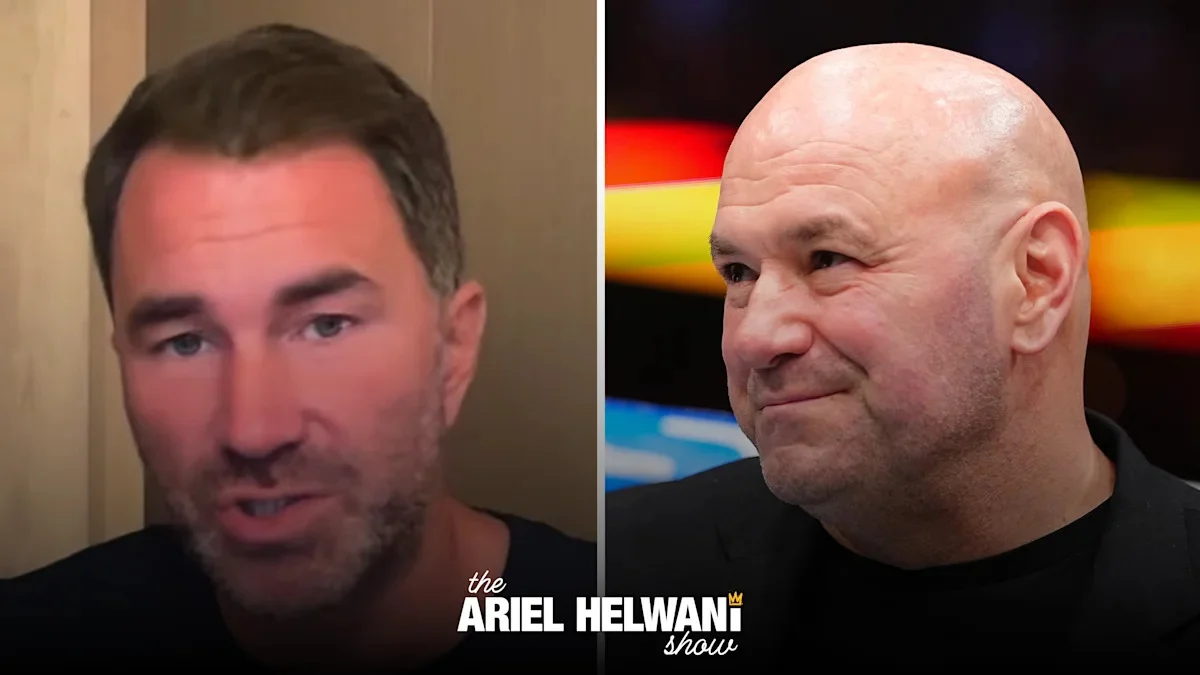
Matchroom Boxing head Eddie Hearn has offered an extensive look inside the high-stakes machinery of modern combat sports, addressing the simmering friction surrounding the elusive heavyweight clash between Anthony Joshua and Tyson Fury, his evolving rivalry with UFC chief Dana White, and the rapid growth of his promotional and management interests across both boxing and mixed martial arts. In a comprehensive discussion reflecting the turbulent state of elite combat sports, Hearn broke down the complex promotional politics, contractual maneuvering, and personal dynamics currently dictating the sport’s biggest potential matchups and cross-promotional experiments.

At the top of the agenda remains the perennially debated all-British showdown between former two-time unified heavyweight champion Anthony Joshua and former lineal and WBC heavyweight champion Tyson Fury. While the proposed blockbuster has repeatedly fallen victim to promotional disputes, rival broadcast allegiances, and unexpected in-ring upsets over the past half-decade, dialogue around the bout continues to generate immense public fascination. Hearn addressed the latest state of negotiations for the matchup, shedding light on the intricate behind-the-scenes hurdles that must be cleared if the two domestic giants are ever to share a ring.
A central element of Hearn’s perspective on the Fury-Joshua dialogue is the unwavering sense of loyalty he maintains toward Joshua, whom he has guided since the 2012 Olympic gold medalist made his professional debut. Over the course of Joshua’s career, the two have formed one of the most lucrative and durable promoter-fighter partnerships in modern sports history. Hearn reiterated that his commitment to Joshua’s best interests remains non-negotiable, particularly as various rival entities and independent power brokers attempt to insert themselves into the conversation. According to Hearn, unsolicited and competing offers have routinely been directed toward Joshua behind closed doors, with third parties seeking to influence the heavyweight star’s promotional alignment or secure direct access to his future business dealings. Despite these external overtures, Hearn emphasized that Joshua’s team remains completely unified and steadfast in how it approaches top-level discussions.

Beyond the basic commercial framework of a potential clash between Fury and Joshua, Hearn made a point to emphasize the critical necessity of comprehensive, uncompromising drug testing protocols. Given the immense financial stakes, legacy implications, and physical risks inherent to an undisputed or legacy-defining heavyweight collision, Hearn underlined that any eventual agreement must feature rigorous independent anti-doping testing overseen by premier agencies such as the Voluntary Anti-Doping Association. For an event of such unprecedented global magnitude, ensuring absolute transparency, athlete safety, and sporting integrity remains a non-negotiable pillar of any prospective contract.
The conversation around Fury and Joshua took an unexpected turn when UFC chief Dana White entered the narrative, claiming that his own team was positioned to take the reins and produce the historic British encounter. Hearn addressed White’s comments directly, examining both the plausibility and the audacity of the UFC executive’s assertions. While acknowledging the promotional muscle and production standards of White’s organization, Hearn highlighted the deep gulf between staging events under a single, centralized promotional banner and navigating the decentralized, multi-network web of championship boxing.

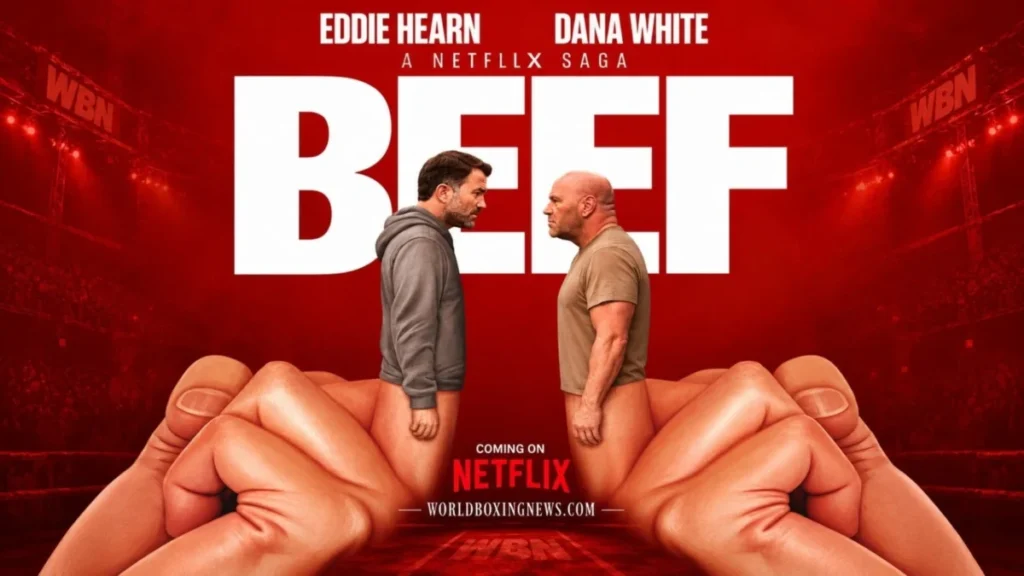
Hearn expressed complete willingness to sit down for a formal meeting with White to discuss the landscape, even as their public back-and-forth has intensified into a compelling sub-narrative within the combat sports industry. A potential face-to-face sit-down between the London-based boxing promoter and the Las Vegas-based mixed martial arts titan would represent a fascinating intersection of distinct promotional philosophies. Hearn noted that while competitive banter and barbed public exchanges have become a staple of their relationship, there is also mutual respect for what each has built on the global sporting stage.
The rivalry between Hearn and White has gathered momentum alongside White’s repeated declarations regarding Zuffa Boxing. For years, White has signaled an intention to disrupt the traditional boxing market with an enterprise modeled on the UFC’s tightly integrated, roster-driven structure. Hearn assessed the trajectory of Zuffa Boxing to date, pointing out the practical difficulties anyone—regardless of their success in other sports entertainment verticals—encounters when attempting to overhaul a sport historically resistant to centralized monopoly. Hearn observed that while the UFC model thrives on exclusive athlete contracts, strict rankings management, and complete operational control, traditional boxing operates on a foundation of independent contracting, autonomous sanctioning bodies, and multiple competing networks. The contrast between those two paradigms has, in Hearn’s view, made Zuffa Boxing’s expansion into a dominant market force far more complex and measured than White might have originally anticipated.

Simultaneously, Hearn has steadily worked to elevate his own name recognition and operational footprint in the United States. Long a ubiquitous household name across the United Kingdom and Europe, the Matchroom chairman has spent recent years embedding himself into the American sports media ecosystem, staging major championship cards in key U.S. markets, and cultivating a distinct, media-friendly persona designed to resonate with American audiences. Hearn discussed this ongoing push to build his profile across the Atlantic, framing it as an essential step toward transforming Matchroom from a regional promotional powerhouse into a truly global sporting juggernaut capable of rivaling any combat sports entity in the world.
That international ambition is further reflected in Matchroom’s ventures beyond conventional boxing promotion, most notably through Matchroom Talent Agency. In a move that brings Hearn into indirect business orbit with White’s primary domain, Matchroom has established representation for elite mixed martial artists currently competing inside the UFC. Hearn highlighted the status of high-profile management clients Tom Aspinall and Ian Machado Garry, both of whom have positioned themselves at the very forefront of their respective divisions.

Aspinall, holding the UFC interim heavyweight championship, has emerged as one of the most athletic and devastating finishers the heavyweight mixed martial arts division has seen in years, while Ireland’s Garry has steadily climbed the welterweight rankings with an undefeated record and an unapologetic, media-savvy approach. Hearn detailed how Matchroom Talent Agency works to optimize commercial opportunities, endorsements, and career positioning for such athletes while respecting the contractual realities of their agreements with the UFC. Representing elite talent competing directly under White’s organizational umbrella introduces a fascinating dynamic, underscoring Hearn’s capacity to operate both as White’s promotional adversary in public forums and as a management facilitator for the UFC’s most prominent domestic and international stars.
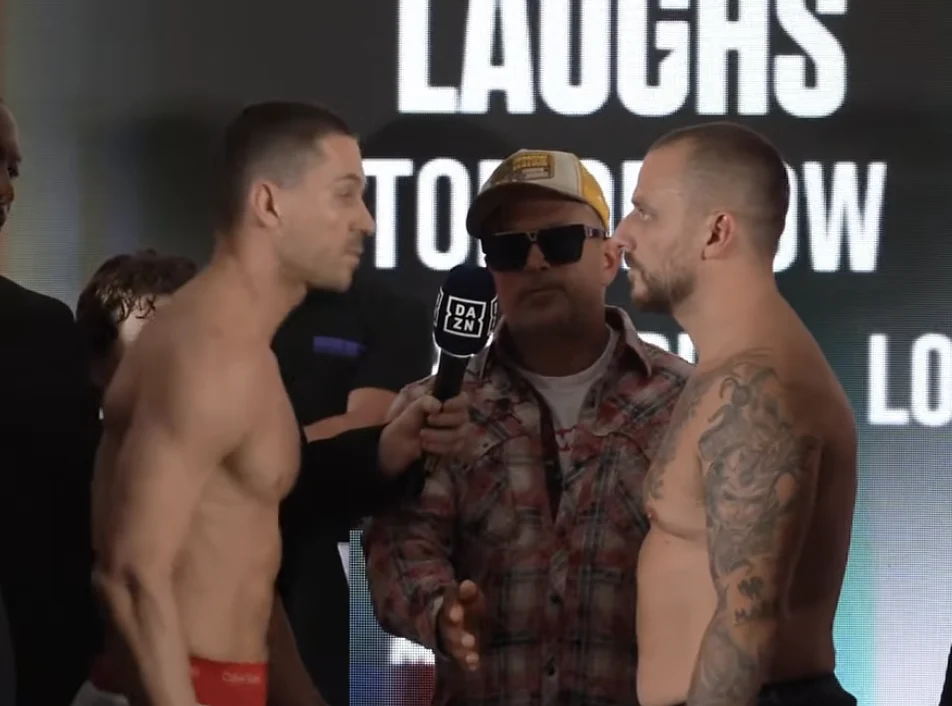
The dialogue also turned to the emerging talent inside Matchroom’s own boxing stable, spotlighting rising light heavyweight sensation Ben Whittaker following his most recent victory. Whittaker, an Olympic silver medalist known as much for his flamboyant, showboating style as his slick technical ring craft, has rapidly become one of the most talked-about and viral figures in British boxing. Hearn reviewed Whittaker’s recent outing, noting the delicate balance the young prospect must maintain between dazzling theater and disciplined pugilism. While Whittaker’s antics have drawn both fierce acclaim and sharp criticism from traditionalists, Hearn recognized that the young fighter possesses the rare, polarizing charisma required to transcend conventional boxing circles and attract a new, younger demographic to the sport. The Matchroom leader framed Whittaker’s ongoing progression as a vital component of boxing’s generational turnover, emphasizing that building the sport’s future requires cultivating athletes who are capable of commanding mainstream cultural attention.
Hearn’s remarks portray a promotional landscape defined by converging industries, deep-seated rivalries, and sweeping commercial ambitions. Between stewarding long-standing relationships with icons like Anthony Joshua, evaluating the logistics of historic bouts against Tyson Fury, defending boxing’s operational realities against Dana White, managing elite UFC contenders, and nurturing prospects like Ben Whittaker, Hearn continues to operate at the center of combat sports’ most consequential intersections.