
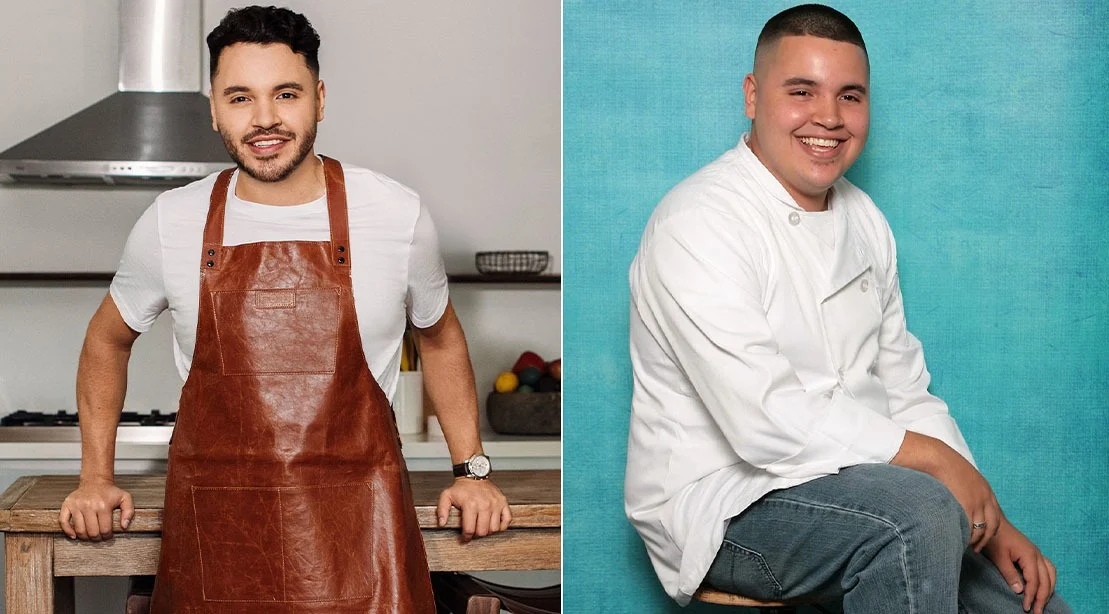
Renowned chef, author, and television personality Chris Valdes carved his path to culinary prominence as a standout finalist on Season 14 of the hit Food Network show Food Network Star. Known for bringing vibrant energy and mouthwatering dishes to screens and dining tables alike, the Miami native has built a career around sharing his deep passion for cooking. However, the demanding life of a professional chef often runs counter to the principles of health and wellness, prompting Valdes to take a hard look at his lifestyle. Recently, the celebrated cook embarked on a transformative personal journey that resulted in the loss of 40 pounds of body fat—all without ever compromising his unwavering commitment to rich, authentic flavor.
Valdes recently stepped away from the kitchen and television sets to sit down for an in-depth conversation with M&K, detailing not only how he managed to shed the excess weight, but also how he tackled the mental and physical hurdles required to keep it off in a sustainable, long-term manner.
To understand Valdes’ approach to food and wellness, one must first look to his culinary roots. "I would describe my cooking as bold, flavorful, and heavily influenced by my Cuban roots," Valdes explains. "I love taking the Latin and Caribbean flavors that I grew up with and giving them a modern twist."
These rich culinary traditions offer a vast array of ingredients, but they also present unique challenges for anyone attempting to maintain a healthy physique. The fast-paced, high-pressure environment of a professional kitchen, combined with the rich nature of comfort foods, means that staying in shape requires a conscious, daily effort rather than an accidental byproduct of a busy schedule.
Addressing the misconceptions surrounding Latin cuisine, Valdes notes that the food cannot be neatly boxed into a simple "healthy" or "unhealthy" category. "There are so many naturally nutritious ingredients such as beans, vegetables, lean proteins, seafood, avocado, fresh herbs, citrus, and spices," he points out. "But at the same time, some of the comfort foods that I grew up loving can be fried, heavy in carbohydrates, or served in very large portions."
Rather than abandoning the dishes of his heritage, Valdes adopted a philosophy of adaptation. "I’ve now learned that I don’t have to stop eating the foods that connect me to my culture. Instead, I can change the cooking method, adjust the portions, and make smarter ingredient choices while keeping the flavors that make those dishes special."
For many, the food they crave is deeply intertwined with emotional history, and Valdes is no exception. Food has been a central pillar of his life experience from an exceptionally early age. "Since I was a kid, food was love, comfort, family, and celebration," Valdes shares. He recalls how his father would frequently treat him to chicken nuggets almost on a daily basis, and how growing up immersed in the environment of his family’s restaurant meant food was constantly present, surrounding him around the clock. Furthermore, his cultural background amplified this connection. Growing up Latino, he felt that nearly every occasion provided a reason to gather, and wherever there was a celebration, an abundance of food was sure to follow.
Chef Chris Valdes Examined His Emotional Relationship with Food
Valdes’ childhood took a dramatic turn when his father was sent to prison and the family’s restaurant was forced to close its doors. During this turbulent period, a young Valdes found solace in an unexpected place. "Around that time, I remember seeing cooking on television and becoming fascinated by it," he recalls.
As he began experimenting and cooking for himself, he discovered a sanctuary—a space where he could exercise creativity, find deep focus, and cultivate a sense of well-being during a time when much of his external world felt unstable and distressing. "In many ways, cooking saved me then," he reflects. What began as a vital source of personal comfort eventually blossomed into his ultimate passion, his professional career, and the foundation upon which he would build his adult life.
Yet, the realities of pursuing a professional culinary education brought their own physical tolls. Tasting six or seven distinct dishes every single day while in culinary school left a lasting mark on his appetite and physical habits. "There still isn’t really an ‘OFF’ switch," he admits, describing his persistent appetite. "I even daydream about food."
At just 23 years old, Valdes received a stark medical warning when a doctor informed him that his cholesterol levels were far too high. He calls the moment a definitive wake-up call, but acknowledges that his initial attempts to correct the problem lacked sustainability. He hired a personal trainer and threw himself aggressively into intense gym routines, but when his schedule forced him to scale back those exhausting sessions, the weight predictably returned.
Desperate for a solution, Valdes took a drastic measure at the age of 25. "I even underwent liposuction," he shares candidly. At the time, a part of him genuinely believed that if he could magically alter his physical appearance through a surgical procedure, everything else in his life would seamlessly fall into place. But it did not work that way.
"What I learned was that changing my body didn’t automatically change my habits, my mindset, or my relationship with food," Valdes explains. "Liposuction could change what I saw in the mirror, but it couldn’t teach me discipline or consistency—I had to do that for myself."
As a public-facing chef who frequently wows audiences with cooking segments on programs like Good Morning America, Valdes knew that his entire personal identity and professional livelihood revolved around food. Complete abstention was never a viable option. Instead, fundamentally altering his relationship with eating became the absolute key to his success. To manage his energy, stay active, and improve his physical conditioning, Valdes tried various fitness regimens before discovering a lasting passion for CrossFit. Beyond the physical exertion, these grueling workout sessions served a vital role in sharpening his mental outlook.
"I didn’t have to think about everything I was carrying or what tomorrow looked like. I just needed to get through the next rep," Valdes explains, highlighting how the focused intensity of the workouts helped clear his mind. To cement healthier daily rituals, he committed himself to the widely recognized 21/90 rule, a psychological framework theorizing that it takes 21 days of consistent effort to build a new habit, followed by an additional 90 days to firmly engrain it into one’s lifestyle.
Chef Chris Valdes Now Cooks Healthier, but Never Compromises on Taste
To dial in his daily nutritional intake, Valdes implemented immediate adjustments that quickly transformed into permanent lifestyle changes, such as completely cutting out sugary sodas. "It’s funny because something that once seemed completely normal doesn’t appeal to me anymore," he notes. He also began deliberately distancing himself from heavily greasy foods, paying closer attention to the physical feedback his body provided after meals. He realized that the fleeting five-minute pleasure of eating something merely because it tasted good was rarely worth the sluggishness and fatigue that followed.
Once Valdes stopped viewing his journey through the restrictive lens of removing beloved ingredients like sugar and fat, his perspective shifted entirely toward addition. "Now I add more protein, vegetables, fresh ingredients, and foods that actually kept me satisfied," he says.
For the successful chef, maintaining his weight loss has been significantly simplified through clever culinary swaps. "I’ll grill, roast, air-fry, or sear something instead of automatically deep-frying it," Valdes explains. "I will use fresh citrus, herbs, garlic, chiles, and spices to create flavor rather than relying on heavy sauces. I’ll choose leaner proteins, incorporate more vegetables, and pay attention to portion sizes."
There is, however, one element where Valdes draws a strict boundary against compromise: flavor. "If the healthier version doesn’t taste good, you’re probably not going to stick with it," he emphasizes.
Becoming deeply mindful of his cooking techniques and the components of his dishes has not only allowed him to successfully combat the weight gain that once threatened his health, but it has also elevated his capabilities as a professional chef.
"I don’t consider myself a ‘healthy chef’ and I don’t want people to think I’m suddenly giving up the Cuban and Latin foods that I love, because that’s not realistic for me, and I don’t think it has to be," Valdes concludes. "Instead, I’ve become much more intentional, and this has actually made me more creative as a chef, because I love the challenge of finding ways to keep the soul of a dish, while making choices that better fit the way I want to live today."
To follow Chef Chris Valdes on Instagram, click here.