


The sport of professional boxing has captivated audiences for generations, celebrated as the ultimate test of human grit, strategy, and athletic prowess. Yet, for all its timeless appeal, there is one element of the sweet science that routinely sparks fierce debates, internet controversies, and widespread public confusion: the scoring system.

Every so often, a controversial decision leaves fans, analysts, and fighters alike scratching their heads in disbelief. Given the bewildering scorecards occasionally handed down by judges, it is easy for an ordinary spectator to feel alienated by the mechanics of professional judging. However, these glaring anomalies tend to be the exception rather than the rule, overshadowed by countless bouts that unfold without incident across the globe every single week. Still, for the average observer tuning in on any given fight night, the intricacies of how a winner is determined can remain profoundly obscure.

At the core of professional boxing lies the 10-Point Must System, a standardized framework designed to quantify a sport that is inherently chaotic. The foundational premise of this system is relatively straightforward: the winner of any given round must be awarded 10 points. By default, the vast majority of rounds conclude with a 10-9 score, meaning the losing fighter is allocated 9 points. This baseline score holds true unless governing rules or referee interventions mandate a point deduction. In exceedingly rare instances, a round may be scored even at 10-10, though modern judges go to great lengths to avoid deadlocks and this outcome is seldom witnessed in elite competition.

When point deductions come into play, they introduce a distinct layer of mathematical gravity to the bout. A knockdown, for instance, triggers an automatic one-point deduction against the fighter who has been sent to the canvas. Furthermore, if a fighter is dropped multiple times within the same stanza, an additional point is deducted for every subsequent knockdown. However, if both combatants manage to score knockdowns against each other during the same round, the point deductions effectively cancel one another out, returning the scoring framework to a standard dynamic.

While the fundamental architecture of the 10-Point Must System is not rocket science, the human element introduces formidable challenges. Judges, despite their professional training, are susceptible to human error and differing interpretations of what constitutes effective combat. Because human perception can vary wildly from ringside seat to ringside seat, arbiters frequently draw intense public flak for how they distribute points. The system inherently lacks an automated self-correcting mechanism, leaving it entirely reliant on the subjective viewpoints of three appointed officials.

In simple terms, the core mechanism functions as intended: 10 points for the victor and 9 for the vanquished is a concept easily grasped by casual viewers. It is the nuanced interpretation of those rounds by judges under high-pressure scenarios that occasionally makes the results appear murky.

Operating outside the direct domain of the scoring judges are the decisions of the referee, who holds the ultimate authority on the canvas to penalize foul play. Whether dealing with intentional or unintentional infractions—ranging from excessive holding and grappling to debilitating low blows or illegal strikes to the back of the head—referees possess the power to instruct scorekeepers to deduct points. A referee may issue verbal warnings before taking punitive action, but they are under no obligation to issue warnings before docking points from a transgressor’s total. Fortunately, the vast majority of professional bouts proceed without such egregious indiscretions, leaving the final outcome squarely in the hands of the ringside judges.

When judges sit down to evaluate a round, they rely on a universally recognized set of criteria that usually reflects a dominant fighter’s overall control of the environment. Among the foremost attributes judges look for is ring generalship. This term encapsulates a fighter’s ability to dictate the pace of the bout, control the center of the canvas, and systematically neutralize an opponent’s strategy. Alongside ring generalship, judges heavily favor effective aggression. A fighter who constantly moves forward, presses the action, and forces the fight will earn significant favor with the officials, provided that their offensive output is demonstrably more impactful than that of their opponent.

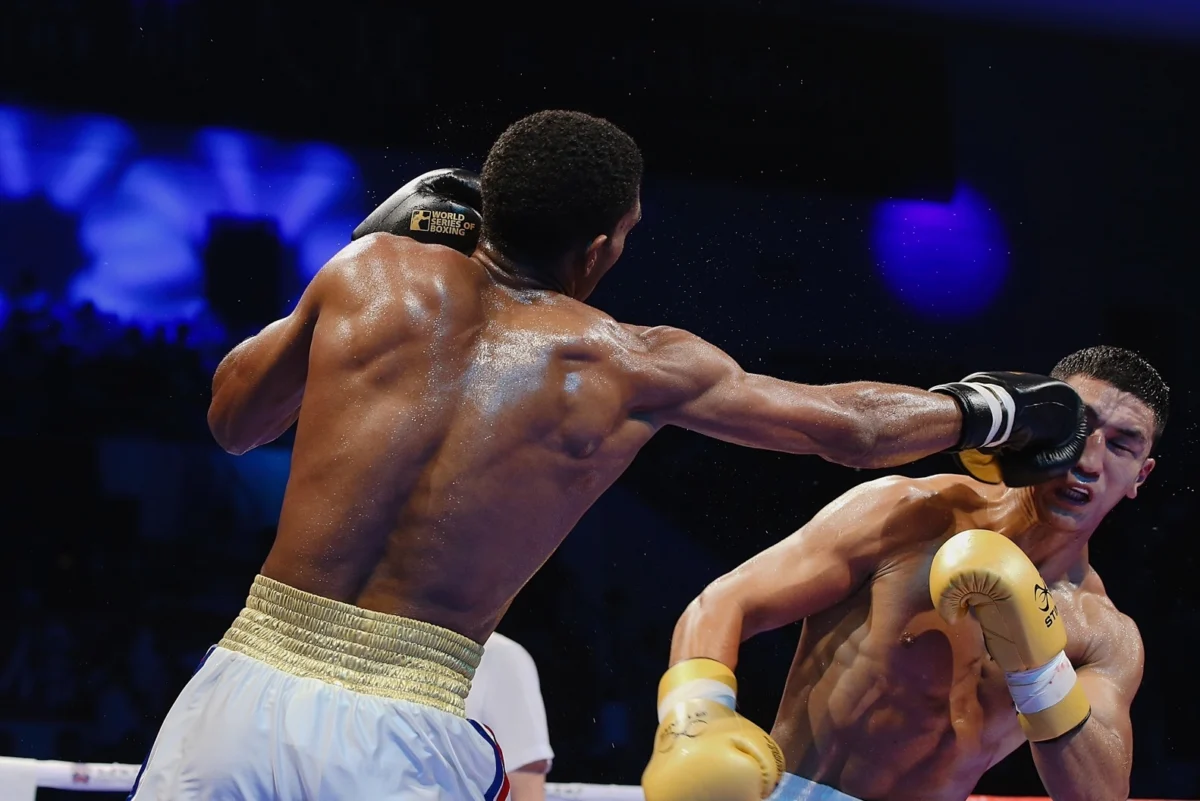
In terms of raw offense, the quality of landed blows carries substantial weight. Judges take note of powerful, clean punches that visibly alter the momentum of a round, as well as high-volume combinations that connect flush against the target. However, effective aggression and power are not the only paths to a favorable scorecard. Conversely, a defensive masterclass can be equally persuasive. A fighter who displays elite defensive responsibility—evading incoming fire while simultaneously landing sharp, counters of their own—will capture the attention of judges just as effectively. Legendary technicians such as Vasyl Lomachenko and Floyd Mayweather Jr. have built masterclasses around this exact philosophy, demonstrating that avoiding damage while capitalizing on defensive lapses is a viable route to victory.

Understanding how a final verdict is reached requires looking at the collaborative structure of the judging panel. Every official professional bout assigns three independent judges to score the action from separate vantage points around the ring. This multi-judge setup allows for a majority rule framework, ensuring that a single outlier judge with a skewed perspective can be overridden if the other two officials are in agreement.

Although a fight can ultimately result in only three outcomes—a win, a loss, or a draw—the combination of three independent scorecards generates five distinct official decision types. A unanimous decision occurs when all three judges independently score the bout in favor of the same fighter, leaving no ambiguity about the winner. A majority decision is declared when two judges score the match for one fighter, while the third judge views the contest as a draw. A split decision represents the most contentious outcome, arising when two judges award the victory to one fighter, but the third judge scores the bout for their opponent.

Draws are similarly categorized to reflect the divergence of the judges’ scoring cards. A majority draw takes place when two judges score the entire fight even, while the third judge awards the win to either competitor. Meanwhile, a split draw represents a complete statistical stalemate among the panel: one judge scores the fight as a win for the first competitor, the second judge declares the victory for the second competitor, and the final judge marks the bout as an even draw.

For any aspiring fighter or dedicated fan looking to decipher how to win over the hearts and minds of the judges, the theoretical formula revolves around controlling the visual narrative of the fight. Officials are conditioned to look for clear indicators of dominance, ring control, clean punching, and defensive proficiency. Beyond these primary pillars, subtle tactical nuances such as the economy of shots, high fight IQ, and the ability to definitively seal or steal the final moments of a closely contested round can heavily influence a judge’s pen.

Critics will undoubtedly continue to debate the merits of professional boxing’s scoring infrastructure, and at times, the system can undeniably feel deeply flawed. Yet, despite its imperfections, it remains the most trusted and enduring method for scoring a combat sports match. In any discipline where two athletes test their limits against one another, a reliable mechanism is mandatory to separate the winner from the loser, and for now, the 10-Point Must System stands as the definitive standard of the sport.