


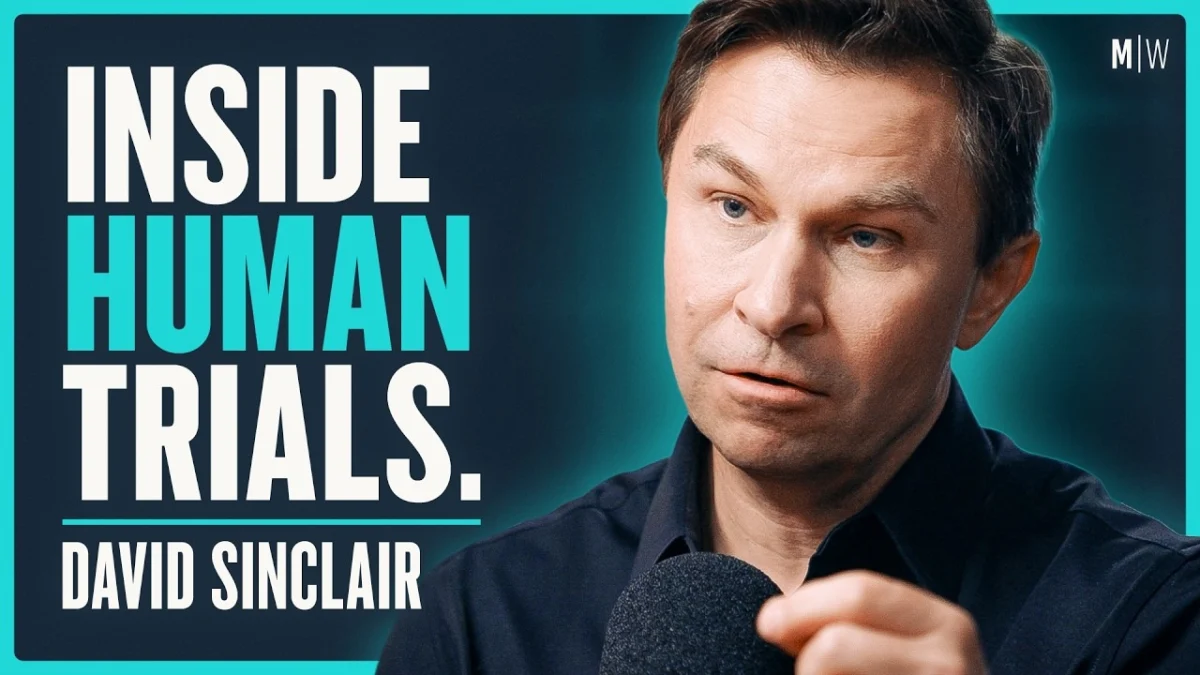
In an in-depth conversation on the Modern Wisdom podcast, Harvard University geneticist and longevity researcher Dr. David Sinclair reunited with host Chris Williamson to discuss recent advances in the biology of aging. Marking their first formal discussion since 2019, Sinclair used the platform to announce that cellular age-reversal techniques developed in his laboratory have advanced into early human clinical testing.
Throughout the extended discussion, Sinclair addressed the broader arc of longevity science, covering his "information theory of aging," personal dietary choices, and extreme fasting habits. He also detailed his personal daily regimen, which pairs established compounds with less conventional interventions, including an unexpected daily prescription medication. While Sinclair articulated an ambitious vision for extending human life expectancy, he also acknowledged significant gaps in human clinical trials, persistent debates among his academic peers, and quality-control hazards plaguing the commercial longevity supplement industry.
Age Reversal Enters Human Trials
The cornerstone of Sinclair’s recent research is cellular reprogramming—a technique designed to reset aged tissues to a biologically younger state. The milestone originated in a landmark 2020 study featured on the cover of Nature, in which Sinclair’s research group demonstrated that targeted epigenetic reprogramming could safely restore vision in aged mice by reversing cellular aging in the optic nerve.
According to Sinclair, the underlying methodology has since been replicated independently by other academic laboratories and confirmed in non-human primates, including monkeys. The mechanism relies on a modified version of the reprogramming factors discovered by Nobel laureate Shinya Yamanaka. While the standard Yamanaka formulation employs four genes—Oct4, Sox2, Klf4, and c-Myc—Sinclair’s team excluded c-Myc, using only the three-factor combination known as OSK.
The exclusion of c-Myc was deliberate and central to safety. Complete expression of all four Yamanaka factors strips cells of their identity, driving them all the way back into pluripotency, which creates an acute risk of tumor formation and teratomas. By utilizing solely OSK, Sinclair explained, cells rewind their biological age by approximately 75 percent before halting the process, thereby preserving their original tissue identity and preventing cancerous transformation.
Building on the non-human primate research, the approach has progressed to human testing with an experimental candidate designated as ER 100, an abbreviation for "epigenetic reversal 100." The initial trials target ocular conditions, a decision Sinclair noted was driven primarily by safety rather than relative efficacy. The eye represents an enclosed, anatomically isolated compartment, which prevents viral delivery vectors from circulating systemically throughout the body.
Sinclair stressed that while human participants are actively receiving ER 100, clinical outcomes have not yet been made public. As a result, the therapy remains an unproven experimental candidate rather than a clinically validated intervention for human age reversal.
The "Corrupted Software" Theory
To explain how cells regain youth without losing their structural function, Sinclair highlighted his "information theory of aging." The model characterizes aging not as an accumulation of unfixable genetic damage, but as a loss of epigenetic information.
Using an analogy to describe the process, Sinclair likened DNA to digital music stored on an optical disc and the epigenome to the reader that reads the data. While the underlying genetic sequence—the music—remains largely pristine over a lifetime, the cellular reader loses its ability to decipher which genes should remain active and which should be silenced. Sinclair referred to this epigenetic drift as corrupted software.
In laboratory models, his team demonstrated that intentionally introducing disruptions into the epigenome caused mice to age at an accelerated rate, providing experimental support for the model.
Looking beyond viral gene therapy, Sinclair reported that his laboratory is actively developing small-molecule alternatives that can be administered orally. In animal experiments, aged mice given an experimental compound three days per week over the course of a single month demonstrated measurable improvements in cognitive memory and skin architecture. The mechanism is believed to function through ten-eleven translocation (TET) enzymes, which remove chemical methyl groups from DNA to re-establish youthful gene expression patterns.
Will Someone Live to 150?
During the interview, Sinclair reiterated his controversial belief regarding human longevity, stating that the first individual to reach 150 years of age is likely already alive.
The assertion has generated significant friction within the scientific community. Sinclair acknowledged that fellow gerontologists and academic colleagues have repeatedly advised him to abandon the specific figure of 150, cautioning that making such claims without conclusive clinical data threatens to erode scientific credibility. Sinclair described himself as an outlier within the institutional hierarchy who is comfortable challenging conservative academic consensus.
Nonetheless, observers and researchers emphasize that such timelines remain speculative projections rather than verified scientific forecasts. While cellular models and laboratory rodents have demonstrated plasticity in aging biomarkers, clear biological age reversal has not yet been demonstrated in human subjects.
How Sinclair Eats: One Meal and Long Fasts
Turning to lifestyle interventions, Sinclair discussed his personal dietary regimen, dismissing standard nutritional conventions:
"I think three meals a day plus snacks is marketing."
Sinclair typically practices a time-restricted feeding model consisting of one meal per day (OMAD), though he occasionally incorporates a second meal depending on physical demands. Following periods of international travel, he regularly extends his fasting window. Sinclair stated that he is capable of fasting for up to two weeks at a time, noting that he experiences heightened cognitive clarity and well-being during prolonged food deprivation.
From a physiological perspective, Sinclair highlighted that after roughly three days of sustained fasting, the body activates chaperone-mediated autophagy—a specialized cellular recycling process that breaks down and clears misfolded proteins and damaged components.
To mitigate risks during extended fasts, Sinclair monitors his biomarkers using continuous glucose monitors, blood diagnostics, and regular body composition assessments, while supplementing with vitamins and minerals to avoid micronutrient deficiencies.
He added a direct caution against universal adoption of prolonged fasting, stating that individuals with low body fat, those struggling with frailty, and elderly populations should avoid extreme caloric restriction. Furthermore, Sinclair acknowledged that no randomized, placebo-controlled clinical trial has proven that caloric restriction extends maximum lifespan in humans. The evidentiary basis rests largely on animal models, such as landmark longitudinal studies conducted in rhesus macaques at the University of Wisconsin, which demonstrated reduced incidence of cancer, cardiovascular disease, and all-cause mortality under restricted diets.
Protein: Pulse It, Don’t Ban It
The management of dietary protein remains one of the most polarized debates in longevity science, pitting the necessity of preserving skeletal muscle mass against the risks of overactivating biological growth pathways. Sinclair clarified his personal approach, explaining that he consumes substantial amounts of protein, primarily derived from plant sources.
His critique was targeted at strict, long-term carnivore diets, which he argued run counter to established longevity research. Animal proteins contain significantly higher concentrations of branched-chain amino acids (BCAAs) such as leucine, which act as potent activators of the mechanistic target of rapamycin (mTOR) pathway.
While sustained mTOR activation stimulates muscle protein synthesis and hypertrophy, persistent signaling through this pathway has consistently been linked to shortened lifespan and accelerated aging in diverse animal models. To balance these competing physiological demands, Sinclair advocated for "pulsing" protein intake—cycling between transient windows of elevated protein consumption to stimulate muscle repair and extended recovery intervals characterized by reduced amino acid availability to permit cellular housekeeping and autophagy.
Exercise, Sleep, and Stress
In discussing physical fitness and lifestyle stress, Sinclair framed regular physical activity and sexual health as integral elements of longevity maintenance. He noted that an active sex life should be viewed functionally as a legitimate component of a weekly longevity and cardiovascular routine.
Regarding sleep, Sinclair argued that restorative sleep quality outweighs total hours spent in bed. He stated that he functions effectively on approximately five hours of sleep per night, reporting overnight heart-rate variability (HRV) measurements consistently in the 80 to 90 millisecond range. He attributes this recovery efficiency to behavioral rules, including an absolute cessation of caffeine intake in the afternoon and evening, coupled with structured breathwork practices prior to sleep.
For psychological stress management, Sinclair uses cognitive deflection techniques. To disrupt mental stress cycles, he employs visualization exercises, such as mentally placing himself in a familiar Cape Cod orchard. His central principle involves actively halting mental rumination by compartmentalizing concerns and deliberately postponing anxious thoughts until designated times.
Inside Sinclair’s Daily Stack
Sinclair also detailed his current morning regimen of supplements and pharmaceuticals. While he previously popularized resveratrol—a plant polyphenol found in grape skins—he maintained during the discussion that the scientific dispute regarding its biological utility is settled in his view, even as external critics continue to challenge its efficacy and bioavailability.
His broader daily stack includes:
- Resveratrol, taken in the morning to stimulate sirtuin pathways.
- Nicotinamide Mononucleotide (NMN), a precursor molecule taken to boost cellular levels of nicotinamide adenine dinucleotide (NAD+).
- Nattokinase, an enzyme derived from fermented soybeans used with the intention of supporting vascular flow.
- Low-dose Aspirin, utilized for cardiovascular risk reduction, though Sinclair explicitly noted that daily aspirin therapy carries bleeding risks and must be managed under medical supervision.
- Tadalafil, a prescription phosphodiesterase type 5 (PDE5) inhibitor typically prescribed for erectile dysfunction or pulmonary hypertension, which he consumes daily in low doses.
Sinclair’s use of daily tadalafil represents an off-label application driven by interest in its potential vascular and endothelial effects. However, he cautioned that his rationales for agents like tadalafil and nattokinase are grounded in mechanistic hypotheses and early preclinical signals rather than established clinical proof. Emphasizing the necessity of individual medical oversight, Sinclair rejected broad-brush recommendations:
"I’m totally against the word ‘everybody’ when it comes to health."
The NMN Contamination Problem
Sinclair expressed sharp concern regarding the commercial supplement supply chain, singling out the widespread distribution of compromised NMN products. He stated that his laboratory inadvertently discovered high levels of bacterial endotoxins in bulk NMN powders and commercially packaged consumer supplements while sourcing materials for animal research.
Endotoxin contamination presents severe immunological risks, as bacterial lipopolysaccharides can trigger systemic inflammatory responses, counteracting the intended health benefits of the compound. Sinclair also cited findings by Singapore-based investigator Andrea Maier, whose independent testing of commercial NMN formulations demonstrated that a large percentage of consumer products on the open market contained negligible amounts of the active ingredient, and in some cases none at all.
These analytical findings highlight significant regulatory and safety issues within the non-pharmaceutical longevity market, where product purity and label accuracy remain inconsistently verified.
Heat, Cold, and Brown Fat
Addressing thermal stress protocols, Sinclair distinguished between the evidentiary foundations of heat therapies and cold therapies. He categorized the evidence supporting regular sauna use as robust, pointing to extensive observational cohort studies from Finland involving male subjects. Those long-term studies have linked regular sessions—conducted multiple times per week—to significantly reduced rates of fatal cardiovascular events and overall mortality.
In contrast, Sinclair stated that the clinical evidence for deliberate cold exposure, such as ice baths, remains much less developed:
"Ice baths remain barely studied."
While human clinical trial data remains scarce, cold exposure reliably activates brown adipose tissue (BAT). Unlike common white fat, which stores excess energy, brown fat is enriched with mitochondria that burn calories to generate heat through non-shivering thermogenesis.
Sinclair cited rodent studies indicating that expanding brown adipose reserves earlier in life is advantageous, as the biological capacity to recruit and convert functional brown fat declines markedly with advancing age. However, until comprehensive clinical trials validate these physiological effects in humans, Sinclair cautioned against accepting outsized lifestyle claims, noting that the broader public enthusiasm surrounding cold-exposure techniques, such as those popularized by Wim Hof, often outpaces the underlying empirical research.