



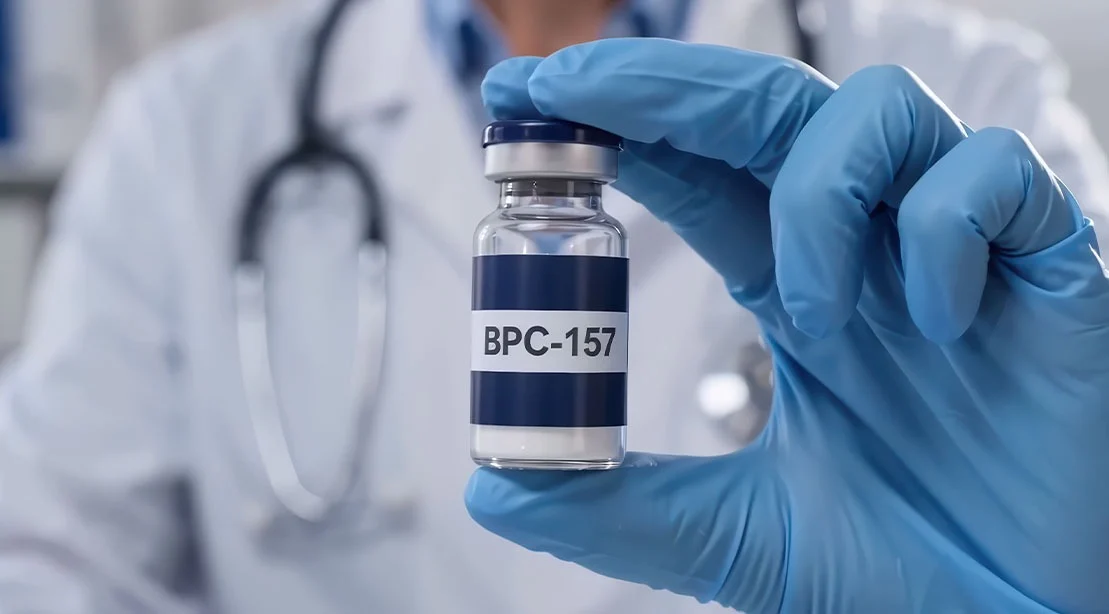
In the shadowy corners of bodybuilding gyms, mixed martial arts training facilities, and online athletic forums, a synthetic peptide known as BPC-157 has quietly accomplished something extraordinary. Without a single official regulatory stamp of approval, it has surged into the mainstream consciousness, becoming one of the most widely discussed and utilized experimental substances in the modern fitness and biohacking world.
For years, the compound has circulated with a nearly mythical reputation. Athletes and gym-goers facing stubborn injuries traded whispered recommendations across internet message boards. Dealing with a torn tendon? Try BPC. Nursing a chronically bad shoulder? Inject BPC. Suffering from persistent gut issues that traditional medicine has failed to resolve? The answer, according to countless online testimonials, was always the same. Some internet lore even jokingly suggested giving the peptide to injured pets, though users readily acknowledge that administering experimental compounds to animals is a line best left uncrossed.
Yet, beneath the hyperbole lies a profound cultural shift. What was once confined to the clandestine fringes of the peptide-geek underground has officially breached the walls of conventional health conversations. As an increasing number of everyday fitness enthusiasts, weekend warriors, and chronic pain sufferers turn to the compound, the medical establishment is finding itself in the unusual position of scrambling to catch up with a phenomenon driven entirely by grassroots demand rather than clinical endorsement.
What Is BPC-157 and How Does It Claim to Heal Tendons?
Derived from a protective protein naturally found in human gastric juice, BPC-157—which stands for Body Protective Compound 157—has earned the moniker of the "Wolverine peptide" within fitness communities. The nickname references the fictional comic book character renowned for his miraculous, accelerated healing abilities. In locker rooms and online forums, BPC-157 is frequently stacked alongside another experimental peptide, TB-500, creating what users dramatically refer to as the "Wolverine Stack," a combination believed by proponents to supercharge tissue repair and reduce systemic inflammation.
Until very recently, quantifying the actual prevalence of BPC-157 use was nearly impossible. The substance lived entirely in the shadows, tracked only through anecdotal accounts and underground sales figures. However, recent data has provided the public with its first clear, measurable look into the trend.
Researchers at health-data analytics company nference conducted an expansive search of more than 15 million de-identified medical records. Within this massive dataset, they successfully identified 1,039 patients whose primary care physicians or specialists had explicitly documented the use of BPC-157 in their clinical notes. The findings revealed a dramatic surge: newly documented users increased roughly 33-fold between the years 2020 and 2026. While researchers emphasize that this work remains preliminary and has not yet undergone the rigorous scrutiny of peer review, it stands as the most compelling evidence to date that BPC-157 has successfully crossed over from niche internet forums into mainstream medical charts.
Who Is Actually Using BPC-157? (New Patient Data)
A closer examination of the nference patient data paints a vivid portrait of the typical BPC-157 user. Over the course of the study period, the demographic profile of reported users shifted noticeably, becoming younger and predominantly male. When physicians documented the rationale behind their patients’ usage, the motivations typically centered around sports-related injuries, stubborn chronic pain, and persistent gastrointestinal complaints.
When researchers looked into where these individuals obtained the substance, the trail led primarily to compounding pharmacies and gray-market peptide sellers operating across the internet. This is precisely where the narrative surrounding BPC-157 takes a complicated and controversial turn.
Despite its widespread adoption and the fervent loyalty of its users, BPC-157 has never received approval from the U.S. Food and Drug Administration for the treatment of any medical condition whatsoever. It is not approved for healing torn tendons, repairing damaged pectoral muscles, alleviating tennis elbow, or curing the digestive disorders that countless individuals claim vanished just days after their first injection.
The vast majority of BPC-157’s legendary status is rooted in preclinical research, predominantly consisting of laboratory experiments conducted on animals. What the scientific community still lacks are adequately powered, randomized, double-blind human clinical trials—the gold standard of medical research that would normally be required before declaring any substance safe and effective for healing human connective tissue.
The recent medical-record analysis does little to resolve this glaring scientific deficit. Because the data is entirely observational, clinical outcomes were not systematically collected, and there was no untreated control group included for comparison. If a patient reports that their nagging shoulder injury improved while using BPC-157, modern medicine cannot definitively determine whether the peptide actually healed the tissue, whether traditional physical therapy played the primary role, whether the natural passage of time allowed the injury to resolve, or whether the patient simply stopped performing the specific exercises that caused the damage in the first place.
Meanwhile, federal regulation is attempting to navigate this murky landscape at a pace that closely mirrors the rapid spread of public usage. Earlier this summer, an FDA advisory committee voted to recommend allowing BPC-157 for certain types of pharmacy compounding. However, public health experts are quick to point out that advisory committee votes do not constitute official FDA approval, nor do they serve as definitive proof that a drug actually works. A final, binding regulatory decision from the agency remains pending, leaving the substance in a persistent legal and medical gray area.
The Dangerous Risks of Buying Peptides Online
For anyone willing to look past the lack of formal clinical trials and venture into the digital marketplace to purchase peptides, a far more immediate and alarming danger awaits: consumers often cannot verify that the vial they receive actually contains what is printed on the label.
In a recent investigative report, journalists at WIRED purchased several supposedly injectable peptides from various shops and online storefronts in New York, subsequently sending the samples to independent laboratories for chemical testing. The results were concerning. Products explicitly labeled as BPC-157, alongside other trending compounds like PT-141, NAD+, and retatrutide, frequently failed to show the advertised active ingredients upon analysis. Whatever substances happened to be inside those tiny glass bottles, laboratory testing was completely unable to verify that they matched the contents promised on the packaging.
This introduces a fundamental hazard to the biohacking community. While individuals can debate endlessly about whether an experimental molecule effectively heals tissue when properly synthesized, it is impossible to intelligently evaluate the efficacy of a chemical compound if that molecule is entirely absent from the product being injected into the human body.
Many within the wellness community are careful to clarify that they are not inherently opposed to peptide research. On the contrary, many believe that peptides may eventually provide sports medicine and regenerative orthopedics with extraordinary, revolutionary tools. It remains entirely possible that BPC-157 will eventually be subjected to rigorous scientific scrutiny and proven to deserve at least some portion of its outsized reputation.
Even so, the fundamental principles of the scientific method dictate that progress cannot rely on personal testimonials alone. The most compelling narrative surrounding BPC-157 is not that its healing properties have been scientifically proven—because, strictly speaking, they have not. Instead, the true story of the phenomenon is that thousands of individuals across the globe have apparently decided they simply cannot wait for the glacial pace of traditional drug trials to catch up with their injuries.
In doing so, patients and fitness enthusiasts have taken their health into their own hands, leaving institutional medicine scrambling to understand, monitor, and regulate a movement that has already left the station. For anyone familiar with the history of underground fitness trends, the dynamic feels unmistakably familiar.