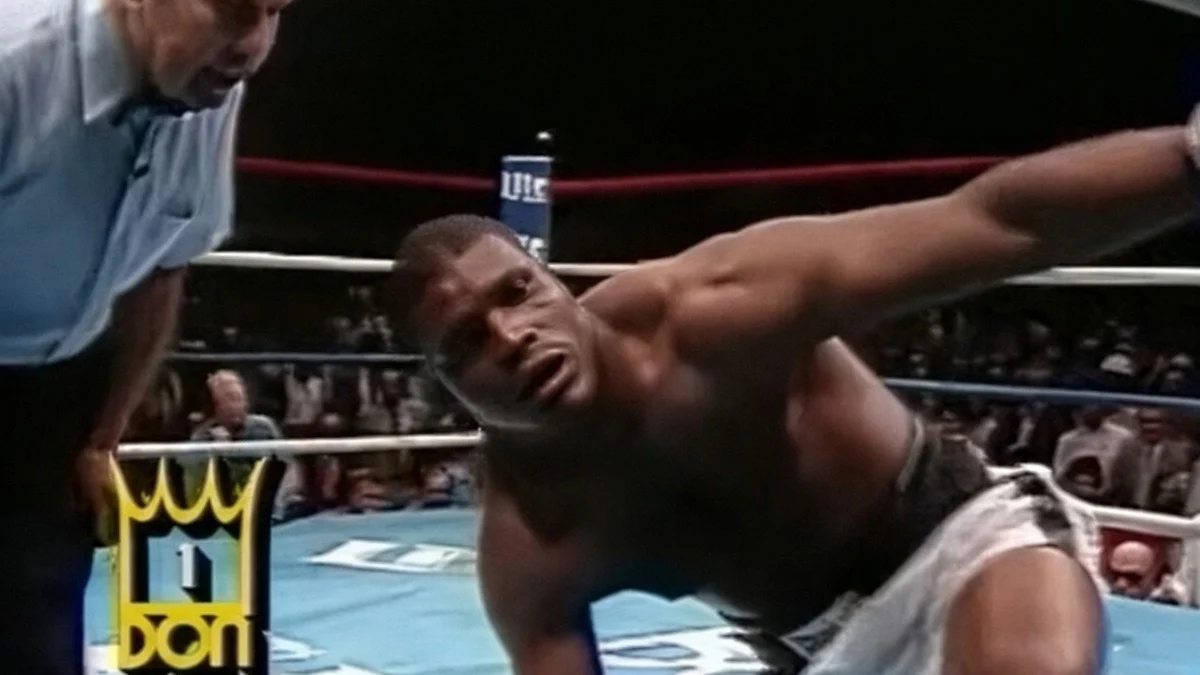
The golden era of 1980s heavyweight boxing was defined by sheer power, intimidating aura, and devastating knockouts. At the center of this ferocious landscape was a teenage Mike Tyson, a terrifying force of nature marching relentlessly toward his historic championship destiny. Every opponent who stepped into the squared circle with the young phenom understood the physical risks, but few could have predicted the harrowing paths their lives would take away from the sport. For Baltimore heavyweight Reggie Gross, a swift and brutal defeat at the hands of Tyson in the summer of 1986 marked the beginning of a rapid descent into the dark underworld of contract killing, culminating in a triple life sentence that shocked the sports world.
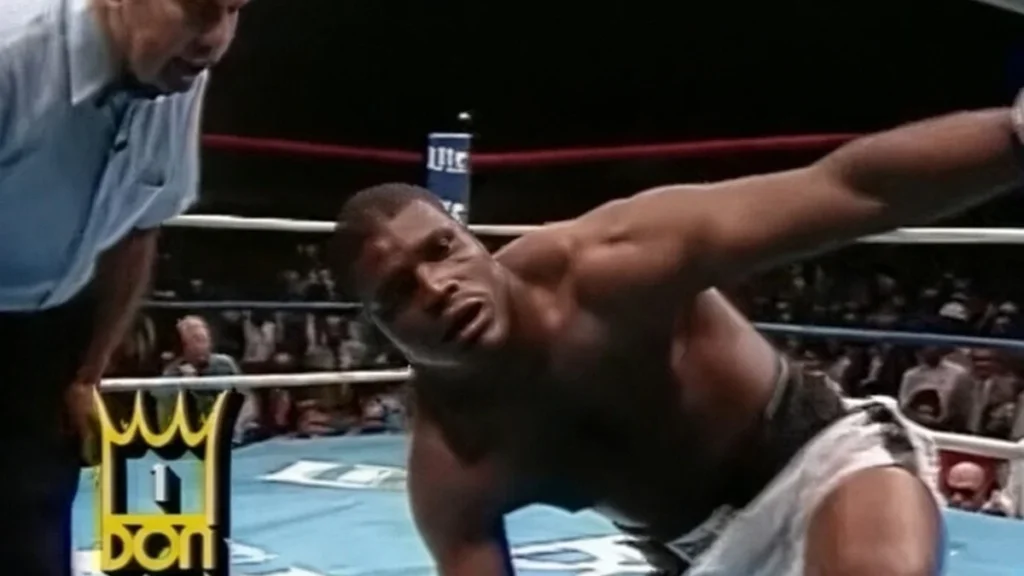
The collision between Tyson and Gross took place on June 13, 1986, under the bright lights of Madison Square Garden. At the time, Tyson was an undefeated juggernaut tearing through the heavyweight division, systematically destroying almost everyone put in front of him on his historic trajectory. Gross, a gritty contender from Baltimore, stepped up to face the ferocious prospect, hoping to halt the freight train that was capturing the global imagination of the boxing world.
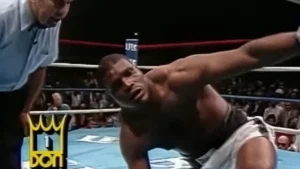
The bout, however, was decisively one-sided and remarkably brief. Gross lasted just two minutes and 36 seconds before the referee stopped the contest in the opening round. Tyson dropped the Baltimore heavyweight twice with punishing blows, establishing the kind of overwhelming dominance that would soon make him the youngest heavyweight champion in boxing history just five months later. For Gross, the loss was a standard, albeit brutal, occupational hazard in a notoriously unforgiving sport. Yet, what unfolded away from the boxing ring later that same year proved to be infinitely more disturbing than any physical punishment he ever experienced under the bright arena lights.
Mike Tyson’s Opponent Killed Three
Following his defeat at Madison Square Garden, Gross drifted away from the disciplined routine of a professional athlete and became deeply entangled in a ruthless Baltimore drug organization operated by Warren Boardley. At the time, the syndicate was engaged in a violent, high-stakes turf war to seize total control of the local narcotics trade. In this brutal environment, human life was treated as a disposable commodity, and Gross soon transitioned from a professional fighter into a hired executioner.
According to prosecutors, Gross operated as a contract killer for the Boardley enterprise, receiving a fee of $3,000 for each murder he committed. The bloody spiral of violence unfolded with terrifying speed just months after his encounter with Tyson. On September 12, 1986—a mere three months after stepping out of the ring with the future heavyweight king—Andre Coxson was murdered in Baltimore. Gross was ultimately implicated and pleaded guilty to the killing.
The bloodshed did not stop there. Just eleven days after Coxson’s murder, two more lives were claimed during the gang’s relentless territorial dispute. Zachary Roach and Rodney Young were killed in what prosecutors described as calculated hits ordered by the narcotics syndicate. Gross found himself deeply trapped in a web of federal and state investigations as the full extent of the Baltimore gang’s violent operations came to light.
The legal fallout was protracted and complex. Gross initially faced prosecution in state court for the killing of Andre Coxson, resulting in an acquittal in 1987. However, the federal net closed in tightly around him as investigators untangled the broader conspiracy. In 1989, Gross pleaded guilty in federal court to all three murders, acknowledging his role in the deaths of Coxson, Roach, and Young.
When the case reached sentencing, the presiding judge handed down a punishment that exceeded even the state’s recommendations. While prosecutors had pushed for a 75-year prison term, the judge elected to impose three life sentences, ordering two of them to run consecutively. It was a staggering finality for a man who had shared a professional boxing ring with one of the greatest heavyweight punchers of all time just a few years prior.

Gross Continued Boxing After Murders
What makes the timeline of Gross’s crimes particularly striking is that his criminal activities overlapped directly with his active professional boxing career. Even as he was operating as a hired contract killer for a violent Baltimore drug syndicate, Gross continued to accept bouts against elite international competition, stepping back into the ring to face some of the most formidable fighters of the era.
In 1987, the year he was acquitted in the state trial for Coxson’s murder, Gross traveled to face top British heavyweight contender Frank Bruno. Much like his encounter with Tyson, Gross suffered a definitive knockout defeat against Bruno, absorbing further physical damage while leading a deeply perilous double life outside the sport.
His career continued into the following year. In June 1988, Gross fought Donovan "Razor" Ruddock on the high-profile undercard of Mike Tyson’s heavyweight championship showdown with Michael Spinks. Fighting on the biggest stages in the sport while simultaneously entangled in gangland warfare and contract killings underscored the chaotic and compartmentalized reality of Gross’s life during that turbulent era.
While World Boxing News has extensively documented Tyson’s devastating early-career knockouts and the immense physical toll his opponents suffered, few fighters ever experienced a personal downfall as extreme or tragic as the one that befell Gross.
Three Murders and Three Life Terms
The roots of Gross’s destruction extended deep into a life marked by hardship and personal tragedy long before he ever crossed paths with Tyson or became involved in organized crime. Born into difficult circumstances, Gross suffered the early loss of his father, who was killed shortly after his birth. As his professional boxing career began to fracture and deteriorate, Gross fell victim to severe drug addiction, turning to substances to cope with the mounting pressures of his life.
In a candid interview published years later, Gross admitted that a crippling heroin addiction had completely taken over his life during the exact period when the murders were committed. He acknowledged making catastrophic mistakes and expressed deep regret over the destructive trajectory his life had ultimately taken. At the same time, he occasionally disputed direct responsibility for the killings in subsequent reflections, despite having formally entered guilty pleas in a federal court of law.
The bizarre intersection of Mike Tyson’s legendary career and dark criminal elements has surfaced in other unusual ways over the years. Notably, the former heavyweight champion once unknowingly met convicted serial killer Dale Hausner before the murderer was eventually captured and brought to justice. However, while those encounters remained peripheral, Gross had shared a direct, physical space inside the ropes with Tyson, standing across the canvas from a rising icon before plunging into a life of violent crime that resulted in a permanent prison sentence.
As Tyson marched forward to capture the WBC heavyweight title from Trevor Berbick just five months after his victory over Gross, cementing his status as the youngest champion in boxing history, Gross was rapidly hurtling toward a very different kind of history—one defined by federal indictments, multiple life terms, and a tragic waste of athletic potential.