

Legendary Panamanian fighter Roberto Duran has offered his definitive verdict on where he stands among his elite contemporaries, famously ranking himself at the very top of boxing’s legendary "Four Kings." Having shared the ring with prime iterations of Sugar Ray Leonard, Marvin Hagler, and Thomas Hearns during one of the most golden eras in the history of the sport, Duran’s assessment provides a fascinating window into the mind of a fierce competitor who defined a generation of boxing.
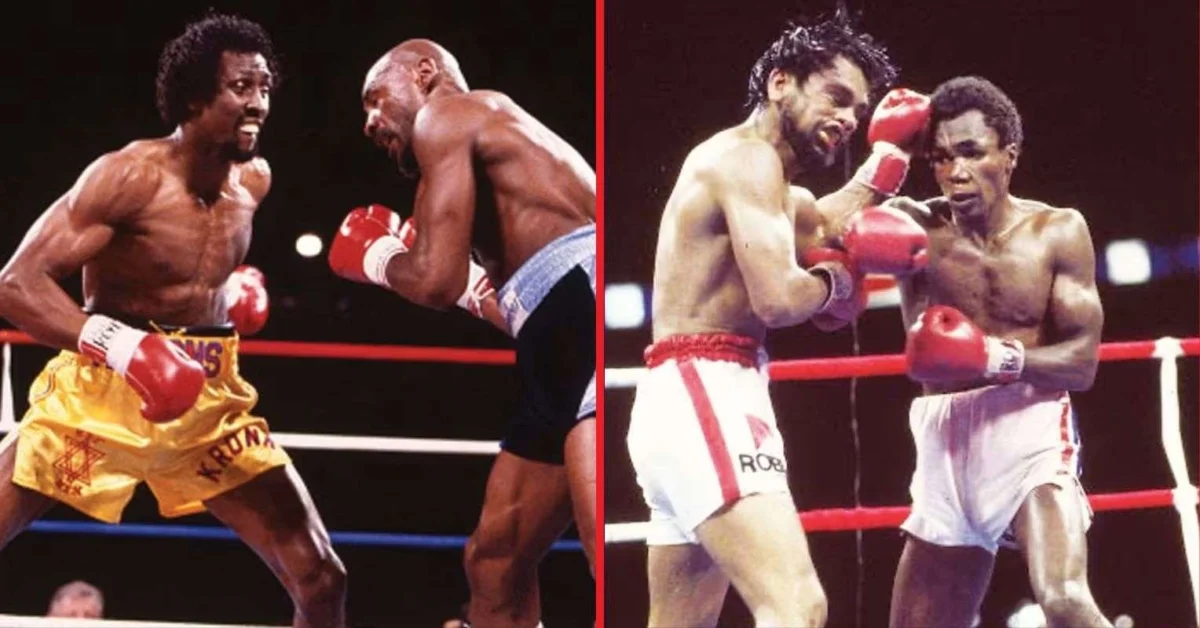
The phrase "Four Kings" remains synonymous with a series of sensational bouts in the late 1970s and 1980s that captivated the sporting world. These four warriors—Duran, Leonard, Hagler, and Hearns—fought one another in various combinations, creating a round-robin rivalry that elevated boxing to unprecedented heights of popularity, drama, and technical brilliance. Decades after the final bell rang on their storied careers, debate continues to rage among fans, historians, and fighters alike regarding how they stack up against one another in terms of raw talent, career achievements, and head-to-head dominance.
For Duran, the iconic "Hands of Stone" whose professional journey spanned five decades across multiple weight classes, there is no hesitation about who reigns supreme. In a revelation shared with boxing journalist Tris Dixon, the Hall of Famer placed himself proudly at number one on his list of the quartet, offering a unique perspective from a man who stood across the canvas from each of them.
Duran’s journey through this elite group began with his legendary first encounter against Sugar Ray Leonard in 1980. At the time, Leonard was the golden boy of American boxing, an Olympic champion, and the reigning WBC welterweight titleholder. Duran, a naturally smaller fighter who had dominated the lightweight division with terrifying punching power and relentless pressure, was widely considered a sizable underdog as he moved up in weight to challenge the undefeated American superstar in Montreal.
What transpired in that first bout became etched in combat sports folklore. Rather than attempting to outbox the faster and more polished Leonard, Duran dragged his opponent into a grueling, tactical, and brutal inside war. By forcing the fight into the trenches, Duran neutralized Leonard’s dazzling speed and footwork, ultimately earning a hard-fought and memorable 15-round unanimous decision victory to capture the welterweight crown. It was a tactical masterpiece born of raw aggression and unmatched ring IQ.
The rivalry, however, was far from over. Leonard secured an immediate rematch later that same year, adapting his strategy to frustrate and befuddle the Panamanian icon. That second meeting culminated in the famous eighth-round stoppage when Duran, visibly frustrated by Leonard’s movement and taunting, turned his back to the referee and famously uttered "No más," yielding the contest. Nearly a decade later, in 1989, the pair met for a third and final time up at middleweight, where Leonard secured a unanimous decision victory over a veteran Duran, bringing their trilogy to a close with Leonard holding a 2-1 edge in their head-to-head series.
Despite Leonard’s status as a multi-division champion and widely acknowledged as one of the finest pugilists in boxing history, Duran’s personal ranking places his great rival at number two, right behind himself.
Moving beyond his rivalry with Leonard, Duran also found himself facing the physical realities of campaigning in heavier weight classes against naturally larger opponents. Operating above the 147-pound limit always presented a distinct disadvantage for a fighter who started his career as a lightweight, a reality that became glaringly apparent when he stepped up to challenge the fearsome middleweight champion Marvin Hagler in 1983.
Fought at a catchweight of 157 pounds, the bout between Duran and Hagler showcased the incredible heart and technical savvy of the Panamanian legend. Few experts gave Duran a chance against the formidable "Marvelous Marvin," who was in the absolute prime of his destructive middleweight reign. Yet, Duran gave a terrific account of himself over 15 grueling rounds, pushing the champion to his absolute limits before ultimately losing a unanimous decision. It was a performance that earned Duran immense respect, proving that his skill and resilience could bridge the physical divide against one of the most dominant middleweights of all time.
In his very next high-profile outing, Duran encountered another terrifying force of nature in Thomas "The Hitman" Hearns. Unlike his competitive chess match with Hagler, Duran’s fight against Hearns in 1984 at super-welterweight was short, sharp, and devastating. Hearns, possessing a significant height and reach advantage alongside a devastating right hand, overwhelmed the smaller challenger from the opening bell. The fight ended in an emphatic second-round finish, handing Duran the most resounding and definitive defeat of his career against any of the Four Kings.
Yet, despite suffering such a crushing knockout at the hands of the Detroit puncher, Duran placed Hearns the lowest in terms of ability when discussing the quartet with Tris Dixon. While boxing purists and historians often view Hearns as one of the most lethal and technically brilliant punchers the sport has ever seen—highlighted by his incredible battles with Leonard, Hagler, and Duran—the Hall of Famer clearly viewed his own capabilities, and those of his other rivals, through a different lens.
Perhaps the legendary champion based his evaluation on the totality of their respective careers, longevity, and overall impact inside the squared circle rather than relying solely on the outcome of a single explosive encounter. While public consensus frequently crowns Sugar Ray Leonard as the ultimate standard-bearer of the group, or points to Hagler’s long-standing dominance of the 160-pound division, Duran’s self-assessment reflects the unwavering self-belief that made him one of the most feared and respected fighters to ever lace up a pair of gloves.
In the final configuration of his rankings, Duran positioned himself at the summit at number one, with Sugar Ray Leonard occupying the second spot. Rounding out the list at number three was Marvin Hagler, a fighter who notably stopped Hearns in a legendary three-round war and also engaged in a notoriously contentious, razor-thin decision loss to Leonard during their own memorable careers.
Decades after the final chapters of their legendary rivalry were written, the opinions of the men who lived through the era continue to shape how boxing fans view the golden age of the sport. Through his candid assessment, Roberto Duran reaffirmed the fierce competitive spirit that defined his legendary career, reminding the world why he remains the indomitable "Hands of Stone."