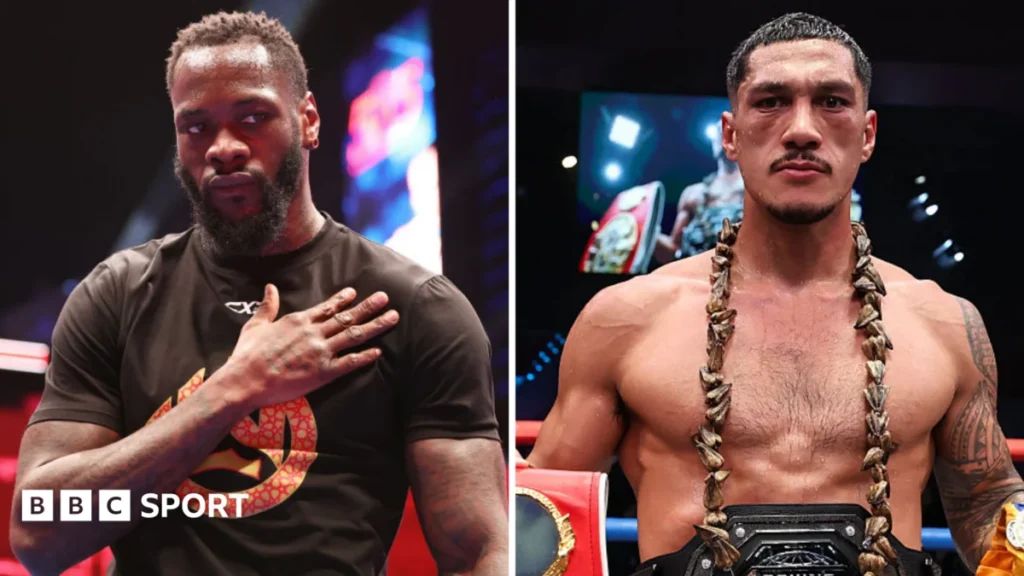

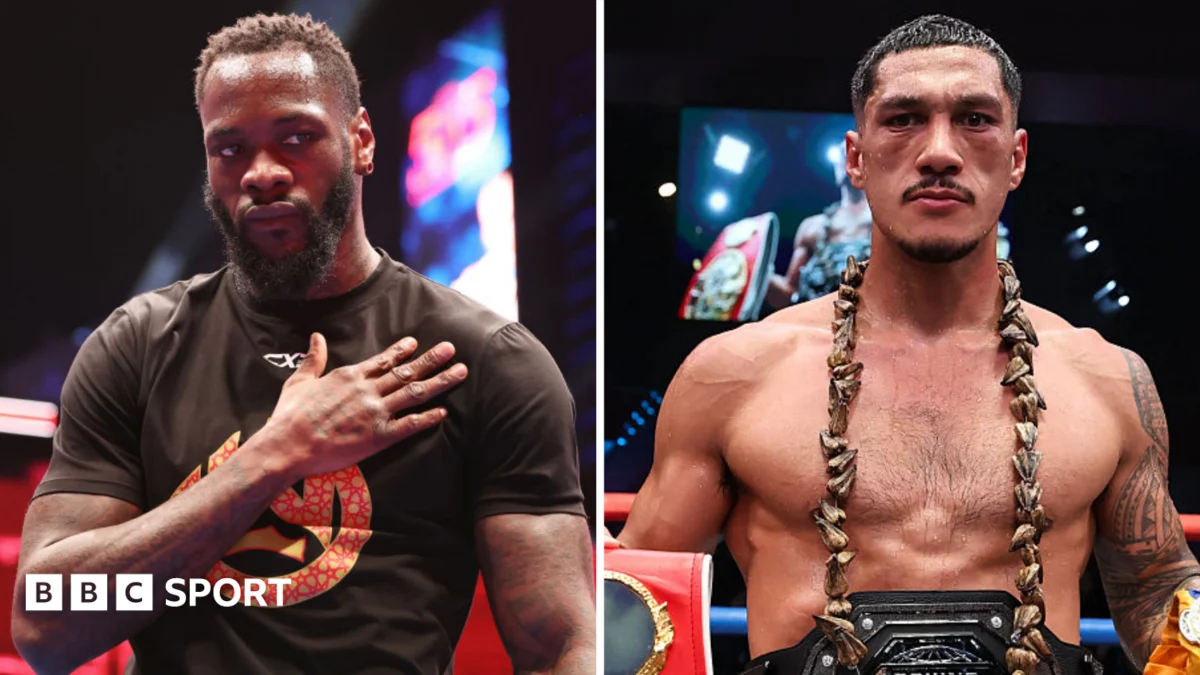
Australian cruiserweight world champion Jai Opetaia has been forced to pull out of his scheduled heavyweight debut against former world champion Deontay Wilder. The cross-divisional encounter was set to serve as one of the major features on the undercard of the heavyweight clash between Tyson Fury and Anthony Joshua, scheduled to take place on December 11 at the Principality Stadium in Cardiff, Wales. The sudden withdrawal removes a high-profile contest from an international fight card that had captured widespread attention across the boxing world.
While Opetaia did not initially publish a detailed medical report in his immediate public statement, it is understood that the decision to withdraw stems from an aggravated hand injury sustained during training camp. The physical setback leaves the undefeated champion unable to complete his preparation or enter the ring at full strength. The scheduled bout with Wilder was set to mark Opetaia’s initial move into the heavyweight division, representing a significant jump in weight for the Australian titleholder.
Taking to social media to address his supporters, the boxing community, and his intended opponent, Opetaia expressed deep disappointment over the timing of the injury. Writing on his official Instagram account, the 31-year-old offered an immediate statement of regret to all parties affected by the cancellation, recognizing the extensive preparation and organization required for an event of this scale on a major international stage.
"Apologies to everyone and especially [Wilder] and his team for withdrawing from the bout," Opetaia posted, acknowledging the disruption the late withdrawal causes to his opponent’s competitive schedule and training timeline. Having undergone extensive preparation for high-stakes fights throughout his career, Opetaia highlighted the mutual understanding that exists between professional combat sports athletes when physical injuries disrupt fight plans late in a training camp.
In his message, Opetaia emphasized the professional empathy he holds for Wilder, who was also deep in preparation for their scheduled contest in Wales. "Fighter to fighter, I know the feeling and it’s frustrating," Opetaia wrote, describing the frustration that accompanies an unexpected cancellation after weeks of demanding physical training and strategic preparation. He further reiterated his willingness to accept tough challenges throughout his professional career, adding, "I’ve always prided myself on fighting anyone, any place."
The Australian champion also directly addressed online criticism that emerged following the news of his withdrawal. In the immediate aftermath of the announcement, various social media users began questioning the reasons behind his decision to step aside, with some commentators suggesting that the cruiserweight titleholder was reluctant to face one of the heavyweight division’s most dangerous punchers.
Opetaia pushed back strongly against those claims, delivering a direct response to online critics whom he described as "keyboard warriors." He firmly rejected any suggestion that fear influenced his decision, specifically dismissing claims that he was intimidated by the prospect of facing Wilder’s powerful right hand. Throughout his career, Opetaia has built a reputation based on toughness and competitive drive, making assertions of hesitation inconsistent with his established record inside the ring.
Stepping into the ring against an opponent of Wilder’s stature requires complete physical fitness, and attempting to fight with a compromised hand would present an unwarranted physical risk. The demands of competing in the heavyweight division mean that a fighter must have full utility of both hands to defend, construct combinations, and manage distance effectively. Attempting to navigate a bout against a heavyweight knockout artist while carrying an active injury could compromise both safety and competitive performance.
The event at Cardiff’s Principality Stadium on December 11 was put together as one of the year’s focal points in professional boxing, headlined by the marquee heavyweights Tyson Fury and Anthony Joshua. The inclusion of Opetaia versus Wilder on the supporting program added substantial interest to the card, pairing a reigning, undefeated cruiserweight champion against a established American heavyweight on a major European platform.
Opetaia’s professional record remains unblemished as he takes time to heal from the injury. Having built a record of 31 victories in as many professional contests, the 31-year-old Australian has established himself as a dominant presence in his weight class. His record reflects over a decade of consistent performances at the high levels of the cruiserweight division.
With his transition to the heavyweight ranks temporarily paused, Opetaia reaffirmed that his primary athletic objective remains focused on his natural division. Despite the opportunity to test himself in boxing’s flagship weight class, the undefeated Australian made it clear that his main goal is to achieve undisputed status at cruiserweight by unifying all the major world titles in the division.
Unifying a weight class requires securing all major belt titles in the division, an objective Opetaia views as a central priority for his career legacy. While a marquee fight against Wilder offered a high-visibility opportunity, refocusing on cruiserweight unification aligns with his long-stated intention to establish clear supremacy in his weight division before pursuing permanent challenges elsewhere.
Looking further ahead, Opetaia’s future path may eventually lead to significant matchups against other top champions who have expressed interest in sharing the ring with him. Among them is unified champion David Benavidez, who has publicly indicated an interest in facing the Australian champion in a high-profile bout targeted for 2027.
The prospective interest from Benavidez regarding a 2027 fight highlights Opetaia’s standing in the international boxing landscape and the recognition he receives across multiple weight divisions. While any prospective matchup with Benavidez remains years away, it illustrates the high-caliber options available to Opetaia once he fully recovers from his current physical setback.
For the immediate future, Opetaia’s priority shifts entirely to physical rehabilitation and proper recovery. Hand injuries require careful management, rest, and structured rehabilitation to ensure the bone structure and tissue fully heal before returning to full-contact training and heavy bag work. Returning to activity prematurely would risk re-injuring the hand and causing lasting complications that could impact future ring appearances.
The fight cancellation leaves event organizers with the task of finalizing the remaining undercard lineup for the December 11 card in Wales. While the headlining bout between Tyson Fury and Anthony Joshua remains the primary draw for spectators at the Principality Stadium, the removal of the Opetaia-Wilder matchup alters the composition of the main supporting program.
As Opetaia begins his recovery process, his broader career path remains defined. The undefeated Australian champion will focus on rehabilitating his hand, pursuing undisputed glory at cruiserweight, and eventually re-evaluating future opportunities to test his skills against top opposition across the sport.