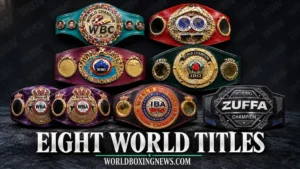

Boxing’s ongoing and pervasive world title confusion has reached an entirely new level of absurdity. The International Boxing Association (IBA) has once again aggressively promoted its IBA.PRO championship as a legitimate world title, a move that potentially elevates the total number of active belts carrying that grand description to an astonishing eight across the entire sport.
The controversial organization officially announced that two
-time Olympic gold medalist Hasanboy Dusmatov of Uzbekistan will step into the ring to face Roderick Bautista of the Philippines for the IBA.PRO world title. The high-stakes showdown is scheduled for December 4 in Istanbul, Turkey, where elite fighters converge for the sport’s marquee calendar moments.
The ten-round contest, scheduled at 52.2 kilograms, will take place during the high-profile final day of the inaugural IBA President’s Cup. The tournament is set to unfold inside the sprawling Sinan Erdem Sports Arena, drawing international attention, though much of that spotlight is now overshadowed by the growing controversy surrounding the championship’s labeling.
The IBA has made no attempt to disguise or downplay the championship’s disputed status in its promotional material. On the contrary, the organization stated clearly on its official social media channels that Dusmatov is directly targeting an IBA.PRO world title, treating the belt with the same gravitas traditionally reserved for the historic lineages of the sport.
For an organization with deep, foundational roots in amateur boxing—an entity that has experienced intense political and operational friction with the mainstream professional governance of the sport—to be openly describing a newly minted professional championship as a world title is intensely confusing for fans. This development arrives during an already deeply uncertain and fragmented climate for professional pugilism, where casual and hardcore observers alike find it increasingly difficult to decipher who truly holds the mantle of a global champion.
Recent industry analysis has repeatedly highlighted how modern promotional heavyweights were already pushing the sport toward an unsustainable saturation point. Matchroom Boxing and Zuffa, for instance, have heavily pushed various designations toward a staggering seven different world-title claims, even as the traditional and established championship structure technically remains unchanged on paper.
Now, the IBA is firmly adding its own independent claim to an already fiercely crowded and contentious picture, injecting further unpredictability into an ecosystem that many critics argue is already buckling under the weight of its own administrative bloat.
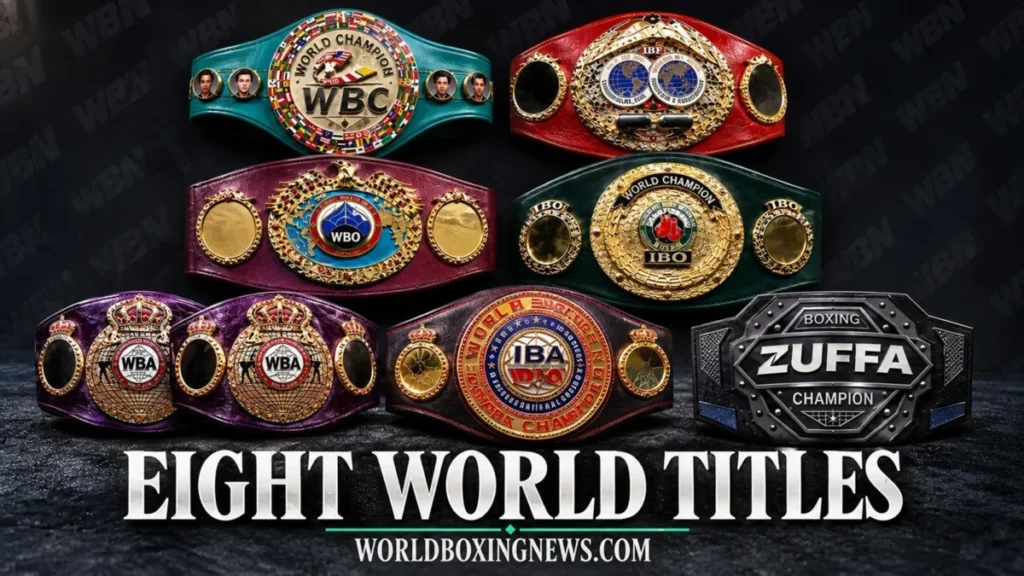
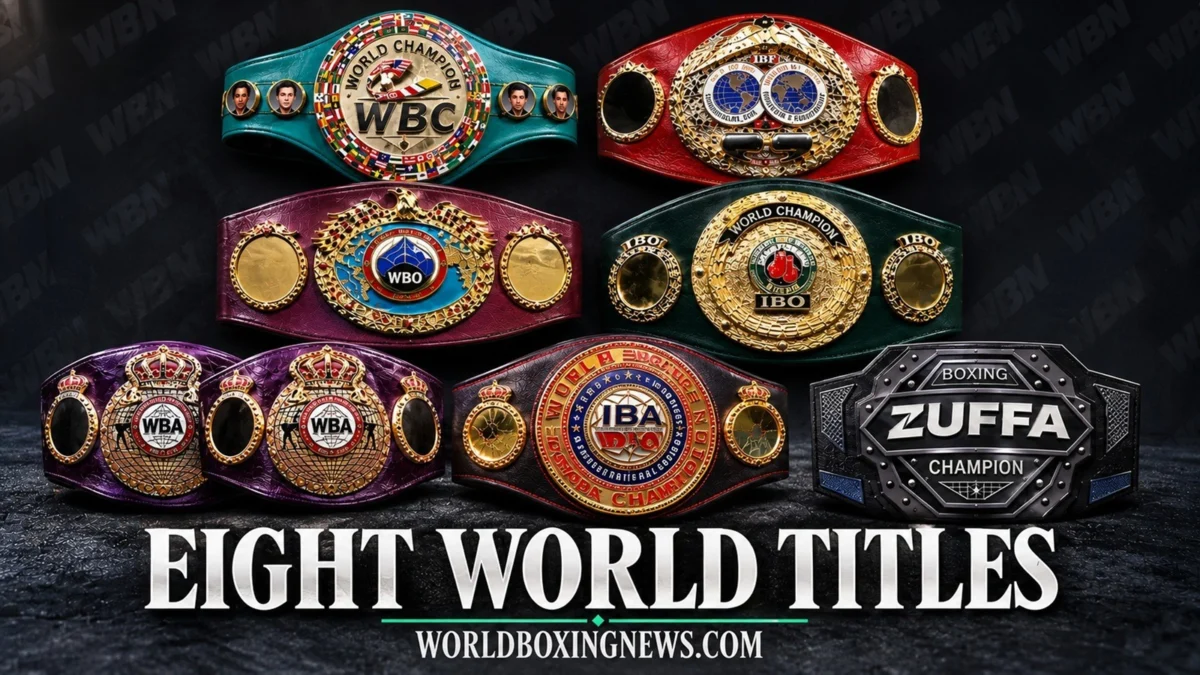
Eight World Title Claims
To understand the magnitude of the current dilution, one must examine the traditional hierarchy of the sport. Historically, the WBA, WBC, IBF, and WBO have remained boxing’s four universally established world championship organizations. Their principal, undisputed titles have long formed the foundational bedrock of what it means to be recognized as a true world champion, requiring elite fighters to prove themselves against the absolute best in their respective weight classes.
However, the modern landscape has strayed far from this clean paradigm. The World Boxing Association (WBA) operates a complicated system that includes its principal championship alongside its secondary Regular championship, creating internal fragmentation within a single sanctioning body. Simultaneously, Eddie Hearn’s Matchroom Boxing has consistently promoted the International Boxing Organization (IBO) belt as a co-equal world title, despite historical resistance from purists.
Adding fuel to the fire, Zuffa Boxing has also introduced its own proprietary championship framework, successfully injecting yet another physical belt and promotional designation into the mix.
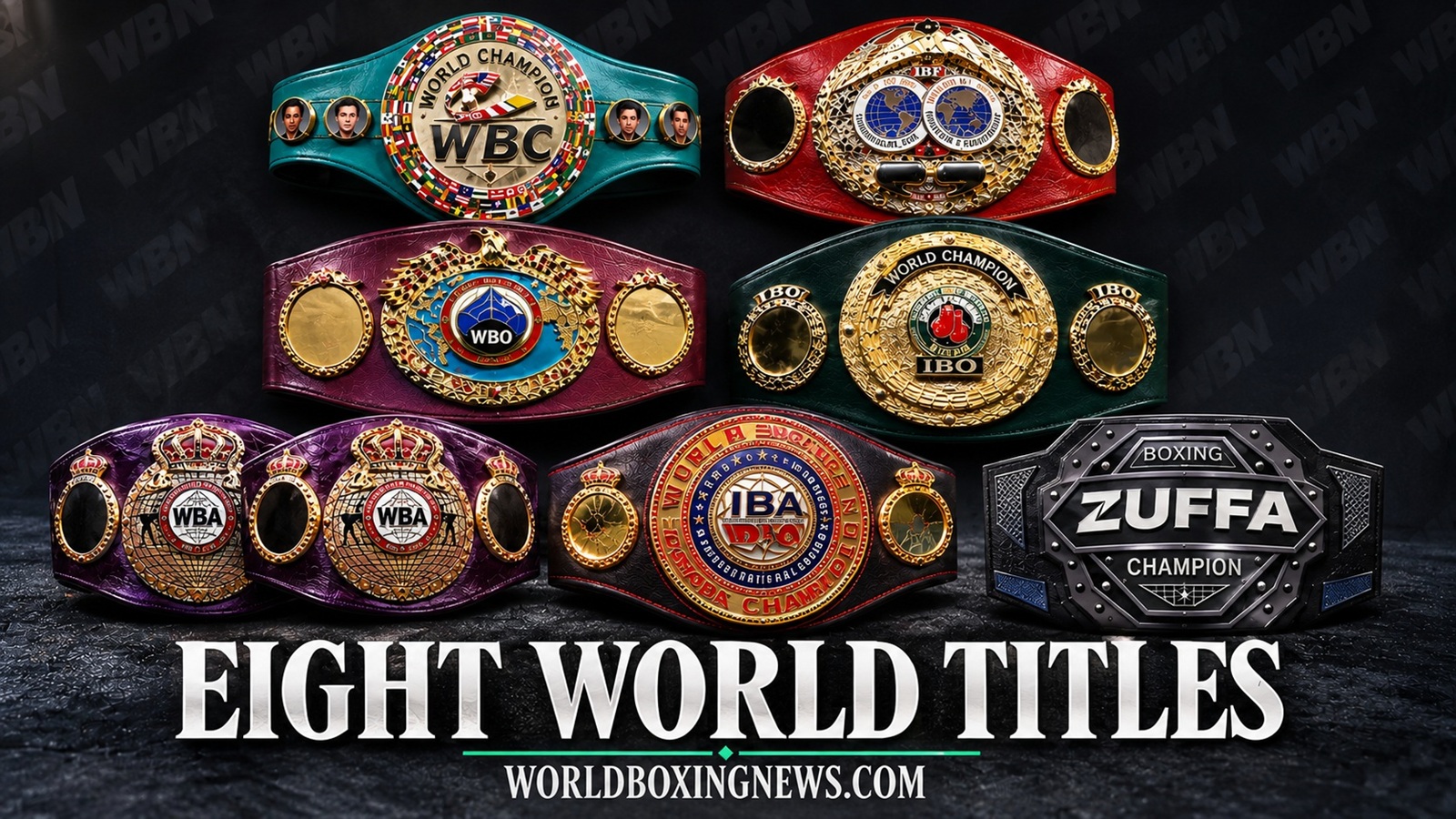
Before the IBA’s latest campaign, this already created seven distinct championship designations being actively presented to the public as world titles, particularly when the WBA’s principal and Regular titles are counted separately by promoters eager to market their fighters as champions.
The introduction and persistent promotion of the IBA.PRO championship potentially takes that staggering figure to a chaotic total of eight.
For new fans trying to navigate the sport and understand who the real world champions actually are, the situation has become increasingly difficult, if not impossible, to follow. A fighter can now be introduced to a global television audience as a "world champion" without ever holding one of the four principal, historically respected titles recognized by the established sanctioning bodies and legacy boxing historians.
The IBA’s latest high-profile announcement serves as yet another glaring example of how loosely the prestigious description of a world title can now be applied in modern combat sports marketing.
World Title Recognition
In response to these shifting promotional standards, leading independent boxing authorities have drawn a firm line in the sand. World Boxing News explicitly does not recognize the IBA.PRO championship as a legitimate world title. This strict editorial stance mirrors the outlet’s long-standing policy of excluding the WBA Regular, the IBO, and the Zuffa belts from its widely referenced recognized world champions list, maintaining that true world titles must adhere to rigorous, universally accepted standards of elite competition and historical continuity.
To be fair, the IBA, like any other independent promotional or sanctioning body, is legally and operationally entitled to stage professional boxing contests and award its own proprietary championships to successful fighters. The core concern raised by industry veterans and media members alike is what happens when those newly minted belts are aggressively promoted using the exact same sacred terminology as boxing’s established, time-honored world titles.
At some critical juncture, concerted action needs to be taken to ensure that organizations cannot simply manufacture a championship belt out of thin air, declare it a world title for commercial leverage, and blindly expect fans, media, and fighters to accept it as part of the sport’s genuine historical tapestry.
There is no immediate suggestion that the IBA has only just fabricated its championship overnight; rather, the underlying issue is its continued, unyielding insistence on promoting the belt as a global world title at a time when professional boxing is already visibly struggling with a severe surplus of conflicting championship claims.
The historic four-title structure has not officially changed within the regulatory rulebooks, but the marketing language and promotional rhetoric surrounding it certainly have shifted dramatically.
With an eighth championship now being aggressively marketed and promoted as a world title on the international stage, boxing risks making an already complex, fragmented, and bureaucratic sport even harder for newcomers and casual observers to understand, potentially alienating the very audience the sport needs to capture for future growth.
As December 4 approaches and Hasanboy Dusmatov prepares to lock horns with Roderick Bautista in Istanbul, the eyes of the boxing world will understandably be fixed on the action inside the ring. Yet, long after the final bell rings at the Sinan Erdem Sports Arena, the broader administrative debate over what constitutes a true world championship will undoubtedly rage on, leaving the sport’s governing identity hanging in an increasingly crowded balance.