Mexican boxing superstar Canelo Álvarez intends to move forward with his upcoming world title bout in Saudi Arabia later this month, defying a sharp and violent escalation in regional conflict that has seen repeated, deadly missile and drone strikes target the kingdom’s critical transportation infrastructure.
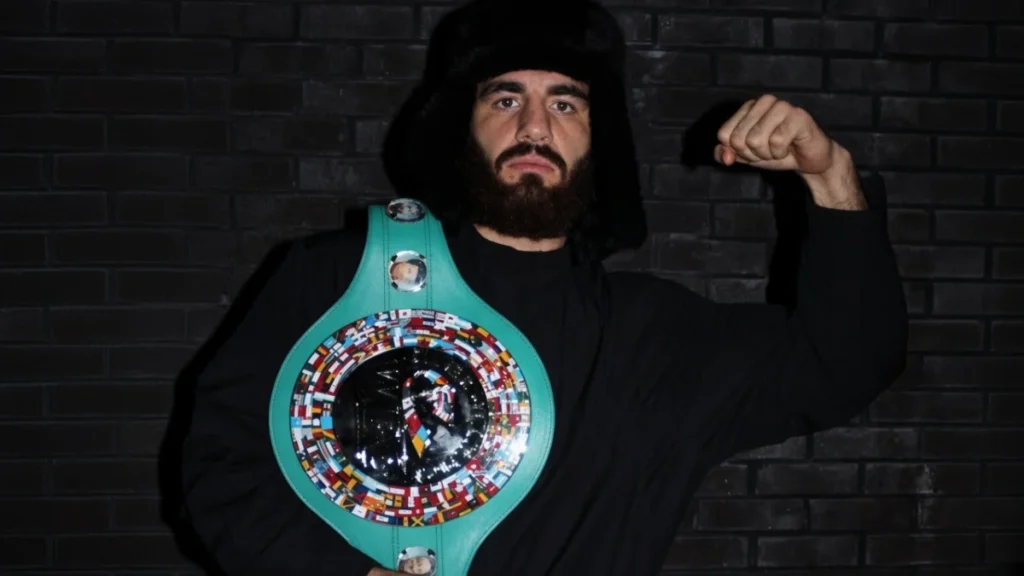
The 36-year-old former undisputed champion is scheduled to challenge the unbeaten Christian Mbilli for the WBC super-middleweight championship in Riyadh on October 31. The high-stakes showdown comes just weeks after a devastating missile attack on the capital city’s primary international hub killed at least 12 people and left more than 300 others wounded, casting a heavy shadow over the safety of major international events in the region.
Confirmation that the marquee fight remains on schedule came directly from Turki Al-Sheikh, the chairman of Saudi Arabia’s General Entertainment Authority and the driving force behind the kingdom’s rapid rise as the premier global venue for professional boxing. Al-Sheikh revealed that Álvarez had personally contacted him to guarantee his participation despite the dangerous security situation unfolding across Saudi territory.
Writing on social media, Al-Sheikh expressed deep gratitude for the fighter’s unwavering commitment during a time of heightened national crisis. Álvarez reached out directly to assure Saudi officials that his travel plans and fight preparations remained entirely unchanged, signaling a rare show of defiance against the regional volatility that has temporarily brought parts of the kingdom’s transit network to a standstill.
In his public statement, Al-Sheikh praised the Mexican fighter’s resolve while offering a staunch defense of his home nation’s safety and cultural heritage. He emphasized that Saudi Arabia remains a land of peace, safety, rich civilization, deep history, and kind-hearted people, noting its status as home to the two Holy Mosques. He added that hard times inevitably reveal true friends, publicly thanking everyone who had reached out to offer support following the strikes.
The explicit reassurances from Álvarez arrived amidst a dramatic intensification of hostilites carried out by Yemen’s Iran-backed Houthi rebels. On Sunday, a second projectile struck a passenger terminal at King Khalid International Airport in Riyadh, according to statements released by the Saudi-led military coalition actively fighting Houthi forces in Yemen. Military authorities reported that the second strike inflicted additional casualties and injuries, though official counts were not immediately finalized.

The initial Saturday assault on the same expansive airport complex represented the single deadliest attack on a Gulf Arab nation since the wider outbreak of regional hostilities involving Iran. The casualty toll mounted further when the Indian embassy in Saudi Arabia reported that one of its citizens had succumbed to severe injuries sustained during the initial explosion, potentially pushing the total death count from the airport bombardment to 13.
In the immediate aftermath of the strikes, King Khalid International Airport was forced to suspend commercial operations, remaining closed through Sunday as security and emergency crews surveyed the destruction. The diplomatic and logistical fallout was swift. The United States government issued urgent travel advisories cautioning American citizens to completely avoid the airport complex and its surrounding perimeter. Simultaneously, several major international commercial airlines took emergency measures to suspend flight service into Saudi Arabia, citing the direct and mounting peril to civil aviation.
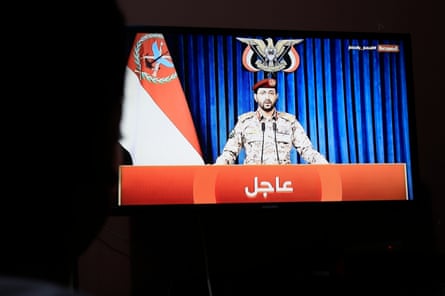
The Houthis, who have repeatedly claimed responsibility for a campaign of coordinated strikes against Saudi civilian airports and energy infrastructure, issued stern public warnings to global aviation companies and commercial passengers, advising them against entering Saudi airspace. In Sana’a, Houthi military spokesman Yahya Sarea delivered a televised statement formally confirming that the rebel group had orchestrated the deadly missile and drone barrage directed at the Saudi capital.
The surge in military tension presents a direct challenge to Saudi Arabia’s broader strategic ambitions. Over recent years, the kingdom has poured billions of dollars into establishing itself as an international hub for top-tier sport, world-class entertainment, and global commerce. The violent disruptions threaten to undermine that carefully cultivated image at an exceptionally sensitive time for Saudi leadership.
Riyadh is currently hosting a major international energy conference, with a dense schedule of prominent international business forums slated to follow. The sudden deterioration of regional security has also heightened the prospect of direct intervention by foreign allies. United States President Donald Trump announced that he was actively evaluating military options against Houthi targets in response to the airport strikes, adding that he planned to hold direct consultations regarding the security crisis with Saudi Crown Prince Mohammed bin Salman.
The ongoing geopolitical crisis also highlights the complex dynamic surrounding Saudi Arabia’s massive financial investments in global athletics. Under the leadership of Al-Sheikh, the kingdom has fundamentally reshaped the professional boxing landscape, deploying immense financial resources to stage massive pay-per-view events in Riyadh that were historically reserved for traditional fighting capitals like Las Vegas or London. While these events have successfully drawn the sport’s most famous stars and captured global fan attention, Saudi Arabia’s aggressive sports expansion has continuously drawn intense scrutiny from human rights organizations, facing persistent criticism over its domestic rights record and accusations of using high-profile sporting spectacles to distract from political and regional conflict.
For Álvarez, the upcoming contest in Riyadh represents a pivotal moment in his legendary athletic career, entirely separate from the chaotic political landscape surrounding the venue. Holding a stellar professional record of 63 wins, three losses, and two draws—with 39 of those victories coming by way of knockout—the Mexican veteran is seeking redemption and a return to championship status.
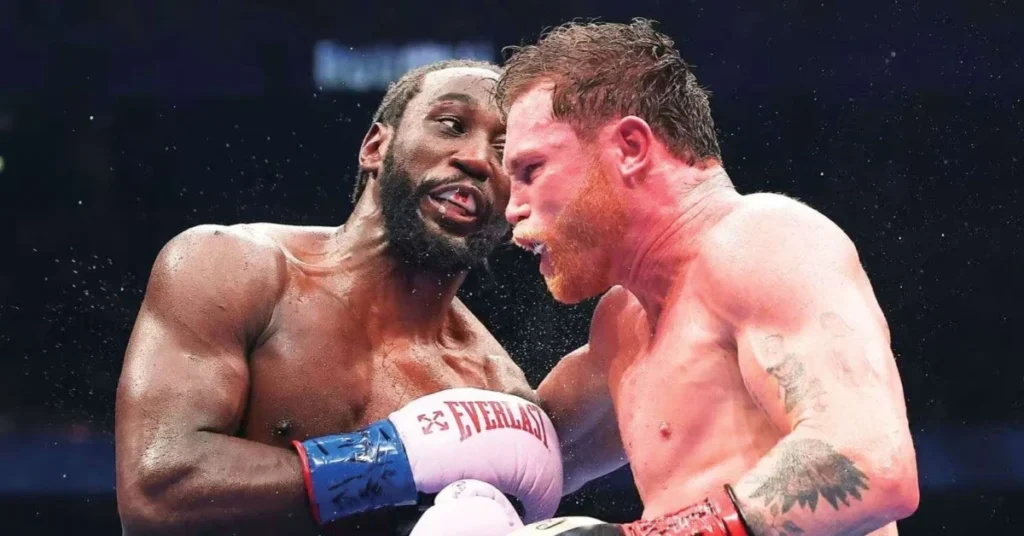
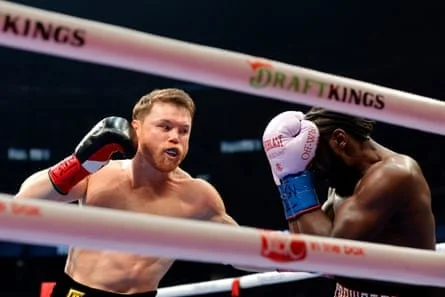
The October 31 bout against Mbilli will be Álvarez’s first appearance in the ring since suffering a decisive, unanimous decision loss to Terence Crawford in September 2025. That defeat marked one of the most notable setbacks of Álvarez’s career, leaving him eager to prove that he remains at the absolute elite level of the super-middleweight division. The fight will mark his second career performance in the Saudi capital, having previously competed in Riyadh in May 2025.
Speaking candidly during a Zoom conference call with journalists, Álvarez reflected openly on the missteps that led to his loss against Crawford. Despite conducting what he described as an exceptional physical training camp, he admitted that his mental focus had wandered significantly during the critical days immediately preceding the bout. He noted that when a fighter suffers a defeat, it is essential to look back and evaluate mistakes honestly, confessing that during the week of the Crawford fight, his mind simply was not where it needed to be.
Determined not to repeat those psychological and physical errors, Álvarez has dramatically overhauled his preparation strategy for the upcoming clash with Mbilli. The former undisputed monarch of the 168-pound division has spent his current training camp operating along Spain’s Mediterranean coastline, utilizing the exact same high-performance facility favored by heavyweight champion Oleksandr Usyk.
Beyond refining his tactical approach, Álvarez has placed a heavy emphasis on managing the physical strain of long-distance international travel. Reflecting on his initial fight in Riyadh, he recognized that he had struggled significantly to overcome jet lag and adapt to the local time zone. To eliminate that disadvantage for his return bout, he adjusted his training schedule to allow for a full 21-day acclimatization period inside the region, ensuring his body is fully adjusted to the Middle Eastern time shift long before he steps through the ropes.
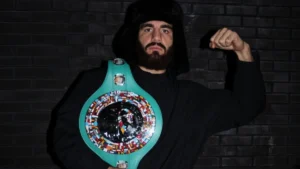
He will need every physical advantage available against Mbilli, a formidable contender whose explosive rise has made him one of the most dangerous opponents in the division. Undefeated across 29 professional bouts, with 24 wins coming by knockout, the 31-year-old Mbilli brings a relentless, forward-marching style characterized by heavy volume punching and relentless pressure. Álvarez acknowledged the extreme threat posed by the challenger, predicting that Mbilli’s hyper-aggressive approach will inevitably make for a dramatic, fan-friendly battle.
Despite having competed at the highest levels of professional boxing since turning pro at the tender age of 15, Álvarez dismissed any suggestion that his career is approaching its final chapter. When asked how much longer he intends to endure the rigorous demands of elite competition, the Mexican icon refused to impose any rigid timeline on his retirement, stating plainly that he cannot say how many fights he has left because he continues to feel exceptionally good both physically and mentally.