
Long before
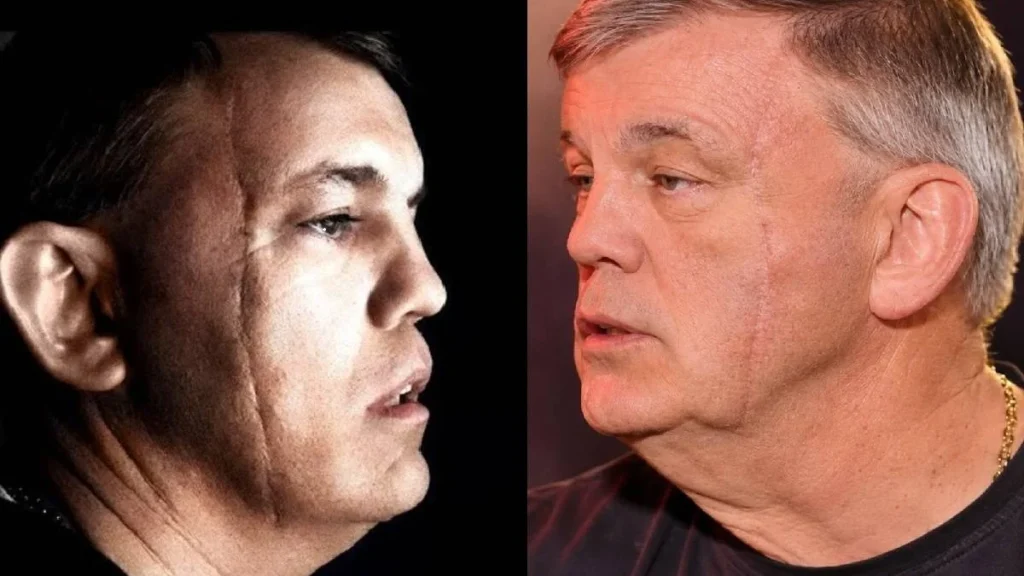
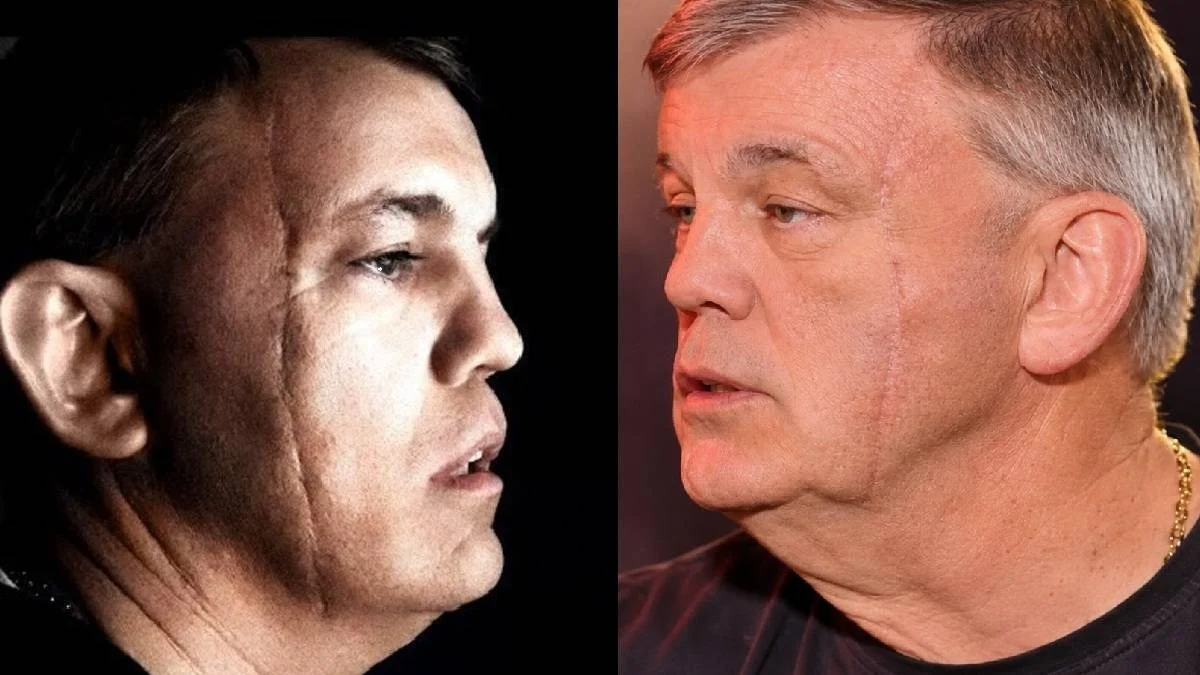
he became one of the most recognizable, uncompromising, and sharp-tongued trainers in the sport of boxing—a man who worked with a young Mike Tyson under the legendary Cus D’Amato and later guided Michael Moorer to the heavyweight championship—Teddy Atlas was a young man in Staten Island, New York, whose life hung by a thread. To this day, fight fans across the globe instantly recognize Atlas by the prominent, jagged scar running down the left side of his face. That permanent mark tells a harrowing story of violence, survival, and a brush with death that nearly severed his jugular vein during a brutal street confrontation.
Yet, for all the physical trauma of receiving 400 stitches—200 painstakingly sewn inside his facial tissue and another 200 sealing the exterior—the moment that has truly lingered with Atlas for decades did not happen in the flashing lights of the ambulance or on the blood-stained pavement of Staten Island. Instead, it unfolded quietly in a hospital room, lingering as an emotional wound that outlasted any physical damage. It was the moment his father walked through the door, inspected the carnage, offered a brief appraisal of the medical work, and then walked out without speaking the words his son had desperately waited to hear.
Atlas opened up about the harrowing episode during a candid, deeply personal interview on Ring Champs with Ak & Barak, a segment later shared by ATS Fight. Revisiting the memories of his violent youth, Atlas painted a vivid picture of a terrifying escalation that began with a confrontation involving a friend and a group of several men. What started as a dispute quickly spiraled out of control, resulting in a vicious knife attack that left Atlas severely wounded and fighting for his very existence.
As he lay bleeding in the back of an emergency vehicle, surrounded by police officers and medical personnel, Atlas was acutely aware of how close he was to the edge. The gravity of the situation was not lost on the professionals attempting to keep him alive. Hearing fragments of their urgent conversations, Atlas recalled the chilling reality of those moments in the ambulance, where the primary concern was whether he would even make it to the hospital alive.
“I was in the ambulance with the cops and I remember them saying, ‘I think we might lose him,’” Atlas recalled during the interview.
Yet, even as his body failed and the paramedics voiced their grave concerns, fear was momentarily eclipsed by a powerful, almost childlike conviction. In that frantic race against time, Atlas did not surrender to despair or contemplate his mortality. Instead, his mind instantly turned to one specific person whom he believed held absolute power over his fate: his father, Dr. Theodore Atlas.
Rather than accepting the terrifying possibility of death, Atlas sought immediate psychological and emotional refuge in the idea of his father’s protection. “And I remember to your question, when I heard it, I remember saying to myself, they don’t understand, my father’s going to take care of this,” Atlas recounted. To the young Atlas, his father was an infallible figure of authority and capability. Convinced that his father would somehow intervene and make everything right, Atlas locked onto a single, defiant mental refrain: “I’m not going to die.”
Upon arrival at the hospital, the chaos only intensified. Atlas was rushed through the corridors on a stretcher, medical personnel frantically bouncing the cart as they prepared him for emergency surgery. Despite the severity of his facial wound—which had narrowly missed his jugular vein by millimeters—his thoughts remained entirely fixed on summoning his father to his bedside. As the medical team maneuvered him through the halls, Atlas repeatedly begged for the man he believed could anchor him through the crisis.
“When we got there and they took me up on the stretcher and they were rushing me and bouncing me around, I remember telling them, ‘Get Dr. Atlas. He’ll take care of this. Get Dr. Atlas,’” he remembered.

The reality of the situation soon interrupted his desperate appeals. One of the attending physicians gently tried to ground him, explaining that while Dr. Atlas was undoubtedly a respected medical professional, he was not present at the facility, and the hospital’s trauma team was fully equipped to handle the emergency. “Dr. Atlas is great, but he’s not here and we have a very good doctor,” Atlas recalled being told.
Atlas was rushed into surgery, where skilled surgeons worked meticulously to close the catastrophic wounds across his face. He ultimately survived the operation, though the grueling procedure required an astonishing 200 stitches inside his face and another 200 on the outside. The physical repair saved his life, but it left behind the stark, permanent reminder that would come to define his visual presence in the boxing world for generations to come.
Years later, Atlas would channel his intensity, uncompromising principles, and tactical brilliance into a legendary career in boxing. Alongside Cus D’Amato, he helped mold a young, ferocious Mike Tyson before stepping into top-tier corners on his own, famously guiding Michael Moorer to a world heavyweight championship victory. His voice became a staple of boxing broadcasting, known for its unfiltered honesty and passion. Yet, despite the accolades, the championship belts, and the respect commanded within the combat sports community, the memory of what happened immediately following his surgery remained an open nerve.
When Atlas finally woke up from the operation, groggy and recovering from the extensive trauma, he waited for his father to arrive. When Dr. Atlas finally stepped into the hospital room, the interaction was brief, clinical, and devoid of the emotional warmth the battered young man was yearning for.
Instead of offering comfort, reassurance, or a fatherly embrace after his son had narrowly escaped death, Dr. Atlas surveyed the damage with clinical detachment. Assessing the work of the surgical team, he offered a stark and transactional evaluation of the outcome.
“He surveyed the scar,” Atlas recalled. “He said, ‘They did a good job. You’ll have a scar for the rest of your life.’ And he left.”
Stunned, Atlas lay in his hospital bed waiting for the rest of the conversation—for the words that would acknowledge the terror of the ordeal, the blessing of survival, or simply the affection of a father relieved to see his son alive. When the podcast interviewer explicitly asked whether his father had said anything else during that pivotal visit, Atlas answered with a quiet, definitive, “No.”
Reflecting on that silence decades later, Atlas acknowledged the heavy weight of those unsaid words. “That’s what I was waiting for,” he admitted. “I was waiting for that—I guess I was waiting for that day.”
Furthermore, Atlas candidly reflected on how the violence of that night rippled far beyond his own physical trauma, recognizing that the incident inflicted profound emotional collateral damage on those closest to him. “It did so much damage to myself, but I realized it was really damaging. It was my family,” he noted.
The knife wound eventually healed, and the resulting mark became an indelible part of Teddy Atlas’s public persona, recognized by millions of boxing enthusiasts worldwide. But the deeper narrative behind the scar extends far beyond the streets of Staten Island or the ropes of a boxing ring. It remains the story of a man who survived a near-fatal assault, only to confront a different, more enduring kind of pain—waiting in vain for words of comfort that never came from the man he called for in his darkest hour.