

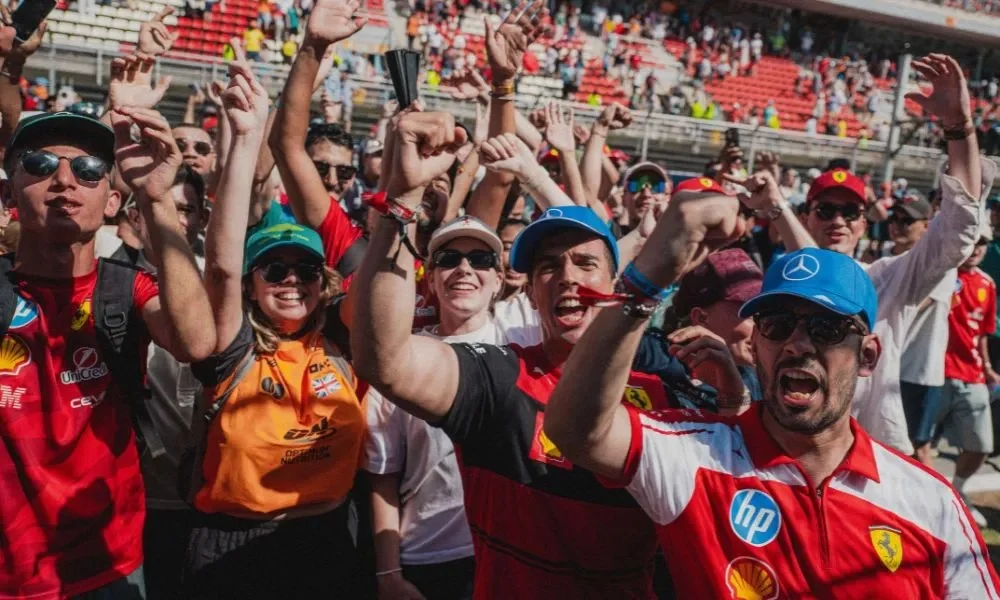
Formula One’s staggering global expansion shows no signs of slowing down, with ticket sales data revealing a massive surge in international interest and a fundamental shift in how fans consume live motorsport. According to comprehensive data from global ticketing platform Viagogo, fans from 160 countries purchased tickets to a Formula One Grand Prix in 2025. This impressive figure represents a 42 per cent increase in geographic reach compared to just six years prior, underscoring the championship’s ongoing transformation into a truly borderless entertainment property.
With approximately 160 million people visiting its ticketing platform every month, Viagogo now ranks Formula One as its third-biggest sporting category globally. The motorsport powerhouse sits comfortably behind soccer and the National Basketball Association (NBA) within the company’s ecosystem. Capitalizing on this unprecedented wave of worldwide popularity, Viagogo is actively working to stimulate and serve even greater demand for race tickets. The company argues that this growth delivers tangible benefits for all stakeholders across the sport, including high-profile team partners such as the Alpine Formula One team.
Shaun Stewart, vice president of open distribution at Viagogo, highlights the mutually beneficial nature of this broader audience funnel. Explaining the strategy to SportsPro, Stewart notes that introducing everyday consumers to motorsport, guiding them toward Formula One, and subsequently helping them discover a team like Alpine to follow creates a successful commercial outcome for all parties involved.
‘Buyers skew younger than they traditionally have’
The ticketing data has provided Viagogo with deep insights into the profile of the modern Formula One fan, shedding light on how supporters interact with the sport and how the traditional race weekend has evolved. Significant shifts have emerged not only regarding who is following the championship, but also in the motivations driving fans to attend live events and the geographic patterns of their travel.
Formula One’s internal metrics indicate that 57 per cent of all newly acquired fans are under the age of 35. Furthermore, women account for 75 per cent of all new fans and now represent 42 per cent of the sport’s total global fanbase. These shifting demographics are directly reflected in the commercial transactions recorded by ticket distributors.
Stewart points out that Viagogo experiences a remarkably similar gender split in its ticket purchases, mirroring the 60/40 balance reported by the sport itself. Crucially, the company has observed that these new buyer demographics skew significantly younger than the traditional audience base that historically purchased motorsport tickets through their channels.
Beyond demographics, few market catalysts are as reliable for driving immediate ticket demand as the presence of a competitive home driver on the starting grid. The emergence of national heroes has repeatedly unlocked dormant or fast-growing regional markets.
According to Stewart, transaction volumes in Argentina skyrocketed immediately following Franco Colapinto’s arrival at Alpine. Similar localized booms occurred elsewhere when Racing Bulls driver Liam Lawson energized fans across New Zealand, and when former Formula One driver Daniel Ricciardo consistently sparked surges in ticket sales from Australian consumers.
Recognizing this powerful correlation, Viagogo actively tracks upcoming motorsport talent and the nationalities likely to appear on future Formula One grids to predict which geographic markets will experience sudden spikes in demand. For instance, Bulgaria represents a market to watch closely as Nikola Tsolov advances through the Red Bull young driver development pipeline.
At the same time, fans are increasingly displaying an appetite for attending Grands Prix outside their home countries, treating the global calendar as an interconnected tourism map. British ticket buyers, for instance, purchase 77 per cent of their tickets for races held outside of the United Kingdom. The trend becomes even more pronounced in other regions: 98 per cent of Viagogo’s ticket transactions originating from Brazil are for races held outside of Brazil, with China trailing closely behind at 91 per cent, followed closely by Australia.
‘These are destination trips now’
This international mobility fundamentally alters the operating landscape for race promoters. Promoters must now compete fiercely against one another for international travelers while simultaneously working to retain the long-term loyalty of their domestic fanbases. Another notable trend is that fans are no longer purchasing tickets exclusively based on geographical proximity. Instead, regions like the Middle East have experienced surging popularity as premier destination events.

Qatar, for example, has seen an approximate 73 per cent increase in the diversity of countries purchasing tickets for its grand prix weekend, according to Stewart. When evaluating grandstand tickets for races in the Middle East, alongside high-end options like F1 Experiences and paddock passes, consumers find these events increasingly affordable, accessible, and attractive due to perceived driver accessibility.
This trend feeds into the broader evolution of Formula One events transforming from standalone sports competitions into comprehensive experiential outings. For Viagogo, the ticket serves as the primary gateway to an extended holiday.
Rather than quick weekend trips, these outings have evolved into multi-day destination journeys lasting anywhere from three to five days. In earlier eras, ticket demand was almost exclusively concentrated on Sunday race day. Today, consumers actively purchase three-day passes, turn the event into a five-day vacation, and frequently travel with family members.
To capture this growing market, Viagogo maintains strategic partnerships with major travel entities like Booking.com and Expedia, enabling the platform to offer integrated flight and hotel packages. This integration demonstrates how modern ticketing platforms are weaving themselves directly into the wider global travel ecosystem. These multi-day commitments also provide the financial justification for race hosts who continue to pay the substantial sanctioning fees required to host a Formula One grand prix.
The scheduling introduction and expansion of sprint races have further encouraged fans to commit to multi-day track attendance. While the sprint format has occasionally faced criticism from traditional purists who prefer the historic weekend schedule, its commercial and operational success is difficult to dispute. Looking ahead, Formula One plans to feature ten sprint events on the calendar, expanding significantly from previous seasons.
Stewart notes that the addition of a sprint race reliably triggers a ten to 20 per cent jump in Saturday ticket demand, leading to the observation that event organizers would likely welcome a sprint format at every stop on the calendar if given the choice.
‘We have two decades of buyer data’
Operationally, Viagogo capitalizes on these shifting demand patterns by employing an open distribution model. This approach mirrors the structural framework long established in the commercial travel industry, where airlines sell inventory through their proprietary websites while simultaneously distributing tickets through global networks like Expedia or Kayak. By applying this logic to motorsport, the model works to remove the traditional barriers that once separated primary and secondary ticketing markets.
Expounding on the operational philosophy, Stewart describes how a fan sitting in Buenos Aires can access a localized website and view available tickets for every single race on the Formula One calendar, functioning much like a menu. Viagogo operates more than 150 localized websites featuring native languages and local payment processing methods, contrasting with primary ticketing platforms that are frequently designed around a single language or localized user base.
The core argument supporting open distribution is that the primary hurdle keeping fans away from Formula One is not a lack of interest or prohibitive cost, but rather access friction. Distributing inventory across multiple trusted channels removes that barrier, capturing consumers who might otherwise remain outside the sport’s reach.
For rights holders and event promoters, this open approach means retaining strict control over pricing structures and holding onto primary ticket revenue while minimizing reliance on disconnected middlemen. Viagogo generates revenue by charging a transparent booking fee that covers payment processing and operational costs, effectively turning potential market value leakage into a streamlined revenue stream.
Ultimately, Viagogo positions itself not merely as a ticket reseller, but as an active fan acquisition engine for the sport. This capability extends to identifying and converting enthusiasts of other motorsport disciplines. Leveraging two decades of rich consumer transaction data, the platform can cross-promote Formula One to established audiences, targeting consumers who regularly attend IndyCar races but have never experienced a NASCAR or Formula One event.