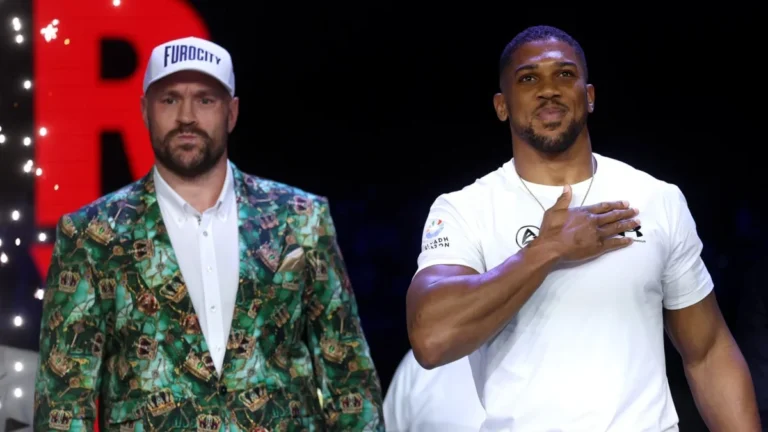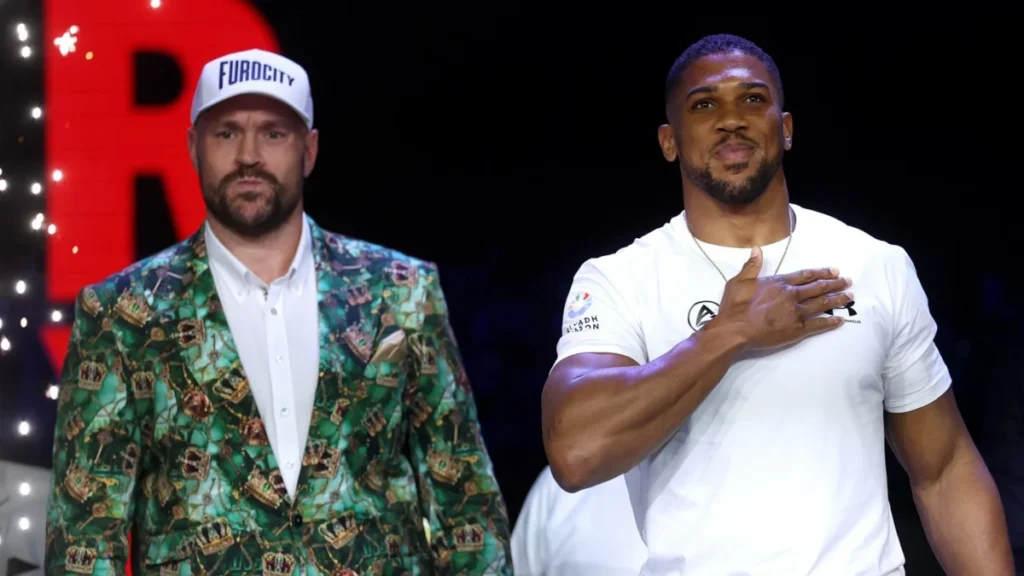
The landscape of elite combat sports promotion has long been defined by a complex interplay of massive executive personalities, intense corporate rivalries, and intricate legal frameworks. This reality has rarely been more apparent than in the ongoing, highly publicized dispute surrounding the promotional and production rights for the upcoming heavyweight clash between Tyson Fury and Anthony Joshua. Even as the highly anticipated matchup has been formally announced for December 11, the promotional battle behind the scenes shows no signs of subsiding, highlighting a deep division between two of the most powerful figures in sports entertainment.
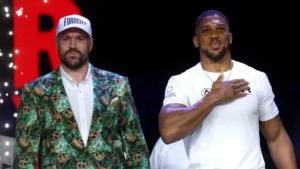
The official confirmation that Fury and Joshua will finally share a ring on December 11 sent shockwaves of excitement through the global sports community, seemingly marking the resolution of years of difficult negotiations. However, the initial promotional rollout was immediately accompanied by intense speculation regarding the administrative hierarchy of the event. Questions arose when UFC Chief Executive Officer Dana White was noticeably absent from the official kickoff press conference. For many industry observers, White’s absence suggested a potential scaling back of his involvement or perhaps a quiet retreat from the cross-promotional venture.
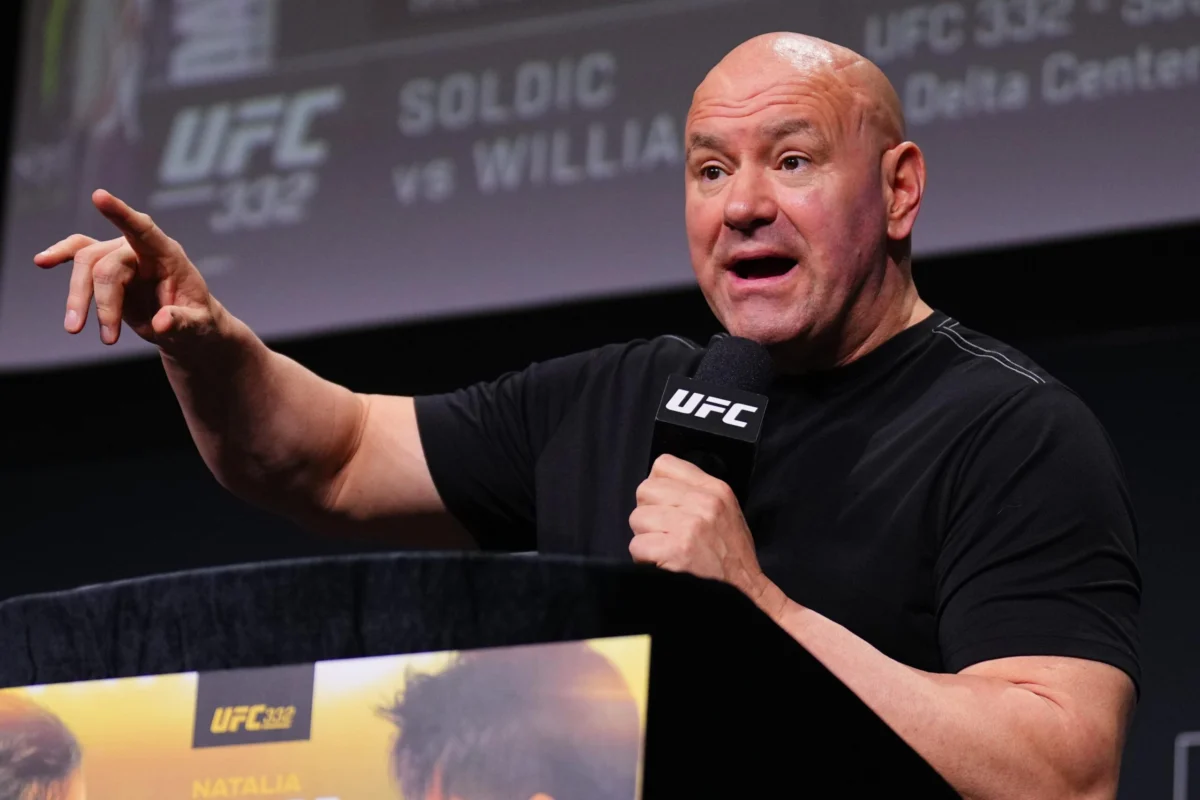
White, however, wasted little time in correcting that narrative and asserting his position. Speaking to reporters during a press conference following the latest iteration of his Contender Series, the veteran promoter addressed his absence directly and doubled down on his intended role for the December event. According to White, his failure to attend the kickoff press conference was not indicative of any diminished responsibility, a lack of interest, or a withdrawal from the project. Instead, he attributed his absence strictly to prior professional commitments that demanded his presence elsewhere. Far from stepping aside, White made it clear that he remains fully committed to directing the event’s presentation.
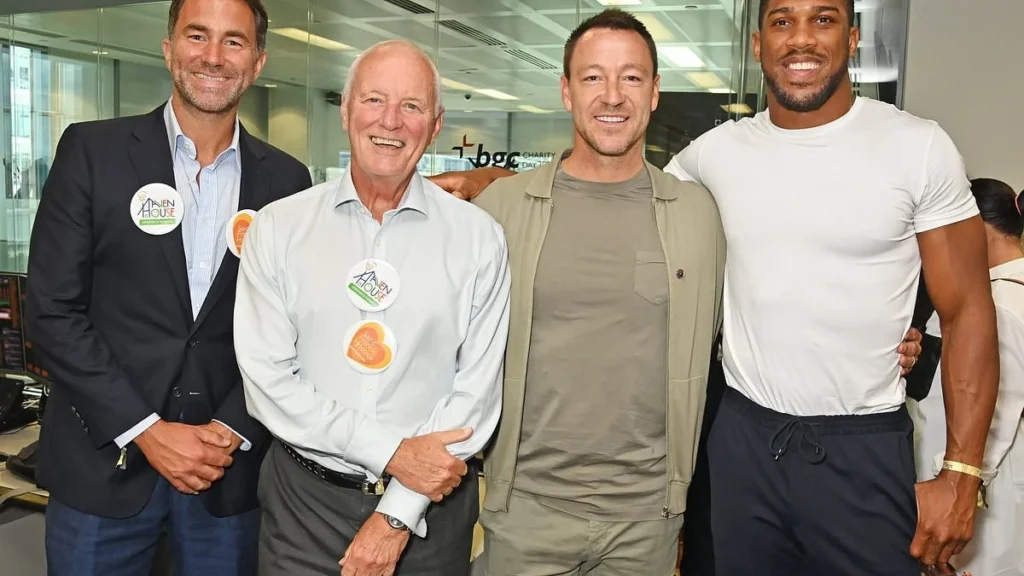
This firm stance directly contradicts the public assertions made by Matchroom Boxing’s Eddie Hearn. Hearn, who has long guided the career of Anthony Joshua, has repeatedly and publicly maintained that it is contractually impossible for White to participate in a promotional or production capacity without his explicit, formal approval. From Hearn’s perspective, the existing contractual agreements governing the heavyweight blockbuster grant him a level of veto power or regulatory control over who manages the broadcast and promotional elements. This legal boundary, according to the Matchroom head, represents an insurmountable obstacle for White unless a mutual agreement is reached between all primary stakeholders.
When confronted with Hearn’s claims during his post-fight media appearance, White reacted with characteristic defiance. A reporter’s question regarding the apparent confusion over who would be handling the production duties prompted an immediate and fiery response from the UFC boss. White questioned the very premise of any ongoing confusion, asserting that the operational plan has already been established. He maintained that every statement he has made regarding his involvement since the project’s inception remains entirely accurate, dismissing any suggestion that his role is subject to Hearn’s consent.
White’s dismissal of Hearn’s legal arguments was particularly blunt, highlighting a fundamental difference in how the two executives approach promotional conflicts. When the prospect of contractual violations and potential lawsuits was raised, White brushed it off with a sarcastic retort, expressing total indifference to the threat of litigation. This reaction underscores White’s operating philosophy, which often favors direct execution and organizational momentum over the cautious, contract-focused posturing typical of traditional boxing promoters. For White, the physical capability to deliver a world-class broadcast takes precedence over administrative disputes.
To back up his claims of total involvement, White detailed the extensive logistical planning already underway for his team. He confirmed that handling the broadcast production for the December 11 show is not a hypothetical scenario or a point of negotiation, but an established fact. According to the plan laid out by White, he will not only be physically present at the venue on December 11, but he will also be accompanied by his premier production staff. Immediately following the conclusion of the heavyweight event, White and his entire crew plan to fly directly back to Las Vegas to oversee an upcoming UFC event, demonstrating the intense, dual-focus schedule his organization is prepared to maintain to pull off the broadcast.
One of the most intriguing revelations from White’s media appearance was his claim that the necessary discussions have already concluded, rendering Hearn’s public offers to meet irrelevant. Hearn had previously suggested he was open to sitting down with White to discuss the situation and potentially find a resolution to the production dispute. White, however, rejected the necessity of such a gathering, questioning what they could possibly need to discuss at this stage. He then revealed that a pivotal meeting had already taken place, implying that key decisions have been finalized behind closed doors, irrespective of Hearn’s public statements.
The friction between White and Hearn highlights the broader complexities of modern combat sports co-promotions. When two of the most powerful and recognizable figures in sports promotion attempt to collaborate on an event of this scale, conflict is almost inevitable. The UFC has long maintained strict, centralized control over its events, rarely co-promoting with outside entities and maintaining an in-house production style that has set industry standards. White’s foray into the boxing world, particularly with an event as massive as Fury vs. Joshua, represents a significant expansion of his operational footprint. Conversely, traditional boxing promotions like Matchroom are accustomed to navigating intricate multi-promoter negotiations, where contractual details and territorial boundaries are fiercely guarded.
The sheer magnitude of a Tyson Fury vs. Anthony Joshua matchup explains why both sides are fighting so aggressively for control of the presentation. For years, a clash between these two British heavyweight champions has been regarded as the biggest possible event in boxing, capable of generating historic revenue, massive global viewership, and defining the legacies of everyone involved. For Dana White and his production team, producing and promoting such an event would solidify their influence in the boxing landscape and showcase the UFC’s production capabilities on boxing’s grandest stage. For Eddie Hearn and Matchroom, maintaining control is essential to protecting their promotional dominance and the interests of their star fighter.
As the December 11 date approaches, the battle lines outside the ring appear to be drawn just as clearly as those within it. Despite Hearn’s insistence on contractual barriers and the necessity of formal approvals, White remains completely undeterred, daring anyone to challenge his narrative. He concluded his remarks by reaffirming that his involvement is an absolute certainty, leaving no doubt that he intends to run the show his way. Whether this promotional dispute will escalate into a formal legal battle or resolve itself through behind-the-scenes compromises remains a central storyline as the combat sports world counts down to one of the most anticipated nights in boxing history.