


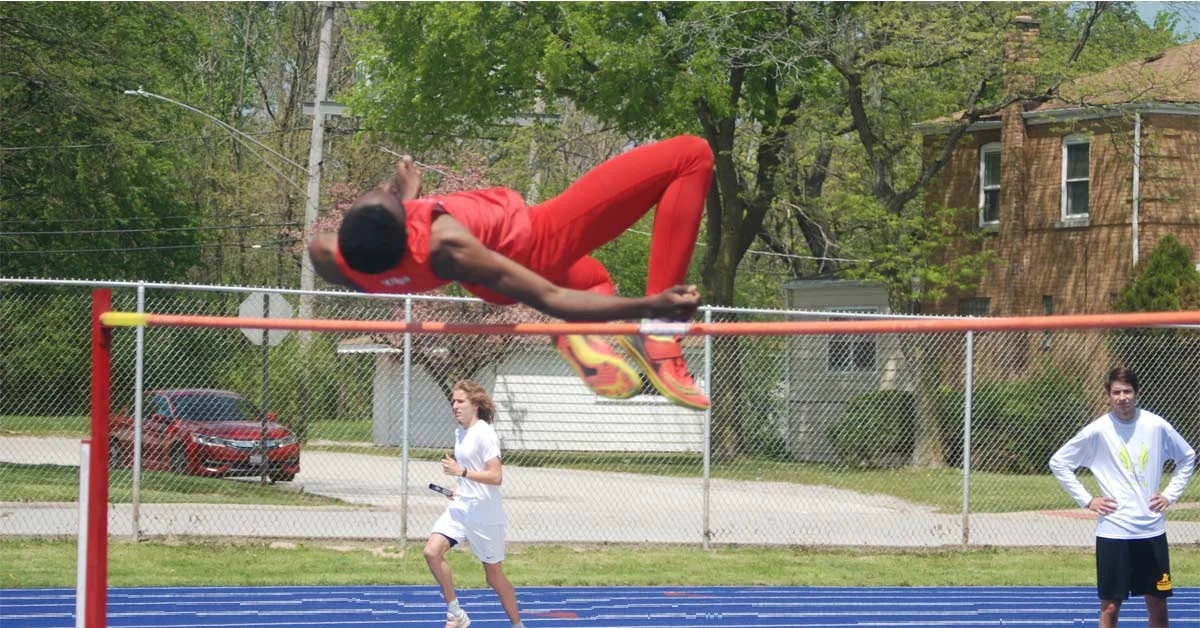
High jump has long earned a reputation among track and field coaches as one of the most technically demanding events in the sport. While horizontal jumps like the long jump rely heavily on takeoff velocity, takeoff angle, and the height of the center of gravity—requiring comparatively fewer technical interventions—the high jump presents an entirely unique set of obstacles. According to veteran coach Rob Assise, what truly separates the high jump from its jumping counterparts is the curved nature of the approach run and the intricate bodily rotations that naturally result from it.
Drawing heavily from the foundational teachings of elite track and field authority Boo Schexnayder—whose instructional work, The High Jump: Technique and Teaching, serves as a seasonal staple for many coaches—Assise has spent years refining how athletes approach training for this specialized discipline. Developing young high jumpers successfully requires looking past simple repetition and breaking the approach down into its fundamental components: the start, the initiation of the curve, arm mechanics, the
inward lean, directional control, and overall rhythmic pacing.
The Critical Importance of a Consistent Start
For developing high school athletes, consistency is paramount, and it begins with the very first movement. Assise advocates for either a crouched start or a rolling start, theorizing that naturally "elastic" athletes gravitate toward the rolling style because the preparatory movement allows them to harness energy effectively through the stretch-shortening cycle. This aligns with the physiological profile of most high jumpers, who generally lean toward elasticity rather than raw, force-dominant power.

Coaches must remain exceptionally rigorous during the teaching and rehearsal of the start. In any jumping approach, variations are bound to happen, but the beginning and the end should be the most consistent phases. While the final steps naturally resolve themselves as the athlete instinctively steers toward a comfortable takeoff position, the middle of the run is prone to fluctuations. Utilizing a rolling or crouched start helps minimize these variables, avoiding the extended steps of a running momentum start that typically invite inconsistency. Accelerated posture should build gradually, targeting an upright position by roughly the third step of a ten-step approach, though varying this during auxiliary drills helps test overall coordination.
Initiating the Curve and Managing the Inward Lean
One of the most persistent hurdles for developing high jumpers is the tendency to abandon their inward lean as they draw closer to the crossbar. Early in his coaching tenure, Assise attempted to combat this by simply telling athletes to "hold" their lean during the final stages of the approach. However, mirroring advice from expert Gary Winckler, he realized that true improvement comes from focusing heavily on the proper initiation of the curve itself.
According to Schexnayder’s methodology, the transition into the curve must begin with a subtle shift of the hips during the drive phase of the fourth step. The fifth step officially initiates the curve and should land slightly outside the displacement line to properly establish the lean, while the sixth step consolidates the curve by landing back on the displacement line. Emphasizing a fluid, sweeping curve rather than a rigid, sharp path prevents athletes from prematurely cutting their trajectory. Coaches can effectively drill this phase year-round—even indoors during winter months—by utilizing gym floors, hallways, or football field center circles marked with cones or chalk.
Maintaining Proper Arm Mechanics and Rhythm
Another frequent error among novice high jumpers is a noticeable reduction in limb range of motion through the middle and latter stages of the approach. During the curve, the inside arm naturally exhibits a shorter range of motion than the outside arm, perfectly mirroring the contralateral leg to maintain optimal synchronization. However, many jumpers severely restrict this movement, sometimes locking their arms tightly at a ninety-degree angle against their sides for the duration of the turn.

To combat this without over-coaching, practitioners utilize targeted verbal cues alongside consistent work in circular, semi-circular, and serpentine running patterns. Some programs even incorporate mini-hurdles and cones along the curve to encourage proper arm mechanics and foot placement, though such setups require careful supervision and video analysis to maintain safety and consistency.
Rhythm is equally vital. A quality approach relies on a progressively accelerating tempo rather than a rapid start that fizzles out into a decelerating shuffle before takeoff. When forward velocity drops, overall momentum diminishes accordingly. Assise emphasizes that instilling this rhythmic discipline requires demanding absolute focus during every single practice repetition, ensuring athletes treat training approaches with the same intensity they would bring to a high-stakes competition.
Directional Control and Spatial Awareness
Because no two competitive approaches are completely identical, high jumpers will inevitably find ways to steer themselves toward a secure takeoff spot. Rather than leaving this adaptability to chance, coaches can actively train directional control through varied, creative drills that introduce controlled instability. By practicing approach variations with a higher degree of variability, athletes can narrow their safe takeoff window, sharpening their focus on the ideal takeoff mark during actual competition.
Whether utilizing dynamic multi-directional drills or basic spatial awareness exercises, these variations are generally implemented sparingly—accounting for a fraction of overall training volume—to break up monotony and test fundamental coordination. Cross-sided jumping trials, where athletes approach from the opposite direction, further challenge bodily awareness, promote long-term joint health, and occasionally help identify hidden potential for events like the triple jump.

Balancing Tendon Health and Structural Integrity
The relentless pursuit of tendon stiffness—a common objective in modern athletic training designed to minimize ground contact time and maximize explosive rebound—carries hidden risks, particularly for high jumpers. The unique torsional forces experienced during a curved approach place immense stress on the lower extremities, making high jumpers especially susceptible to tendinopathies.
Drawing insights from sports science discussions surrounding tendon remodeling and health, coaches recognize that explosive plyometrics and heavy lifting must be carefully balanced with modalities that support long-term tendon resilience. Ensuring that structural health keeps pace with athletic development helps keep competitors healthy, resilient, and capable of performing at their peak throughout a grueling season.
The Role of Precision and Triangulation
Facility limitations at the scholastic level mean coaches must take absolute control of what they can manage, starting with precise and repeatable approach marks. Without proper triangulation, athletes invite unnecessary variability into their jumps. By utilizing geometric principles—such as Pythagorean triples involving twelve-, sixteen-, and twenty-foot measurements—coaches can establish exact right angles relative to the uprights and crossbar.
Using tape measures anchored at critical intersection points, athletes can verify their starting marks prior to competition, ensuring their approach run remains structurally sound every time they step onto the runway. By prioritizing foundational consistency, precise mechanics, and intelligent training design, coaches can guide high jumpers toward sustained success while keeping their athletes healthy and confident.