

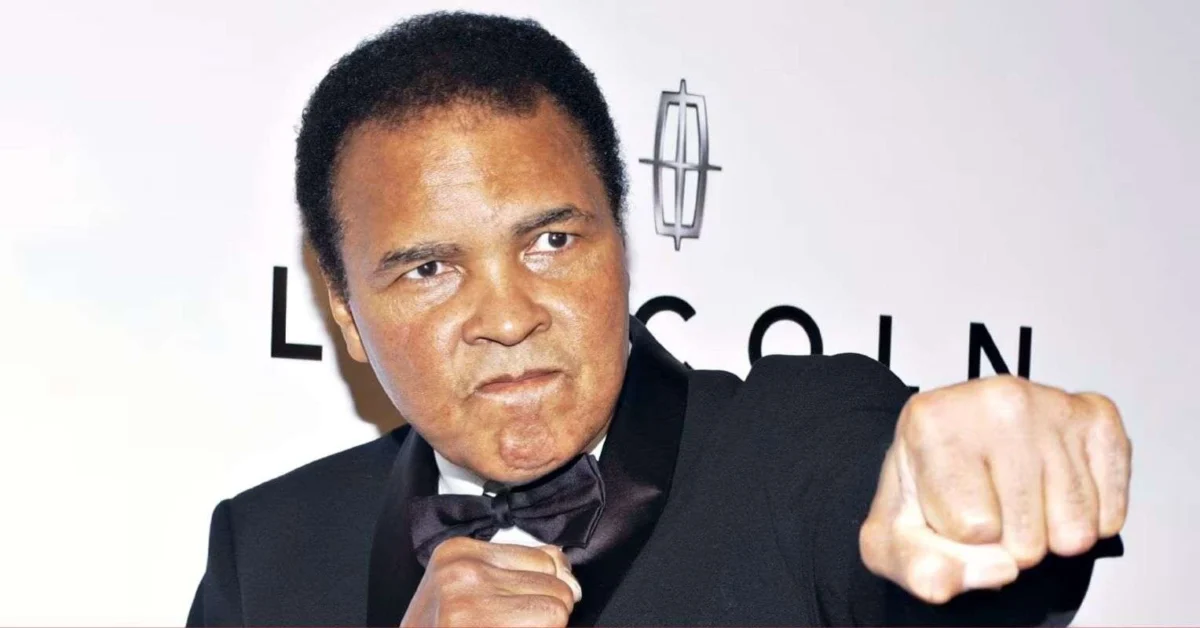
Muhammad Ali, a man who famously proclaimed himself to be "The Greatest," once confessed that there was one heavyweight legend who managed to eclipse anything he ever accomplished inside the squared circle.
To countless boxing fans and historians across generations, Ali remains the undisputed greatest of all time. His sensational career stands as a monumental pillar in sports history, defined by his historic journey to becoming a three-time world heavyweight champion. Along the way, he claimed epic, era-defining victories over some of the most formidable fighters to ever lace up a pair of gloves, including iconic battles against George Foreman in the legendary Rumble in the Jungle, the bruising wars with Joe Frazier, and his triumphs over powerhouse contenders like Sonny Liston.
While other legendary fighters such as Jack Johnson, Lennox Lewis, and the undefeated Rocky Marciano are frequently mentioned in heated debates regarding who truly was the best to ever grace boxing’s glamour division, Ali once turned his attention entirely toward another name. Rather than choosing himself or a contemporary rival, Ali chose to heap immense, unfiltered praise on a pioneer of the sport who came before him.
In a resurfaced interview that has captured the attention of modern fight fans, the charismatic heavyweight icon explained exactly why he held such profound respect for the legendary Joe Louis. Far beyond mere admiration for his punching power or his dominance under the bright lights, Ali’s reverence was deeply rooted in the character of the man himself, transcending the boundaries of athletic achievement.
Reflecting on Louis’ legacy, Ali shared a deeply personal perspective on what truly made the former champion remarkable. What he remembered most about Joe Louis was not simply the staggering number of men he knocked out or how great he was as an athlete, but rather how he handled fame on a global scale. Ali marveled at how Louis could become so popular and achieve such extraordinary greatness on earth, yet spiritually remain completely unchanged. He described a man who was always humble, noting that it was impossible to find anyone who felt let down or alienated by Joe Louis, emphasizing that simply everyone loved him.
When the interviewer followed up by directly asking Ali if he viewed Louis as the undisputed best of all time, the three-time champion offered a simple, definitive response that left no room for ambiguity: "The greatest of all time."
Joe Louis, affectionately known throughout the sporting world as the "Brown Bomber," dominated the heavyweight division during an era of profound social and political turmoil. He captured the world heavyweight championship in 1937 by defeating James J. Braddock and held the throne until his initial retirement in 1949. During that incredible twelve-year span, Louis made 25 consecutive successful title defenses. To this day, that remarkable streak serves as the longest single reign by a champion in the entire history of the sport, a testament to his staggering consistency and dominance.
His final professional record ultimately stood at 66 wins from 69 fights, a ledger that places him among the most successful and feared prizefighters in history. However, as Ali astutely pointed out, the achievements of Joe Louis outside the ropes carried a cultural and social impact that was just as monumental as anything he managed to accomplish inside the ring. Louis operated during a deeply segregated America, yet his extraordinary athletic prowess and undeniable grace under pressure allowed him to transcend racial barriers, uniting a fractured nation and becoming a unifying symbol of American pride during the era of the Second World War.
By acknowledging Louis as superior in certain respects, Ali demonstrated a deep reverence for the lineage of the heavyweight division and the towering figures who paved the way for his own historic career. The rare praise from a fighter who defined a generation underscores the enduring legacy of the Brown Bomber, cementing his place not only as a record-breaking champion, but as a universally beloved icon whose spirit and humility left an indelible mark on Muhammad Ali himself.