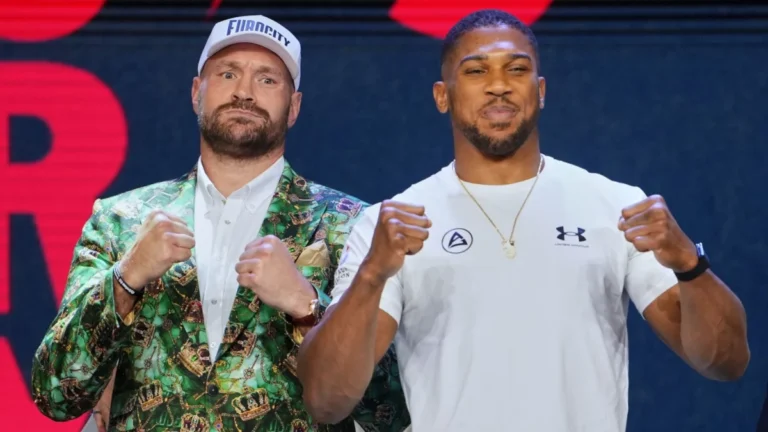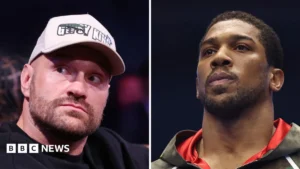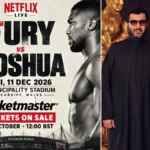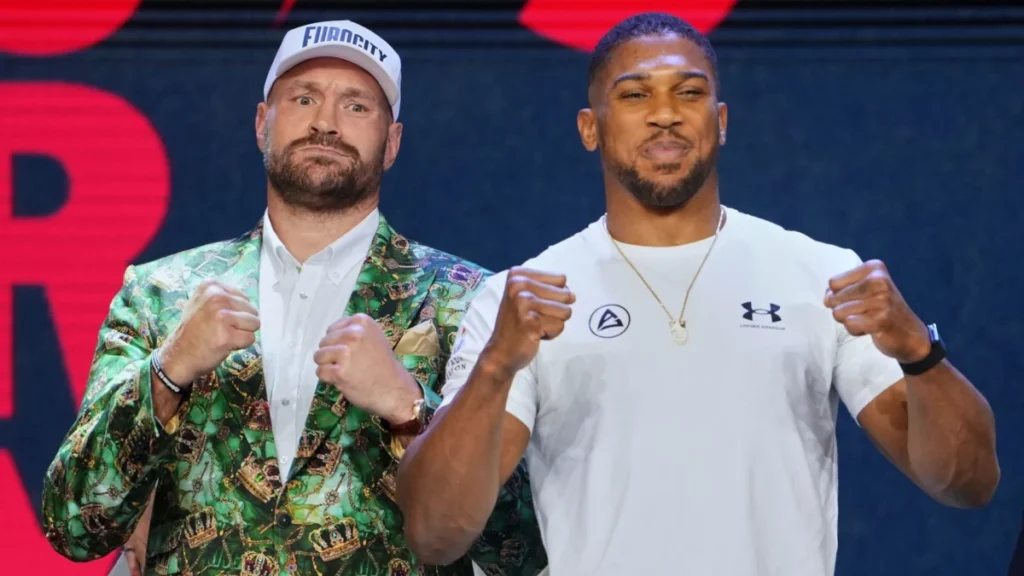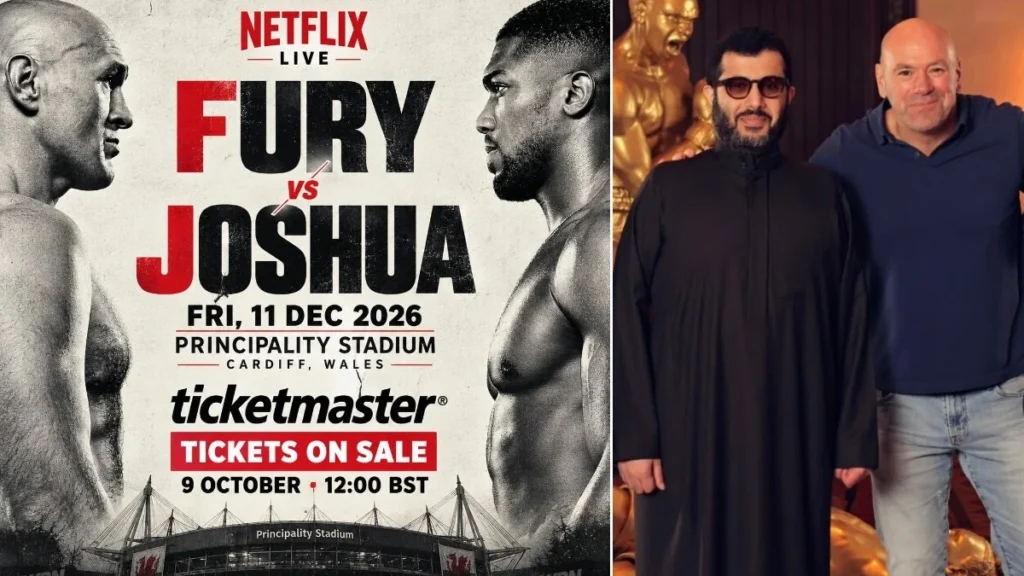


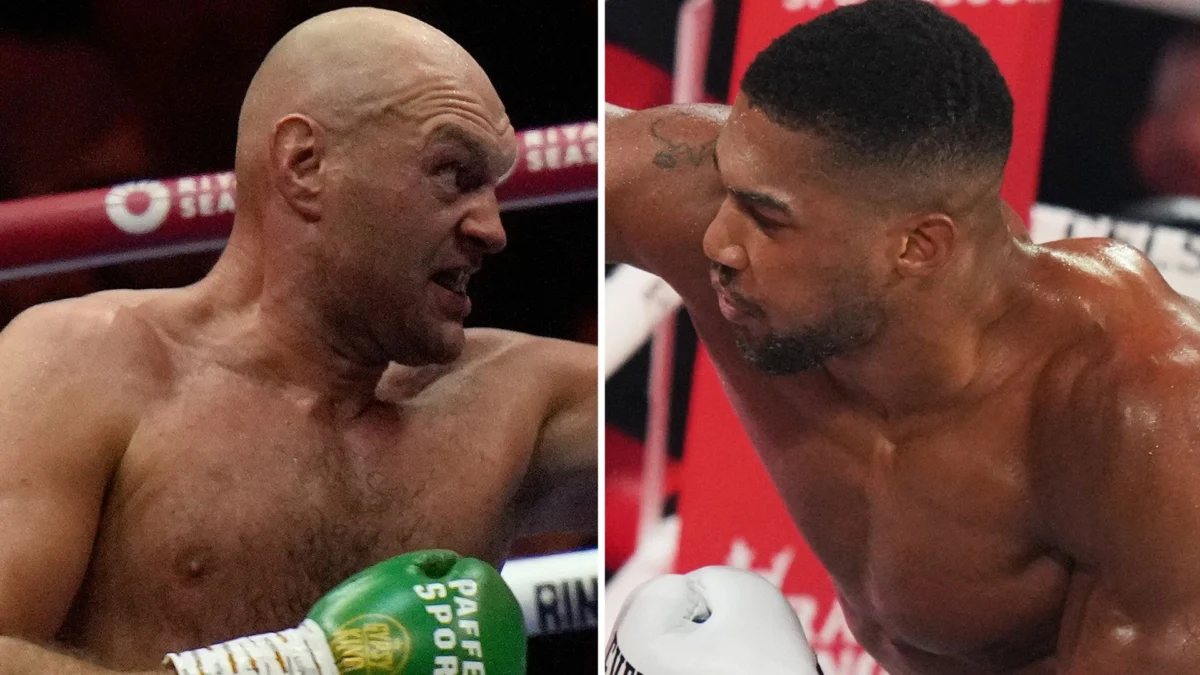
The wait is finally over. In a development that has sent shockwaves through the sporting world, Tyson Fury and Anthony Joshua are set to settle their historic rivalry in the ring. After near enough a decade of verbal sparring, intense speculation, and aborted negotiations, the two giants of British heavyweight boxing will clash on December 11 at the Principality Stadium in Cardiff.
This monumental event represents more than just a boxing match; it is the culmination of a generation-defining narrative. For years, the prospect of Fury and Joshua sharing a ring seemed destined to remain one of boxing’s greatest unfulfilled promises. Now, the contracts are signed, the venue is locked in, and the countdown to December 11 has officially begun.
It’s happening?
Yes, it is officially happening. After years of teasing the public, teasing each other, and leaving fans frustrated by repeated near-misses, Tyson Fury and Anthony Joshua have finalized terms for a December 11 showdown. The battleground will be the iconic Principality Stadium in Cardiff, Wales—a venue renowned for its electric atmosphere and, crucially for a winter event in the United Kingdom, its retractable roof.
The announcement brings to an end a rivalry that has simmered for nearly ten years. Both fighters have dominated the heavyweight landscape, capturing the imagination of sports fans worldwide while charting vastly different paths to the top. Now, in the autumn of their respective professional careers, they will finally step between the ropes to determine domestic and global supremacy.
Why have we waited so long?
To understand the magnitude of this event, one must look at the long, tortuous road it took to get here. As the premier British heavyweights of their era, Fury and Joshua have been on a collision course for the better part of a decade. Both are former unified world champions, and both have held the division in a stranglehold at various points in their careers. Yet, a direct confrontation eluded them.
During their respective peaks, when they held all the major world titles between them, the boxing world clamored for an undisputed championship clash. However, the complex machinery of modern boxing—comprising rival promotional outfits, competing television networks, sanctioning body obligations, and purse split disagreements—repeatedly stalled negotiations. Every time a deal seemed close, it would collapse under the weight of administrative and financial demands.
The landscape shifted dramatically when both men suffered setbacks against Ukrainian master tactician Oleksandr Usyk, losing their respective world titles. With the undisputed crown temporarily out of reach, the immediate sporting justification for the fight changed, but its commercial and emotional appeal remained entirely undiminished.
Even reaching this current agreement was a fraught process. Negotiations dragged on for months, with various international locations considered. At one stage, the legendary Madison Square Garden in New York emerged as a serious candidate to host the event, offering a historic transatlantic backdrop. Ultimately, the decision was made to bring the fight home to the United Kingdom, selecting Cardiff’s Principality Stadium as the perfect arena to host this monumental domestic clash.
Why are promoters feuding?
While the fighters have agreed to terms, the political battle behind the scenes continues to rage. The staging of this mega-fight has been made possible by the immense financial backing of Saudi Arabian financier Turki Alalshikh, whose deep pockets have fundamentally reshaped the landscape of heavyweight boxing.
When the fight was officially announced, it was presented as a joint venture staged by Alalshikh’s boxing entity, The Ring, alongside prominent American combat sports promoter and UFC CEO Dana White. White’s sudden involvement in a major heavyweight boxing event raised eyebrows across the industry, signaling a potential shift in promotional power dynamics.
However, the arrangement has not sat well with everyone. Eddie Hearn, the head of Matchroom Boxing and the long-time promoter of Anthony Joshua, has publicly challenged the official promotional structure. Hearn has openly claimed that the American promoter cannot and will not be involved in the event’s execution.
Despite this public feuding and the backroom posturing of rival promoters, the momentum behind the event is now unstoppable. With tickets officially scheduled to go on sale this Friday, industry experts agree that it is virtually inconceivable for promotional wrangling to torpedo the contest at this late stage. The financial stakes and public anticipation are simply too high. The fight remains firmly on.
What time will the ringwalks be?
In a move that highlights the truly global appeal of this matchup, the organizers have made a controversial scheduling decision. To cater to a massive international television audience—most notably pay-per-view buyers in the United States—the main event ringwalks are scheduled to take place at approximately 1:00 AM local time in Cardiff.
While a 1:00 AM start time is highly unusual for a major sporting event in the United Kingdom, it ensures the fight airs during prime-time viewing hours in North America (8:00 PM Eastern Time / 5:00 PM Pacific Time). To accommodate the thousands of fans attending the event live, the Principality Stadium will remain open long after the final bell, with organizers confirming the venue will not close its doors until 3:30 AM.
Is there a world title on the line?
Although both men enter this fight without the championship belts they once held, there is a strong possibility that a major world title will be up for grabs on December 11.
Reports have emerged suggesting that the World Boxing Association (WBA) is considering putting its vacant "Super" heavyweight world championship on the line for this contest. The title was recently vacated by Oleksandr Usyk, leaving a void at the very top of the WBA rankings.
The situation is somewhat complicated by the fact that the WBA already recognizes a "Regular" heavyweight champion in Murat Gassiev. Sanctioning body politics in boxing are notoriously complex, and the decision to sanction a "Super" champion while a "Regular" champion exists is a move that often draws scrutiny. Sky Sports has contacted the WBA to obtain official confirmation regarding the status of the belt for the December 11 bout.
Who’s on the undercard?
As of right now, the supporting bill for this mega-event has not been finalized. With the main event only recently secured, matchmaking for the undercard is still in its infancy. For the time being, fans and pundits can only speculate on which domestic and international prospects will be given the opportunity to perform on one of the biggest stages in British boxing history.
What’s the musical act?
High-profile boxing events under the guidance of Saudi organizers have increasingly incorporated major musical performances to elevate the entertainment spectacle. This event will be no different. It has been confirmed that a major musical act will perform shortly before the fighters make their ringwalks.
While the identity of the performer is being kept under wraps, organizers have ruled out one major name, confirming that global pop superstar Dua Lipa will not be the act performing in Cardiff.
Will there be a second fight?
In a departure from the modern trend of heavyweight blockbusters, the contract for this fight is a strictly one-fight deal. There is no bilateral rematch clause written into the agreement.
This omission raises the stakes significantly for both fighters. Without a guaranteed rematch, there is no safety net for the loser; a defeat on December 11 could signal the end of their aspirations at the elite level of the sport. While a second fight could theoretically be negotiated in the future, any potential sequel will depend entirely on the public demand generated by the drama of the first encounter.
Who will win?
Predicting the outcome of Fury vs. Joshua remains one of the most intriguing debates in combat sports. At their absolute physical peaks, the matchup offered a fascinating contrast of styles: Fury, the elusive, unorthodox giant with peerless ring IQ and movement, against Joshua, the classic, athletic power-puncher with devastating combination punching.
In their most recent outings, Fury has arguably looked like the better-preserved fighter of the two, maintaining his unbeaten status through grueling wars and displaying a remarkable ability to adapt inside the ring. However, Joshua’s explosive power remains a constant, equalizer-level threat. He possesses the physical tools to hurt any man in the world with a single clean blow.
The psychological battle is already underway. During their pre-fight press conferences, the tension between the two has been palpable. In one notable exchange, Fury was quick to shut down any suggestion that Joshua acts as his "landlord" in the heavyweight division, dismissing the idea of any mental edge. Joshua, meanwhile, has remained composed, delivering sharp, measured responses to Fury’s trademark mind games.
This rivalry has deep roots, stretching all the way back to the summer of 2012. Following Joshua’s gold-medal triumph at the London Olympics, a young Tyson Fury joined British heavyweight legends Lennox Lewis, Frank Bruno, and Scott Welch in offering words of wisdom to the young prospect as he prepared to turn professional.
More than a decade later, those words of wisdom will be replaced by leather. On December 11, under the closed roof of the Principality Stadium, the talking will finally stop, and the boxing world will finally get its answer.