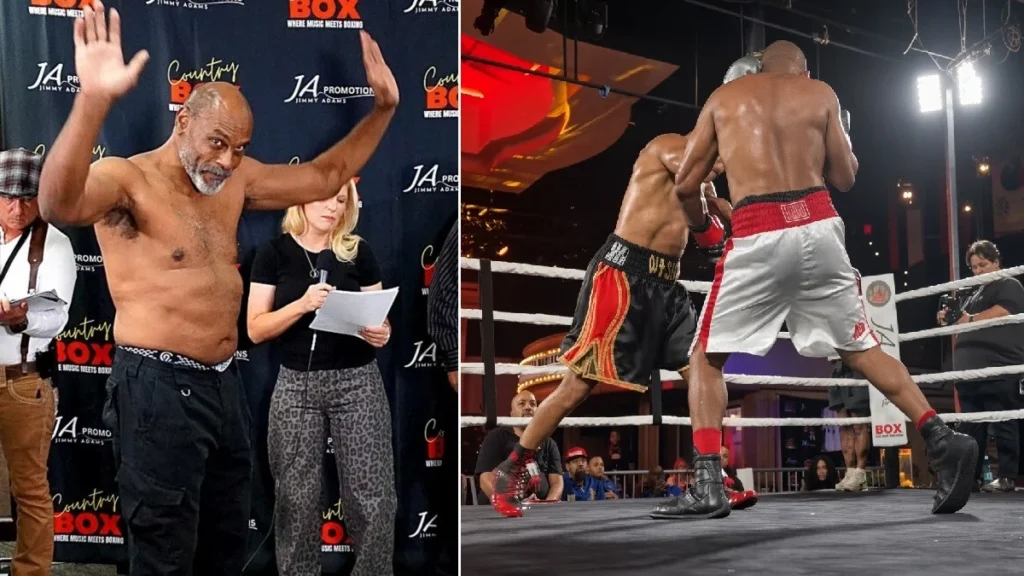
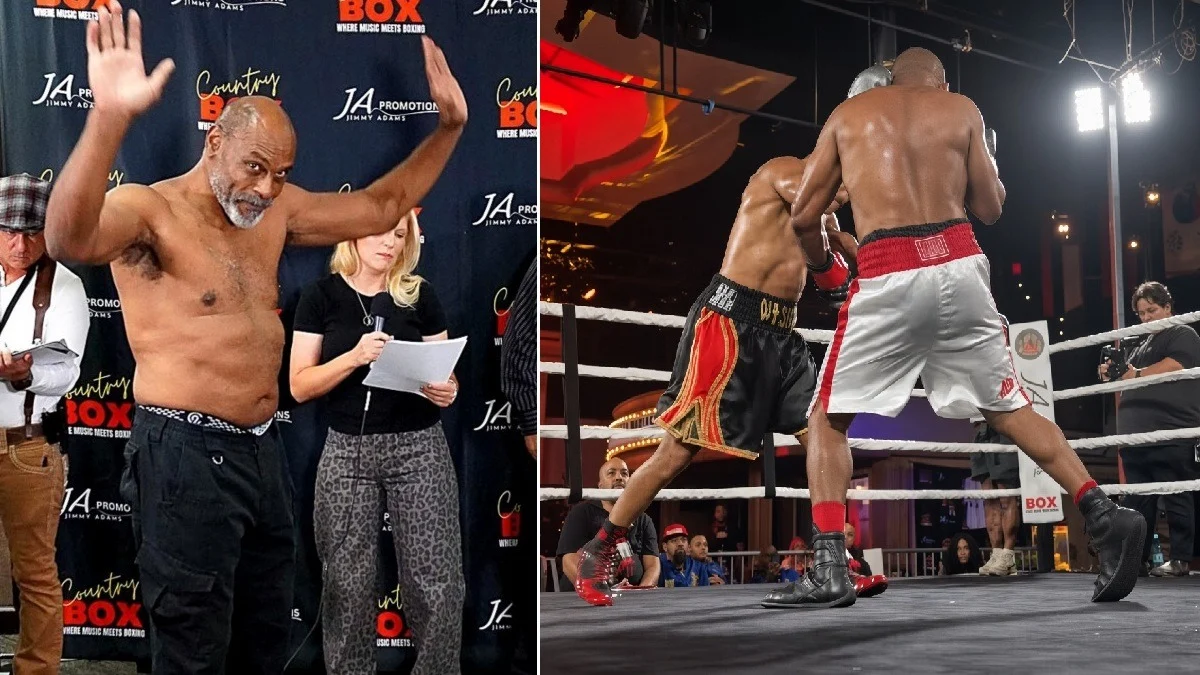
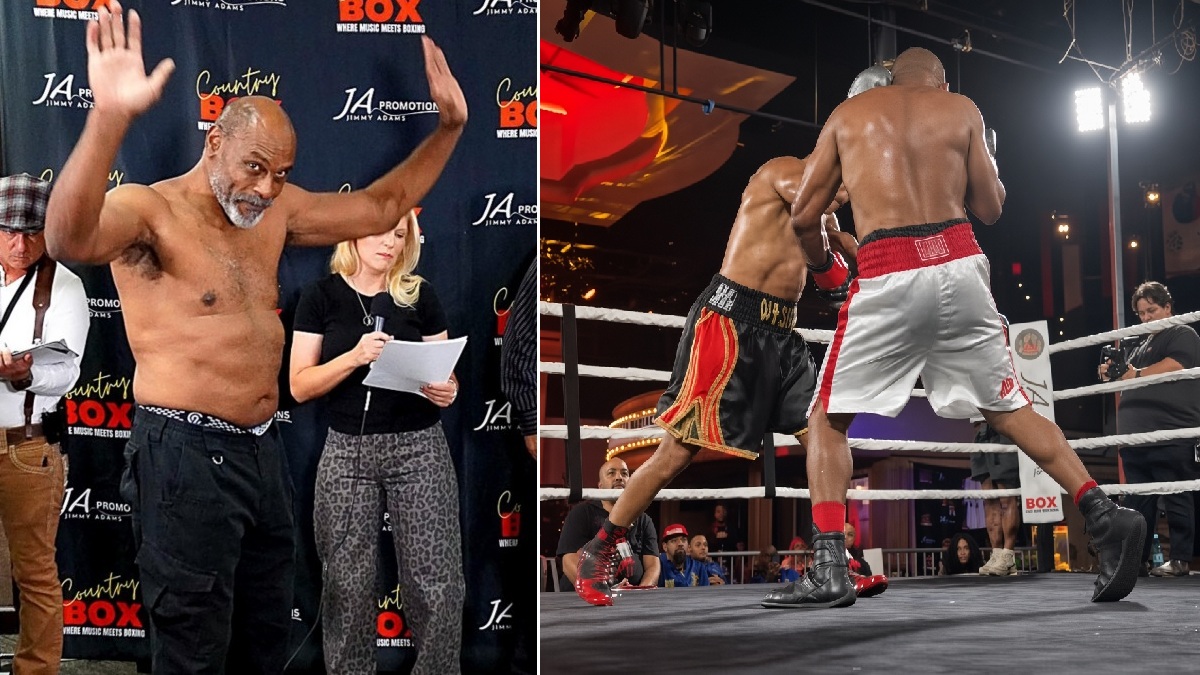
Former heavyweight world champion Oliver McCall has extended his astonishing professional boxing career that first began four decades ago, but his latest victory has reignited intense debate surrounding fighter safety, licensing, and advanced age in combat sports. At 61 years old, McCall stepped into the ring at Plaza Mariachi in Nashville on Tuesday night to face 54-year-old Jeremiah Williams, securing a fifth-round technical knockout victory. However, the triumph was overshadowed by the alarming amount of heavy punishment the veteran absorbed throughout the contest, coming nearly 30 years after his infamous and tragic in-ring breakdown against Lennox Lewis.
The bout ended in the fifth round when Williams suffered a cut above his left eye. According to reports, the laceration began following an accidental clash of heads before a crisp right hand from McCall worsened the injury, ultimately prompting a stoppage. Yet, full fight footage reviewed by World Boxing News reveals a far more troubling narrative than a simple late-round stoppage victory. In the video, McCall takes numerous heavy, flush shots to the head, raising urgent concerns about the sheer volume of punishment the veteran continues to absorb at a stage of life when most athletes have been retired for decades.
The matchup itself, pitting "The Atomic Bull" against an opponent who is still 54 years old, has sparked widespread scrutiny regarding how athletic commissions evaluate and license aging fighters. While McCall’s resilience and punching power remain intact, the physical toll of putting a 61-year-old former world champion into high-impact exchanges highlights systemic questions that extend far beyond a single regional card in Tennessee.
Oliver McCall Takes Huge Shots
The narrative of any boxing match is often dictated by its final result, and the fact that McCall emerged victorious will undoubtedly overshadow much of the adversity he faced during the bout. Williams, showing that he still possessed considerable power despite his own advanced age, landed several heavy punches during sustained exchanges. Throughout these moments, McCall relied on his trademark toughness, continuing to press forward and march through incoming fire even after being caught flush on multiple occasions.
A particularly controversial moment occurred in the fourth round when McCall went down to the canvas. While the referee on duty ruled the incident a slip rather than an official knockdown, a closer review of the footage suggests otherwise, leading boxing analysts to argue it should have been scored as a knockdown.
Had the referee ruled it a knockdown, it would have shattered a remarkable statistical quirk in McCall’s storied career: his long-standing record of never officially being knocked down during his professional tenure. Thanks to the referee’s discretion, that record remains intact. The victory improved McCall’s professional record to 62 wins, 14 losses, and 1 contest ending in a no-decision, with 41 of those victories coming by way of knockout. Meanwhile, Williams saw his record drop to 19 wins, 15 losses, and 2 draws. Williams’ career path has been equally unconventional, having dropped his first eight professional fights before eventually turning things around to secure a winning record, with both men competing actively well past their fiftieth birthdays.
McCall’s Lennox Lewis Breakdown
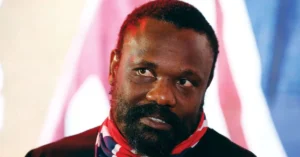
To fully understand the lingering anxieties surrounding Oliver McCall’s career, one must look back at the defining moments of his professional journey. McCall etched his name into boxing history in 1994 by delivering a stunning second-round knockout of Lennox Lewis to capture the WBC heavyweight championship. Though he lost the title the following year to Frank Bruno, his name remained synonymous with the elite tier of heavyweight boxing.
However, his career is also tied to one of the most disturbing and surreal incidents in the history of championship boxing. During his 1997 rematch against Lewis, McCall inexplicably stopped engaging with his opponent, began weeping openly in the middle of the ring, and refused to follow his corner’s instructions. Referee Mills Lane ultimately waved off the fight in the fifth round, a moment that exposed the profound psychological and physical strains of the sport and left fans and officials searching for answers.
Those ghosts of the past resurfaced following McCall’s latest outing in Nashville. Former world champion Jamel Herring took to public platforms to voice his concerns, explicitly questioning the standards of medical clearance that allowed two men well into their fifties and sixties to exchange heavy blows to the head. Those safety and ethics concerns do not simply vanish just because the older fighter managed to secure another win on his ledger.
McCall’s Boxing License
Despite the warnings from media observers, former champions, and medical advocates, McCall shows no intention of hanging up his gloves. WBN has confirmed that the veteran intends to continue fighting, signaling that his historic career is still far from over.
The Tennessee Athletic Commission ultimately sanctioned the bout and allowed the contest between McCall and Williams to proceed. However, the rigorousness and appropriateness of the medical requirements applied to a 61-year-old heavyweight demand a much closer examination. While there is no immediate evidence that the commission violated its own procedural rules, the visual evidence from the fight underscores deep flaws in how boxing jurisdictions handle licensing and medical oversight for aging competitors.
The core debate is not centered on whether Oliver McCall retains his fighting instincts. His victory in Nashville proves beyond a doubt that he remains capable of landing dangerous punches and securing victories against opponents of a certain caliber. The true issue is whether the heavy punishment he absorbed should be glossed over simply because his hand was raised at the final bell.
"The Atomic Bull" has survived decades in one of the world’s most unforgiving sports without ever suffering an official knockdown, a testament to his incredible durability and chin. Yet, that remarkable athletic achievement should never become an excuse or a reason to turn a blind eye to the heavy, concussive punches he continues to take at 61 years of age. As McCall pushes forward with plans for yet another fight, the broader boxing community is left watching closely—and anxiously—hoping that a legendary career does not push its luck too far.