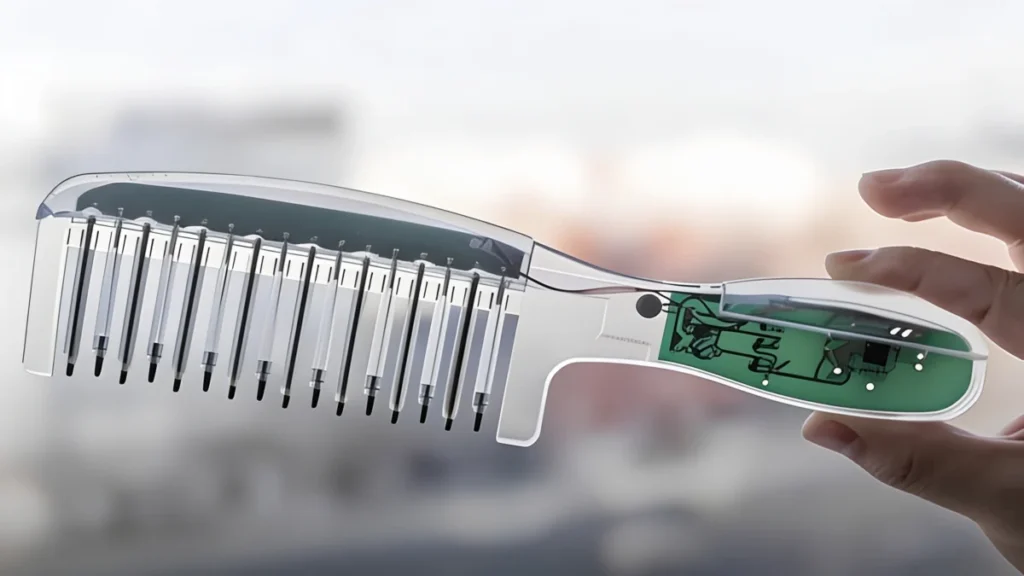


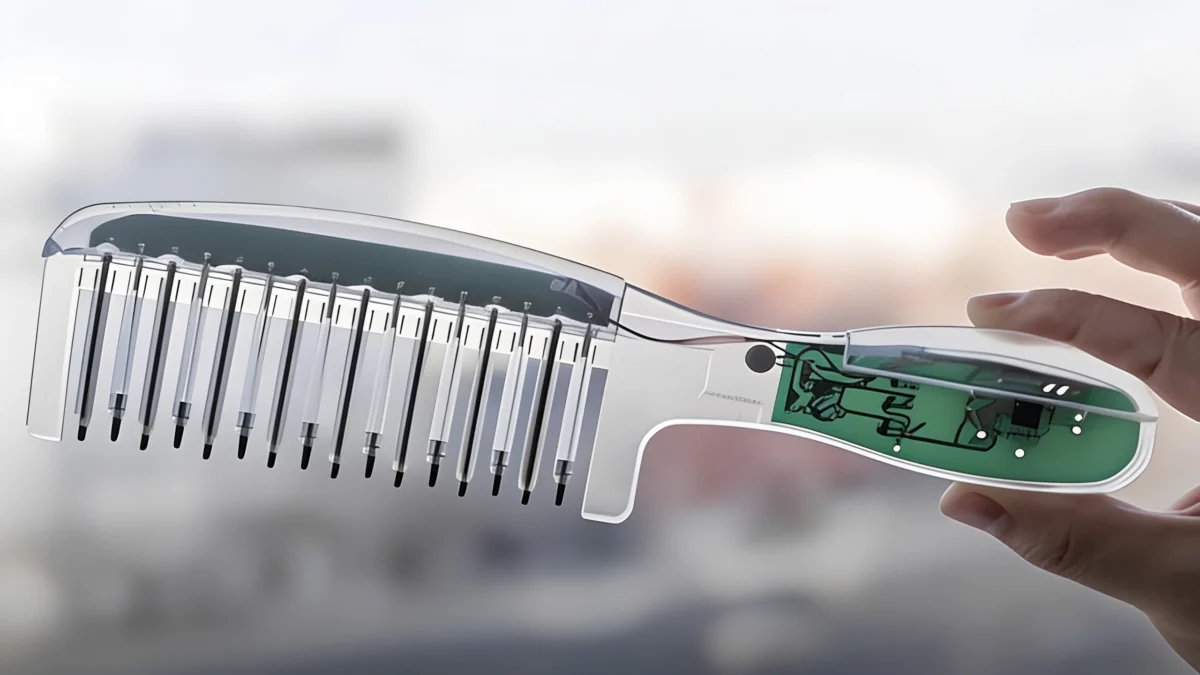
Researchers have unveiled a novel bioelectronic device that has shown remarkable results in early-stage hair loss trials, outperforming conventional treatments such as topical minoxidil in a controlled animal model. Developed through a collaborative effort between engineers at Beihang University and the City University of Hong Kong, the experimental device—named "Detangle" after the Disney animated film—utilizes a combination of mild electrical pulses and targeted genetic therapy to stimulate hair follicle recovery.
According to findings published in the peer-reviewed journal Nature Communications, balding mice treated with the bioelectronic comb achieved nearly 100 percent hair regrowth across affected areas within a single month. The results have sparked considerable interest within the scientific and dermatological communities, offering a glimpse into a potential future where genetic medicine can be delivered through intact skin without the use of traditional hypodermic needles.
Nearly 100% Regrowth in Under a Month
The pace and extent of the recovery observed during the study have drawn significant attention from researchers studying androgenetic alopecia. By day 28 of the experiment, subjects treated with the Detangle platform demonstrated near-total fur recovery on areas previously subjected to hair loss models.
For comparison, control groups treated with daily topical minoxidil—the active pharmaceutical ingredient in popular over-the-counter treatments like Rogaine—reached approximately 70 percent regrowth over the same timeframe. Meanwhile, subjects treated with other standard comparative interventions scored even lower. Furthermore, researchers reported that the application of the bioelectronic device did not cause significant skin damage or adverse dermatological reactions in the test subjects, suggesting a favorable safety profile in these preliminary trials.
How a Comb Becomes a Delivery System
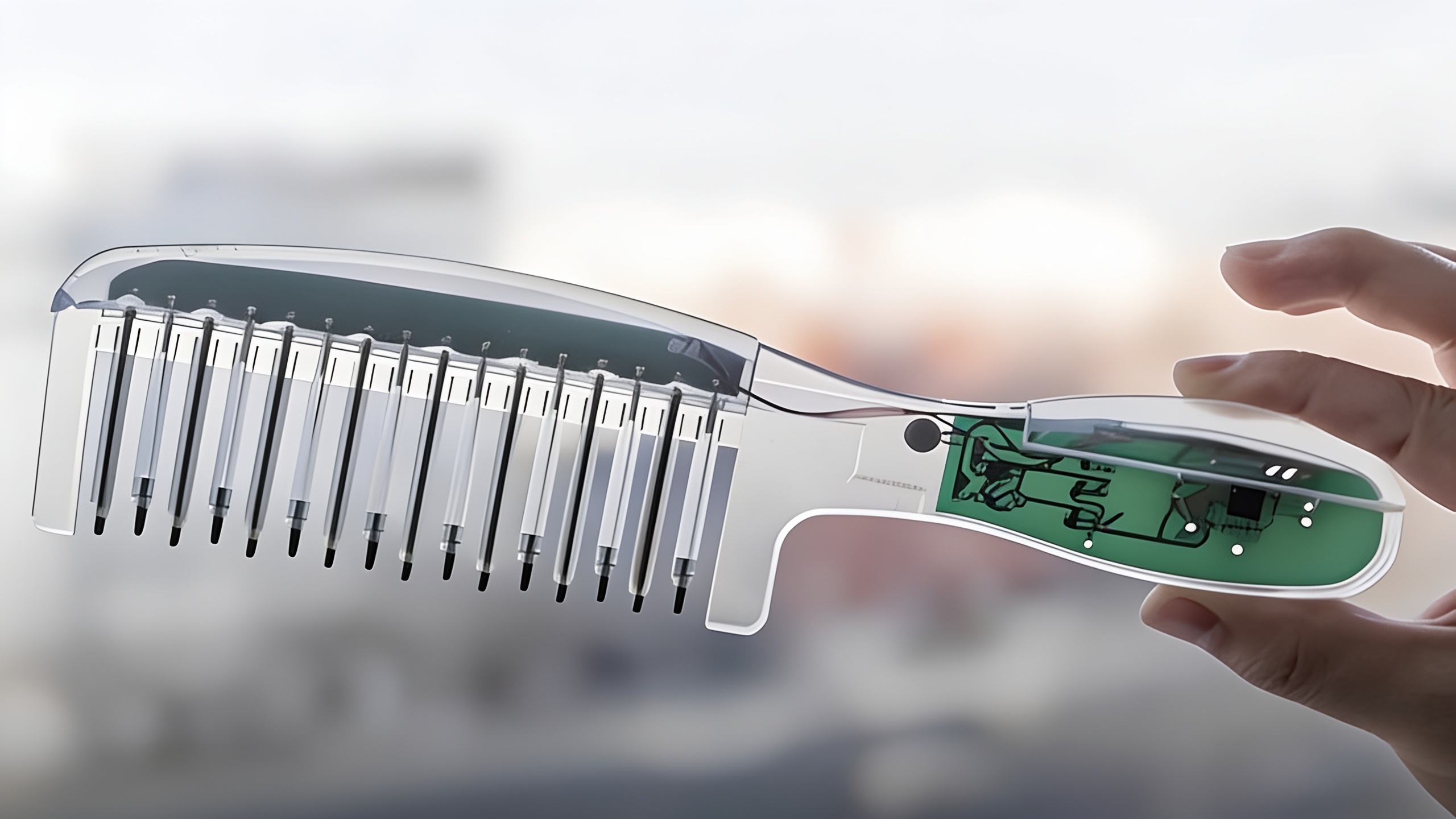
At first glance, the Detangle device resembles an ordinary grooming tool, but its internal engineering functions as a precision biomedical instrument. The device integrates two built-in electrodes alongside microscopic, pen-like reservoirs designed to hold therapeutic biological molecules.
When the teeth of the comb make contact with the scalp, the device emits mild, controlled electrical pulses. These pulses temporarily modulate the skin barrier, opening microscopic pathways through a biophysical principle known as iontophoresis. This process allows large, fragile genetic cargo to bypass the outermost layer of the skin and travel directly toward the hair follicles situated underneath, a feat that has historically challenged topical drug developers.
A Two-Pronged Genetic Attack
The therapeutic strategy behind the device relies on a dual-mechanism approach designed to tackle the biological root causes of pattern baldness simultaneously. Androgenetic alopecia is fundamentally driven by dihydrotestosterone (DHT), a derivative of testosterone that progressively miniaturizes hair follicles, ultimately shortening their growth phase until visible hair production ceases entirely.
To counteract this process, the Detangle device delivers SRD5A2 small interfering RNA (siRNA). This specialized genetic molecule is engineered to silence the specific gene responsible for producing 5-alpha-reductase type 2, the enzyme that converts testosterone into DHT. By reducing the local concentration of this enzyme, the treatment aims to halt the hormonal assault on vulnerable follicles.
Simultaneously, the device delivers a second payload consisting of plasmid DNA that encodes a pro-angiogenic protein. The primary function of this protein is to stimulate the formation of new blood vessels in the surrounding scalp tissue. Enhanced vascularization ensures a richer supply of oxygen and essential nutrients to the follicles, supporting cellular repair and long-term productivity. This combination of hormonal suppression and vascular revitalization distinguishes the bioelectronic platform from conventional single-target therapies.
Why Delivery Is the Real Bottleneck
The human skin has evolved primarily to act as a robust protective barrier against external pathogens and foreign substances, a feature that presents a formidable challenge in pharmacology. Hair follicles typically reside between one and four millimeters beneath the skin’s surface, and the vast majority of therapeutic molecules applied topically are unable to penetrate deeply enough to exert a clinical effect.
Pattern hair loss remains an exceptionally common condition, affecting approximately half of all men over the age of fifty, alongside a substantial portion of the female population. Current clinical options approved by regulatory bodies include topical minoxidil, oral finasteride, and low-level laser therapy. While these treatments have helped millions of individuals manage hair thinning, each comes with distinct limitations, ranging from potential systemic side effects to modest overall efficacy. Clinical trials for topical minoxidil, for instance, typically demonstrate a 20 to 40 percent improvement in hair density.
Genetic therapies offer immense potential, but the molecules involved are significantly larger and more fragile than traditional small-molecule drugs. Finding a safe, non-invasive method to transport these delicate structures past the skin barrier has remained a central hurdle in dermatological research, making the delivery mechanism of the Beihang University comb its most notable innovation.
Inside the Mouse Experiment
To evaluate the efficacy of the device, researchers induced alopecia-like conditions in laboratory mice by shaving their dorsal areas and applying topical testosterone daily to suppress natural hair growth. Once the hair loss model was established, the Detangle device was applied to the test subjects every three days over a continuous 28-day period.
The frequency of application required by the device is notably lower than that of conventional topical treatments, which typically demand daily or twice-daily application regimens. The combination of reduced application frequency and superior quantitative regrowth metrics formed the basis of the positive initial reports.
The Catch: Mice Are Not Humans
Despite the promising outcomes observed in the laboratory, researchers and independent medical experts emphasize the need for substantial caution. To date, no human clinical trials have been conducted using the Detangle device, and all available data originates exclusively from animal models.
The physiology of murine hair follicles differs significantly from that of human scalps. Mice feature markedly higher follicle density and operate under entirely different biological growth cycles, meaning that a near-total regrowth rate in rodents cannot be interpreted as a direct predictor of human clinical success. Furthermore, human skin is thicker and structurally distinct from mouse skin, presenting a much tougher physical barrier for any transdermal delivery system.
Translating these findings into viable human therapies will require extensive clinical investigations to evaluate safety, optimal voltage parameters, dosage consistency, and long-term efficacy on human scalps.
Bigger Than Baldness?
While the commercial implications for the multi-billion-dollar global hair loss treatment industry are considerable, the underlying technology may hold broader potential. The successful demonstration of needle-free, electrically assisted gene delivery through the skin could theoretically pave the way for new transdermal dermatological treatments addressing other medical and cosmetic conditions.
Nevertheless, such prospects remain purely hypothetical at this stage. The transition from a successful animal model to a commercially available human medical device is a complex, multi-year process fraught with regulatory and scientific challenges.
For individuals currently experiencing hair thinning, the Detangle device remains an experimental proof of concept rather than an accessible cure. No comparable electric comb products currently available on the commercial market have demonstrated similar genetic delivery capabilities or clinical results. Medical professionals continue to advise patients concerned about hair loss to consult with qualified dermatologists to discuss established, evidence-based treatment options while research into advanced delivery platforms continues to evolve.