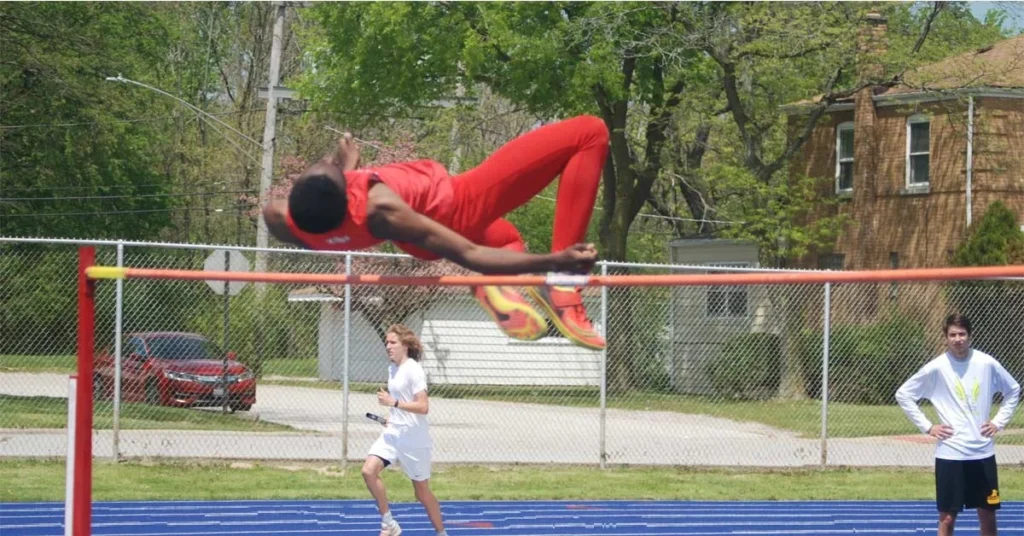


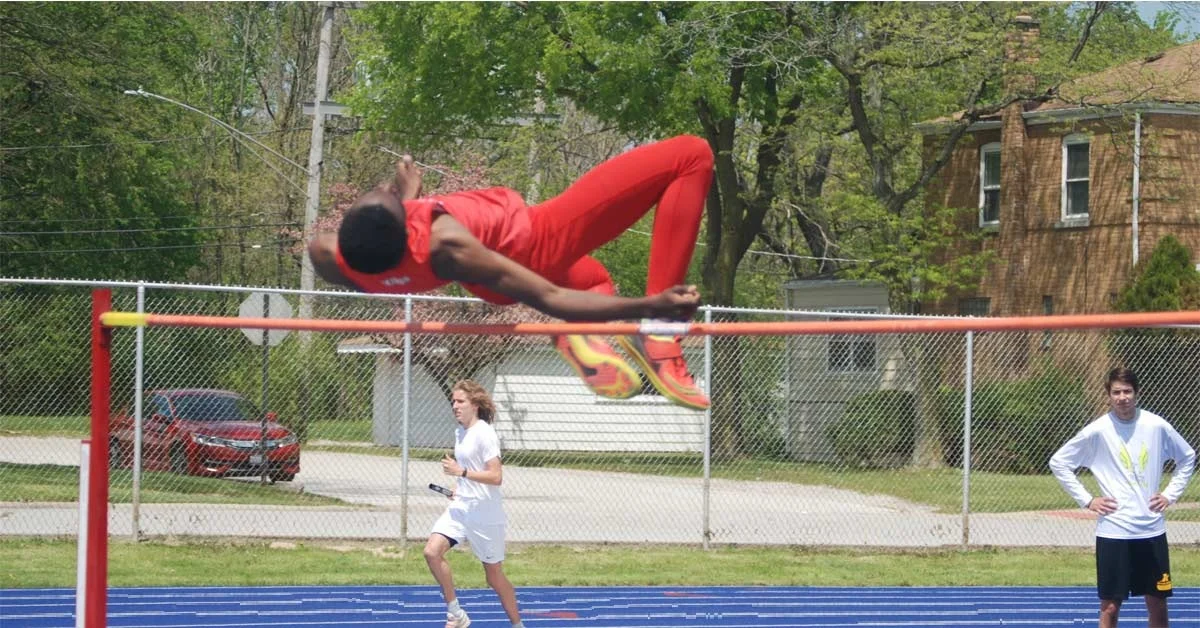
Track and field coaches have long debated which discipline presents the ultimate technical challenge, but veteran coaches frequently point to one event that stands entirely apart: the high jump. While the long jump and triple jump rely heavily on horizontal speed, takeoff angles, and center-of-mass height—demanding relatively straightforward linear mechanics—the high jump introduces a volatile variable that changes everything. According to track coach Rob Assise, what makes the high jump exponentially more challenging than its jumping counterparts is the curved approach and the complex rotational forces that follow.
Assise notes that his coaching philosophy has been profoundly shaped by the teachings of renowned instructor Boo Schexnayder, particularly his instructional work, “The High Jump: Technique and Teaching.” Returning to these foundational concepts season after season has allowed coaches to refine how they address the multifaceted nature of the high jump approach. Breaking down the run-up into vital components—including the start, the curve entry, the lean into the takeoff, steering capability, and rhythm—offers a roadmap for developing young, resilient high jumpers who can handle the grueling biomechanical demands of the event.

The foundation of any successful high jump sequence begins well before the athlete reaches the bar. When working with high school athletes, Assise advocates strongly for the rollover or crouch start. The underlying theory suggests that elastic athletes favor these methods because the initial pre-movement allows them to harness energy effectively through the stretch-shortening cycle. Because the vast majority of high jumpers lean toward an elastic profile rather than a purely force-based profile, this starting mechanism feels natural and optimizes energy storage from the very first stride.
Consistency remains the ultimate goal during the initial phase of the run-up. Beginners frequently show a tendency to grow lackadaisical at the start of any jumping approach. Because natural deviations occur during any run-up, the most consistent segments must be the beginning and the end. While the end of the approach tends to regulate itself as the athlete steers toward a comfortable takeoff position, the middle section often harbors the greatest degree of variance. By utilizing a rollover or crouch start instead of a rolling start with extra lead-in steps, coaches can eliminate unnecessary strides, thereby shrinking the window for human error and erratic pacing.
As athletes transition from acceleration into the critical curve phase, a familiar hurdle immediately emerges: the tendency to abort the inward lean as the bar approaches. Early in his coaching career, Assise attempted to combat this by focusing strictly on the final steps of the approach and shouting verbal cues like "stay in." However, true progress only materialized after adopting the advice of legendary coach Gary Winckler to focus upstream on the entry point. Emphasizing a high-quality curve entry and practicing it with high frequency drastically improves an athlete’s ability to maintain the necessary body lean throughout the transition.

According to Schexnayder’s model, the transition into the curve should commence with a slight hip rotation during the push-off of the fourth step. The fifth step officially initiates the curve and should take place slightly outside the running lane to establish the requisite inward lean, while the sixth step solidifies the path by landing back on the track. Coaches often utilize visual demonstrations and verbal cues to prevent athletes from cutting the curve short during these pivotal middle steps. Incorporating marked training curves—whether on a standard track, a school cafeteria floor during winter months, or the center circle of a soccer field—allows athletes to rehearse the exact spatial awareness and visual focus required during high-stakes competition.
Arm mechanics in the curve present another frequent stumbling block for developing jumpers. Novice athletes often experience a severe reduction in limb range of motion, particularly with the inside arm, which should naturally coordinate with the contralateral leg to ensure precise timing. Some jumpers compromise the entire sequence by pinning their arms tightly against their sides at a ninety-degree angle throughout the bend. To combat this without over-coaching, instructors rely on visual feedback, targeted verbal cues, and dynamic drills such as circle running, semicircle runs, and serpentine paths. The strategic placement of mini-hurdles or cones along the curve has also proven effective in forcing athletes to open up their arm carriage and maintain proper spatial separation.
When jumpers fail to establish an adequate inward lean in the final strides, the breakdown can usually be traced to a handful of mechanical or psychological factors. Addressing these root causes requires a balanced approach to tendon health and tissue preparation. While developing tendon stiffness is a common priority in modern athletic training programs—aiming to mimic elite performers who exhibit minimal ground contact times and explosive force—overzealous training can easily backfire. Drawing on insights from sports scientists like Dr. Keith Baar, modern coaching frameworks emphasize balancing stiffness development with structural longevity. Because high jumpers are uniquely vulnerable to tendinopathies due to the extreme torsional forces inherent in the event, cultivating healthy tendons is a prerequisite for sustaining peak performance over a grueling season.

Steering capability represents another nuanced dimension of the high jump approach. While athletes will inevitably find a way to navigate toward a secure takeoff spot—often resorting to running past the bar if they miss their mark—practicing control through variable-intensity drills helps narrow that margin of safety. Incorporating creative exercises, such as back-and-forth clapping drills or varied approach challenges, forces athletes to refine their spatial accuracy. However, coaches emphasize that these specialized drills should constitute a minor percentage of overall training. The primary reduction of variance must happen through disciplined repetition of the standard approach itself.
Rhythm and controlled acceleration dictate the flow of a successful run-up. A frequent flaw observed at the high school level is an approach that begins at an unsustainable, frantic speed, only to decelerate as the athlete nears the bar. Because forward momentum directly dictates potential energy at takeoff, any drop in velocity diminishes the overall jump. Ensuring maximum engagement and maintaining a consistent training rhythm across all jumping disciplines helps instill the discipline required to execute under pressure.
Facility limitations often present an additional logistical hurdle for scholastic programs, making precise measurement and triangulation non-negotiable. Without standardized equipment, failing to accurately triangulate the starting mark invites unnecessary inconsistency. By utilizing mathematical principles such as Pythagorean triples—measuring out specific structural dimensions in feet to form a reliable right triangle with the standards—coaches can establish foolproof baseline measurements. This meticulous attention to geometry ensures that regardless of unfamiliar venue layouts, athletes can reliably locate their starting mark and minimize the variables that stand between them and a personal best.