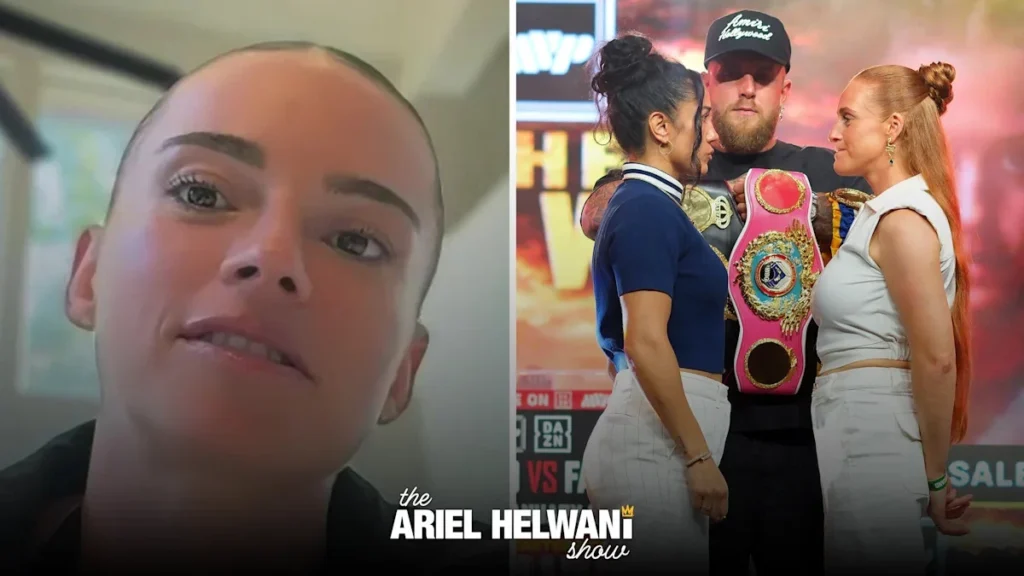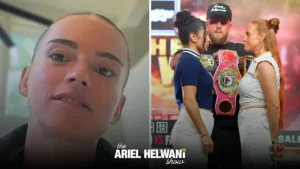

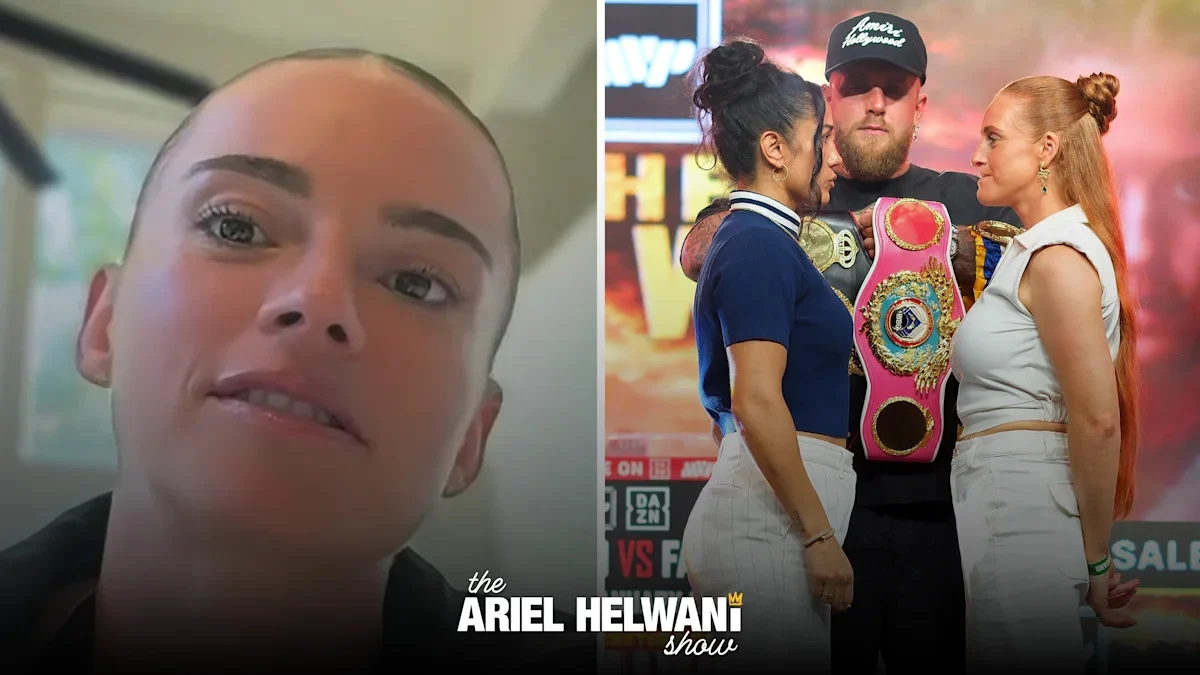
When Skye Nicolson steps through the ropes this Sunday to defend her World Boxing Council featherweight championship against Miyo Yoshida, she will do so amidst one of the most turbulent and intriguing backdrops in modern women’s boxing. The undefeated Australian southpaw has never been one to shy away from complex political landscapes, but her recent movements outside the ring have sparked as much conversation as her clinical performances inside it. In previewing her championship assignment against Yoshida, Nicolson addressed a sprawling array of topics that have reshaped her career path, offering insight into an unexpected strategic alignment with Most Valuable Promotions, the resolution of an acrimonious feud with executive Nakisa Bidarian, the persistent disappointment of watching a blockbuster showdown against Amanda Serrano slip away once more, and her thoughts on Alycia Baumgardner’s bold claim to be the defining face of female pugilism.
At the center of Nicolson’s immediate focus is Yoshida, a seasoned and resilient competitor whose veteran pedigree presents a distinct stylistic challenge. Yoshida, a former two-time world champion, has earned a reputation across the international boxing circuit as an uncompromising, durable pressure fighter who embraces grueling exchanges and tests the composure of technical purists. For Nicolson, who has built her professional career on exquisite distance management, sharp counter-punching, and the disciplined ring IQ honed through an extensive amateur background, Sunday’s WBC title bout serves as a crucial measuring stick. To retain her championship status, Nicolson must neutralize Yoshida’s relentless forward momentum and prevent the challenger from turning the bout into an inside brawl.

Yet, as critical as the physical test against Yoshida remains, the conversation surrounding Nicolson in the buildup to the fight has inevitably drifted toward her promotional posture and the dramatic pivot that saw her join forces with Most Valuable Promotions, the outfit founded by Jake Paul and veteran executive Nakisa Bidarian. The collaboration caught large sections of the boxing community off guard, particularly given the historical friction that had previously characterized interactions between Nicolson and the MVP hierarchy. In the past, promotional posturing, public comments, and tense negotiations had fueled a noticeable tension between Nicolson and Bidarian, with both sides trading pointed assessments across traditional media channels and social platforms.
Nicolson revealed that moving past that adversarial dynamic required both parties to separate personal grievances from professional ambition. In detailing how the unexpected alliance materialized, Nicolson explained that she and Bidarian were able to conduct direct, candid discussions to clear the air, ultimately recognizing that mutual commercial and competitive objectives outweighed the lingering residue of past disputes. By squashing the beef with Bidarian, Nicolson demonstrated a pragmatic maturity that has increasingly defined her career. Rather than allowing past promotional skirmishes to construct permanent roadblocks, she identified MVP’s distinct marketing machine and burgeoning influence as a viable engine to amplify her profile and provide the grand stage her championship reign demands.
The reconciliation with Bidarian and the resulting link with MVP naturally intensified speculation surrounding the fight that the boxing world has clamored to see for well over a year: a featherweight showdown against Amanda Serrano. Serrano, a seven-division world champion and MVP’s flagship female athlete, has long stood as the benchmark of the 126-pound division. When Serrano previously vacated the WBC featherweight strap over the sanctioning body’s refusal to sanction three-minute rounds for women’s championship bouts, Nicolson seized the opportunity to claim the green-and-gold belt, instantly establishing herself as the natural foil to the Puerto Rican trailblazer.

A clash between Nicolson’s sharp, elusive boxing style and Serrano’s relentless, power-punching volume has been widely viewed by analysts as a premier stylistic pairing. With Nicolson now working in close proximity to Serrano’s promotional home, it appeared that the path toward finalizing the marquee bout had finally been cleared. However, Nicolson confirmed that the fight has once again failed to materialize, leaving her on the outside looking in as Serrano pursued alternative pathways.
Reflecting on missing out on the Serrano bout yet again, Nicolson made no secret of her frustration, while maintaining that she has done everything within her power to force the matchup into existence. The recurring inability to finalize terms underscores the intricate and often maddening complexities of elite matchmaking, where weight stipulations, scheduling priorities, round durations, and contractual fine print often delay the encounters that fans crave most. Despite the latest postponement of that ambition, Nicolson remains steadfast in her belief that the featherweight division cannot achieve ultimate clarity until she and Serrano settle their business inside the ring, and she continues to position herself as the legitimate champion ready to test herself against the division’s most decorated stalwart.
The featherweight picture is not the only theater where Nicolson finds herself entangled in public debate. The Australian also turned her attention to the super featherweight division and the assertive proclamations of Alycia Baumgardner, the unified champion who has repeatedly branded herself as the true face of women’s boxing. Baumgardner’s meteoric rise, punctuated by devastating power, undeniable charisma, and an unapologetic media presence, has earned her a prominent place in the contemporary sport. However, the designation of being the singular face of the female code remains a fiercely contested title, shared in various arguments among luminaries such as Claressa Shields, Katie Taylor, Serrano, and Baumgardner herself.

Nicolson offered a measured appraisal of Baumgardner’s self-anointed status, questioning the premise that any single fighter can lay uncontested claim to the mantle without consistently measuring themselves against the absolute best available opposition in defining matchups. While acknowledging Baumgardner’s athleticism and formidable profile, Nicolson emphasized that being the standard-bearer for women’s boxing requires more than social media bravado and occasional appearances; it demands a relentless competitive schedule, an active championship reign, and a willingness to unify divisions through perilous technical tests. Nicolson’s commentary highlights a growing, palpable rivalry between the featherweight and super featherweight champions, creating the early foundations for a potential champion-versus-champion collision should their career paths converge in the near future.
The intersecting storylines surrounding Nicolson reflect the broader evolution currently sweeping through women’s professional boxing. Over the past several years, the landscape has transformed from an overlooked niche into an explosive, commercially viable sector capable of commanding headline billing in iconic venues across the globe. With this increased visibility has come the inevitable intrusion of promotional gamesmanship, protracted purse negotiations, and cross-platform rivalries. Fighters are no longer judged solely on the precision of their lead hand or the soundness of their footwork, but also on their ability to navigate promotional politics, command digital audiences, and cultivate undeniable public personas.
Nicolson finds herself sitting squarely at the intersection of these traditional and modern boxing forces. Her fighting style is classic, patient, and deeply rooted in fundamental mastery, drawing praise from purists who appreciate defensive craft and ring control over reckless brawling. Concurrently, her willingness to engage with promotional disruptors like MVP, openly challenge established icons like Serrano, and publicly critique high-profile peers like Baumgardner indicates an acute awareness of what the modern entertainment landscape requires to reach mainstream stardom.
All of these high-stakes subplots, however, remain entirely contingent upon the outcome of Sunday’s encounter. In boxing, looking past a determined, hard-nosed challenger has historically proved disastrous for reigning champions, and Miyo Yoshida represents an opponent uniquely capable of disrupting carefully laid promotional plans. Yoshida arrives with the motivation of reclaiming a seat at the championship table, fully aware that a victory over the ascending Australian would completely upend the featherweight hierarchy and derail the lucrative prospective bouts Nicolson has spent months maneuvering toward.
For Nicolson, Sunday represents an exercise in compartmentalization. To preserve her status as WBC champion, maintain her newly minted alliance with MVP, and keep the pressure on Serrano and Baumgardner, she must silence the surrounding noise, step into the center of the ring, and deliver a performance that validates her lofty standing. The outside storylines provide the drama, the promotional alliances provide the platform, but the ultimate authority remains within the ropes, where Skye Nicolson must prove that her championship credentials can withstand the unrelenting pressure of Miyo Yoshida.