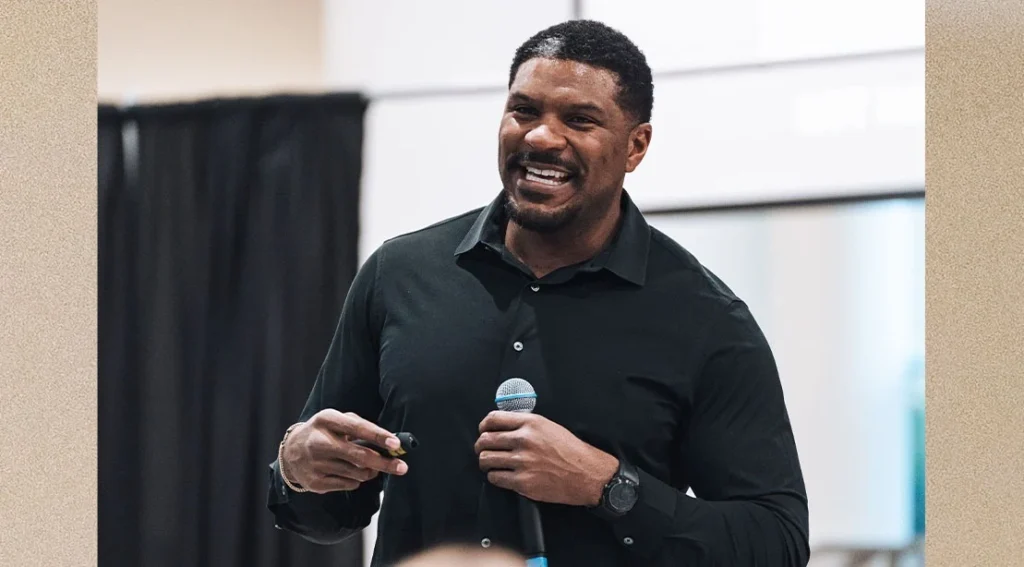


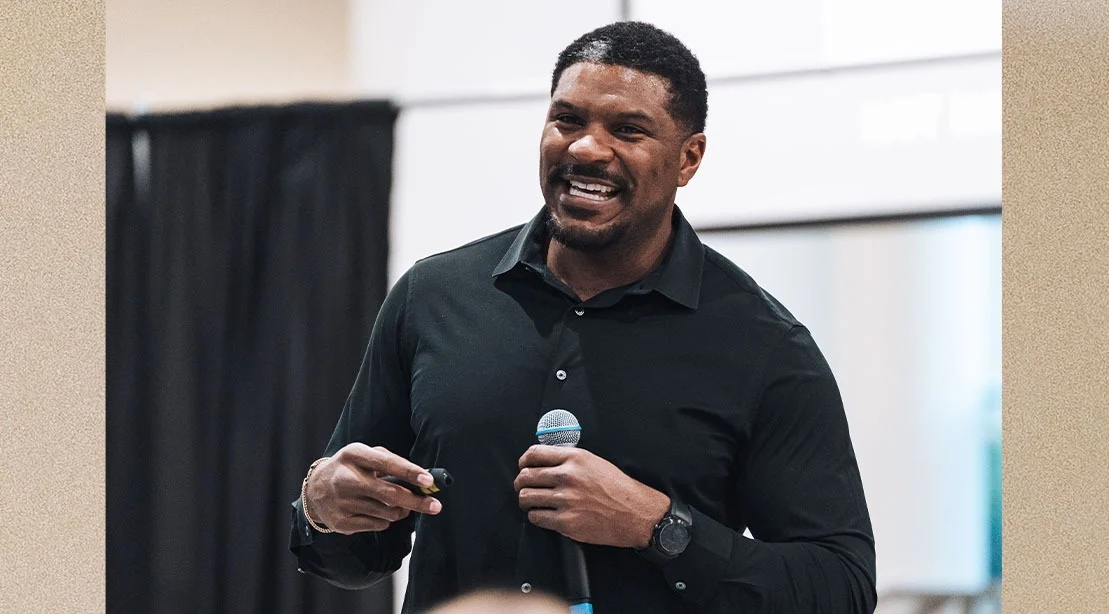
When Julius Thomas hung up his NFL cleats in 2018, he had no idea he was about to face the hardest, and longest, transition of his life. The former tight end, who once caught game-winning touchdowns thrown by Peyton Manning during his standout years with the Denver Broncos, walked into graduate school at 30 years old with no playbook, no immediate career safety net, and none of the daily validation and wins that professional football had reliably handed him for years.
Stepping away from the competitive spotlight of professional sports is a notoriously daunting hurdle for elite athletes, but Thomas’s subsequent journey offers a profound look into the hidden psychological mechanics of high performance.
Reflecting on that abrupt shift, Thomas recalled the stark contrast between his athletic peak and his academic beginnings. When you have to go from being a master of your craft to a rookie, you transition from winning consistently, knowing precisely what you are doing, and feeling entirely comfortable, to having to rebuild your entire foundation from scratch. That process is remarkably challenging, because the beginning of any new journey inevitably involves losing, doing things wrong, working tirelessly, and struggling through uncertainty.
The lessons he learned over the years that followed fundamentally changed the way he looks at human performance. He returned to the classroom with the same intense dedication he once brought to the football field, completing a rigorous clinical residency and ultimately earning his doctorate in clinical psychology in June 2025.
In professional sports, the prevailing cultural mentality is almost always to push through adversity, ignore the pain, and keep going no matter what. While Thomas lived that grueling reality for years on the gridiron, today, operating as a performance coach and consultant through his company Optimal Performance, he sees firsthand how much of true peak performance actually relies on stepping back, slowing down, and checking in with ourselves.
One of the things Thomas frequently emphasizes is that the single biggest unaddressed area of performance in all of sports is emotional regulation.
Thomas’s Take on NFL Injuries This Season
The professional football season has already severely tested the traditional push-through mindset from its earliest weeks. Across the league, major injuries have sidelined star players, capturing the attention of analysts, fans, and medical staffs alike. Notably, several starting quarterbacks faced early-season setbacks, including Jayden Daniels, Caleb Williams, and Jaxson Dart. Meanwhile, Philadelphia Eagles quarterback Jalen Hurts was expected to miss significant time after medical evaluations discovered deep vein thrombosis and bilateral pulmonary emboli, with his medical case ultimately traced back to an initial calf injury sustained from an opponent’s cleat.
When asked about the mounting physical toll on players, Thomas resisted pinning the troubling run of injuries on any single cause, nor did he believe that the current wave of sidelined talent was fundamentally unusual for the brutal nature of the sport. Football has a 100 percent injury rate, he points out, noting that every single person who steps onto the field to play football is going to get injured at some point, meaning that overall injury rates are inherently high in that particular environment.
Contact injuries simply come with the job description, he explains, while training loads, playing surfaces, off-season conditioning habits, baseline mobility, and proper recovery—or the glaring lack thereof—shape the non-contact injuries that often alter seasons. Furthermore, a growing body of scientific research shows that the mind plays a critical role in physical resilience and vulnerability.
A notable 2017 meta-analysis published in the journal Sports Medicine linked psychological stress responses to a significantly higher risk of athletic injury, while also demonstrating that targeted psychological interventions can successfully reduce overall injury rates. Because of these interconnected systems, Thomas makes it a deliberate point to take his foot off the gas pedal far more frequently than most high achievers are naturally inclined to do.
If you just only floor it, only floor it, only floor it, how long do you think that mechanical engine is going to do well? Thomas asks, answering his own rhetorical question by noting that it will certainly not last very long.
The physical and mental brakes represent the parasympathetic nervous system, which is the rest-and-digest branch that actively counters the body’s acute stress response. If we do not do enough to create more parasympathetic tone in our nervous system, and if we do not sleep enough hours to allow for physical repair, all we are doing is slowly degrading the major systems in our body, he explains, emphasizing that the accumulated cost of the relentless daily grind will inevitably come due sooner or later.
How Every High Performer Pays the Tab
This destructive pattern of relentless overexertion frequently follows high performers out of the athletic stadium and straight into the corporate boardroom. Thomas has consulted with high-powered executives who approached him searching for nootropics and pharmaceutical cognitive enhancers to sharpen their daily focus, only to later admit that they themselves had been surviving on a mere four hours of sleep a night for two decades.
To combat this unsustainable lifestyle, Thomas built a comprehensive framework known as Striving for 100 to help bring his clients back to five fundamental daily habits: exercise, sleep, nutrition, recovery, and healthy substance use, with proper recovery anchoring all the rest. Working one-on-one with clients, he layers in radical acceptance, cognitive restructuring, and psychological reframing drawn from several evidence-based clinical methods, such as cognitive behavioral therapy (CBT) and acceptance and commitment therapy (ACT).
You are either going to pay the cost slowly and surely by recovering properly in your 30s and 40s and 50s, he warns, or you are going to pay it all of a sudden when you end up seriously sick.
Thomas holds himself to the exact same rigorous standard, though he admits that when an experienced friend originally warned him that a full professional and personal transition would take roughly a decade to accomplish, he initially refused to believe it.
He notes that he is now eight years deep into his post-athletic transition and is finally getting close to where he ultimately wants to be in his new profession. Along the way, he has experienced firsthand the immense psychological difficulty surrounding personal identity and how profoundly society misunderstands the transition process for retiring athletes.
Thomas actively bristles at the well-meaning advice that retiring athletes frequently hear on their way out of the locker room—the common suggestion that they simply need to separate who they are as a human being from the specific sport they played.
It really bothers me when people say that about athletes, because they are trying to minimize the challenge of the experience, he explains. When the athlete inevitably finds himself struggling with the psychological challenge of leaving the game, they feel like they shouldn’t be struggling, and that this transition should somehow be easy. He adds that a person’s identity runs far deeper than a simple occupational label; it is built through what you do every single day and reinforced continuously by how others perceive you.
Years after playing his final professional game, people still routinely want to talk about his NFL playing days, during which the two-time Pro Bowl tight end caught an impressive 12 touchdown passes in both the 2012 and 2013 seasons. It is genuinely hard to get people to see you in your new career, he admits candidly.
Now, part of his professional mission is preparing current and rising athletes for that inevitable shift, prompting them to honestly evaluate whether they are ready for one of the hardest things they will ever do in their lives, and whether they have built the necessary psychological tools to get through it successfully.
He asks athletes directly if they possess the psychological skills needed to reframe circumstances, recontextualize their experiences, and find new meaning and purpose outside of the stadium.
What he does not want any player to forget is that the struggle associated with major life changes says nothing negative about their character or worth. Every major life transition inherently strains human psychological limits. Transitions are always hard, he emphasizes, but with the right tools, framework, and support systems, they become much easier to navigate over time.
When the Pain Doesn’t Show on an X-Ray
Most people are never taught to properly identify and name what they are feeling emotionally, let alone work through those feelings when chronic stress drags on for months or even years. Thomas was not taught those skills initially either, and through his extensive academic research, he has witnessed the profound physical toll that unmanaged emotional stress can take on the human body.
Emotions directly trigger our nervous system, Thomas says, referring to his specialized studies in psychoneuroimmunology. Therefore, the better you get at managing your emotions and actively reducing negative emotional states, the less sustained stress you place on your nervous system over the long term.
This connection is crucial because our nervous system, immune system, and overall psychology are deeply intertwined, he notes. When chronic stress sets in, various aspects of our daily life quickly take a hit. Sleep quality and nutritional habits tend to slip first when emotional strain builds up, while chronic muscle tension climbs steadily as underlying anxiety lingers in the background.
Fortunately, research shows that simply putting a complex feeling into words can help turn down the physiological volume of distress. A widely cited 2007 brain imaging study conducted at UCLA and published in Psychological Science found that the simple act of labeling negative emotions significantly dampened the amygdala’s neural response to distressing images.
Despite the proven benefits of emotional awareness, very few people receive adequate support in doing that necessary psychological work. Thomas highlights data from the Centers for Disease Control and Prevention reporting that only 10.9 percent of U.S. men receive counseling or therapy from a mental health professional, compared to 16.9 percent of women. Unfortunately, Thomas sees a clear discrepancy in where people consistently choose to spend their time, attention, and financial resources instead.
People are generally not very interested in paying for professional mental health services, but they are really interested in buying new pants, new shirts, and nice bags, he remarks, pointing out how much easier it is for many individuals to ask for help with physical pain or bodily discomfort. During his playing days as an athlete, he never once hesitated to walk straight into the team training room to address a sore ankle.
We are constantly asking for help in so many different areas of our daily life, he observes, but we somehow, as a culture, maintain the belief that we should be able to handle whatever is happening in our heart and in our mind entirely by ourselves.
Meet Thomas at Eudaimonia
As his work in clinical psychology and performance coaching continues to expand, Thomas is increasingly finding himself among the leading voices in the broader health, wellness, and longevity sectors. He is slated to share the stage with prominent innovators and leaders in the wellness industry at the upcoming Eudaimonia event scheduled for November 5 through 8.
Reflecting on his participation in the event’s inaugural year, Thomas recalled how deeply the professional relationships he built across psychology, neuroscience, medicine, and mind-body practices have resonated with him long after the conference ended.
The conversations, the professional network, and the community I built during my first year at Eudaimonia are still having a positive influence on my life almost one year later, he said, adding that the gathering has quickly become one of the conferences he looks forward to attending the most.
Thomas is set to return to the event to deliver keynotes focused on mental health alongside a panel discussion exploring mindset, human performance, and the psychological capacity to adapt to changing environments. The primary takeaway he hopes audiences will leave with is a sense of genuine hope, practical and actionable steps, and education regarding tools that can help make them healthier, more productive, and higher functioning individuals.
If you want to achieve sustainable high performance over the course of a lifetime, you simply have to build true well-being and a high quality of life directly into what you do every day, Thomas concluded.