


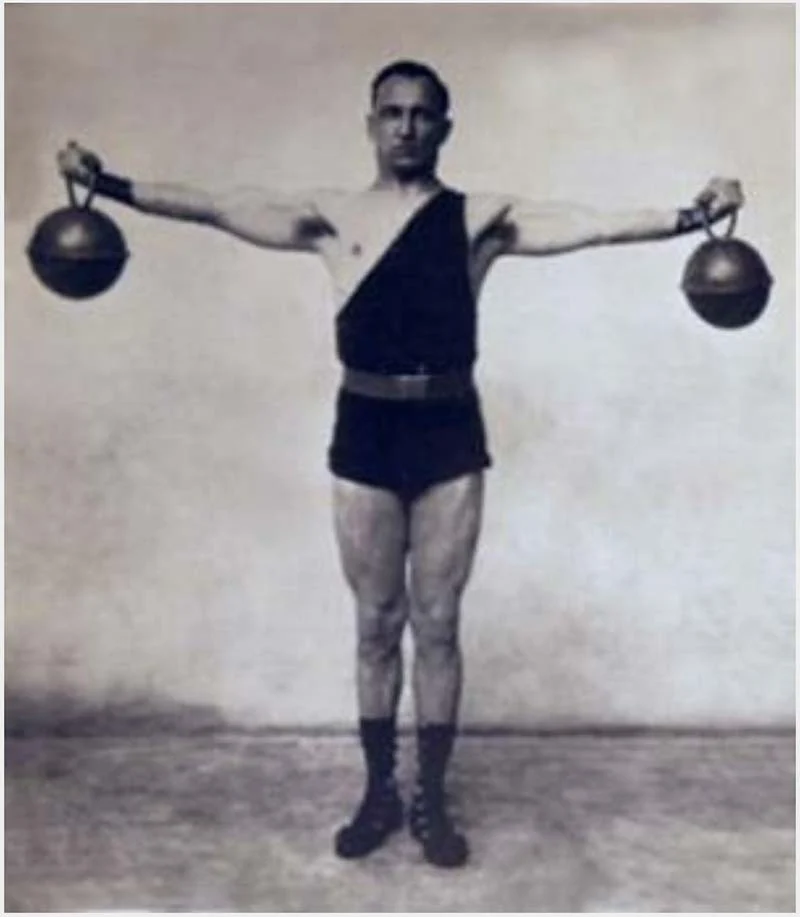
For decades, strength coaches and fitness enthusiasts alike have debated the true utility of the kettlebell. From its mythical presentation as a secretive weapon of Russian special forces to its actual roots in Vaudeville, circus acts, and traditional physical culture, the cast-iron ball with a handle occupies a unique space in modern athletic development. While prominent trainers swear by its effectiveness for power and fat loss, a closer examination of its history, mechanics, and limitations reveals a more nuanced picture.
Ken Jakalski, a seasoned track and field coach, has long incorporated kettlebells into his athletes’ training regimens. Influenced by figures like Pavel Tsatsouline and Dan John, Jakalski recognizes the undeniable utility of the tool. However, he is equally quick to separate the practical benefits of kettlebell training from the elaborate marketing mystique that has surrounded the equipment for generations.
Unpacking the Myth of Soviet Super-Training
The enduring popularity of kettlebells in Western fitness culture is largely built upon an intriguing narrative: that they represent the secret, high-efficiency training methodology of elite Soviet athletes. This perspective was frequently marketed to American trainers looking for an edge, painting a picture of high-tech, scientifically optimized regimens from behind the Iron Curtain.
However, historical records tell a very different story. Writer Rick Brunner, in his book Soviet Training and Recovery Methods, dismantled the myth of the hyper-advanced Eastern Bloc training facility. According to Brunner, the reality on the ground was far more rugged. Soviet athletes trained in rudimentary barns and damp cellars, utilizing weights forged from old railway car axles. Far from relying on state-of-the-art diagnostic computers or sophisticated machinery, many of these athletes drew their inspiration from dog-eared bodybuilding magazines smuggled from the West, training alongside basic barbells, isometic racks, and crude, early iterations of free weights.

Culture and weightlifting historian David Landau has similarly characterized the modern kettlebell renaissance as a triumph of marketing over biomechanical reality. Landau points to cinematic touchstones like Rocky IV—where the fictional Russian boxer Ivan Drago is depicted as the ultimate product of high-tech diagnostic laboratories, contrasting sharply with Rocky Balboa’s rustic barn workouts—as the root of this psychological bias. In reality, early weightlifting pioneers understood that the kettlebell, while useful, was fundamentally a primitive strength-training tool burdened with distinct mechanical limitations.
Early physical culture expert Alan Calvert famously cautioned against viewing any single piece of equipment as a universal solution, noting that anyone purchasing a single kettlebell under the impression that it could uniformly develop every muscle group in the human body would be in for a rude awakening.
Why Coaches Still Choose Kettlebells
Despite these structural and historical limitations, kettlebells remain a fixture in athletic facilities worldwide. The question naturally arises: why do experienced coaches continue to make them a cornerstone of daily programming if they are far from a magical cure-all?
The answer lies in the distinct physical demands of ballistic movements. Proponents of kettlebell training, such as fitness educator John Powers, emphasize that the primary advantage of kettlebells over conventional dumbbells, barbells, or selectorized machines stems from the dynamic, ballistic nature of the exercises. Athletes can leverage kettlebells to execute complex lifting, pressing, pulling, and extension patterns that challenge the body across multiple planes of motion.

Crucially, kettlebell movements demand constant inter- and intramuscular coordination, elevating kinesthetic awareness throughout the entire duration of the lift. Because every kettlebell exercise inherently involves multiple joints and large muscle groups, the core, hips, and deep stabilizing stabilizers must remain engaged without interruption. This continuous demand for postural control and stabilization helps bridge the gap between static lifting and the chaotic, fluid environments of competitive sports.
Respected strength coach Dan John has frequently underscored this philosophy, asserting that mastering the fundamental hip hinge and teaching the mechanics of a proper swing yields immediate dividends. For John, the kettlebell swing remains an exceptional choice for conditioning, explosive power development, and general athletic preparation.
In practical applications, coaches like Jakalski utilize kettlebells not as an end-all-be-all, but as an effective developmental bridge. Kettlebells serve as a reliable lead-in to primary multi-joint movements, such as trap-bar deadlifts, single-leg deadlifts, single-leg cleans, and weighted step-ups. Movements like the goblet squat and the traditional kettlebell swing provide athletes with an accessible entry point into deep hip mechanics and loaded positioning before progressing to heavier, more rigid implements.
Historical Precedents and Practical Limitations
The adaptability of kettlebell training is hardly a recent discovery. Archival material from the Russian Weightlifting Yearbook of 1984 highlighted the utility of kettlebell lifting within broader physical education frameworks. An article from the publication concluded that kettlebell training was remarkably well-suited for a diverse array of sports, citing the technical simplicity of the movements, the low barrier to equipment acquisition, and the ability to scale exercises across a wide demographic of ages and skill levels.

Yet, acknowledging these practical benefits does not elevate the kettlebell to the status of a miracle cure. The fitness industry has a long history of repackaging traditional concepts under new branding—a phenomenon once famously described by renowned Dutch sprint coach Henk Kraaijenhof as "old wine in new skins."
Ultimately, the enduring value of the kettlebell lies in its practicality and engagement factor rather than any inherent superiority over barbells, dumbbells, or bodyweight training. As strength and conditioning pioneer Mel Siff aptly observed, kettlebell training can be exceptionally effective and undeniably fun, just like countless other forms of physical preparation. The key for modern coaches and athletes is to maintain perspective, avoiding the dogmatic trap of viewing any single methodology as the sole path to athletic excellence.