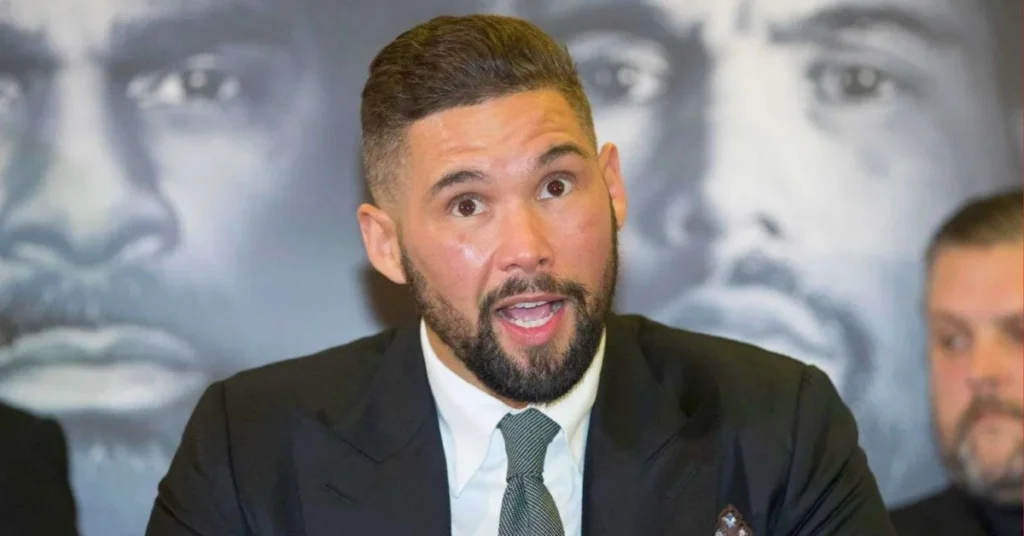
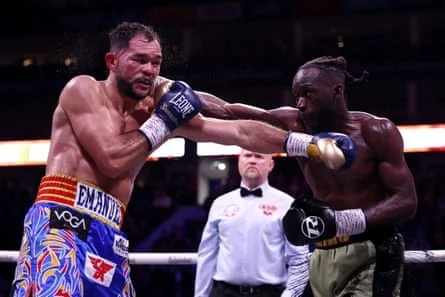
“I’ve been very reluctant to tell my story,” Denzel Bentley says as he sits upstairs at his gym in Essex, finally opening up about a testing life spent both inside and before the canvas of the ring. Before he even begins to address the latest maddening round of boxing politics that threatens to derail his career trajectory, Bentley reveals how he has dealt with genuine catastrophe and personal trauma. This deeply buried pain places boxing’s corporate shenanigans into a sobering, grounded perspective, especially because so many of his childhood friends have been violently murdered on the streets of London.
Bentley has just been officially stripped of his WBO world middleweight title because the sanctioning body refused to grant him permission to defend his belt against Shane Mosley Jr at London’s Copper Box Arena. The governing body firmly rejected his appeal, ruling that he was not entitled to face the world-ranked Mosley Jr rather than his mandatory challenger in what would have been his first official title defence.
Bentley admits to feeling “disappointed” by the decision, noting that “I don’t feel as if I’ve been treated like a champion.” Despite the bureaucratic setback, he still fully intends to defeat Mosley Jr this Saturday night in what marks the opening bout of a lucrative, multi-fight deal with the American promoter Zuffa. But as the 31-year-old talks in raw and moving detail about his past, Bentley draws the conversation back to the streets around his old council estate in Battersea, where friends were routinely stabbed or shot dead during his youth.
“I don’t want a sob story,” he says, his tone shifting to one of stark seriousness, “but boxing definitely saved me. I got out of a lot of trouble because of boxing. A lot of things happened on the estate and I was at the gym. I missed things by the skin of my teeth. But I’ve been chased. I’ve been shot at. I’d be scared for my life. But, as a teenager, you become immune to it.”
His expression mixes a profound sense of resignation with quiet relief. “I’m blessed and fortunate enough to be alive.”
Bentley has lost three of his 26 professional fights, and in the fraught buildup to his last defeat against Nathan Heaney in November 2023, yet another close friend was killed in Battersea. “I’m from a background where you become numbed,” he reflects. “Of course it’s sad and it hurts, but I’ve lost friends more than once in the lead-up to a fight. That time was crazy because my friend got stabbed by someone we knew who needed money. He saw my friend and tried to steal his watch. My friend turned round and said: ‘We know each other. How can you try and rob me?’ They got into a scuffle and the other guy pulled out a knife and stabbed him multiple times. My friend died on the spot.”

The memory of the aftermath remains vivid. “We got the phone call and flew down there. The paramedics had arrived and the body was still there. The dead man’s brother was in bits. I went to him and said: ‘I don’t even know what to say to you. This is so hard.’”
When asked how many friends he has ultimately lost to street violence, Bentley offers a grim assessment. “To knife and gun crime? It’s a lot, man.”
Asked if the deaths run into double figures, he pauses before confirming: “Definitely. I can’t count how many friends I’ve lost. The first time I lost someone to knife crime, I was 12. He got stabbed outside his house. Even the night before I fought Danny Dignum [whom Bentley knocked out in May 2024], another friend was shot. I blocked that out and got on with the fight. It made me feel guilty that I’m celebrating my win and my friend’s just lost his life and his family are in bits.”
Bentley possesses a commanding physical presence, but he needs a moment of quiet reflection before resuming. “People still live the same lives. That’s what they’re accustomed to and they can’t break out of it. They’re still people I’ve got genuine love for, and I just hope I don’t have to lose no more friends to the streets.”
Reflecting further on his childhood, the reality of facing mortality at such a tender age left an indelible mark. “It was mad,” he says softly, recalling the summer when he was 12 years old. “I remember going home that evening and lots of police were racing about. It was the summer and we were about to break up from school and we could tell someone had got stabbed. The next day was the last day of school and someone told me: ‘Yeah, so-and-so got stabbed last night.’ I was like: ‘You’re lying.’ I’d seen the commotion, but I didn’t know it was my friend. You feel guilty because you’re not there for them. It’s traumatic, but there’s nothing you can do. Even last month another friend of mine got shot in the back and passed away. He was a bus driver and I saw him as a little brother.”
Bentley is articulate, and his thoughts flow naturally as he contemplates the socioeconomic realities of his community. “There comes a day when something happens and you don’t hurt as much. But I still go round the estate to see my mum and things happen. I’d love to move her out. I want my kids to go see their grandma. But, listen, we’re not in the middle of Gaza where people are going through so much worse than us. We’re still privileged to be in positions where I can find a way to move myself out.”
The conversation turns to shared backgrounds within the sport, noting a mutual friend in Isaac Chamberlain, the cruiserweight who grew up in Brixton and similarly navigated a dangerous path before finding salvation in boxing. Asked if he followed a comparable route, Bentley is candid. “Yes, 100%. That’s how I’m around these people that I’ve lost in London. To us, that’s normal. Or it was. Now that I have a kid of my own, I never want him to be in an environment like that. That’s why I can’t let boxing get the better of me. I don’t care what I’ve got to go through. I’ve got to make sure my son’s good, and if I have more kids in the future I don’t want them to be around people doing things like that.”
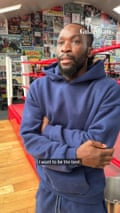
Bentley’s athletic journey was not a traditional one; he only began boxing seriously when he was 17, having spent his earlier years aspiring to be a footballer. “I stopped playing at 16,” he recalls. “People were saying: ‘If you’re not in an academy by now you’re not going to make it.’ So I was like: ‘I’m going to college now.’ But I started taking boxing seriously when I made a conscious decision to leave university where I was studying sports science. I wanted to see if I could be a boxer.”
Working part-time at Sainsbury’s during those formative years, Bentley would cycle to the gym in Bermondsey using a Santander bike rental scheme. “Pay £2 and, if you get there in under half an hour, you don’t get charged another £2,” he laughs, before remembering the first words of genuine validation he ever received from his amateur trainer, Steve Hiser, who took troubled youths off the street and told him he possessed championship potential. Hiser passed away in 2023 just as Bentley had captured the British middleweight title. “He was proud,” Bentley says, “but he was on his deathbed.”
Bentley’s professional career has experienced soaring highs and punishing lows, including a hard-fought challenge for the WBO world title against Janibek Alimkhanuly in Las Vegas in November 2022. He lost that bout on points to a fighter who would later fail a drug test years down the line. Following that defeat, Bentley entered a frustrating spell in the wilderness. After beating Brad Pauls in December 2024 to regain his British title and claim the European belt, Bentley was forced into a grueling 16-month hiatus without a single fight as behind-the-scenes boxing politics repeatedly scuppered his bouts.
“It was no fault of my own,” Bentley says, emphasizing that there were no injuries or personal missteps involved.
During those 16 months without steady income, Bentley faced the harsh economic realities of a sport that often fails its elite athletes. “I didn’t get no pay. I had to start looking for jobs, and when I couldn’t get any, we went back to Frank Warren and he was kind enough to give me an advance. But after my next fight I’m using that money to pay back everything.”
At a time when he was on the verge of establishing himself as a dominant world champion, Bentley found himself looking for low-wage work. “My cousin asked me why I wasn’t fighting. It’s frustrating because I ain’t got the answers. So he told me to sign up to Amazon deliveries. It’s a zero-hours contract and you work when you’re available. If you’re not training one day, you could do a 12-hour shift of delivery work. I downloaded the app and put in my postcode, but there were no jobs near me. I refreshed it every day and even tried to use my mum’s address to see if I can get any jobs there. But nothing came up.”
Reflecting on the absurdity of his situation, he asks rhetorically in what other elite sport a world-class operator would be reduced to searching for a basic delivery job. “There is no other sport like it,” Bentley says. “It’s crazy, but it makes my journey more unique.” Asked how his partner handled the financial strain of a year and a half without reliable pay, he smiles slightly. “Luckily for my missus, she’s got a good job, so she just cracks on with it.”
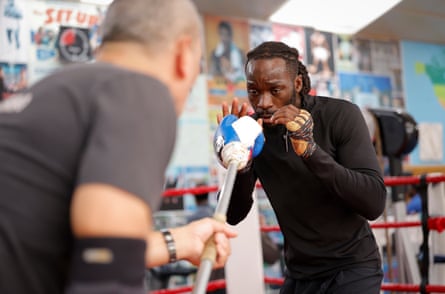
His fortunes shifted seven months ago when he stopped Endry Saavedra to win the WBO interim title at the O2 Arena. In July, Bentley was officially upgraded to the full WBO world champion after Alimkhanuly vacated the belt. Seeking better long-term prospects, Bentley subsequently parted ways with Frank Warren’s Queensberry Promotions and signed a multi-fight deal with Zuffa Boxing, the United States-based promotional outfit headed by Dana White.
“I need to be where I’m appreciated,” Bentley explains, “and Zuffa offered me a long-term deal with better money. Look, Queensberry have brought me back from losses and done loads, but I felt unappreciated by them.” He adds that despite external skepticism regarding Zuffa’s new entry into boxing, the promotional landscape offers compelling matchups. “Of course people are critical of Zuffa because they’re new in boxing. But they’ve got two world champions in my weight class in Aaron McKenna and Carlos Adames. There are loads of fights for me, so it was a no-brainer.”
Amid these career shifts, Bentley has had to navigate the fallout from the WBO’s insistence that he defend his title against mandatory challenger Yoenli Hernández. “They wanted me to fight Hernández,” Bentley says, “but they had an agreement with Queensberry. After Hernández’s last fight, they put out a tweet saying great performance. Denzel Bentley, the champion, gets a voluntary before the end of the year, and then he fights his mandatory next year. That was the original plan I want to stick to. Hernández can’t fight until next year, but I can’t be inactive. I also have a family to feed.”
Despite the initial blow of having his appeal rejected and being stripped of the belt, Bentley maintains a pragmatic outlook. “Weirdly enough, I feel relief that the saga’s now over. We can move forward and look to win another world title.”
He stresses that the administrative ruling alters nothing regarding his upcoming contest. “This changes nothing in my approach to fighting Mosley Jr. He’s a good, tough, awkward fighter. He throws shots and he’s a dog in the ring.”
Bentley’s affection for the physical combat of boxing remains undiminished, even as he navigates its cutthroat business side. Stepping into the ring on Saturday night for a hard-edged battle, he feels entirely at home. “My past experiences have helped me build a lot of resilience,” he concludes. “I’m ready to go out there on Saturday and put on a show. It’s an exciting new chapter in my life and we’ll see where it takes me.”