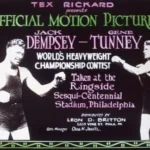

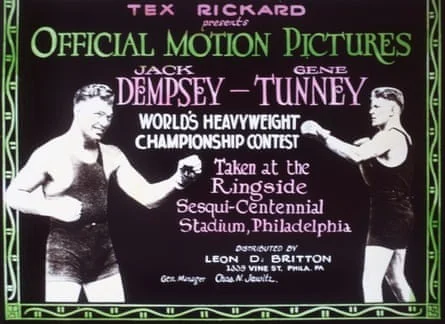
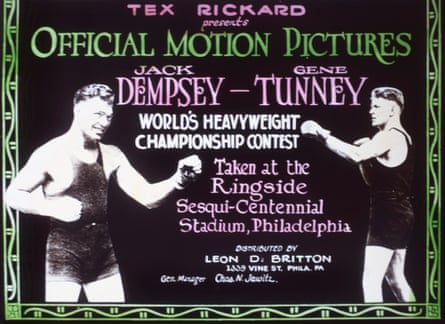
Wednesday marks the centennial anniversary of the first ring encounter between Jack Dempsey and Gene Tunney, a contest that redefined modern prize fighting and stands among boxing’s most storied championship bouts. Their two-fight rivalry in the 1920s represented the pinnacle of American sports spectacles, bridging the sport’s rough-and-tumble past with its modern era of mass entertainment and million-dollar gates. At the heart of this legendary dynamic was Jack Dempsey, one of the most mesmerizing and charismatic figures ever to wear the heavyweight crown.
Long before he commanded the attention of millions, Dempsey was forged in the crucible of extreme hardship. Biographer Randy Roberts observed that as a young man, Dempsey lived in mining camps and hobo jungles, rode the rods, and more than once begged for food. Yet what truly set Dempsey apart from others trapped in poverty was his extraordinary work ethic and unwavering determination to survive. As Roberts recounted, Dempsey eagerly accepted virtually any form of labor available, moving from washing dishes, cutting lawns, and scrubbing floors to the physically demanding worlds of coal mining, ditch digging, and fruit picking. Dempsey himself drew a clear distinction regarding those turbulent early years, once reflecting: "I was a hobo, but I was never a bum."
Dempsey’s fighting career began in earnest under the moniker "Kid Blackie." Between 1911—when he turned 16—and 1914, he engaged in roughly 100 raw bouts across the dusty mining towns of Colorado, Utah, and Nevada. For Dempsey, boxing was not an aesthetic pursuit; it was a desperate necessity driven by basic human survival.

"When you’re fighting, you’re fighting for one thing," Dempsey later recalled. "To get money. When I was a young fellow, I was knocked down plenty. I wanted to stay down. I couldn’t. I had to collect that $2 for winning or go hungry. I had one fight when I was knocked down 11 times before I got up to win. I had to get up. I was a hungry fighter. When you haven’t eaten for two days, you’ll understand."
Inside the ring, Dempsey translated that deep-seated survival instinct into an overwhelming, ferocious style. Famed trainer Ray Arcel described him as akin to "a saloon fighter," observing that with Dempsey, "every part of your body was a legal target." Renowned sportswriter Paul Gallico painted a vivid picture of Dempsey’s relentless ring persona, writing that the fighter seemed to have a constant bottomless well of cold fury somewhere close to his throat.
Gallico highlighted Dempsey’s speed, courage, and hitting power, while noting that defense was virtually non-existent in his repertoire. "His protection was aggression," Gallico wrote. "Dempsey never boxed anybody. When the bell rang, he ran out and began to attack his opponent, and he never stopped attacking him, trying to batter him to the floor until the bell ended the round. He had a smoldering truculence on his face and hatred in his eyes. He was utterly without mercy or pity, asked no quarter, gave none."
Dempsey simplified his own fighting philosophy into three essential pillars, stating: "To be a good fighter, you have to have three things. You’ve got to be able to give it. You’ve got to be able to take it. And you’ve got to have a fighting heart."
When Dempsey was rising through the ranks, the sport of boxing had fallen into a deep decline across the United States. Following the retirement of popular champion James Jeffries in 1904, the heavyweight division lacked a widely beloved figurehead. Public opposition mounted as moral reformers frequently condemned prizefighting as sinful and barbaric. These campaigns to ban the sport gained significant momentum after Jack Johnson claimed the championship in 1908.
The athletic landscape shifted on April 5, 1915, when Jess Willard defeated Johnson in Havana, Cuba. While Willard was positioned for stardom, his championship reign proved largely inactive. Willard went on tour with Buffalo Bill’s Wild West Show and other theatrical companies, defending his heavyweight title only once over the course of four years.
Seeking to revitalize boxing, Tex Rickard, America’s premier boxing promoter, lured Willard back into the ring on July 4, 1919. Rickard offered Willard a $100,000 guarantee to defend his title against Dempsey in Toledo, Ohio. It marked the nation’s first major outdoor prizefight since Jeffries had come out of retirement and been battered into submission by Johnson on July 4, 1910. The contrast between the two men was stark: Willard weighed in at 245 pounds, towering over Dempsey, who tipped the scales at just 187 pounds.
However, the physical disparity proved meaningless once the action commenced. Dempsey unleashed a brutal assault, breaking Willard’s jaw and nose, knocking out six of his teeth, and leaving severe cuts above and below his eyes. Unable to continue after three brutal rounds, Willard surrendered, and Jack Dempsey was crowned heavyweight champion of the world.
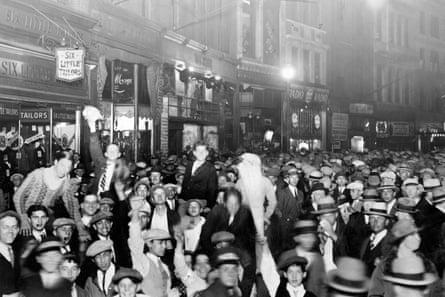
Rickard recognized that Dempsey possessed the ideal combination of terrifying knockout power and electric charisma to transform boxing into a respectable, broad-appeal sport that crossed all social classes. As state after state legalized prizefighting and moral