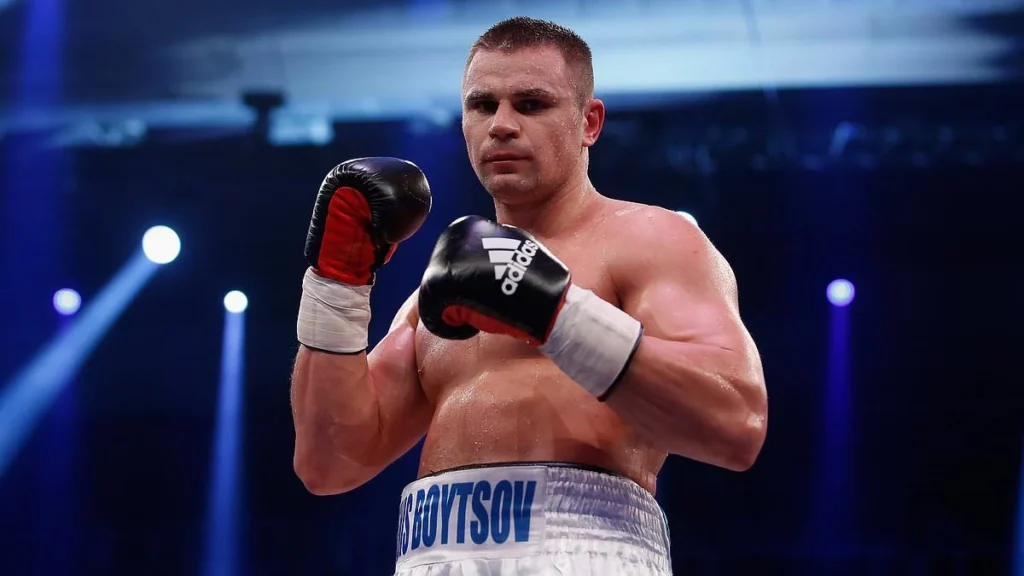


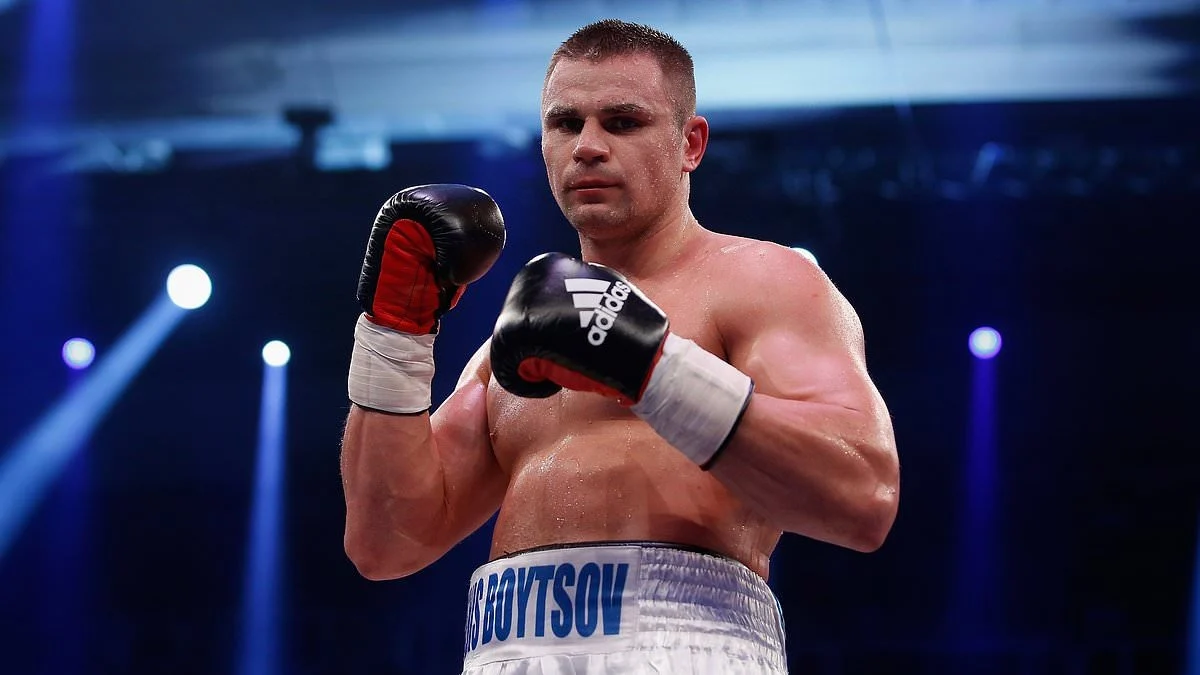
Denis Boytsov, the former world-rated Russian heavyweight contender whose promising boxing career was tragically brought to an abrupt and violent end more than a decade ago, has died at the age of 40. Boytsov passed away at his family home following an eleven-year struggle with catastrophic injuries sustained during an unexplained and brutal assault in a German subway station, an incident that shocked the international boxing community and left investigators without answers.
His death brings a somber close to one of the most poignant and distressing chapters in modern combat sports. Once regarded as one of the most devastating punchers in the sport and elevated to the position of the world’s number two heavyweight contender, Boytsov spent the final eleven years of his life entirely dependent on round-the-clock care. He had been left unable to speak following the severe head trauma he sustained in Berlin in 2015, an ordeal that completely transformed his life and extinguished a boxing career that had seemed destined for world championship contention.
According to his family, Boytsov died suddenly at home earlier this week after suffering an unexpected and fatal medical complication. His father, Nikolai Boytsov, confirmed the heartbreaking news to the Russian state news agency TASS, explaining that his son succumbed within minutes to a detached blood clot while being tended to by his wife, Olga Litvinova.
Recounting the agonizing final moments of the former boxer’s life, Nikolai Boytsov described a rapid and devastating sequence of events that unfolded right in front of his family. The boxer had just finished eating and was being assisted in bed when the medical emergency arose without warning.
"A blood clot broke off," Nikolai Boytsov said in his statement to TASS. "There was nothing they could do; it was instant death. Three minutes and that was it. This happened at home. His wife fed him and started turning him to the side. He suddenly broke down, started shaking, turned blue. And his whole life was over."
The sudden passing marks the end of an agonizing journey for the Boytsov family, who had devoted more than a decade to nursing the former athlete through an arduous, day-to-day existence of severe disability. Following the 2015 tragedy in the German capital, Boytsov underwent extensive and specialized rehabilitation treatments, first in German medical facilities and later back in his home country, where his loved ones assumed the burden of his long-term care.
Boytsov’s brother, Maxim, provided further insight into the harsh realities of the former contender’s condition over the past decade. He revealed that throughout the eleven years that followed the Berlin incident, Denis was never able to regain his ability to speak. The severe neurological trauma inflicted upon him had permanently robbed him of verbal communication, forcing him and his caregivers to rely entirely on basic non-verbal cues to interact.
"No, we didn’t communicate. He just nodded yes and no. But he understood everything," Maxim Boytsov said, reflecting on the prolonged emotional toll of caring for his brother. "I courted him for ten years. But it didn’t work out."
Despite the profound limitations imposed by his physical damage, those closest to him maintained that his cognitive comprehension remained intact beneath the surface of his silence. His mind remained aware, processing the presence of his loved ones even as his body remained captive to the lasting effects of that fateful day in Germany. Funeral services for the heavyweight have been arranged to take place in the Russian region of Oryol, his native territory, where relatives, friends, and mourners are gathering to pay their final respects.
Before his life was derailed by violence outside the ring, Boytsov had stood on the cusp of the pinnacle of heavyweight boxing. Competing during an era when Ukrainian icon Wladimir Klitschko ruled over the division, the Russian knockout specialist compiled a formidable professional record of 36 victories against just a solitary defeat, with 27 of those wins coming by way of knockout. Known for his aggressive fighting style, explosive hand speed, and pulverizing punch power, he steadily climbed the rankings of major sanctioning bodies, eventually securing the position of the world’s second-best heavyweight behind Klitschko.
Boytsov’s trajectory had put him on a direct collision course with the sport’s biggest names and most prestigious titles. Among his most notable potential matchups was a high-stakes clash against future world champion Tyson Fury. Boytsov had been primed and scheduled to face Fury in December 2012, a marquee fight that could have decisively altered the landscape of the division. However, Boytsov ultimately withdrew from the scheduled contest, missing out on the opportunity to test himself against the towering British contender on a global stage.
Despite that missed opportunity, the respect Boytsov commanded among his heavyweight peers was immense, particularly among those who had shared the ring with him behind closed doors. Former British heavyweight champion David Price—who famously defeated Tyson Fury in the amateur ranks back in 2005—later spoke with deep reverence and awe about the Russian’s extraordinary punching power.
Price, who throughout his career had sparred and trained alongside numerous elite heavyweights, including former unified world champion Anthony Joshua, singled out Boytsov as possessing striking power that surpassed even that of Joshua. Reflecting on a sparring session they had shared in Germany during the prime of their careers, Price noted that even partially deflected punches from Boytsov carried a jarring impact rarely felt in the sport.
"I sparred a Russian called Denis Boytsov in Germany once. He only hit the top of my head, but he was a powerful puncher," Price told the Daily Star in an interview looking back on his time in the heavyweight division. Recalling how Boytsov’s career was subsequently destroyed, Price expressed profound sorrow for what befell his former training partner. "I think he got his career cut short, he got absolutely battered and left for dead, he couldn’t fight again. But I remember him being a really powerful puncher."
That terrifying power inside the ring stood in stark contrast to the vulnerability Boytsov faced in his personal life during his time living and training abroad. The catastrophic turning point of his life arrived in May 2015 in Berlin. Boytsov was discovered lying between the tracks in a subway tunnel between the Bismarckstrasse and Wilmersdorfer Strasse stations in the German capital. He had suffered devastating head injuries and had to be rushed to an emergency trauma center, where physicians were forced to place him into a medically induced coma to manage massive swelling on the brain.
The circumstances surrounding the incident immediately sparked intense speculation and alarm. Berlin police launched an inquiry into how a world-class professional athlete ended up severely injured in an underground train tunnel, but the investigation was plagued by a lack of conclusive evidence. To this day, the perpetrators of the assault have never been formally identified or brought to justice, leaving the exact events shrouded in dark mystery.
In the immediate aftermath of the incident, representatives and relatives raised serious concerns that Boytsov had been the target of a targeted attack directly connected to his career. A statement published on the boxer’s official website shortly after he was hospitalized pointed to a sustained campaign of intimidation that had plagued him for years leading up to the tragedy.
"It is possible that this attack was linked to the boxer’s sporting activity," the statement on his website read at the time. "Around two years ago, Boytsov was receiving threats constantly."
His wife, Olga Litvinova, was devastated by the catastrophic event and openly voiced fears that the incident went far beyond a random act of street violence. Given the relentless threats her husband had reportedly been subjected to in the preceding years, she suggested that the assault was an attempted assassination designed to eliminate him or end his fighting career permanently.
While authorities were never able to uncover the individuals responsible or definitively prove the motives behind the attack, the consequences for Boytsov and his family were absolute and permanent. His fighting career, which had stood at 36-1 and held the promise of lucrative world championship bouts, was instantly terminated. At the age of 29, an athlete built on peak physical conditioning, speed, and formidable punching power was suddenly reduced to a fight for survival.
Although he eventually survived the critical initial phase and emerged from the induced coma, the brain trauma permanently stripped him of his independence and his voice. For the subsequent eleven years, the man who had once terrified heavyweights across Europe remained confined to home care, unable to speak a single word, relying on the tireless devotion of his wife Olga and his family members who tended to his basic needs every day.
The tragic ending to Boytsov’s life at the age of 40 has resonated deeply across the sport, serving as a heartbreaking reminder of an elite talent whose prime was stolen away under violent, unresolved circumstances. As his family prepares for his funeral in Oryol, the memory of Denis Boytsov remains divided between the ferocious puncher who once stood at the heights of world heavyweight boxing and the silent, resilient fighter who endured more than a decade of profound adversity until his final breath.