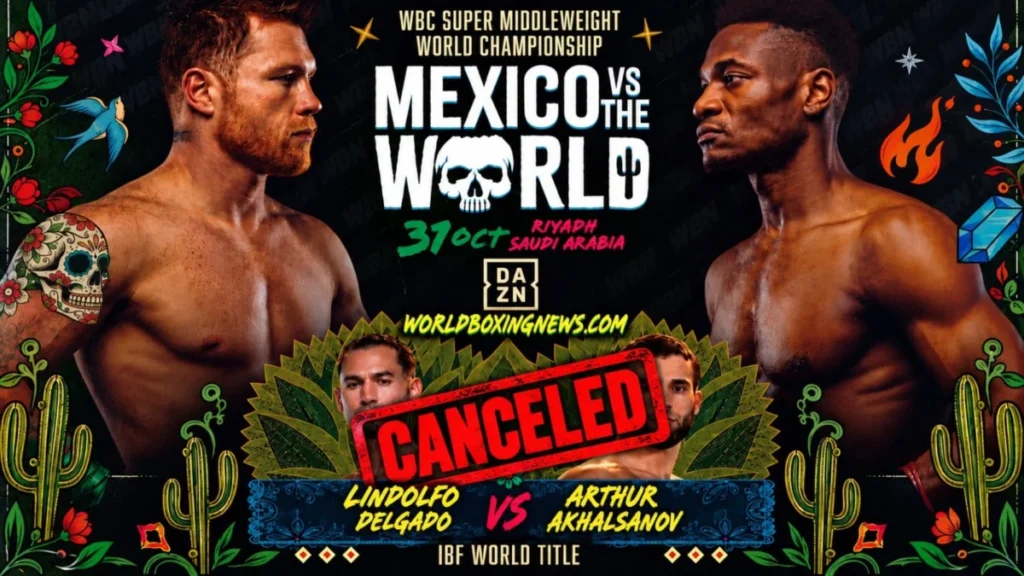

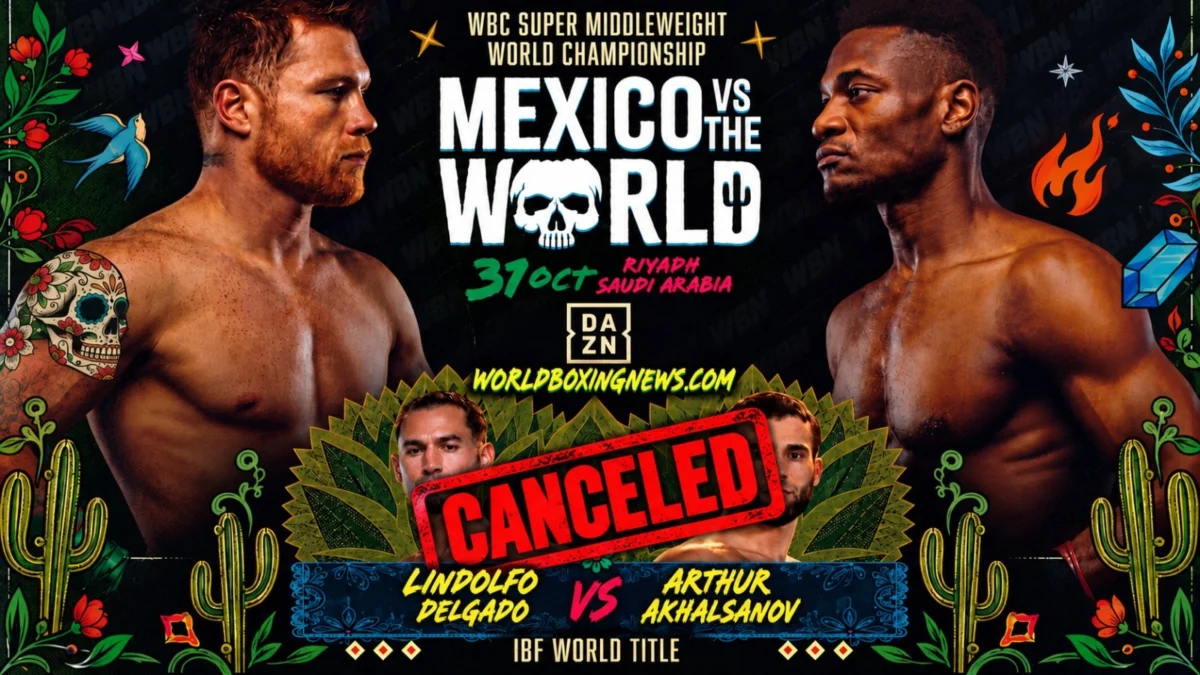
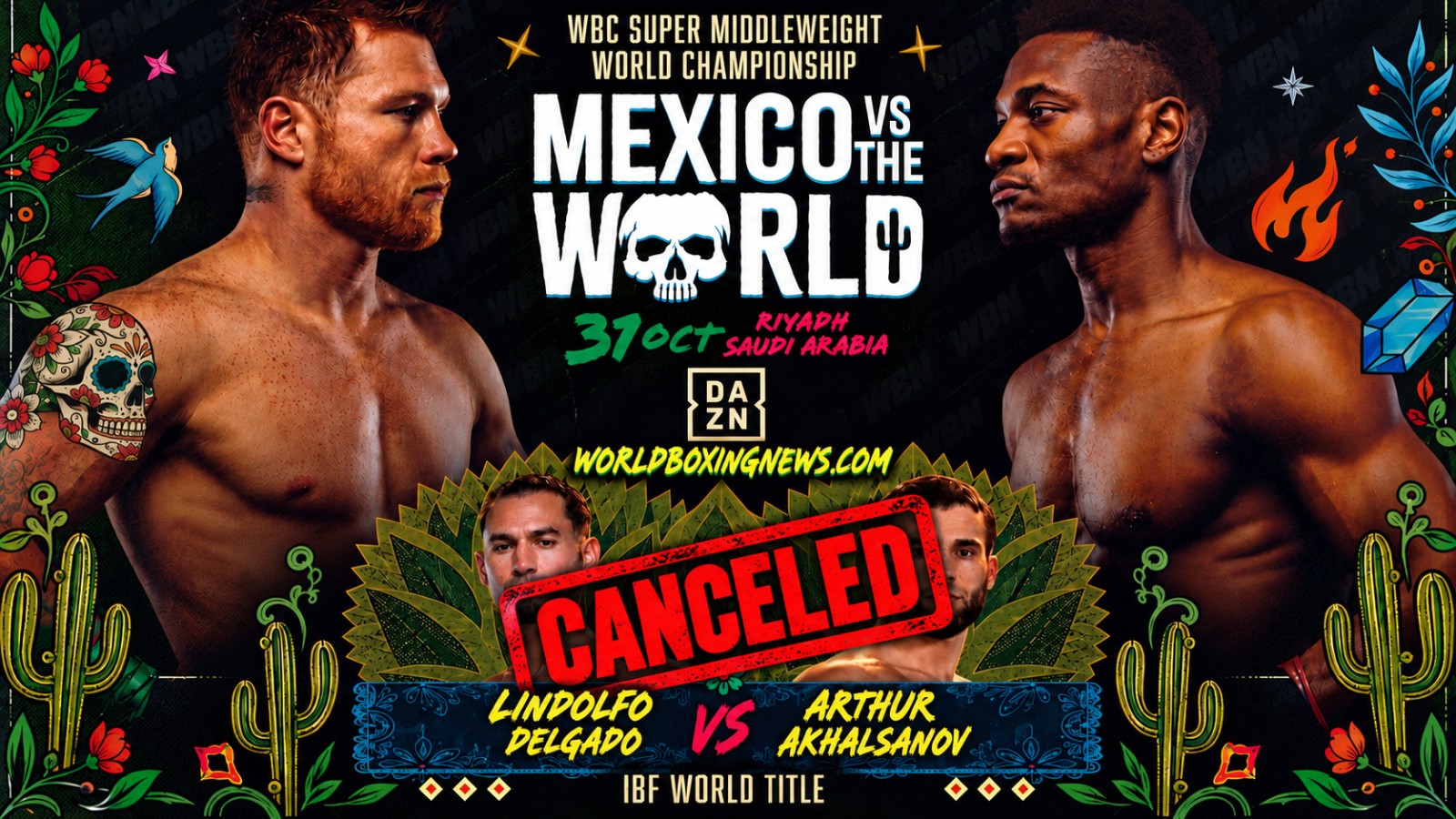
A high-profile world title fight scheduled for the undercard of the upcoming Canelo Alvarez versus Christian Mbilli pay-per-view event has been officially canceled due to escalating security concerns in Saudi Arabia. The cancellation comes as ballistic missile debris continues to fall on the capital city of Riyadh, leaving fighters, trainers, and event personnel inside the metropolitan area grappling with extraordinary safety risks just days before the Saturday night opening bell.
The scrapped bout involves Mexican contender Lindolfo Delgado, who was slated to challenge Artur Biyarslanov for the vacant International Boxing Federation (IBF) super lightweight world title. However, the fight was called off after Delgado and his veteran trainer, Robert Garcia, made the definitive decision against traveling into the Saudi capital amid the volatile security climate.
The mounting apprehension follows statements from regional authorities who reported successfully intercepting hostile ballistic missiles targeting Riyadh earlier in the week. The initial interception resulted in property damage as scattered debris plummeted into populated areas. The situation deteriorated further when incoming missile debris from two newly intercepted aerial threats fell directly onto parts of the capital, damaging a residential home and leaving at least one individual with minor injuries.
World Title Fight Canceled Over Safety Fears
Robert Garcia confirmed in interviews that Delgado would refuse to make the flight overseas after seriously evaluating the tangible risks and the specific travel logistics proposed by event organizers. The acclaimed trainer voiced deep skepticism regarding the rationale of escorting an elite athlete into a sovereign nation actively facing repeated aerial attacks and cross-border missile fire, especially given that the travel itinerary would have required supplementary transit through neighboring Bahrain.
"Why would we risk ourselves going over there without being safe?" Garcia told reporters, highlighting a sentiment shared by several members of the broader combat sports community who are monitoring the situation from abroad.
Conversely, the management team for Artur Biyarslanov offered a different perspective on the unfolding logistical breakdown. Jimmy Kambosos, manager to Biyarslanov, confirmed that his fighter was preparing to return home to Chechnya after last-minute efforts to secure a replacement opponent for the vacant IBF belt ultimately fell through. Kambosos noted that 19 out of the 20 fighters featured across the fight card had already safely arrived in Riyadh and maintained that Biyarslanov would eventually receive another opportunity to fight for the championship at a more stable time and location.
At the same time, Kambosos cast doubt on the precise motivations behind Delgado’s withdrawal, pointing to a potential mix of contributing factors. These included theoretical passport complications, processing delays with travel visas, conflicting advice from management and training staff, and a general breakdown in communication between promoters and the fighter’s camp, alongside the prevailing security concerns. While Kambosos did not definitively establish which of these alternative elements triggered the pullout, Garcia’s publicly stated safety warnings remain difficult for the sporting world to dismiss in light of emergency mobile alerts broadcast across the city.
Riyadh Missile Warning and Emergency Protocols
The atmosphere in the Saudi capital shifted dramatically when local authorities issued severe hostile aerial threat warnings to residents across Riyadh. Emergency guidance distributed via mobile phone push notifications instructed citizens and visitors alike to remain indoors, immediately seek shelter away from exterior windows, and strictly adhere to directives issued by Civil Defense personnel.
Dull explosions echoed through parts of the capital before officials eventually lifted the formal advisory. The security breach underscored the inherent unpredictability of the regional conflict and cast a long shadow over the massive sporting spectacle financed by the nation’s entertainment sector. For fighters and cornermen who had already touched down in the metropolis, there remained very little they could do to shield themselves from interceptors detonating overhead or to predict where metallic debris might eventually descend.
Despite these dramatic disruptions, the main event remains officially greenlit. Canelo Alvarez and Christian Mbilli are still scheduled to step through the ropes to battle for the prestigious WBC super middleweight title on Saturday evening. Both fighters fulfilled their media obligations by attending the official pre-fight press conference in Riyadh, with the ceremonial weigh-ins slated to follow.
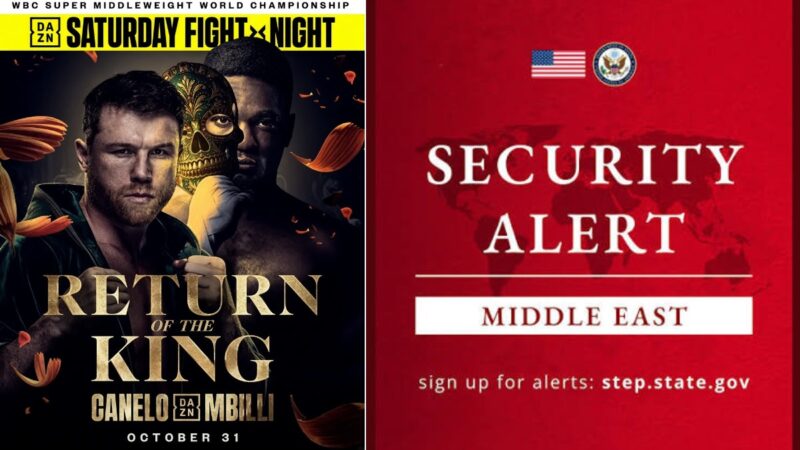
The event is planned to take place at The Venue, with the primary broadcast delivered globally through DAZN. Yet, the decision to proceed with a massive international gathering while air defense systems actively engage incoming projectiles has provoked intense scrutiny regarding the duty of care owed to undercard fighters, stadium workers, and paying spectators alike. With no public transparency regarding comprehensive emergency shelter access or specialized evacuation plans for the thousands expected to pack the arena, the ethical questions surrounding the promotion have only intensified.
Boxers’ Lives Come First
The ongoing controversy highlights a profound anxiety within professional boxing: the friction between commercial enterprise and the basic physical security of human beings. Bringing athletes into a territory facing active missile threats transforms a standard athletic competition into an unpredictable gamble with human life.
Professional boxing is widely recognized as one of the most perilous individual sports in the world, carrying severe, life-altering physical risks inside the squared circle alone. Athletes put their long-term neurological and physical health on the line every time they compete. Forcing or encouraging fighters to navigate active geopolitical conflict zones and aerial defense bombardments just outside their hotel rooms introduces a completely unacceptable dimension of danger that falls entirely outside the sporting realm.
The governing bodies, promoters, and stakeholders involved in staging elite sports entertainment carry a fundamental obligation to prioritize human safety above broadcast windows, financial investments, and promotional commitments. The fighters currently residing in Saudi Arabia for this weekend’s card, much like those who chose to withdraw, deserve absolute reassurance that their well-being remains paramount. In a sport where the margins between health and tragedy are already razor-thin, the primary concern must always be ensuring that everyone involved can step away from the ring safely when the final bell rings.