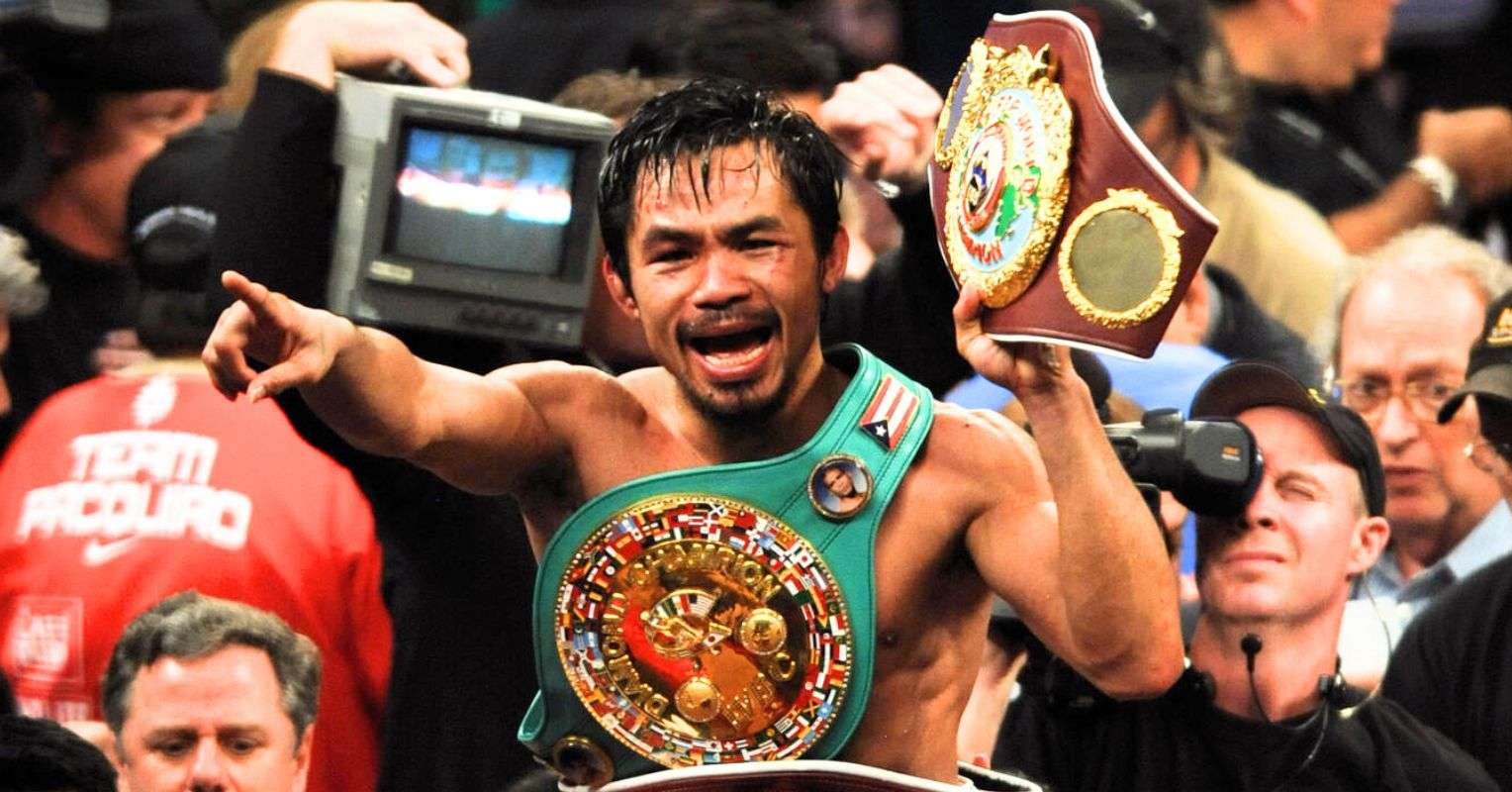
Manny Pacquiao stands as an undeniable titan in the annals of boxing history, a pugilistic phenomenon whose electrifying career transcended the sport itself. Hailing from humble beginnings in the Philippines, Pacquiao’s meteoric rise to global superstardom was fueled by a relentless southpaw attack, blurring hand speed, concussive power in both fists, and an unwavering warrior spirit. He etched his name into legend by becoming the only fighter to capture world titles in an astounding eight different weight divisions, from flyweight to junior middleweight. Beyond the ring, his humility, philanthropic efforts, and eventual foray into politics, culminating in a senatorial position in his home country, cemented his status as a national hero and an international icon. His fights were not just sporting events; they were cultural phenomena, uniting millions and inspiring a nation.
Among the pantheon of his fiercest adversaries, one name resonates with particular intensity: Juan Manuel Marquez. The Mexican counter-punching maestro, known as "Dinamita" for his explosive power and surgical precision, was Pacquiao’s stylistic foil and perhaps his most persistent tormentor. Their rivalry was not merely a series of fights; it was an epic saga, a four-act drama that captivated the boxing world for nearly a decade, defined by razor-thin margins, controversial decisions, and a profound mutual respect born from shared combat.
The genesis of this legendary rivalry unfolded on May 8, 2004, at the MGM Grand Garden Arena in Las Vegas. In their first encounter, Pacquiao, then a rising star, unleashed a blistering assault in the opening round, sending Marquez to the canvas three times with a torrent of left hands. The crowd roared, expecting a quick finish. However, Marquez, demonstrating the heart and resilience that would define his career, not only rose from each knockdown but dramatically rallied, out-boxing Pacquiao for significant stretches of the remaining rounds. The fight ultimately ended in a controversial split draw, with many observers believing Marquez had done enough to earn the victory. The seeds of a contentious rivalry, and Marquez’s burning sense of injustice, were sown.
Four years later, on March 15, 2008, they met again. By this time, Pacquiao had cemented his status as a pound-for-pound elite. The rematch was another tactical masterpiece, a chess match fought at warp speed. Once again, a single knockdown proved pivotal, with Pacquiao dropping Marquez in the third round with a straight left. The fight went the distance, culminating in a split decision victory for Pacquiao, 115-112, 114-113, and 112-115. The boxing world was divided, and Marquez, feeling unequivocally robbed, intensified his calls for a definitive resolution. The rivalry, far from being settled, only grew hotter.
The third installment arrived on November 12, 2011, almost four years after their second clash. The anticipation was palpable, the narrative of injustice fueling Marquez’s every move. This bout was perhaps the closest of the trilogy, a nuanced and strategic affair that saw Marquez land clean counter-punches with alarming consistency, often catching Pacquiao as he lunged forward. Despite Marquez’s seemingly superior boxing, the judges again sided with Pacquiao, rendering a majority decision (114-114, 115-113, 116-112). The verdict was met with a chorus of boos from the frustrated crowd, many of whom, like Marquez himself, felt he had clearly won. Marquez left the ring visibly distraught, his sense of grievance now a deep, festering wound. The clamor for a fourth fight became deafening, an undeniable demand from a boxing public desperate for closure.
That definitive encounter finally arrived on December 8, 2012, once more at the iconic MGM Grand Garden Arena. Both fighters, though in their mid-to-late thirties, had retained their formidable skills and competitive fire. The narrative was clear: for Pacquiao, it was about proving his dominance; for Marquez, it was about vindication, a desperate quest to erase the bitter taste of past decisions and finally achieve an undisputed victory. The atmosphere was electric, thick with the weight of history and expectation.
The fourth bout exploded from the opening bell, a stark departure from the more tactical nature of their previous encounters. Pacquiao, ever the aggressor, pressed the action with his characteristic blend of speed, angles, and combinations. Marquez, however, was sharper, more disciplined, and more powerful than ever before. He continued to employ his signature counterpunching strategy, patiently waiting for Pacquiao’s openings. In Round 3, the arena gasped as Marquez landed a perfectly timed overhand right, sending Pacquiao crashing to the canvas for the first time in their four-fight series. It was a stunning moment, a stark reminder of Marquez’s dangerous precision.
Yet, true to his legendary spirit, Pacquiao recovered. He rose, visibly shaken but unbowed, and quickly regained his composure. By the fifth round, the Filipino icon seemed to have turned the tide, hurting Marquez with a series of powerful shots and appearing to take control of the contest, reminiscent of his rallies in their prior battles. It felt like the familiar pattern was re-establishing itself, with Pacquiao’s aggression slowly wearing down his Mexican rival. The crowd was on its feet, sensing a potential finish.
But then, in Round 6, everything changed in an instant that would forever be etched into boxing lore. With just seconds remaining in the round, as Pacquiao, perhaps sensing an opportunity to close the show, lunged forward with a left hand, Marquez seized his moment. He dipped slightly, shifting his weight, and unleashed a devastating, perfectly timed counter right hand. The punch landed flush on Pacquiao’s chin with concussive force. The impact was immediate and catastrophic. Pacquiao collapsed face-first, unconscious before he even hit the canvas, his body rigid in a chilling display of the punch’s power.
A collective gasp swept through the arena, followed by an eerie, profound silence. Time seemed to stand still. Marquez, who had spent years chasing this moment, stood triumphant on the ropes, his arms raised in a gesture of pure, unadulterated vindication. It was the most dramatic knockout in years, a seismic event that shook the boxing world to its core. Pacquiao eventually regained consciousness, but the image of his prostrate form became an enduring symbol of the brutal, unforgiving nature of the sport, and the ultimate closure for Juan Manuel Marquez. The Mexican warrior had finally secured his undeniable victory, erasing the controversies and cementing his place as Pacquiao’s equal, if not his superior, on that fateful night.
Despite the devastating nature of that knockout, Pacquiao’s career was far from over. He demonstrated incredible resilience, returning to the ring to win more world titles, including his epic "Fight of the Century" against Floyd Mayweather in 2015, and capturing the WBA welterweight championship from Keith Thurman in 2019 at the remarkable age of 40, thus becoming the oldest welterweight world champion in history. After a brief retirement and a foray into a presidential bid in the Philippines, the allure of the ring has called him back once more.
Pacquiao is set to make another audacious return to the ring this year, aiming to once again become the welterweight division’s oldest world champion, a record he already holds. This comeback, pitting him against the formidable Mario Barrios, has sparked considerable debate and excitement among fans and pundits alike.
Among those observing his potential return with a discerning eye is none other than his storied rival, Juan Manuel Marquez. Speaking to Pro Box TV, Marquez offered a surprisingly optimistic, yet pragmatic, assessment of Pacquiao’s chances:
"If Pacquiao feels good, no shoulder, knee, or foot injuries, and he’s perfectly fine — let’s give him the benefit of the doubt. Let’s see what kind of fight he has to put up against Mario Barrios." Marquez, intimately familiar with Pacquiao’s capabilities and vulnerabilities, understands the profound impact of physical condition at this stage of a fighter’s career. His emphasis on injury-free preparation highlights the immense challenge of competing at an elite level past one’s prime.
He continued, probing the strategic approach Pacquiao might employ: "Will he be aggressive? Will he rely on his power? Because power is the last thing a fighter loses. Let’s give the benefit of the doubt to a historic fighter." This insight from Marquez is crucial. While speed and reflexes often diminish with age, punching power can endure, a potent weapon for an aging champion. Pacquiao’s ability to still generate formidable force will be a key factor against a younger, strong opponent like Barrios. Marquez acknowledges the historical significance of Pacquiao’s career, suggesting that such a legend deserves the benefit of doubt for a comeback attempt.
Marquez concluded his thoughts with a poignant observation: "What matters is the integrity of the fighter. Pacquiao still hits hard. Let’s see how Barrios handles that." This statement speaks volumes about the respect Marquez holds for his former foe. Despite their bitter rivalry, Marquez recognizes Pacquiao’s enduring commitment and the inherent danger he still poses. The "integrity of the fighter" refers to Pacquiao’s dedication and heart, qualities that have defined his entire career. The challenge for Barrios will not just be to withstand Pacquiao’s power, but to contend with the sheer will of a man who has repeatedly defied expectations and overcome adversity.
Manny Pacquiao’s return is more than just another fight; it’s a testament to his enduring passion for boxing, his unyielding desire to challenge himself, and his remarkable ability to capture the world’s attention. The echoes of his legendary rivalry with Juan Manuel Marquez still reverberate, a reminder of the peaks and valleys of his unparalleled journey. As he steps back into the squared circle, the boxing world watches with bated breath, eager to see if the "PacMan" can once again defy time and add another extraordinary chapter to his already storied legacy.