
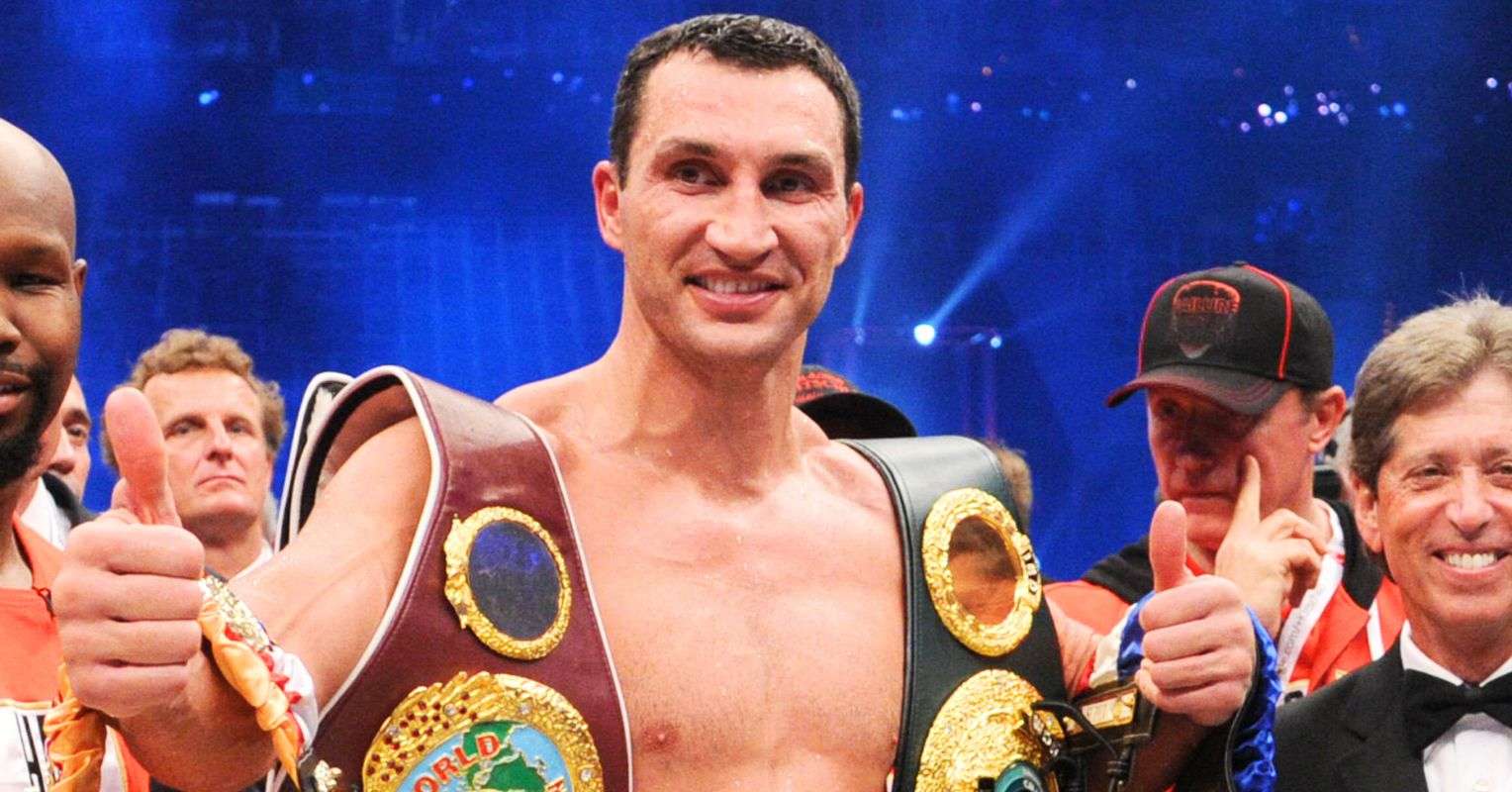
Wladimir Klitschko, a name synonymous with heavyweight boxing dominance, a towering figure who would eventually unify multiple world titles and reign supreme for over a decade. His formidable 6’6” frame, piston-like jab, and meticulously disciplined fighting style carved out a legacy as one of the greatest heavyweights of all time. Yet, before the era of "Dr. Steelhammer" truly began, there was a night in 1998, a stark and brutal lesson delivered in his homeland of Ukraine, when he was still an undefeated prospect, ripe for a harsh awakening. This was the night he met Ross Puritty.
Klitschko’s amateur pedigree was impeccable, highlighted by his gold medal at the 1996 Atlanta Olympics, a feat that immediately marked him as a professional contender with immense potential. Turning pro shortly after, he embarked on a rapid ascent, racking up 16 consecutive victories, most by knockout. Each win seemed to solidify the burgeoning belief that a new, dominant force was on the horizon. The boxing world watched keenly, anticipating his inevitable march towards a world title. His management team was carefully crafting his path, selecting opponents designed to build his experience and profile without derailing his momentum. The fight in Kyiv against Ross Puritty was intended to be another such stepping stone, a showcase for the young, powerful Ukrainian.
Ross Puritty, on the other hand, was a different breed entirely. Hailing from the United States, Puritty embodied the quintessential boxing journeyman. His record, a mixed bag of losses and wins, offered little to suggest he posed a significant threat to a talent like Klitschko. He was known more for his incredible durability and granite chin than for any refined boxing skills or devastating power. Puritty was the kind of fighter who could absorb a phenomenal amount of punishment and keep coming forward, a human battering ram whose primary weapon was his relentless pressure and sheer toughness. In 1998 alone, he had already fought three times, dropping decisions to seasoned professionals Larry Donald and Chris Byrd, before securing a knockout win against Mark Hulstrom just 29 days prior to his clash with Klitschko. He was a survivor, a gatekeeper, an opponent designed to test prospects, often exposing their weaknesses, but rarely beating them outright.
The atmosphere in Kyiv on that fateful night was electric with expectation. Local fans had come to witness their national hero continue his undefeated streak, to see another opponent succumb to his power. Klitschko, radiating confidence, entered the ring as the overwhelming favorite, embodying the hopes of a nation. The opening bell sounded, and the fight unfolded largely as predicted in the initial rounds. Klitschko asserted his dominance immediately, utilizing his reach advantage to pepper Puritty with sharp, precise jabs. He moved well, mixing his punches, landing powerful combinations to Puritty’s head and body. The young Ukrainian looked sharp, fast, and powerful, seemingly in complete control. Puritty, true to form, absorbed the blows. He stumbled, he rocked, but he never went down. He kept his guard up, occasionally returning a slow, looping punch, but primarily serving as a resilient target for Klitschko’s assault.
However, as the rounds wore on, a subtle but significant shift began to occur. Klitschko, perhaps unaccustomed to an opponent who simply would not yield, began to show signs of fatigue. His early exuberance and high punch output had taken their toll. His movements became a fraction slower, his punches lost a degree of their snap, and his once-impenetrable defense started to show cracks. Puritty, sensing the change, intensified his relentless forward march. He continued to absorb Klitschko’s weakening shots, but now he was landing more of his own. These weren’t necessarily fight-ending blows, but they were consistent, thudding punches that began to chip away at Klitschko’s energy and resolve. The crowd, initially boisterous, grew increasingly uneasy as their hero appeared to be struggling.
The fight entered its championship rounds, a territory Klitschko had rarely explored due to his propensity for early knockouts. By the ninth and tenth rounds, the narrative had completely flipped. Klitschko, visibly exhausted, was now on the defensive, struggling to keep the relentless Puritty at bay. His trademark jab, once a weapon of precision, became an effort. Puritty, though not a knockout artist, was a tireless aggressor, his punches finding their mark with greater frequency. The sheer accumulation of blows and the mental drain of fighting an opponent who refused to quit were taking a severe toll on the young Ukrainian.
In the tenth round, the unthinkable happened. Puritty, seizing the initiative, landed a series of heavy, clubbing blows. Klitschko, his legs wobbly and his guard faltering, succumbed to the pressure. He was sent crashing to the canvas, a moment of profound shock for everyone watching. It was the first time in his professional career he had been knocked down. He rose bravely, but his distress was evident. He survived the remainder of the round, retreating and holding, but the damage was done, both physically and psychologically. The aura of invincibility had been shattered.
The eleventh round began with Klitschko desperately trying to regain his composure, but Puritty was like a shark smelling blood. He pressed forward, relentless, unleashing a barrage of punches. Klitschko, still reeling from the previous knockdown, was overwhelmed. Another heavy combination landed, and the future champion went down a second time. This time, as he struggled to rise, his corner, seeing their fighter in undeniable peril and with no realistic path to victory, made the difficult but humane decision. A white towel sailed into the ring, signaling the end. The referee waved off the contest, declaring Ross Puritty the winner by TKO in the eleventh round. The crowd was stunned into silence, then a smattering of applause for the unlikely victor. Wladimir Klitschko, the undefeated Olympic gold medalist, had suffered his first professional defeat in spectacular fashion.
The immediate aftermath was a period of intense introspection for Klitschko and his team. The loss was not just a defeat; it was an exposure of vulnerabilities that had been masked by his raw power and early success. It highlighted a lack of stamina, an inability to adapt when his initial strategy failed, and a psychological fragility when facing true adversity. For a fighter groomed for greatness, this was a significant setback, raising questions about his future prospects and whether he truly possessed the championship mettle.
For Ross Puritty, this victory was the undisputed highlight of his career. He had done what no other professional fighter had managed to do before him: defeat Wladimir Klitschko. While he never ascended to elite status and finished his career with a modest record, his name would forever be etched in boxing history as the man who handed "Dr. Steelhammer" his first professional loss. It was a testament to his incredible toughness, his perseverance, and the timeless truth that in boxing, on any given night, a journeyman with heart can upset even the most promising of talents. Puritty’s career continued in much the same vein, fighting a string of tough opponents, but he never again achieved such a high-profile victory. His legacy, however, was secured in Kyiv.
Klitschko, to his immense credit, did not allow this devastating defeat to define his career. Instead, it became a pivotal learning experience. The path back to the top was not immediate or without further stumbles. He suffered two more shocking knockout losses in the early 2000s, first to Corrie Sanders in 2003 and then to Lamon Brewster in 2004, leading many to write him off. These defeats, however, served as catalysts for profound change. It was during this period of rebuilding and self-reflection that Klitschko made the crucial decision to partner with legendary trainer Emanuel Steward.
Under Steward’s tutelage, Klitschko underwent a radical transformation. He shed the raw, sometimes wild, approach of his early career and embraced a more disciplined, strategic style. Steward meticulously refined Klitschko’s potent jab, turning it into the most effective weapon in heavyweight boxing. He taught Klitschko to control distance, to clinch when necessary, and to manage his energy levels over twelve rounds. The mental fortitude, once a weakness, was meticulously rebuilt. The "Dr. Steelhammer" persona emerged – a fighter who was physically imposing, technically precise, and psychologically unshakeable.
From 2006 onwards, Wladimir Klitschko embarked on one of the most dominant reigns in heavyweight history. He unified the IBF, WBA, WBO, and IBO titles, systematically dismantling opponent after opponent with his calculated, suffocating style. Alongside his equally dominant elder brother, Vitali Klitschko, the "Klitschko Era" saw the siblings rule the heavyweight division for over a decade, a period of unprecedented familial supremacy. The early setbacks, including the loss to Puritty, became footnotes in a career defined by resilience, adaptation, and an unwavering commitment to excellence.
The defeat to Ross Puritty, therefore, was far more than just a shocking upset; it was a crucible. It was the moment a promising talent was forced to confront his limitations, to learn the harsh realities of professional boxing, and to understand the profound difference between raw potential and sustained championship-level performance. It taught Wladimir Klitschko invaluable lessons about stamina, defense, and the mental toughness required to navigate the treacherous waters of the heavyweight division. In hindsight, the loss to Ross Puritty was not the end of a dream, but rather the difficult, essential beginning of a legend, forging the steel that would later define "Dr. Steelhammer."