


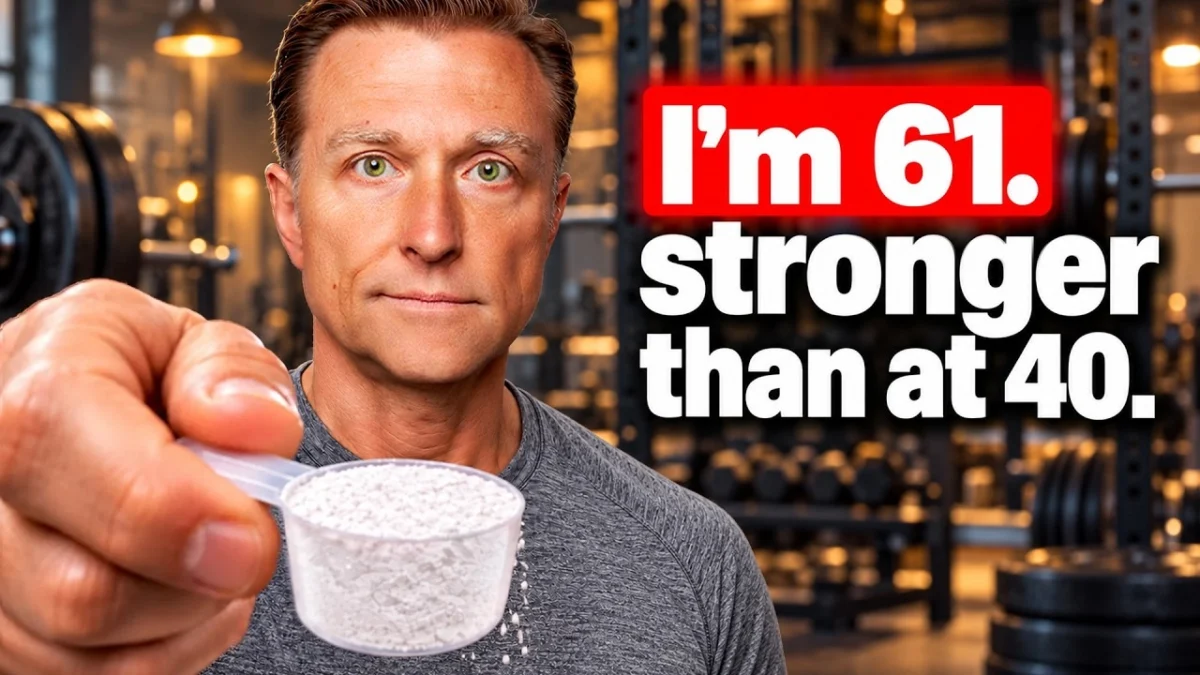
For decades, creatine has been pigeonholed in the fitness world as a niche supplement reserved strictly for bodybuilders, powerlifters, and young athletes chasing rapid muscle hypertrophy. However, a growing body of scientific research and commentary from health educators suggests that this perception is entirely outdated. In fact, emerging evidence points to adults over the age of fifty—particularly postmenopausal women—as the demographic that stands to benefit the most from daily creatine supplementation.
In a recent comprehensive breakdown, health educator Dr. Eric Berg examined the physiological shifts that occur when individuals over fifty introduce daily creatine into their routines for thirty days. The insights reveal a cascade of systemic benefits that extend far beyond the gym walls, touching on cognitive sharpness, metabolic health, skeletal resilience, and cellular energy production. As researchers continue to study the compound, the conversation around creatine is shifting from athletic performance enhancement to a foundational tool for healthy aging.
What Creatine Actually Does in Your Body
To understand why creatine matters as people age, it helps to look at how the compound functions naturally within human biology. Creatine is not merely a manufactured powder found on store shelves; the human body synthesizes it organically, primarily through the liver, kidneys, and pancreas. Unfortunately, the body’s natural production rate declines significantly with advancing age—precisely during the window of life when cellular efficiency begins to wane.
Dr. Berg explains that creatine serves as a fundamental pillar in cellular energy production. Inside nearly every cell, specialized structures known as mitochondria generate adenosine triphosphate, or ATP, which acts as the body’s primary energy currency. Structurally, an ATP molecule features three phosphate groups. When the body expends energy, it breaks off one of those phosphate groups, transforming the charged battery of ATP into adenosine diphosphate, or ADP, a depleted state.
Creatine steps into this cellular cycle by rapidly donating a phosphate group back to the depleted ADP molecule. This immediate replenishment regenerates ATP, fueling rapid bursts of energy that typically last between five and ten seconds. This phosphate recycling mechanism is vital for short, explosive movements, such as sprinting up a flight of stairs, lifting heavy groceries, or rising quickly from a seated position—physical actions that frequently become more demanding as individuals cross the age of fifty.
Five Critical Functions of Creatine Beyond Muscle
While improved muscular output is the most famous attribute of creatine, the compound performs several lesser-known, critical functions across various organ systems that make it uniquely suited for supporting aging physiology.
Brain and cognitive function represent a primary area of interest. High-energy-demand tissues depend heavily on a steady supply of creatine, and brain tissue sits at the very top of that priority list. Neurons require continuous ATP regeneration to sustain complex cognitive processes, memory formation, and everyday mental clarity. A 2023 review published in the scientific journal Nutrients highlighted that creatine supplementation successfully improved memory performance in older adults, with the most pronounced benefits observed in individuals who maintained lower baseline creatine levels due to limited dietary meat consumption.
Beyond cognitive health, creatine profoundly influences muscle hydration and cellular volume. The compound naturally draws water molecules into muscle cells, enhancing overall hydration status and contributing to firmer, fuller muscle tissue. This cellular hydration explains why individuals initiating supplementation often notice a modest one-to-two-pound weight gain on the scale within the first couple of weeks; this shift represents intracellular fluid retention rather than an accumulation of body fat.
Blood sugar regulation is another systemic benefit tied to regular intake. Research demonstrates that creatine enhances glucose uptake into skeletal muscles and improves the body’s glycogen storage capacity. A 2020 study published in Amino Acids revealed that creatine supplementation successfully improved insulin sensitivity and glucose tolerance in middle-aged adults, pointing toward tangible advantages for overall metabolic health and energy stability throughout the day.
Furthermore, creatine supports critical methylation processes that govern neurotransmitter production, DNA repair, and cellular detoxification. By alleviating the body’s physiological need to synthesize creatine from scratch, supplementation preserves vital methyl groups, freeing them up to support these other essential biochemical pathways. Finally, the compound plays a supportive role in bone and connective tissue health. While creatine does not generate new bone mass independently, studies indicate that it enhances the skeletal response to mechanical loading, making it a valuable adjunct for postmenopausal women facing elevated risks of osteoporosis and bone density loss.
The 30-Day Timeline: What to Expect Each Week
To better understand how the body responds to consistent supplementation, health experts often outline a progressive timeline as creatine gradually saturates tissue stores over a four-week period.
During the first week, the earliest noticeable changes typically manifest in cognitive function. Improvements in focus, concentration, and working memory often emerge within days of starting the routine. Furthermore, individuals navigating high-stress environments frequently report an enhanced capacity to handle daily pressures with greater mental resilience. Clinical studies reinforce this rapid timeline, with research in the Journal of the International Society of Sports Nutrition demonstrating enhanced working memory and decreased mental fatigue after just one week of supplementation in adults over sixty.
By week two, as muscular creatine stores continue to accumulate, physical performance begins to shift noticeably. Individuals engaging in routine physical activity or structured resistance training often experience improved endurance, less perceived exertion during sets, and faster recovery times between physical efforts. These objective performance gains provide a solid foundation for maintaining functional independence.
As the timeline moves into week three, systemic metabolic improvements become more apparent. Blood sugar regulation stabilizes, helping to mitigate sudden energy crashes between meals and making fasting periods more comfortable. The physical appearance of muscles undergoes a subtle change as cellular hydration increases, giving rise to firmer tissue without actual muscle hypertrophy. Daily physical chores and routine exercise begin to feel less burdensome, which frequently inspires a spontaneous increase in daily physical activity.
At week four, creatine achieves full saturation within muscle and surrounding tissues. While structural improvements in bone mineral density require much longer observation periods and specialized imaging to detect, subjective enhancements in joint comfort and connective tissue resilience often become evident. More importantly, the psychological and physical readiness to engage in physical exercise reaches its peak, creating a positive behavioral feedback loop where enhanced capacity drives higher activity levels.
Addressing Common Concerns and Myths
Despite decades of safety data, several persistent myths surrounding creatine continue to circulate among the general public, often discouraging older adults from exploring its benefits.
Concerns regarding kidney health remain one of the most common reservations. However, extensive scientific literature confirms that standard doses of creatine do not harm healthy renal function. A comprehensive 2021 safety review published in the Journal of the International Society of Sports Nutrition analyzed decades of clinical data and concluded that creatine monohydrate poses no nephrotoxic risk for individuals with normal kidney function, even with long-term daily use. While individuals with pre-existing renal disease should always consult their physicians before altering their supplement regimens, healthy older adults face no elevated kidney risks.
Another frequently cited concern involves a potential link between creatine and hair loss. This worry stems primarily from a single, small 2009 study conducted on college rugby players that noted a temporary increase in dihydrotestosterone levels, a hormone associated with male pattern baldness. However, subsequent research has failed to replicate these findings, and no clinical studies have demonstrated actual hair loss resulting from creatine supplementation. Experts generally regard this concern as theoretical rather than practical.
Additionally, practical questions often arise regarding the stability of the compound. Creatine monohydrate remains remarkably stable when mixed into hot beverages like morning coffee, ensuring that heat does not degrade its chemical effectiveness or diminish its physiological benefits.
Dietary Sources and the Special Needs of Women Over 50
While daily supplementation offers a convenient, highly concentrated dose, creatine is also naturally present in several whole foods. Dietary sources are heavily concentrated in animal products, with red meat, pork, and various types of seafood containing the highest natural levels. Plant-based foods contain virtually no creatine, which explains why vegetarians and vegans frequently exhibit lower baseline tissue stores and often experience more dramatic cognitive and physical improvements when they begin supplementing.
However, obtaining therapeutic doses through diet alone presents practical hurdles. An individual would need to consume roughly two pounds of raw meat every single day to match a standard five-gram daily supplement dose—an approach that is both financially impractical and potentially disadvantageous for long-term health.
This dietary gap is particularly relevant for postmenopausal women, who face a physiological hurdle known as anabolic resistance. As hormone levels shift during and after menopause, the body’s natural muscle protein synthesis response to exercise and dietary protein diminishes significantly. Consequently, older women require higher protein thresholds and stronger training stimuli to maintain their muscle mass compared to younger demographics.
Recent research published in Nutrients indicates that postmenopausal women may need approximately forty grams of protein per meal to maximally stimulate muscle protein synthesis. Health educators advocate combining daily creatine supplementation with an increased intake of animal protein rich in leucine—the specific amino acid most effective at triggering muscle repair. By pairing creatine’s ability to enhance cellular energy and training capacity with leucine-rich nutrition, older adults can more effectively counter the muscle-wasting processes associated with natural aging.
Ultimately, the accumulating scientific evidence suggests that creatine deserves a reassessment. Rather than viewing the compound as an exclusive tool for athletic performance, researchers and health professionals increasingly recognize creatine monohydrate as an accessible, safe, and profoundly effective foundational supplement for maintaining physical vitality, metabolic health, and cognitive independence throughout the aging process.