


The high jump is widely regarded by track and field coaches as one of the most technically demanding events in the sport. While horizontal jumps like the long jump and triple jump rely heavily on takeoff velocity, takeoff angle, and the height of the center of gravity—requiring relatively straightforward mechanical progressions—the high jump introduces an entirely different tier of complexity. According to veteran coach Rob Assise, the defining challenge of the high jump lies in the curved nature of the approach and the subsequent rotations generated as the athlete transitions toward the bar.
Drawing heavily from the foundational teachings of renowned track and field clinician Boo Schexnayder, particularly his comprehensive work "The High Jump: Technique and Teaching," Assise has outlined a strategic framework for developing young high jumpers. Rather than treating the approach as a single, uniform sprint, Assise emphasizes that mastering the discipline requires breaking the run-up down into distinct, highly controlled components: the start, the initiation of the curve, arm mechanics, the lateral lean, directional control, and overall rhythm.
The Start
Consistency remains the cornerstone of any successful high jump approach, and Assise argues that achieving this consistency begins directly at the starting line. Working primarily with high school athletes, Assise advocates for either a crouched start or a rolling start rather than a traditional momentum-building running start.
The rationale hinges on the athletic profile of typical high jumpers. Most high jumpers tend to possess elastic qualities rather than raw, force-dominant power profiles. A rolling start allows these elastic athletes to utilize a pre-movement oscillation, harnessing energy effectively through the stretch-shortening cycle. Furthermore, running starts that involve a high number of preliminary steps introduce unnecessary variables, increasing the probability of inconsistency.
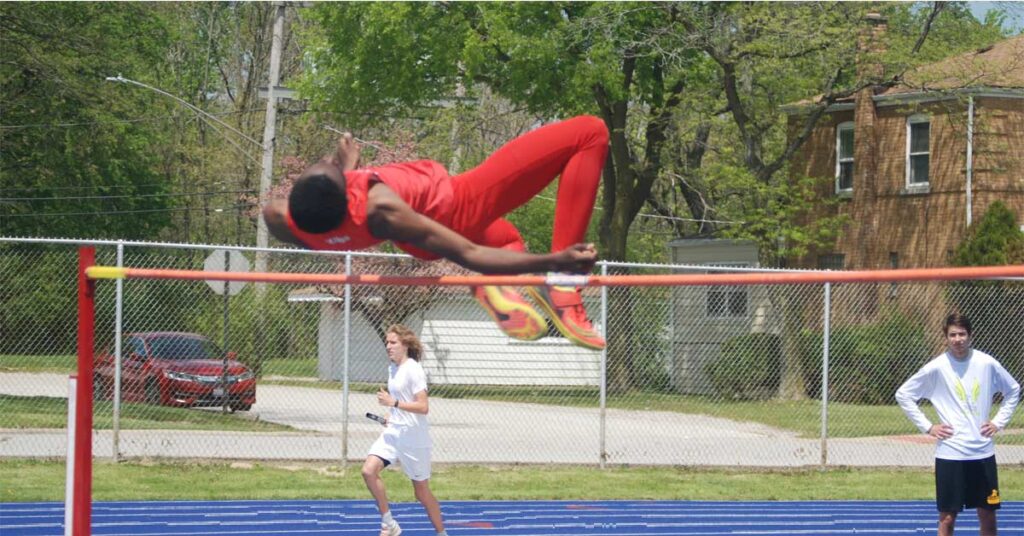
Assise stresses the importance of rigorous discipline during the teaching and rehearsal of the start. Because the beginning and the end of the approach should anchor the jump’s consistency—with the latter largely resolving itself as the athlete naturally seeks a comfortable takeoff position—minimizing early variations is vital. Utilizing acceleration mechanics during the first three steps of a ten-step approach sets a reliable baseline for the rest of the jump.
Initiation of the Curve
One of the most pervasive hurdles for developing high jumpers is the tendency to flatten out or abandon their inward lean as they approach the crossbar. Early in his coaching career, Assise attempted to correct this by instructing athletes to "hold the lean" during the final stages of the run-up, a method that yielded limited success. Influenced by the methodologies of Gary Winckler, Assise shifted his focus upstream, emphasizing the critical importance of a high-quality curve initiation.
According to Schexnayder’s framework, the transition to the curve begins with a subtle hip rotation during the push-off on the fourth step. The fifth step initiates the curve by landing outside the displacement line, establishing the essential inward lean. The sixth step consolidates the curve, bringing the foot back down onto the displacement line. Guiding athletes away from running a rigid, jagged path and toward a fluid, sweeping curve effectively solves the common issue of cutting the curve short.
Coaches can practice this essential phase both on the high jump apron and in alternative indoor spaces during winter months using chalk, cones, or the center circle of a soccer field. By having athletes execute the final five steps of a ten-step approach from a marked entry point, coaches can successfully drill the mechanics of the transition and train the athlete’s visual focus.

Arm Mechanics on the Curve
A frequent technical flaw among novice high jumpers is a restricted range of motion in the upper extremities. During the curve, the inside arm naturally exhibits a shorter range of motion than the outside arm to match the contralateral leg’s cadence and maintain proper timing. However, many developing athletes severely truncate this motion entirely, occasionally locking their elbows at ninety-degree angles tightly against their sides throughout the entire turn.
Rather than over-coaching, Assise favors a minimal-intervention approach, relying on clear verbal cues, visual feedback, and repetitive exposure to circle, semicircle, and serpentine running drills. More recently, coaches have integrated mini-hurdles and cones into these curved runs to encourage proper arm separation and limb dynamics, though such advanced variations require careful video review and consistent foundational mechanics to prevent missteps.
Leaning into the Foot Plant and Directional Control
Failing to maintain the inward lean through the final steps typically stems from specific mechanical breakdowns, such as altering posture, flattening the curve too early, or mismanaging the center of mass. Maintaining that inward lean right up until the moment of the final foot plant is non-negotiable for translating horizontal velocity into vertical lift and rotational clearance over the bar.
Compounding this is the reality of approach variability. Because high school athletes rarely execute identical approaches on every single attempt, they naturally compensate by steering toward a secure takeoff spot. To mitigate this, Assise utilizes variable-difficulty directional drills to sharpen spatial awareness and narrow the acceptable margin of error during competition. While these dynamic and unconventional drills represent only a small fraction of total training volume, they provide valuable variety, break up monotony, and teach athletes how to handle slight course corrections without sacrificing technical integrity.

Rhythm and Spatial Consistency
A high-quality high jump approach is characterized by a progressive, controlled acceleration. The most prevalent rhythm error among developing athletes is starting with an excessively fast tempo and decelerating as they near the bar. Because a jumper’s mass remains constant, any loss in forward velocity directly translates to a loss of momentum necessary for an optimal takeoff.
To cultivate this rhythm, coaches must demand absolute focus during approach rehearsals, treating run-up work with the same intensity as a full competitive jump. Aligning high jump rhythm work with broader sprint mechanics principles, such as those advocated by athletic development experts, helps embed a consistent tempo across all training sessions.
Furthermore, facility limitations make spatial control and precise run-up geometry vital. To eliminate unnecessary variability, Assise emphasizes the use of geometric triangulation before competition. By establishing right angles using Pythagorean triples—such as a 12-foot by 16-foot by 20-foot triangle—coaches and athletes can accurately measure and verify starting marks relative to the uprights. This rigorous geometric approach ensures that regardless of unfamiliar venue layouts, the athlete’s approach remains structurally sound.
Ultimately, mastering the high jump approach requires a balanced commitment to foundational movement quality, tendon health, spatial consistency, and strict attention to the mechanical demands of running a curve. By systematically addressing each phase of the run-up, coaches can help athletes build the consistency and confidence necessary to reach new heights safely.


