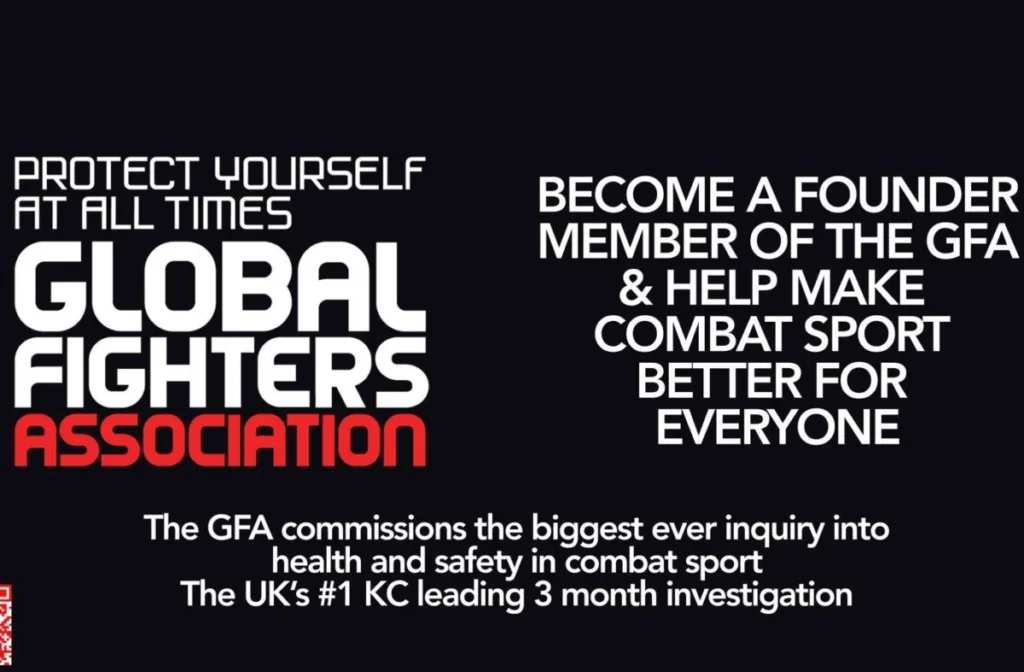

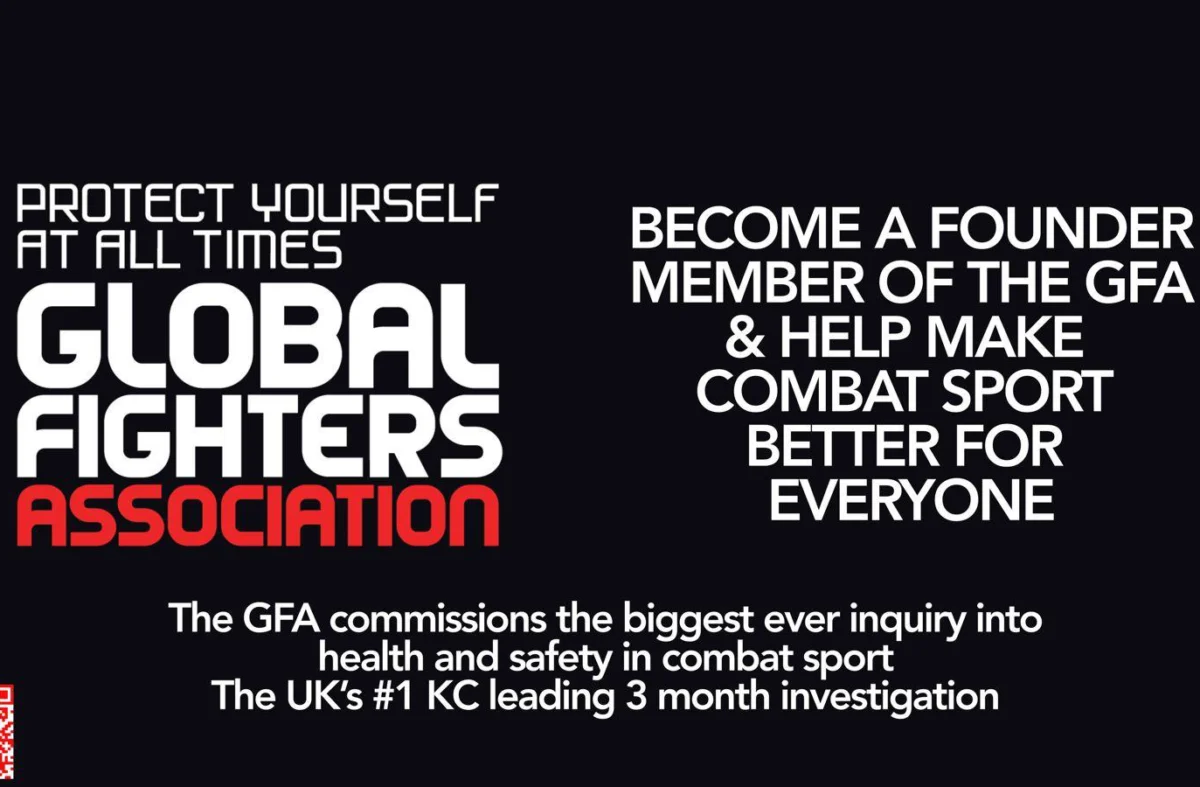
The Global Fighters’ Association (GFA) has officially launched a high-stakes public fundraising campaign with an initial financial target of £500,000, aimed at funding an independent, comprehensive investigation into health, safety, and working conditions across the breadth of combat sports.
Beyond financing the upcoming inquiry, the campaign doubles as a major membership drive. The initiative forms a critical cornerstone of the GFA’s broader strategic mission to establish itself as a dominant global umbrella organization, one designed to definitively represent fighters, coaches, and a wide array of other dedicated combat-sports professionals who have historically operated without institutional backing.
To ensure absolute credibility, rigor, and impartiality, prominent legal figure Jonathan Caplan KC has been appointed to lead the inquiry. Widely regarded by his legal peers as one of the United Kingdom’s foremost King’s Counsel specializing in complex health, safety, and regulatory matters, Caplan will oversee a multi-faceted investigative process. The methodology is designed to combine the expansive scope typical of a formal public inquiry with the rigorous, evidentiary question-and-answer format characteristic of a House of Commons select committee.
The sprawling investigation is slated to gather extensive testimony, evidence, and perspective from a comprehensive cross-section of the combat sports ecosystem. Contributors will include fighters themselves, coaches, medical doctors, surgeons, physical therapists, referees, judges, promoters, managers, regulatory authorities, governing bodies, media representatives, venue operators, and the families of athletes who bear the unique burdens of the profession.
According to the organization’s outline, the inquiry’s inaugural report will maintain a sharp, primary focus on health, safety, and vital education initiatives within the sport. Subsequent reports are expected to follow, progressively addressing complex systemic issues such as judging standards, scoring transparency, post-fight review procedures, anti-doping protocols, institutional governance, structured retirement planning, fighter contracts, and comprehensive insurance frameworks. The collective findings generated by Caplan and his team will directly inform and shape the GFA’s foundational agenda during its crucial first year of operations.
“Over the last decade or so, professional sports such as rugby, football and horse racing have raised their game when it comes to the welfare of the participants,” said GFA Chair Designate Simon Bazalgette, emphasizing the stark disparity between mainstream athletics and combat disciplines. “It is striking that combat sport is one of the last workplaces with no professional representation for its workers, meaning little protection, no minimum health and safety standard, no independent pension scheme, no insurance floor, and no single body a fighter can turn to when something goes wrong.”
Bazalgette, who brings considerable administrative experience to the table as the former Chief Executive Officer of the Jockey Club, is backed by a seasoned executive team. This leadership group features former GMB South union leader Paul Maloney alongside several respected former elite fighters who understand the physical and professional realities of stepping into the ring or cage.
Through this expansive initiative, the GFA aims to establish a protective umbrella that represents every stakeholder involved in combat sports. The organization’s vision spans from grassroots participants training in local gyms to elite world champions, as well as the diverse array of behind-the-scenes professionals who rely on the industry for their daily livelihoods.
Building a Safety Net for Fighters
Despite generating billions of dollars in global revenue and capturing the attention of millions of fans worldwide, combat sports remain heavily fractured. The industry is divided across distinct disciplines, competing promoters, disparate governing bodies, and fragmented regulatory systems operating across international borders. Consequently, the safety nets and legal protections available to individual fighters can vary drastically depending entirely on the geographic location of an event, the specific jurisdiction of the regulating commission, and the precise, often restrictive terms negotiated into each athlete’s contract.
In recent years, these systemic gaps have left vulnerable fighters and their families in devastating positions. When athletes sustain catastrophic, life-altering injuries inside the ring or cage, they have frequently been forced to rely heavily on ad-hoc public fundraising campaigns, GoFundMe pages, and charitable support mobilized by the broader combat-sports community to cover soaring emergency medical treatments, surgeries, and long-term rehabilitation costs.
The GFA argues that relying on grassroots sympathy and reactive charity after a tragedy has already occurred highlights a fundamental structural failure, rather than a viable safety net. The organization maintains that the industry requires a permanent, proactive, and institutionalized system of protection.
“Every week, somewhere in this sport, a fighter is hurt, exploited or forgotten, and the only safety net is whatever the boxing community can scrape together after the fact,” noted GFA co-founder Paul Smith. “That’s not a system. That’s a failing.”
The upcoming independent inquiry intends to drag long-standing, recurring concerns out into the open. The investigative panel will scrutinize controversial and often whispered-about topics throughout combat sports, including allegations of undisclosed weight advantages, the use of illegal or non-standard equipment, financial settlement agreements allegedly intended to silence whistleblowers, recurring glove controversies, sophisticated doping issues, and the reality of athletes exiting the sport burdened by massive, unassisted medical expenses.
Rather than allowing critical industry debates to be fueled by rumors, speculation, or unverified anecdotal accounts, the GFA stresses that Caplan’s upcoming reports will be constructed strictly upon independently verified evidence and rigorous factual inquiry.
Pursuing Trade Union Certification
The Global Fighters’ Association was originally incorporated as a community interest company, laying the groundwork for its multifaceted operational model. A significant portion of the capital raised through the current public fundraising campaign will be directly allocated toward completing the complex legal and administrative process required to achieve formal trade union certification.
Once trade union status is successfully secured, the newly formed union will channel its efforts squarely into professional representation, collective bargaining, and worker advocacy. Meanwhile, the original community interest company will continue to concentrate on vital grassroots development programs, the expansion of the GFA Academy, and broader international outreach. Organization leaders emphasize that this dual governance structure is intentionally designed to ensure absolute transparency regarding how campaign funding is raised and subsequently spent.
Paul Maloney, serving as the GFA’s acting general secretary, pointed to ongoing controversies and legislative debates surrounding the historic Muhammad Ali Boxing Reform Act in the United States as a cautionary tale. He argued that the current struggles in the U.S. vividly illustrate why fighters worldwide urgently require independent, resilient professional representation.
“What’s happening to the Ali Act in the U.S. right now should be a wake-up call for every combat-sport worker, everywhere,” Maloney stated. “If it can be stripped back there, it can happen anywhere else that lacks its own independent, respected voice for fighters.”
The GFA’s leadership team has spent the past three years quietly conducting thorough background research, refining its long-term strategy, and building constructive relationships with promoters, athletic regulators, and established governing bodies across the sporting landscape. The organization’s founders believe that the weight and credibility of the upcoming independent reports will provide the essential leverage needed to advocate effectively for meaningful, industry-wide reforms.
Among the co-founders lending their high profile and firsthand experience to the association is former unified light-welterweight world champion Amir Khan, who has been vocal about the need for institutional change within his former profession.
“There has to be an organization that’s above everything, that we can all report to when something goes wrong, whether that’s in training, at a weigh-in, in a contract or in retirement,” Khan said. “The GFA is that organization.”
To steer the public fundraising initiative, the GFA has partnered with Crowdfunder CEO Dawn Bebe and Head of Campaigns Max Upton. Organizers confirm that the crowdfunding campaign will continue to accept contributions well beyond its initial £500,000 baseline target as the GFA actively expands its global membership base and finalizes its trade union certification milestones.
Monies secured through the public drive will directly subsidize the production of the independent investigative reports, as well as the physical and operational development of the GFA’s dedicated training academy, which is anchored at the organization’s newly established headquarters in Liverpool, England.
The ongoing funding campaign is open to all participants in the combat sports ecosystem, welcoming fighters of all tiers, trainers, coaches, promoters, broadcasting professionals, and passionate fans who wish to register as founding members of the organization.
Further details regarding the initiative, along with pathways to contribute, can be accessed directly through the official GFA Crowdfunder campaign page and the organization’s primary web portal.