


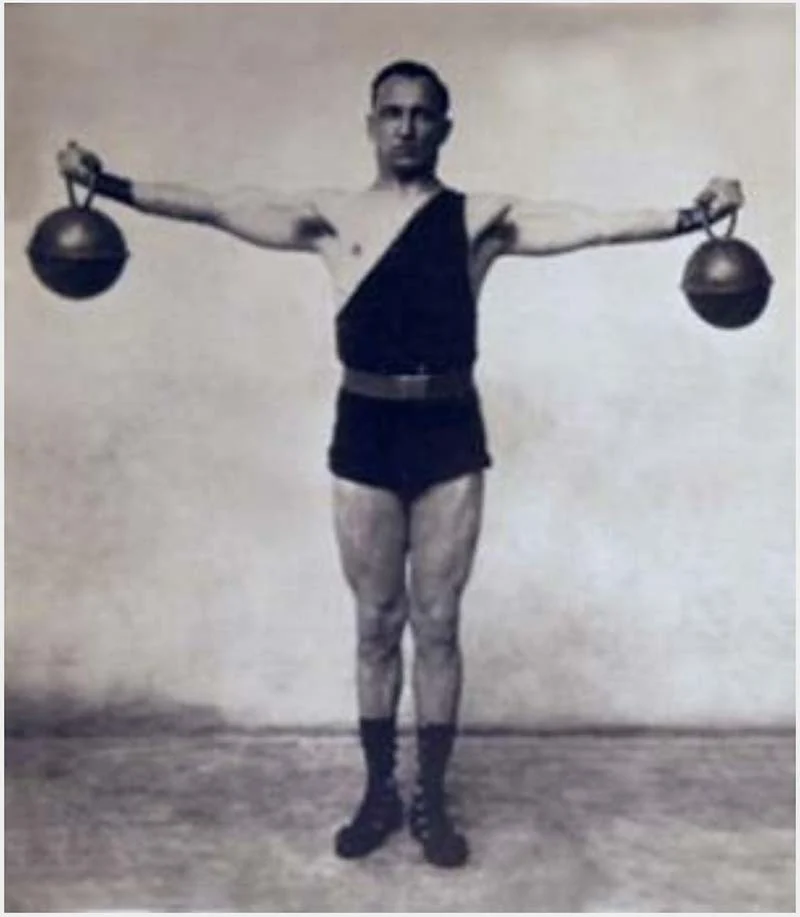
The fitness world has long been captivated by the allure of the kettlebell. Cast-iron cannonballs with handles, popularized in American coaching circles by prominent figures like Pavel Tsatsouline and Dan John, are frequently marketed as a secret conditioning tool utilized by elite Russian special forces. However, a closer look at the history and practical application of these implements reveals a reality far removed from modern marketing myths.
Coach Ken Jakalski recently addressed the enduring fascination with kettlebells, explaining how he integrates them into his athletes’ regimens, how they pair with traditional strength movements, and why they should not be viewed as a superior training modality. While kettlebells remain a staple in athletic programs worldwide, their legendary status owes more to the realms of entertainment and show business than to covert military innovation.
According to cultural and historical analysis by David Landau, the modern kettlebell craze is deeply intertwined with the history of circuses, vaudeville, and old-school showmanship. Landau characterizes kettlebells as "pseudo-entertainment, a primitive weight training tool with many shortcomings." The enthusiasm for these weights, he argues, persists largely due to a cultural fascination with the perceived supremacy of Eastern Bloc training systems.

To illustrate this phenomenon, Landau points to popular culture touchstones such as Rocky IV, where the fictional Soviet boxer Ivan Drago is portrayed as the ultimate product of high-tech training and advanced diagnostics, contrasting sharply with Sylvester Stallone’s character training in a rustic barn with primitive implements.
Yet, the actual history of Soviet athletics paints a remarkably different picture. Rick Brunner, in his book Soviet Training and Recovery Methods, highlights the gritty reality of Eastern Bloc conditioning. In practice, Soviet athletes frequently trained in austere environments like barns and cellars, using equipment forged from old railway car axles while running through the snow. Most of these athletes operated entirely without computers, let alone computerized training machines, cycles, or stair-climbing devices.
Landau corroborates this perspective, noting that American visitors to Russia in the 1980s observed athletes using rudimentary equipment and relying on tattered stacks of bodybuilding magazines for training information. Alongside basic barbells and isometric racks, these training spaces occasionally featured crude, heavy weights that resembled early iterations of the kettlebell.
Rather than emerging from a sophisticated, scientifically engineered methodology, the kettlebell is fundamentally a basic piece of iron with inherent limitations. Early weightlifting authorities recognized these constraints. An observation attributed to Alan Calvert cautions that anyone purchasing a single kettlebell under the impression that it can uniformly develop every muscle in the body is bound to face severe limitations.

Why Coaches Still Use Kettlebells
Given their primitive design and historical limitations, why do kettlebells remain a fixture in so many contemporary training programs?
Advocates point to several distinct biomechanical advantages. John Powers notes that a primary benefit of kettlebells over conventional dumbbells, barbells, or selectorized machines lies in the dynamic, ballistic nature of the movements they facilitate. Athletes can utilize kettlebells to lift, push, pull, and reach, creating an environment where demands on inter- and intramuscular coordination, as well as kinesthetic awareness, remain constantly engaged.
Because kettlebell movements inherently involve multiple joints and muscle groups, stabilizing structures throughout the hips and core are forced to work continuously. Renowned strength coach Dan John has frequently emphasized that mastering proper hip hinge mechanics and swing variations serves as a cornerstone for both athletic development and body composition goals.
In his own practice, Jakalski utilizes kettlebells as a dynamic bridge to heavy compound movements, such as trap-bar deadlifts, single-leg deadlifts, single-leg cleans, and weighted step-ups. The integration of kettlebells serves as a foundational step toward these primary lifts, with movements like the goblet squat and the traditional kettlebell swing playing a particularly prominent role in preparing athletes for heavier loads.

This functional utility is not entirely new. An article published in the 1984 Soviet Weightlifting Yearbook, titled "Kettlebell Lifting as an Effective Means of Physical Education," concluded that kettlebell training was remarkably versatile across a wide range of sports. The publication noted that the effectiveness of kettlebell training stemmed from the feasibility of individual workouts, the technical simplicity of the movements, the low cost of equipment, and its adaptability for athletes of varying ages. Ultimately, the literature suggested that these implements effectively develop fundamental physical qualities and enhance overall physical performance.
Placing Kettlebells in Proper Perspective
Despite the passionate advocacy of many strength coaches and athletes, the central question remains: Is the kettlebell a miraculous tool that transcends all other forms of physical preparation? Is it inherently superior to traditional dumbbells and barbells?
Skeptics suggest that the perpetual wave of enthusiasm surrounding kettlebells may simply represent another iteration of the phenomenon once described by legendary Dutch sprint coach Henk Kraaijenhof as "old wine in new bottles."
Jakalski emphasizes that his use of kettlebells is driven by athlete engagement and practical utility rather than a belief that they outperform other strength-training modalities. Acknowledging that kettlebells represent just one of many viable paths in strength and conditioning, the approach aligns closely with the philosophy articulated by sports scientist Mel Siff. Siff observed that kettlebell training can be exceptional and enjoyable—much like training with dumbbells, barbells, or any other established form of resistance—provided practitioners avoid becoming dogmatic fanatics who dismiss the merits of alternative training methods.