George Foreman is a towering figure in the history of sports and American culture, known not only for his devastating power in the boxing ring but also for one of the most successful second acts in celebrity history. His life story reads like a movie script, featuring a troubled youth, a meteoric rise to the heavyweight championship, a crushing defeat, a spiritual awakening, and a miraculous comeback that saw him reclaim the title at an age when most athletes have long since retired. Beyond boxing, George Foreman became a household name through his entrepreneurial ventures, specifically the George Foreman Grill, making him a unique icon of reinvention.
Early Life and Struggles in Texas
Born on January 10, 1949, in Marshall, Texas, George Edward Foreman grew up in the Fifth Ward of Houston. His childhood was marked by poverty and instability. As a youth, Foreman was often in trouble with the law, dropping out of school at the age of 15. He was a brooding, angry young man who often channeled his frustrations into street fighting. However, his life took a pivotal turn when he joined the Job Corps in 1965. This government program, part of President Lyndon B. Johnson’s War on Poverty, provided Foreman with vocational training and, crucially, an outlet for his physical energy.
It was within the Job Corps, stationed in Oregon, that Foreman was introduced to boxing. His raw strength was immediately apparent to counselor and boxing coach Charles ‘Doc’ Broadus. Broadus encouraged Foreman to channel his aggression into the sport. Despite having very little formal training compared to his peers, Foreman’s natural power allowed him to dominate the amateur circuit rapidly. Within just a few years of putting on gloves, he was on a trajectory toward the world stage.
Olympic Gold and Turning Professional
In 1968, George Foreman represented the United States at the Olympic Games in Mexico City. Despite his limited experience, he bulldozed through the competition to win the Gold Medal in the heavyweight division. His victory was punctuated by a patriotic display where he waved a small American flag in the ring, a moment that garnered both praise and criticism during a politically turbulent era. Following his Olympic success, Foreman turned professional in 1969, embarking on a path of destruction through the heavyweight ranks.
The Rise to the Heavyweight Championship
As a professional, Foreman was a terrifying force. He won his first 37 fights, most by knockout within the first few rounds. His style was not about finesse; it was about overwhelming power and intimidation. In 1973, he earned a title shot against the undefeated champion, Joe Frazier, in Kingston, Jamaica. The fight, known as the ‘Sunshine Showdown,’ was expected to be competitive. Instead, Foreman shocked the world by knocking Frazier down six times in two rounds, winning the Heavyweight Championship of the World via technical knockout. At that moment, Foreman appeared invincible.
Foreman successfully defended his title twice, famously destroying Ken Norton in just two rounds in Caracas, Venezuela. By 1974, he had established an aura of invincibility that rivaled the great champions of the past. He was seen as a sullen, menacing executioner inside the ropes, a sharp contrast to the charismatic personality of his next opponent, Muhammad Ali.
The Rumble in the Jungle
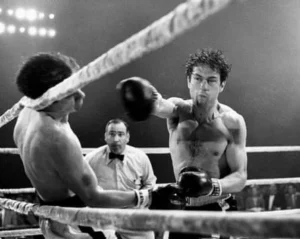
The defining moment of Foreman’s first career occurred on October 30, 1974, in Kinshasa, Zaire (now the Democratic Republic of the Congo). Billed as the Rumble in the Jungle, Foreman faced Muhammad Ali in one of the most famous sporting events in history. Foreman was the heavy favorite, with pundits fearing for Ali’s safety. However, Ali employed his famous ‘Rope-a-Dope’ strategy, leaning on the ropes and allowing Foreman to punch himself into exhaustion. In the eighth round, Ali capitalized on a tired Foreman, knocking him out and handing him his first professional loss.
Spiritual Awakening and Retirement
The loss to Ali devastated Foreman mentally. He fought on for a few more years, winning several bouts, but in 1977, following a loss to Jimmy Young in Puerto Rico, Foreman had a life-altering experience in his dressing room. He suffered from heatstroke and exhaustion and claimed to have had a near-death experience where he felt a profound emptiness followed by a vision of Jesus Christ. This spiritual awakening led him to retire from boxing immediately. He renounced his anger, became a born-again Christian, and was ordained as a minister.
For the next decade, George Foreman lived a life far removed from the violence of the ring. He founded the George Foreman Youth and Community Center in Houston, dedicating his time to preaching and helping at-risk youth. He also underwent a physical transformation, gaining weight and losing the menacing scowl that had defined his championship years. To the public, the terrifying puncher of the 1970s had vanished, replaced by a gentle, smiling preacher.
The Improbable Comeback
In 1987, at the age of 38, George Foreman announced he was returning to boxing. His stated motivation was to raise money for his youth center. Critics and boxing purists mocked the decision, viewing it as a dangerous publicity stunt. Foreman, however, was serious. He had changed his style, fighting with a cross-armed defense and a more patient, plodding rhythm, but his legendary power remained intact. He dubbed himself a folk hero for the ‘age 40 and over’ crowd.
Foreman strung together a series of victories, steadily climbing the rankings. Unlike his younger self, this version of Foreman was jovial, selling cheeseburgers in commercials and making self-deprecating jokes about his weight and age. He won over the public, becoming a beloved figure. In 1991, he earned a title shot against Evander Holyfield. Although Foreman lost by decision, he went the distance and proved he could compete with the best in the world, silencing his critics.
Oldest Heavyweight Champion in History
The climax of his comeback arrived on November 5, 1994, when Foreman faced the WBA and IBF heavyweight champion, Michael Moorer. Moorer was 26 years old, undefeated, and significantly faster than the 45-year-old Foreman. For nine rounds, Moorer outboxed Foreman. But in the 10th round, Foreman landed a short, crushing right hand that sent Moorer to the canvas. Moorer could not beat the count. George Foreman had regained the heavyweight championship of the world 20 years after losing it, setting a record as the oldest heavyweight champion in history—a record that still stands today.
The George Foreman Grill Phenomenon
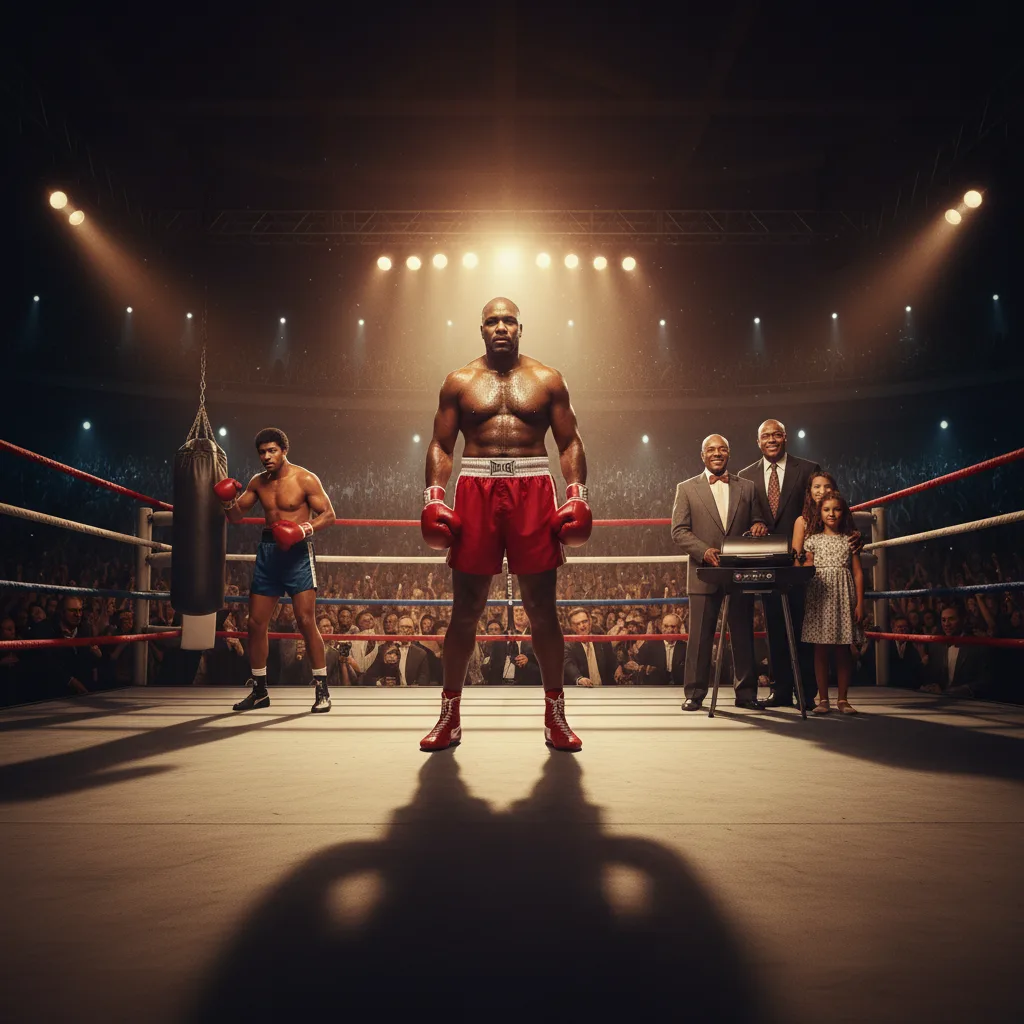
While his boxing comeback was legendary, his financial success outside the ring was even more staggering. In the mid-1990s, Foreman partnered with Salton, Inc. to promote a fat-reducing grilling machine. The George Foreman Lean Mean Fat-Reducing Grilling Machine became a global sensation. Foreman’s trustworthy, friendly persona was the perfect marketing tool. The grill sold over 100 million units worldwide. It is estimated that Foreman made significantly more money from the grill venture—reportedly over $200 million when he sold the naming rights—than he ever did during his boxing career.
Personal Life and Legacy
George Foreman’s personal life is as colorful as his career. He has been married multiple times and has 12 children. famously, he named all five of his sons George: George Jr., George III, George IV, George V, and George VI. He explained this decision by saying, ‘If you’re going to get hit as many times as I’ve been hit by Muhammad Ali, Joe Frazier, Ken Norton, Evander Holyfield, you’re not going to remember many names.’ This humor became a trademark of his later years.
Today, George Foreman is retired from boxing and remains a successful entrepreneur and active minister. He was inducted into the International Boxing Hall of Fame and the World Boxing Hall of Fame. His legacy is dual-faceted: he is remembered as one of the hardest punchers in boxing history and as a brilliant businessman who reinvented himself from a villain into one of America’s most beloved uncles.
In conclusion, the biography of George Foreman is a testament to the power of change. From the angry streets of Houston to the pinnacle of sports, through a spiritual desert and back to glory, his journey inspires millions. He proved that life does not end at 40 and that character is not static; a person can evolve, grow, and succeed in ways they never imagined.