
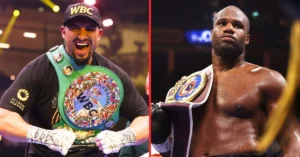
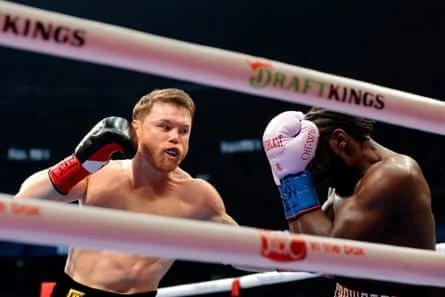
Mexican boxing superstar Canelo Álvarez intends to move forward with his upcoming world title fight in Saudi Arabia later this month, refusing to alter his plans despite a wave of deadly missile and drone strikes targeting critical aviation infrastructure and key municipal areas across the kingdom. The decision, confirmed by top Saudi officials and the fighter himself, comes as rising military tensions in the region threaten both civilian safety and the kingdom’s high-stakes push to establish itself as a premier destination for global sports, international commerce, and entertainment.
Álvarez is currently scheduled to challenge the undefeated contender Christian Mbilli for the WBC super-middleweight championship in Riyadh on October 31. The high-profile bout is slated to take place just three weeks after a devastating missile strike targeted King Khalid International Airport, the main international gateway to the Saudi capital. That attack killed at least 12 people and left more than 300 others wounded, marking one of the most violent and disruptive incidents to strike the heart of the kingdom in recent history.
The situation surrounding the event was further solidified by Turki al-Sheikh, the chairman of Saudi Arabia’s General Entertainment Authority and a pivotal power broker who has fundamentally reshaped the global landscape of professional boxing in recent years. Al-Sheikh revealed that Álvarez had personally reached out to him to offer assurances that the security situation in Riyadh would not deter him from stepping into the ring as planned.
Writing on social media, Al-Sheikh expressed his appreciation for the former champion’s commitment during a period of acute national crisis. He disclosed that Álvarez had personally contacted him to reaffirm his dedication to the fight, stating that the Mexican fighter feared nothing and remained completely focused on competing in Riyadh in October regardless of external developments. In his public statement, Al-Sheikh praised Álvarez’s loyalty and offered a defense of his home country, describing Saudi Arabia as the custodian of the two Holy Mosques and a land grounded in peace, safety, deep historical tradition, rich civilization, and hospitable people. He added that difficult times inevitably reveal who a person’s true friends are, thanking everyone who had reached out to express support and check on the well-being of those in the kingdom.
The assurances from Álvarez came amidst a sharp escalation in military hostilities driven by Yemen’s Iran-backed Houthi rebels, who have dramatically intensified their long-range strikes against targets inside Saudi territory. On Sunday, a second projectile struck a passenger terminal at King Khalid International Airport, according to reports released by the Saudi-led military coalition actively fighting Houthi forces in Yemen. While local authorities acknowledged that additional injuries occurred during the second terminal strike, official government sources did not immediately release precise casualty figures for that specific impact.

The repeated bombardments on the capital’s central transportation hub underscored the severity of the security breakdown. The initial Saturday strike on the airport complex represented the deadliest direct attack on a Gulf Arab nation since the wider war involving Iran erupted. The human toll from the attack continued to mount in the days that followed; India’s embassy in Saudi Arabia subsequently confirmed that one of its citizens had succumbed to severe injuries sustained during the airport bombing, raising the verified death toll from the strike to at least 13 people.
In the immediate aftermath of the attacks, King Khalid International Airport was forced to suspend operations and remained closed to standard air traffic on Sunday. The United States government issued urgent security advisories instructing American citizens to avoid the airport and its immediate surroundings due to ongoing military threats. Concurrently, a growing list of major international commercial airlines took emergency measures to suspend flight operations to Saudi Arabia, reflecting mounting alarm over the direct hazards posed to civilian aviation in regional airspace.
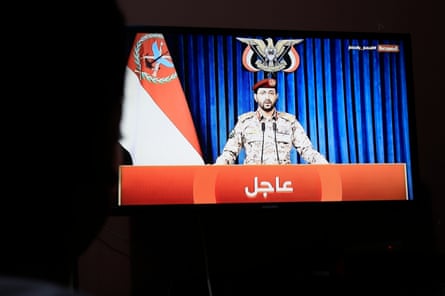
The Houthi movement, which has repeatedly claimed formal responsibility for a series of complex missile and drone operations targeting airports, military facilities, and vital energy infrastructure across the kingdom, issued explicit warnings directed at international air carriers and foreign travelers. Houthi military spokesman Yahya Sarea delivered a televised address from the Yemeni capital of Sana’a, reiterating that commercial aircraft and foreign visitors should refrain from entering Saudi airspace or utilizing the kingdom’s aviation hubs while military operations remained active.
This sharp surge in violence poses a direct challenge to Saudi Arabia at an exceptionally delicate moment. The kingdom has invested heavily over recent years to rebrand its global standing, channeling vast financial resources into elite sports, international cultural events, and massive infrastructure projects designed to diversify its economy and draw international business and tourism. Under the stewardship of Al-Sheikh and the General Entertainment Authority, Saudi Arabia has rapidly emerged as the financial capital of professional boxing, hosting lucrative, high-profile mega-fights in Riyadh and bringing together rival promoters to stage contests that had previously proven impossible to organize.
However, these rapid investments in international athletics and entertainment have drawn persistent international scrutiny. Human rights organizations and political commentators have repeatedly criticized the kingdom’s sports strategy, accusing Saudi leadership of engaging in "sportswashing"—using high-profile athletic spectacles to obscure systemic domestic human rights concerns, suppress political dissent, and soften its international image. The recent missile strikes threaten to derail this carefully cultivated image of security and modern luxury, exposing the vulnerability of the kingdom’s core infrastructure to regional war.
The security crisis also intersects with critical political and economic gatherings taking place in the capital. Saudi Arabia is scheduled to host a major international energy conference this week, alongside several high-level corporate and commercial summits designed to attract foreign capital. The sudden military escalation has heightened concerns about the broader stability of the region, prompting discussions of direct military intervention by foreign powers. U.S. President Donald Trump indicated that his administration was evaluating potential response options against Houthi forces and confirmed plans to consult directly with Saudi Crown Prince Mohammed bin Salman to discuss defense measures and strategic coordination.
For Álvarez, the decision to proceed with the October 31 bout carries immense professional and personal significance. At 36 years old, the Mexican icon boasts one of the most decorated resumes in contemporary boxing history, holding a professional record of 63 victories, three defeats, and two draws, with 39 wins coming by way of knockout. The upcoming clash against Mbilli will mark his first competitive appearance since September 2025, when he suffered a decisive, unanimous decision loss to American star Terence Crawford.
Addressing reporters during a Zoom press conference hosted with the Guardian and other media outlets, Álvarez reflected candidly on his performance against Crawford and discussed his psychological state leading up to that defeat. While maintaining that his physical training camp prior to the Crawford fight had been exceptionally strong, Álvarez acknowledged that his mental focus had drifted during the critical days immediately preceding the event. He explained that whenever a fighter experiences a loss, they are forced to look back and closely analyze their mistakes. He noted that although his physical preparation for the Crawford fight was thorough, his mind was simply not fully present during fight week, preventing him from performing at his absolute best when he stepped into the ring.
Determined to rectify those mistakes, the former undisputed super-middleweight king has overhauled his preparation for his return to Saudi Arabia. Álvarez has been conducting his training camp along Spain’s Mediterranean coast, utilizing the same state-of-the-art training facility favored by unified heavyweight champion Oleksandr Usyk. In addition to rigorous physical conditioning, Álvarez has placed special emphasis on mastering the physical toll of international travel. Having previously competed in Riyadh in May 2025, Álvarez admitted that he had struggled to properly adapt to the extreme time zone shift during his first visit to the kingdom. Drawing from that experience, he adjusted his schedule for this fight, concluding that his body requires a full 21 days in the target region to completely acclimatize and eliminate the lingering effects of jet lag.
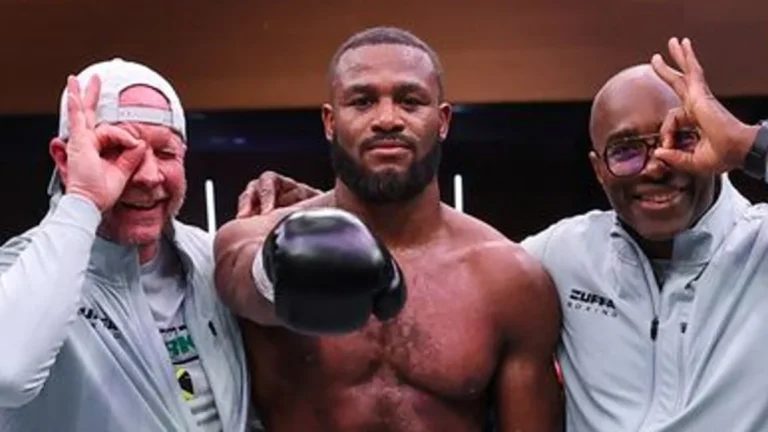
His opponent on October 31, Christian Mbilli, presents a dangerous obstacle to Álvarez’s hopes of regaining momentum at the top of the division. The 31-year-old French-Cameroonian contender enters the contest with an unblemished professional record of 29 victories without a defeat, including 24 knockouts. Known for his explosive power, relentless forward pressure, and exceptionally high punch volume, Mbilli represents one of the most physically demanding challenges in the super-middleweight division. Álvarez acknowledged the distinct threats posed by his challenger, characterizing Mbilli as an aggressive, non-stop pressure fighter whose high-octane style is bound to create an entertaining, action-packed spectacle for fans in Riyadh and watching around the world.
Despite having competed at the elite level of professional boxing for over two decades—having made his professional debut at the age of 15—Álvarez dismissed any suggestion that his career is drawing to a close. When pressed on how much longer he intends to continue fighting before hanging up his gloves, the Mexican superstar refused to set a deadline on his eventual retirement. He stated that he remains uncertain about how many fights he has left in his career simply because he continues to feel physically exceptional, mentally motivated, and fully capable of competing against the world’s best.