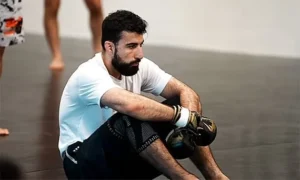
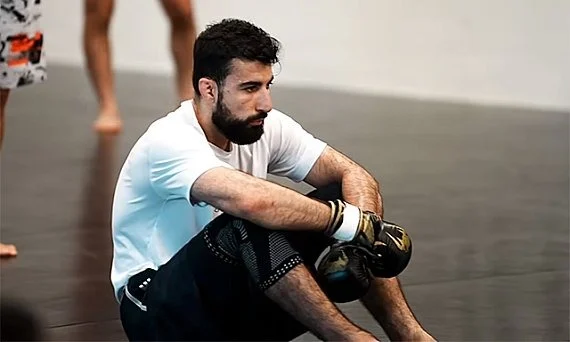
Ultimate Fighting Championship CEO Dana White has clarified that his recent controversial remarks regarding fighters leaving the promotion were not aimed directly at undefeated bantamweight Farid Basharat, whose contract was notably not renewed following a string of organizational decisions.
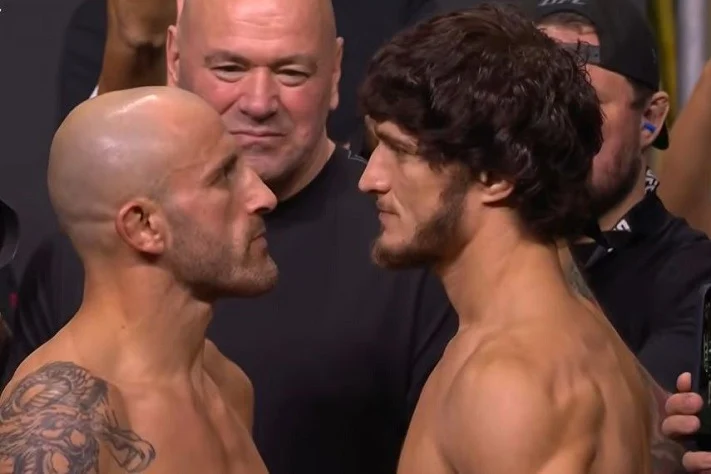
Speaking at the post-fight press conference following UFC 333—an event headlined by Alexander Volkanovski versus Movsar Evloev—White addressed the rising prospect’s public reaction to comments the executive had initially made in the wake of UFC Edmonton on October 17. The situation had drawn considerable attention within the mixed martial arts community, particularly because Basharat had maintained a clean undefeated professional record inside the world’s premier mixed martial arts organization, making his sudden contract status a surprising talking point for fans and analysts alike.
During the press conference, White took the opportunity to explain the broader context of his previous statements, emphasizing that his commentary was meant to address general business practices rather than target any individual athlete’s character or career trajectory.
Dana White Clarifies UFC Contract Remarks after Farid Basharat’s Response
The controversy began when Basharat publicly disputed suggestions and circulating rumors that he had turned down offered bouts or proven difficult to work with during negotiations with UFC matchmakers. Fighters parting ways with the promotion frequently face speculation regarding their compliance, willingness to accept short-notice fights, or contractual demands, and Basharat felt compelled to defend his professional reputation on social media.
Addressing these concerns during the UFC 333 media session, White explained that he had been discussing roster management and contract decisions from a macro perspective rather than pointing a finger at the bantamweight talent.
"When I was talking about why some guys get released, or their contracts don’t get renewed, I was just saying in general. I wasn’t pointing him out, specifically," White told reporters gathered at the press conference.
The UFC CEO’s original remarks, which had sparked the initial confusion, suggested that decisions regarding whether or not to retain specific fighters often involve a complex array of factors extending far beyond their mere win-loss records or performances inside the Octagon. In the high-stakes environment of professional mixed martial arts promotion, contract renewals depend on television ratings, stylistic matchups, promotional activity, and overarching organizational strategies, meaning talented fighters sometimes find themselves on the outside looking through no glaring fault of their own.
White revealed that he became aware of Basharat’s response after stumbling upon a video the fighter had posted on the social media platform Instagram. Upon seeing the athlete’s public defense, the UFC executive realized that his previous remarks had been misinterpreted as a direct indictment of Basharat’s professionalism, prompting him to clear the air publicly.
"I saw actually saw his video on Instagram and I was like, ‘Oh I didn’t mean to do that to that kid,’" White admitted to the media members in attendance. "In no way, shape, or form did I try to do that. I have no problems with him whatsoever, uh, personally or professionally."
White went on to express confidence in Basharat’s future within the sport, noting that given the fighter’s impressive undefeated record and proven capabilities, he will undoubtedly secure a contract with another prominent fighting organization or potentially find a new home in the combat sports landscape.
"And, uh, you know, I’m sure with his record and what he’s got going on, he’ll get resigned somewhere," White added, acknowledging the market value that an undefeated, highly skilled bantamweight holds in the current MMA ecosystem.
Furthermore, while White indicated that an immediate reunion or new contract offer is not currently on the horizon, he did not completely shut the door on the possibility of Basharat eventually returning to the UFC banner down the line. In the fight business, doors are rarely permanently closed, and many athletes who depart the promotion due to contract expirations or temporary roster crunches have historically been invited back after building momentum elsewhere or when promotional needs shift.
The clarification brings a measure of resolution to a brief public misunderstanding between one of the sport’s top executives and a promising young fighter eager to protect his professional standing. As the mixed martial arts world continues to monitor roster shifts and promotional landscapes following the events of UFC 333, the situation underscores the delicate balance between corporate roster management and the personal reputations of athletes navigating the business side of combat sports.