Yet, the trajectory of a combat sports career is rarely linear, and time remains an undefeated opponent for even the greatest champions. By the mid-2000s, years of tumultuous personal struggles, high-profile legal battles, well-documented prison time, and persistent fights with addiction had taken a visible, irreversible toll on Tyson’s physical and mental prime. The ferocious apex predator who once terrorized the division had been replaced by a veteran fighter grappling with the twilight of his career.
This melancholic chapter culminated in June 2005, when Tyson stepped into the ring at the MCI Center in Washington, D.C., for what was then announced as his final professional bout—ignoring the much later exhibition and comeback against Jake Paul. His opponent that evening was Kevin McBride, an Irish-American journeyman whose career profile stood in stark contrast to the elite fighters Tyson had faced during his championship years. Though Tyson was undeniably past his athletic peak, he still commanded the marquee attention of a global superstar, while McBride was regarded as little more than a sturdy test to secure another victory on the ledger.
McBride entered the contest with no signature victories over elite contenders, having already accumulated a collection of professional losses on his record. Never a major player on the world title scene, the towering Irishman possessed physical advantages in size and stamina, but lacked the technical pedigree or stopping power associated with Tyson’s historic rivals. On paper and in the minds of oddsmakers, the match was framed as a showcase for the aging legend to remind the world of his historic pedigree.
The opening rounds seemed to validate those expectations. Tyson started the fight with sharp intentions, utilizing glimpses of his trademark head movement and throwing heavy, jarring punches that caught McBride’s attention. He bullied the larger man around the canvas in the early frames, establishing a presence that suggested his immense natural abilities might still carry him across the finish line.
However, as the bout stretched past the early rounds, the harsh realities of aging and ring wear began to surface with alarming clarity. The former undisputed heavyweight champion visibly faded under the stadium lights, his conditioning failing him as the minutes ticked away. His movements grew increasingly sluggish, his punches lost their destructive snap, and his technique devolved into desperation.
As fatigue set in, Tyson began leaning heavily on McBride—a gritty competitor who would ultimately retire in 2011 with a modest career record of 35 wins, 10 losses, and 1 draw, without ever fighting for a major world title. In a bizarre and telling moment of frustration during the middle rounds, Tyson even attempted to leverage a clinch into an illegal arm-lock, trying to compromise his opponent by applying unnatural pressure to his limb.
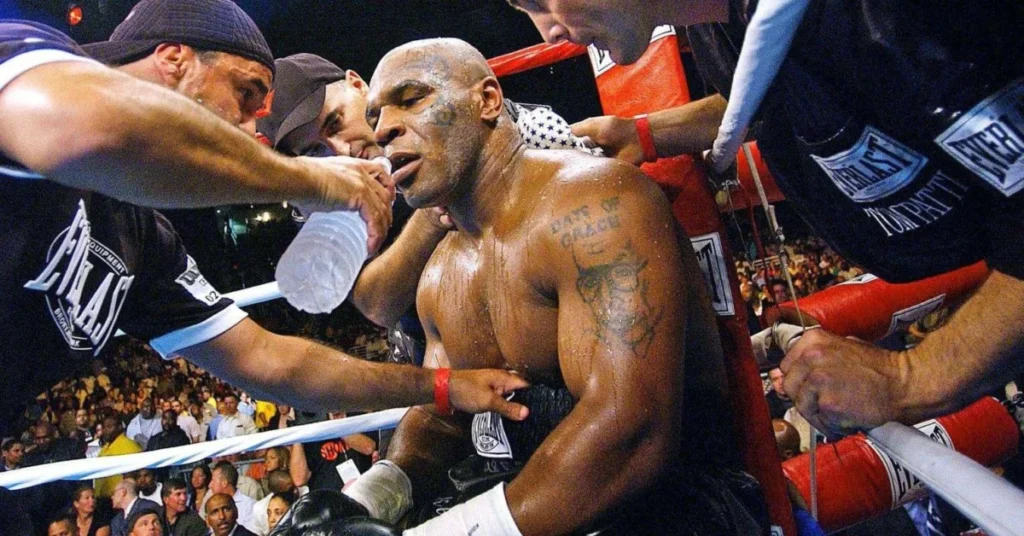
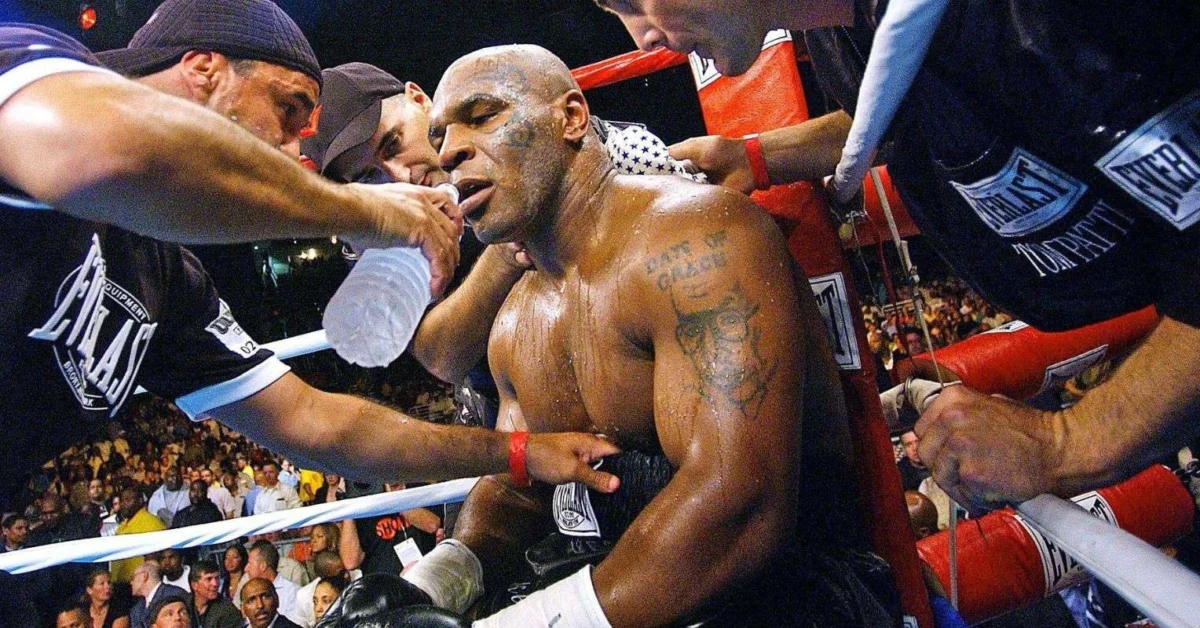
The physical deterioration and mental exhaustion culminated at the end of the sixth round. When the bell sounded to signal the end of the stanza, Tyson walked back to his corner, sat heavily upon his stool, and informed his corner team that he refused to answer the bell for the seventh round. The fight was over, and with it, an iconic professional career reached a somber and anticlimactic halt.
In the immediate aftermath of the stoppage, standing in the center of the ring under the glare of television cameras, Tyson delivered a brutally honest post-fight interview that laid bare his disillusionment with the sport that made him a household name. He openly confessed that he no longer possessed the intrinsic motivation or desire to compete at the professional level, revealing that financial necessity, rather than competitive fire, had driven him back to the ring.
"I got the ability to stay in shape, but I don’t got the fighting guts I don’t think anymore… I’m just sorry I let everyone down, I don’t have this in my heart anymore," Tyson told the broadcast audience.
Elaborating on his inner state and the psychological shift that occurs when a fighter loses their edge, the former champion explained that his priorities had fundamentally changed away from the blood sport that defined his youth.
"I’m just fighting to take care of my bills basically, I don’t have the stomach for this anymore, I’m more conscious of my children and those guys, I’m looking at my opponents, I just don’t have that ferocity, I’m not an animal anymore," he said.