By Wil Esco
Bad Left Hook
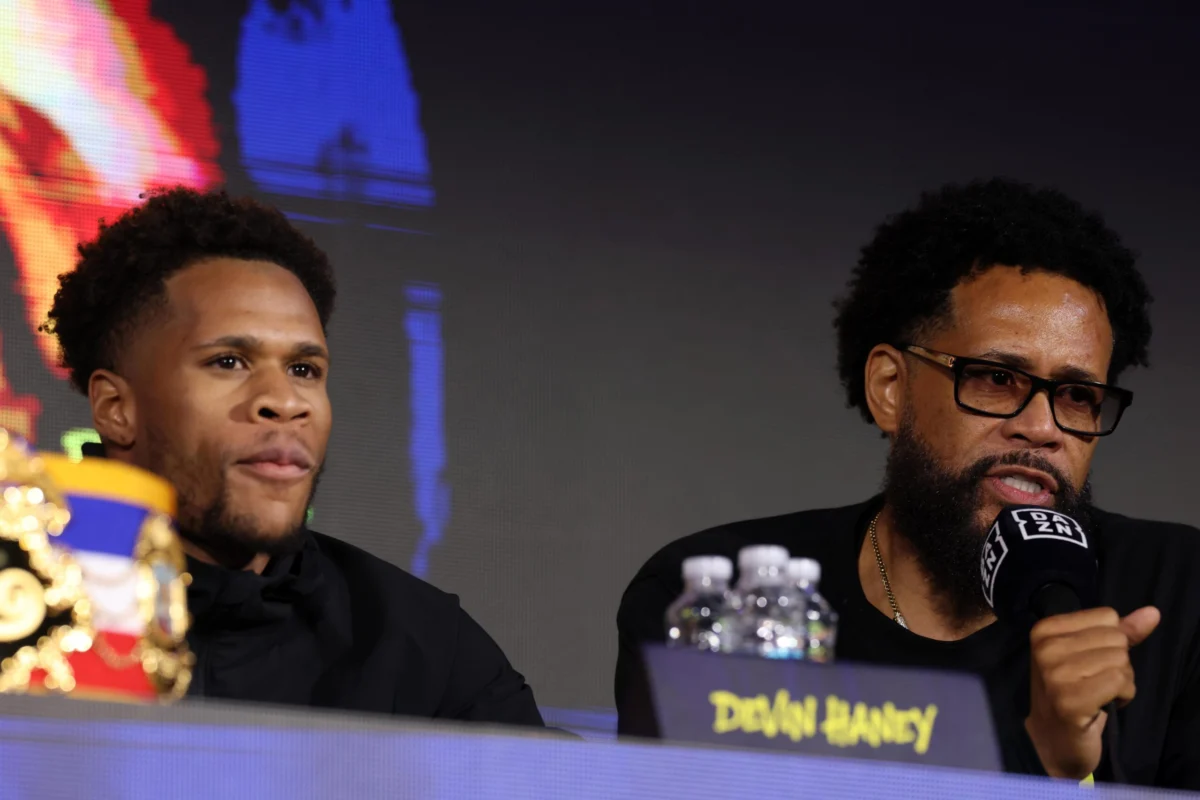
The long-discussed and highly anticipated matchup between Devin Haney and Shakur Stevenson is officially dead in the water, and according to Bill Haney, the blame rests squarely on the shoulders of Stevenson and his management team.
In a recent appearance with Ring Magazine, Bill Haney—father, manager, and trainer to the former multi-division champion—pulled back the curtain on the protracted negotiations that ultimately fell apart. For months, boxing fans and pundits have clamored for a showdown between two of the most skilled technicians in the modern sport. However, despite intense public interest and prolonged back-and-forth discussions between the two camps, the fight failed to materialize.
According to the elder Haney, the breakdown in talks came down to a persistent refusal by Stevenson’s side to finalize an agreement, coupled with demands for additional concessions even after the Haney team had compromised on critical weight terms.
Reflecting on the missed opportunities, Bill Haney did not mince words regarding how the negotiations unfolded and why the bout ultimately stalled.
“The WBO world championship being on the line and an opportunity for Shakur Stevenson—not once, but twice he’s had an opportunity at 135 and again at 147 and he didn’t step up,” Bill Haney told Ring Magazine. “I mean, after months and months of back-and-forth… We did everything that we could to try to make this fight happen.”
The negotiations were complicated not only by weight division logistics but also by underlying tensions within the broader boxing landscape. Bill Haney noted that the complications extended beyond standard promotional hurdles, pointing to external friction that added unnecessary volatility to the process.
“Unfortunately, we had to part ways with that part of the negotiation and everybody thought I was picking on Keyshawn and I was picking on Shakur, but it was a problem started by J. Prince who said he had two double barrels pointed at me and now I don’t know if they were blanks or were they fakes. I don’t know,” he added.
Despite the animosity and the frustration surrounding the collapsed talks, the Haney camp insists that their intent was always to secure the biggest fights available for Devin, who has built a reputation for taking on elite competition. In the eyes of his team, Devin Haney has consistently pursued legacy-defining bouts, welcoming challenges from top contenders regardless of where the fights need to take place or what hurdles are placed in front of them.
“We’d like to say that we have showed that Deebo will pull up anywhere, anytime on the fighters that have the X on their back,” Bill Haney said, using a familiar moniker for his son.
With the Stevenson matchup firmly in the rear-view mirror, the Haney team is already looking ahead. Bill Haney indicated that previous lists of prospective opponents have been disrupted or disregarded as fights have taken alternative paths across the division. Consequently, a fresh roadmap is currently being drawn up to map out Devin’s next steps in the sport.
This upcoming slate of potential opponents is expected to extend far beyond domestic borders, targeting top-tier international talent and championship-level opportunities. Among the primary names currently being evaluated by the camp is Liam Paro, as the team sets its sights on potential unification bouts that can further solidify Devin’s standing in the higher weight classes.
On the talks breaking down over a catchweight
The core of the dispute that ultimately derailed the Stevenson fight centered on weight parameters and contractual clauses. In boxing, negotiations between elite fighters often hinge on precise pounds and ounces, and this matchup proved to be no exception.
Pundits and boxing champions widely agreed that a potential bout between Haney and Stevenson made the most sense at the 147-pound welterweight limit. Recognizing the public demand and the significance of the event, the Haney team made a proactive concession to help bridge the gap between the two sides, agreeing to step down to a 145-pound catchweight.
However, Bill Haney emphasized that this compromise was met not with reciprocal flexibility, but with additional demands from Stevenson’s camp that ultimately strained talks beyond the breaking point.
“All the champions and pundits agree that it should happen at 147 lbs,” Bill Haney explained. “We made the move and made the concession to go down to 145 lbs to make the fight happen with no concession being given. On the total opposite, they asked for a rehydration clause and extended negotiations far beyond what they should have been.”
In championship boxing, rehydration clauses are frequently a point of contention, designed to limit how much weight a fighter can regain after the official weigh-in. For a fighter moving down or managing their body composition carefully, agreeing to strict post-weigh-in limits can present a significant competitive disadvantage.
For the Haneys, the introduction of these late-stage requests after they had already surrendered ground on the base weight proved to be a bridge too far. While Devin’s team had already altered their initial terms to accommodate the fight, the additional hurdles introduced by Stevenson’s representatives proved insurmountable.
“When we made the concession for ’45 we didn’t get what we thought or considered that it would be an appropriate concession, so talks ended up being strained once again,” Bill Haney said.
Despite the frustration of watching another major domestic showdown fall through, Bill Haney maintained that his side acted in good faith throughout the entire process. He stressed that they refrained from using their negotiating leverage to intentionally scuttle the bout, maintaining a consistent stance driven by what boxing fans wanted to see inside the ring.
“I stay consistent in making sure that we use no negotiating power to not make the fight happen,” Bill Haney stated. “We made concessions because that’s what the people want to see and we ain’t going nowhere. Devin is the 147 lb king.”