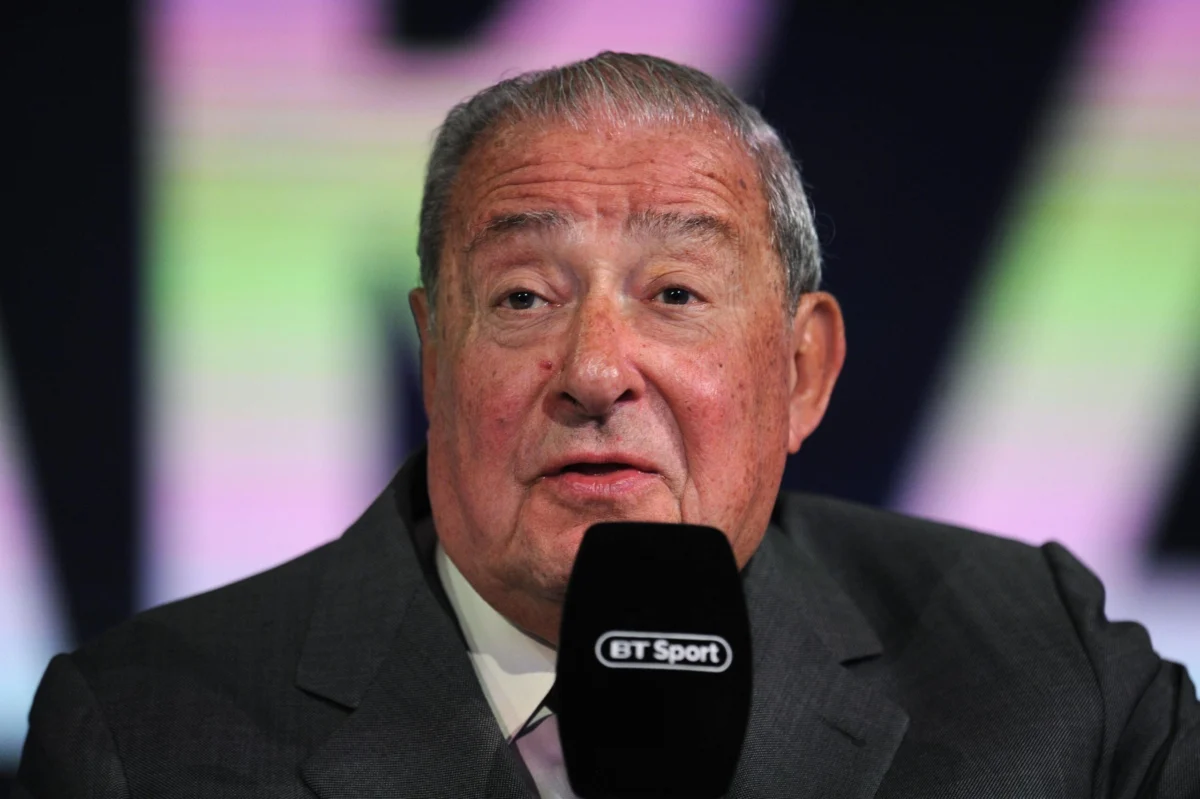
Legendary Hall of Fame boxing promoter Bob Arum is back on the scene, moving around comfortably following a recent knee surgery. Now fully mobile and actively keeping a pulse on the industry, the Top Rank chairman recently sat down for an extensive interview with Fight Hub TV. During the conversation, Arum offered his characteristic candor and deep historical perspective on the current state of the boxing business, touching upon the structural turbulence facing Zuffa Boxing, the changing role of Saudi Arabian investment, fighter compensation, and notable upcoming matchups.
As the promotional landscape experiences significant shifts, Arum’s insights shed light on the economic realities that dictate how fights are made, financed, and sustained in the modern era.
Arum on Zuffa’s Place in Boxing Landscape
The promotional venture Zuffa Boxing has appeared to be in a state of flux recently, and Arum offered a detailed breakdown of the financial mechanics behind their current position. According to the veteran promoter, Zuffa’s initial aggressive posture in the market was heavily tied to external capital.
"When you look at Zuffa, they are hoping to do what they’re doing with Saudi money, and the Saudis have poured a lot of money into the sport and for a while were backing Zuffa, so Zuffa felt emboldened to offer big [money] to good fighters like Shakur Stevenson," Arum explained.
However, that financial dynamic appears to be undergoing a fundamental shift. Arum noted that key decision-makers within the Middle Eastern funding apparatus—specifically pointing to figures like Turki Alalshikh and Sela—have seemingly received directives from higher levels within Saudi Arabia regarding budgetary constraints. Whether the directive is that funding is no longer unlimited or that expenditures must be significantly curtailed, the practical effect is a noticeable retreat.
"So the Saudis are clearly pulling back, and who knows if they’re going to be involved in boxing after this year. They’ve already, apparently, sold Ring Magazine to DAZN," Arum continued. He pointed out the strict corporate governance parameters that govern established entities like Zuffa, emphasizing that without external subsidization, traditional promoters cannot operate at a loss. "So, if the Saudi money isn’t there, Zuffa is not going to spend its own money to promote fights because they have announced to their shareholders that they would not do that. And if they start doing it, then they leave themselves open to a major shareholder suit."
Despite the friction and sudden changes in the marketplace, Arum maintains a pragmatic outlook on the situation, characterizing it as standard commercial readjustment rather than personal conflict. "So, again, we have to see what’s going to happen. There’s no animosity, people are doing what they feel is best for them and that’s business. How this all turns out, we’re going to have to see next year and the years after that."
On Whether He Thinks Zuffa Has Done a Good Job Thus Far
When evaluated on their operational performance since entering the boxing space, Arum suggested that external financial backing alters the traditional metrics of success. In his view, orchestrating high-profile events becomes a significantly more straightforward task when a promoter is working with an abundance of outside capital rather than relying strictly on the organic revenue generated by the fights themselves.
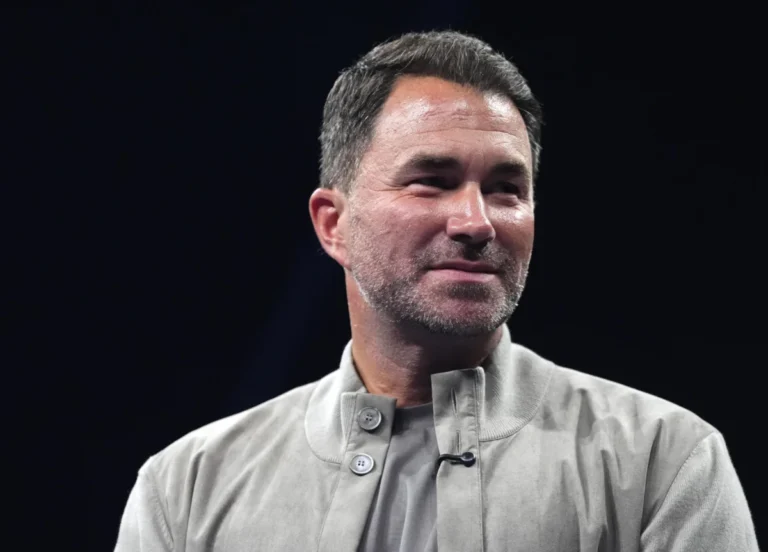
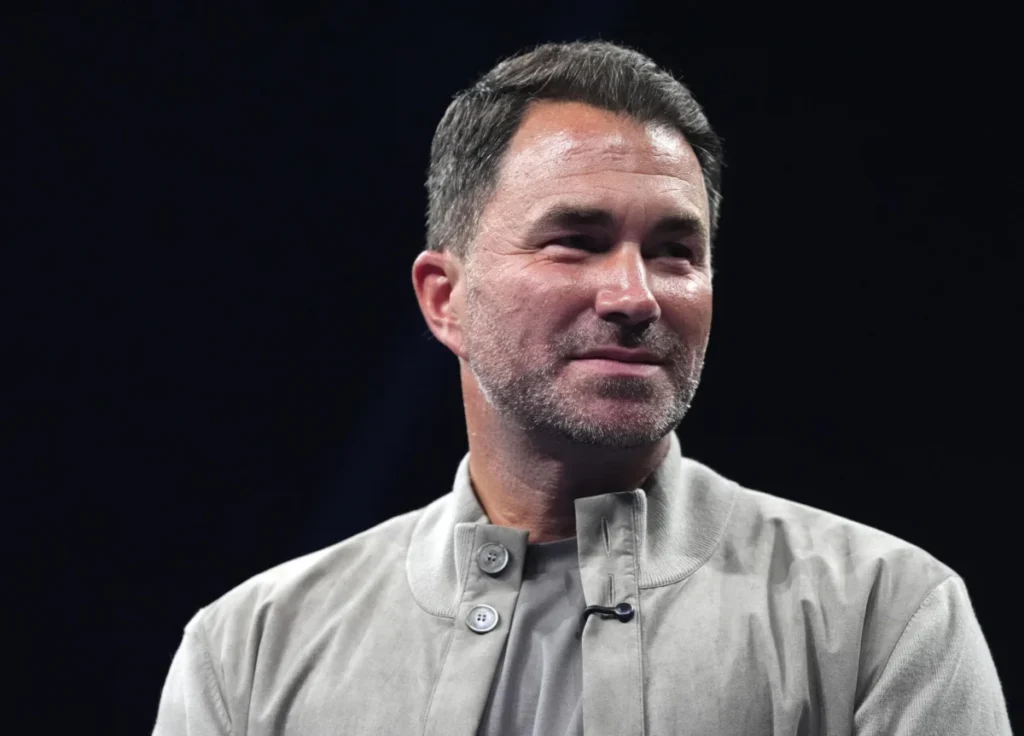
"What does it mean to have done a good job? If somebody gave me a barrel of money to put on fights, would I be doing a good job? Sure. But anybody would be doing a good job. I mean, give Oscar [De La Hoya] this kind of money, give Eddie [Hearn] this kind of money," Arum stated.
True promotional skill, according to Arum, is measured by an organization’s ability to navigate financial viability independently. He emphasized that building a sustainable business model requires matching fights based on the intrinsic economic value of the event rather than relying on heavy subsidies that cannot realistically be recouped.
"So it’s not a question of a good job, the question is can they make matches having a limited budget that is limited by the financial viability of the fight, not what somebody from the outside is pouring into it," Arum said. "That’s doing a big, good job — making it work for them, for the public, for the fighters without the fighters outside help putting in all this money without any way to get it back."
On Shakur Stevenson Splitting with Zuffa Before One Fight Together
The changing financial climate directly impacted high-profile talent acquisitions, most notably Shakur Stevenson’s short-lived association with Zuffa Boxing. Stevenson ultimately parted ways with the promotional outfit before ever stepping into the ring under their banner, a development Arum views as an inevitable consequence of the drying up of guaranteed funds.
"Once they realized there was no money coming from the Saudis to fund a $15 million fight deal, then what do you do? If you can get out of that contract, you get out of it," Arum explained. While acknowledging that he does not know the exact legal mechanics or potential financial costs of the separation, Arum underscored the sheer impossibility of sustaining multi-million-dollar guarantees without the corresponding revenue streams. "Did they get out, did it cost them any money to get out? I don’t know. But, again, to pay Shakur $15M… financially it’s not viable. So, it is what it is. And once the Saudis really left the message that they got the word from The Boss that this unlimited tap is going to stop, it was bound to happen."
On the Shakur vs. Devin Haney Fight Falling Apart
The same economic realities directly contributed to the collapse of the highly anticipated matchup between Shakur Stevenson and Devin Haney. Arum pointed out that the promotional breakdown occurred because the financial promises made to the respective athletes by different entities did not align with the actual market value or revenue generation capacity of the bout.
"The fight fell apart, but essentially it fell apart is because DAZN had promised [Devin] Haney a certain amount of money, Zuffa had promised Shakur a certain amount of money, and it wasn’t a match because that money didn’t exist in the fight that they would have," Arum noted.
Promoting major fights requires immense effort and carries significant financial exposure, meaning promoters are increasingly unwilling to absorb staggering losses for events that fail to pay for themselves. "Would the fight have justified the money being put up? Because otherwise nobody wants to break their ass doing a fight, promoting a fight, and ending up facing an absolute possibility that you’re going to lose money."
On His Prediction for the Business Once the Saudi Money Evaporates
Reflecting on decades of experience in the combat sports industry, Arum compared the current influx and potential withdrawal of foreign investment to historical market corrections. In boxing, he noted, economic bubbles have formed and burst before, and the ecosystem invariably recalibrates once speculative capital leaves.
"Looking at the past when this happened, and in boxing it happens all the time, the market then settles and fighters fight for what’s available and we get some very good fights that still go on and life continues," Arum said. However, he admitted that the sheer volume of non-existent money that has recently been poured into the sport leaves a unique precedent, creating uncertainty about the transition period. "But how it’s going to come out after this, where we had so much money being put into the sport not existing, how is the sport going to continue? It’s going to continue, but how is it going to continue, I don’t know."
Arum drew a direct parallel to past eras of heavy speculative funding, specifically referencing advisor Al Haymon’s previous ventures backed by significant institutional investment. In Arum’s view, those massive financial injections ultimately failed to revolutionize the sport sustainably.
"Remember, [Al] Haymon came in when he had that deal with the mutual fund with hundreds of millions of dollars, and all he accomplished was pissing it away," Arum said. Despite the unpredictability of the current marketplace, the Top Rank chief remains confident in the fundamental resilience of boxing, even if fighter compensation models face a period of readjustment. "So, again, I have the experience and I’ve been around enough not to say definitively what’s going to happen because I don’t know like nobody else does. I have an idea but again, it’s just an idea and not worth talking about. All I know is that the sport will continue, there will be great fights being made. How everybody will be compensated remains to be seen but that’s in the future."
On Ryan Garcia Saying He’s Going to Fight Floyd Mayweather for the WBC Title
The interview also touched upon recent outside-the-ring callouts and promotional rumors, including Ryan Garcia’s stated intention to face retired legend Floyd Mayweather Jr. for a WBC title. Arum questioned the genuine competitive merit and financial viability of such an exhibition or bout, while also offering a pointed assessment of Mayweather’s personal financial history.
"Will people be interested in it? I don’t know," Arum said. "I know Floyd [Mayweather] needs the money ’cause he’s pissed away tons of the money that he made. I mean, he blames Haymon for that, he blames this for that, but ultimately I blame him for pissing it away."
As for whether the matchup could generate enough capital to satisfy both camps, Arum expressed skepticism regarding public appetite for a mismatch in age and competitive prime. "Will Garcia vs Mayweather generate money? Will it generate enough money to satisfy these guys? I don’t know. I think there will be limited interest in a fight where you have a young guy at the peak of his boxing prowess fighting an old man, which Mayweather has now become."
On the Eddie Hearn vs. Dana White Beef Over Promoting Fury vs. AJ, and Hearn Insisting White Can’t Be Involved
Finally, Arum addressed the ongoing public back-and-forth between Matchroom Boxing promoter Eddie Hearn and UFC CEO Dana White regarding potential involvement in the heavily discussed heavyweight clash between Tyson Fury and Anthony Joshua. Hearn has publicly insisted that White has no contractual footing to be involved in the promotion. Arum confirmed that, structurally speaking, Hearn’s assessment is accurate, though he ultimately shrugged off the promotional politics given the massive scale of the event.
"Well, that’s right. Eddie [Hearn] is correct," Arum acknowledged. "Frank [Warren] and I have a contract with [Tyson] Fury, Eddie has a contract with [Anthony] Joshua. Dana has a contract with nobody."
Despite the lack of contractual ties, Arum expressed a total lack of concern over whether White manages to secure a peripheral role in the event, pointing out that the vast majority of the financial backing will once again stem from Saudi Arabian investors who ultimately dictate the terms of high-end heavyweight matchmaking.
"But if Dana wanted to be involved with the fight, be my guest. I mean, the money is the money. The Saudis are putting up the bulk of the money in that fight. They’ll do a good gate, get back some of it. But again, what do I care? What should anybody care?"