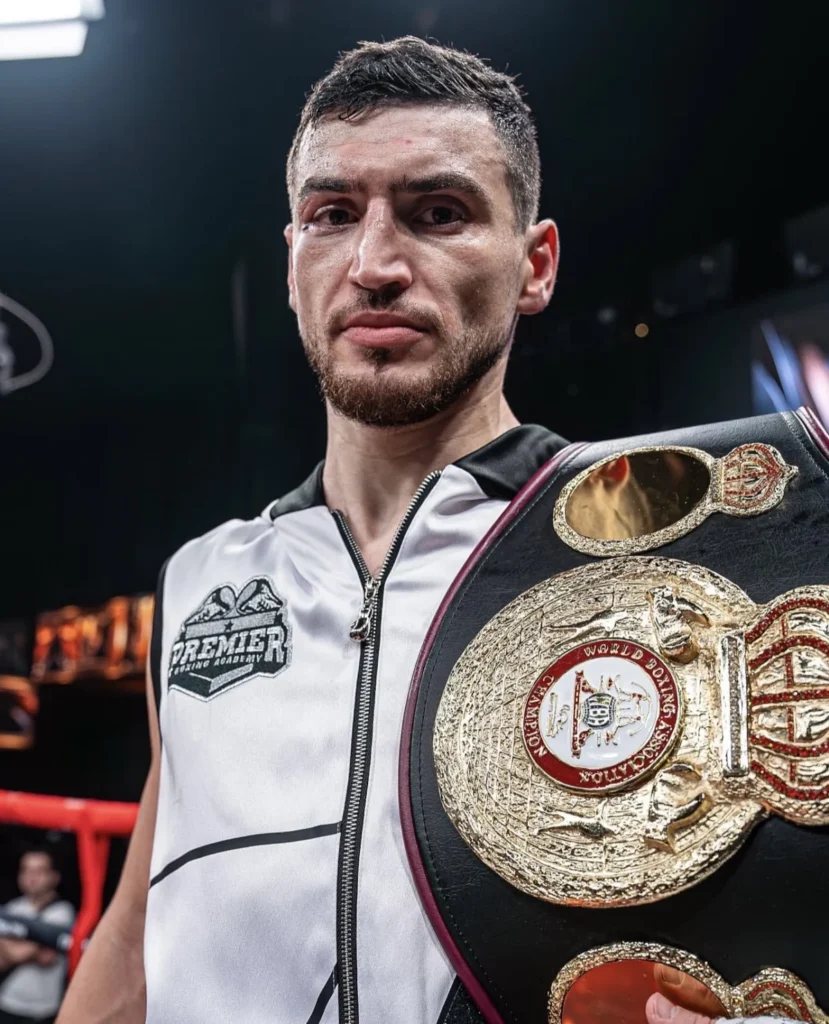

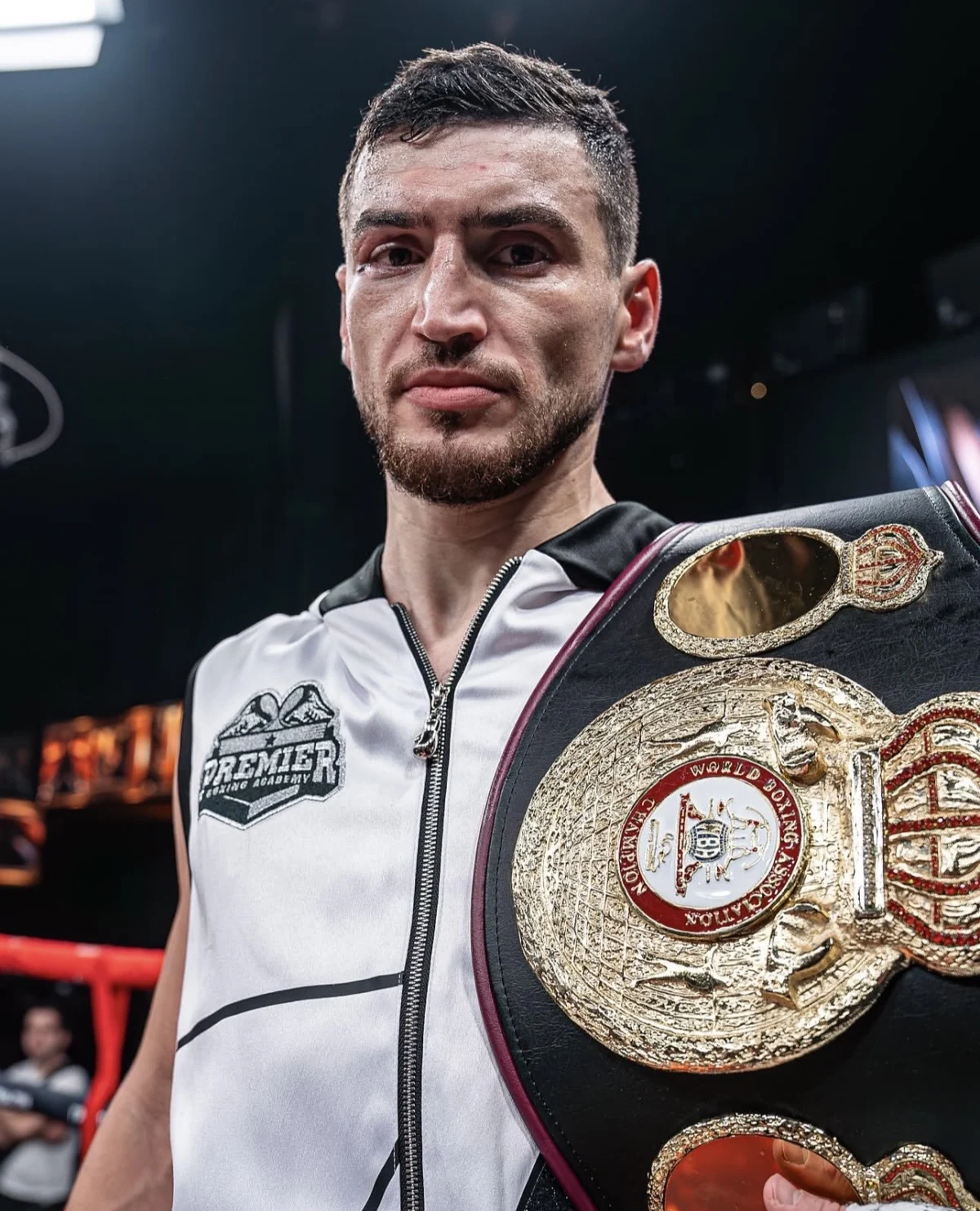
In a high-stakes, closely contested matchup that fully lived up to its considerable pre-fight expectations, southpaw Khariton Agrba achieved a major career milestone by capturing the World Boxing Association interim super lightweight world title, securing a hard-fought split-decision victory over seasoned contender Zaur Abdullaev after twelve rounds of high-level tactical warfare. The championship bout unfolded as an intense battle of contrasting styles and ring philosophies, delivering a compelling narrative from the opening bell to the final ribbon of sound that signaled the end of the twelfth round.
The ringside scorecards underscored the razor-thin nature of the twelve-round contest and highlighted the starkly different perspectives of the official judges tasked with scoring the fight. At the conclusion of the bout, two of the ringside officials handed down scorecards in favor of Agrba, reading 117-111 and 115-113, while the third judge awarded a matching 117-111 verdict to Abdullaev. The pronounced divergence on the official cards instantly ignited debate across the sport, establishing the result as one of the most widely discussed and analyzed decisions on the continental boxing calendar.
From the moment the action commenced in the first round, the championship bout took shape as a cerebral, high-paced chess match. Abdullaev, a battle-tested and physically formidable contender, brought a clear operational strategy into the ring, seeking to establish control through relentless forward pressure, a high and compact guard, and his superior physical strength. Operating with steady determination, Abdullaev aimed to cut off the ring, diminish the available space, and force the southpaw into high-pressure exchanges where physical weight and leverage could dictate the tempo.
In response, Agrba relied on his specialized skill set as a fluid southpaw, leaning heavily on slick lateral footwork, sharp multi-directional angle changes, and a fast, piercing jab to manage distance and frustrate his opponent’s advance. Throughout the opening rounds, Agrba utilized his jab not only as an offensive weapon to disrupt Abdullaev’s sightlines, but also as a essential defensive instrument, repeatedly blinding Abdullaev briefly to set up rapid changes in position before the pressure fighter could set his feet to throw power shots.
As the match entered its middle stages, the tactical battle intensified as both fighters sought to assert their preferred distance and rhythm. During the first half of the bout, Abdullaev enjoyed significant moments of success by successfully closing the distance and smothering Agrba’s preferred perimeter range. By walking through jabs behind his tight defensive shell, Abdullaev managed to back the southpaw toward the perimeter of the ring and launch sustained attacks targeting the body. These heavy body shots were designed to sap Agrba’s mobility over the long haul, reducing the southpaw’s agility and making him a easier target in the second half of the fight.
Despite facing heavy forward pressure and taking grueling body work during these exchanges, Agrba demonstrated sharp ring awareness and rapid technical adaptability. Rather than allowing himself to be trapped against the ropes or overwhelmed by Abdullaev’s physical strength, Agrba repeatedly relied on the unique geometric advantages offered by his southpaw stance. Utilizing subtle footwork, he pivoted sharply around Abdullaev’s lead shoulder, effectively turning his opponent away from his primary power hand and opening clear lanes for rapid counter strikes.
This technical adjustment proved crucial whenever Abdullaev attempted to press the attack inside. By changing angles at the precise moment Abdullaev committed to his forward momentum, Agrba repeatedly created fresh sightlines that allowed him to land crisp, accurate left-handed counter shots cleanly to Abdullaev’s chin. These counter strikes stood out vividly against Abdullaev’s forward aggression, offering clear eye-catching scoring moments for the judges assessing clean hitting and ring generalship.
As the contest shifted into the grueling late stages and the championship rounds approached, the high speed and tactical demands of the fight required absolute precision and stamina from both competitors. With the interim world title hanging in the balance, the final third of the bout became a true test of mental discipline and physical endurance. Abdullaev maintained his unwavering forward pressure, continuing to march forward in pursuit of a decisive blow or a continuous stream of damaging power shots that could turn the tide definitively in his direction.
Rather than wilting or retreating under the burden of Abdullaev’s relentless push, Agrba showed remarkable defensive composure and technical poise under extreme fatigue. Staying disciplined within his southpaw framework, Agrba resisted the temptation to engage in dangerous slugfests, maintaining control over his breathing and footwork. He sustained a crisp cadence with his jab while launching increasingly sharp, well-timed counterpunching combinations as Abdullaev lunged inside to work.
Agrba’s ability to maintain high defensive standards while simultaneously upping his scoring efficiency during these critical late rounds proved to be the decisive factor in the championship struggle. By consistently beating Abdullaev to the punch in key exchanges and landing the cleaner, sharper shots down the stretch, Agrba managed to pull ahead on two of the three official scorecards, securing the necessary points to claim the victory by a thin, competitive margin.
The wide spread across the three judges’ scorecards reflected the age-old debate in professional boxing regarding how to weigh relentless, forceful forward aggression against clean counterpunching, defensive selectivity, and spatial control. The judge who scored the bout 117-111 for Abdullaev clearly favored the steady pressure, physical dominance, and body attacks delivered by the seasoned contender throughout the contest. Conversely, the two judges who ruled in favor of Agrba prioritized the southpaw’s cleaner counterpunching, his ability to pivot away from danger, and the scoring efficiency of his left hand throughout the twelve-round distance.
With this split-decision triumph, Agrba claims the WBA interim super lightweight world title, elevating his standing within the competitive 140-pound weight division and positioning himself at the absolute top tier of the sanctioning body’s rankings. The interim championship belt places him in line for future world championship opportunities while capping off a tactical performance that highlighted both his defensive resilience and his high-level technical execution against a high-caliber pressure fighter.
For Abdullaev, the narrow and controversial loss represents a close defeat in a bout where his strength, tight defense, and relentless work rate made every single round a fiercely contested battle. The split nature of the decision reinforces his status as a formidable and dangerous contender at super lightweight, capable of taking world-class opponents to their absolute physical limits.
Ultimately, the twelve-round contest stands as an exemplary display of modern technical boxing, marked by contrasting strategic philosophies and sustained high-level intensity. Agrba’s ability to combine southpaw movement, sharp angle adjustments, and precise counterpunching under heavy physical pressure allowed him to narrowly edge out a persistent rival, concluding a memorable night of championship boxing and leaving an indelible mark on the division.