
It’s time to answer your burning questions about mixed martial arts.
Each week, combat sports enthusiasts submit their most pressing inquiries into The Feed, sparking debates and discussions that stretch across the entire landscape of the sport. While some questions are addressed immediately in the comment sections, others are reserved for the weekly mailbag—a deeper dive into the storylines, controversies, and future trajectories shaping the Ultimate Fighting Championship and beyond. From the shifting public perception of former dual-champion Alex Pereira to the looming twilight of the women’s bantamweight division, this week’s mailbag covers the most compelling topics in MMA.
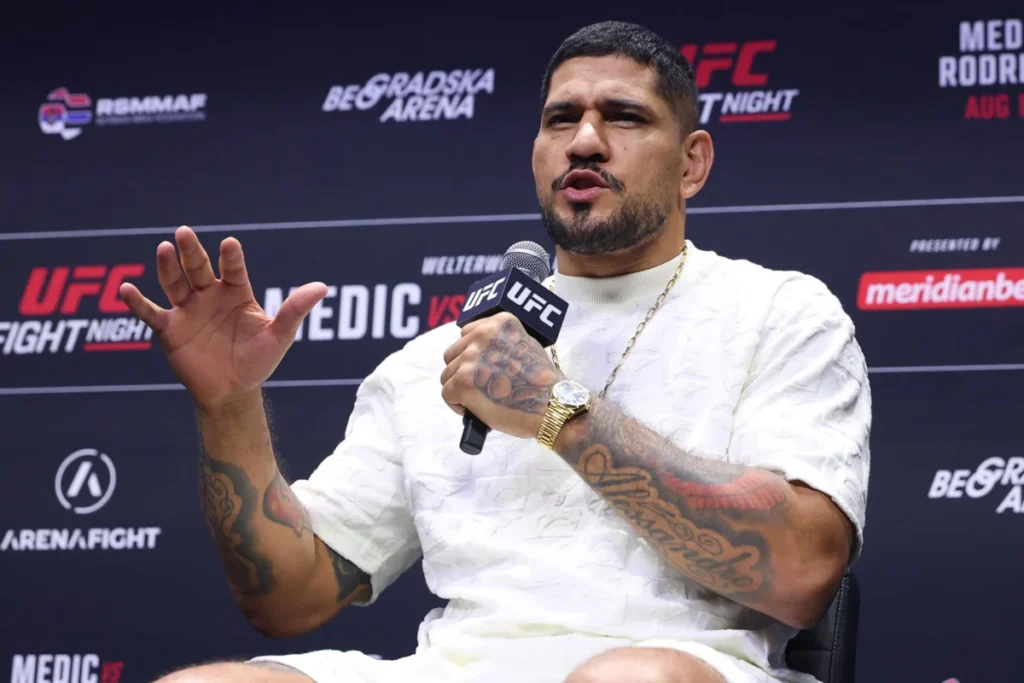
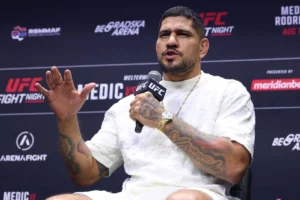
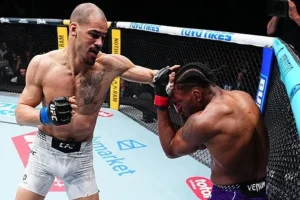
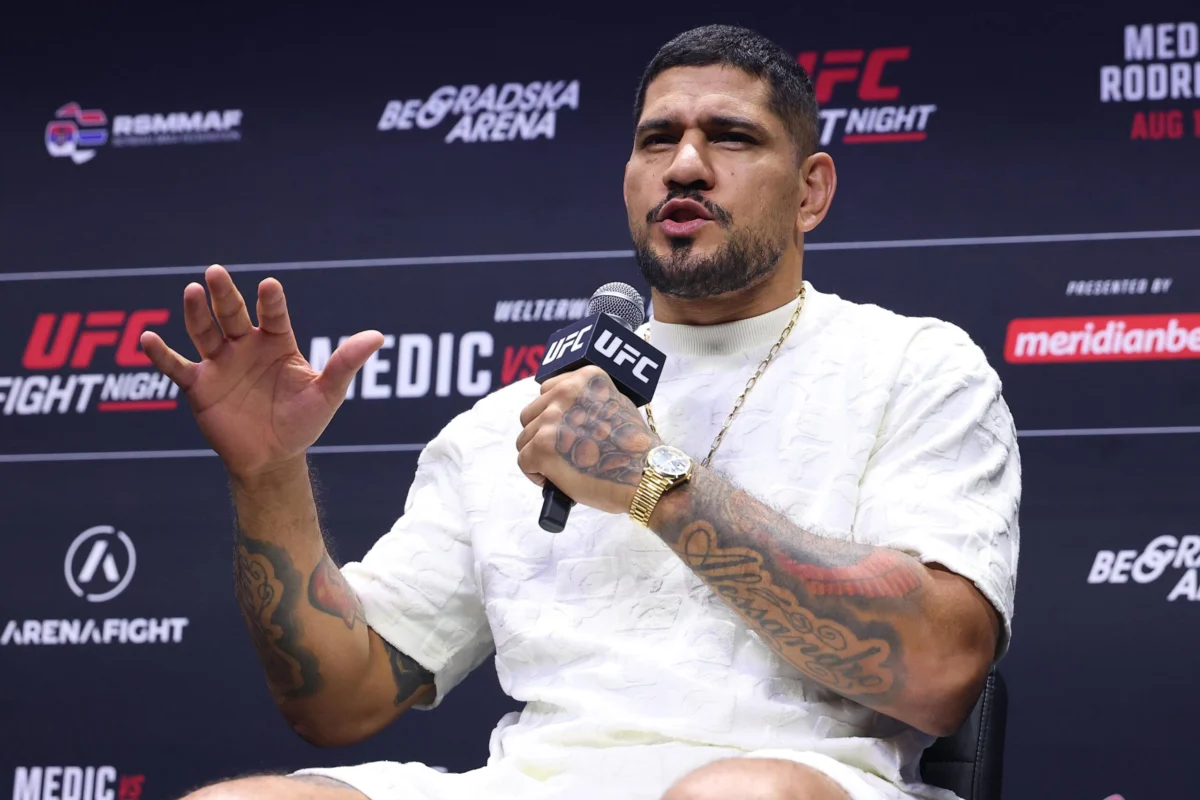
What’s Going On With Poatan?
Question: Alex Pereira used to be one of my favorite fighters, but this whole complaining tour has soured my opinion of him as of late. Do you think this run of complaining will affect his overall legacy, especially if he handles a Pavlovich loss similarly?
It is hard to disagree with this sentiment, and it is refreshing to know I am not alone in feeling this way. For almost the entirety of Alex Pereira’s meteoric rise through the UFC, he cultivated a stoic, terrifying personality reminiscent of a prime Fedor Emelianenko. The man rarely said much, and when he did address the media or the fans, his answers were usually concise, deliberate, or punctuated simply by his trademark catchphrase, "Chama."
The fans ate it up. The combination of his consistently thrilling, knockout-heavy performances and his implacable, cool exterior—punctured occasionally by subtle moments where he broke character—gave Poatan the most formidable aura of any fighter in years. However, ever since his setback against Ciryl Gane at the historic UFC White House card, that aura has taken a noticeable hit. Months after the loss, Pereira has found himself publicly entangled in petty online disputes, most notably beefing with former double-champion and analyst Daniel Cormier over seemingly trivial matters.
Whether you agree with his grievances or not, Pereira’s post-fight reactions have left a lot to be desired. Does he have a legitimate case regarding Gane allegedly landing illegal strikes to the back of his head during their encounter? Absolutely. But in the fast-moving world of professional fighting, do most fans care months down the line? It is hard to say they do. More importantly, what does he actually gain by harping on it continuously? It certainly did not secure him an immediate rematch or another shot at the gold, and it has actively alienated a portion of his once-adoring fanbase.

Now that a high-stakes fight has been officially booked against the fearsome Sergei Pavlovich, the hope is that Pereira can wipe the slate clean, refocus his energy, and move forward. Naturally, he has already begun talking about securing another title opportunity should he emerge victorious against Pavlovich, which is standard procedure for a competitor of his caliber.
Yet, looking ahead, the most fascinating storyline will be what happens if he suffers a defeat against Pavlovich. It is abundantly clear that Poatan is singularly obsessed with capturing a historic third UFC championship belt. If that ambition suddenly ceases to be a realistic option within the heavyweight division, how will he handle it? Will he continue to chase an unattainable goal and spend the twilight years of his career grasping at straws up at heavyweight, or will he swallow his pride and make the trek back down to light heavyweight?
Whatever the outcome, it is an undeniably massive fight that has the entire MMA community watching closely. And for what it is worth, none of this recent social media friction or post-loss bitterness will negatively impact his historical legacy. Pereira is already a guaranteed future UFC Hall of Famer and one of the most remarkably accomplished combat sports athletes of this generation. No amount of post-fight frustration or "crying foul" can ever take those historic accomplishments away.
Kayla Harrison vs. Amanda Nunes: A Double Retirement Showdown?
Question: Hey Jed, what do you think the odds are that Kayla vs. Amanda ends up being a double retirement fight? Also, if your excellent advice is ignored and Valentina doesn’t move up, could it be a triple retirement fight involving the retirement of the women’s bantamweight belt and division itself?
When examining the current trajectory of women’s MMA at the highest level, a double retirement for Kayla Harrison and Amanda Nunes appears extremely likely.
Harrison made headlines recently by admitting openly that she might have walked away from the sport altogether if not for the irresistible allure and competitive challenge of fighting Amanda Nunes. Unless those two transcendent athletes decide to run it back for an immediate rematch—an unlikely scenario given the physical and mental tolls of their careers—it is difficult to envision what else could genuinely motivate Harrison to step back into the Octagon. Valentina Shevchenko stands as perhaps the only other marquee name that could make sense, but even that matchup feels increasingly improbable.

As for Nunes, predicting her long-term motivation is always a complex task. She has already walked away from the sport once, and while she has hinted that her upcoming return might not necessarily be a strict one-off appearance, the fundamental question remains: why would she stick around permanently after a superfight of this magnitude?
Consequently, the realistic expectation is that by next year, the promotion could very well be looking at a vacant women’s bantamweight championship and an increasingly desolate top tier.
Regarding the second part of the question—wondering if Shevchenko’s reluctance to move up permanently could lead to a broader "triple retirement" that effectively shelves the entire 135-pound weight class—the answer is a definitive no. Shevchenko simply does not strike me as an athlete who will walk away easily; she strikes me as the type of competitor who will literally have to be dragged away from the sport kicking and screaming. She appears entirely content to return to the flyweight division and defend her belt for as long as her body allows her to do so safely, and she deserves immense professional credit for that unwavering competitive drive.
Dana vs. Eddie: Fantasy Matchmaking Gone Too Far
Question: Dana once set up a boxing match between him and Tito Ortiz, one of his biggest rivals, but Tito never showed. Let’s say he were to do this again and sets up a match between himself and Eddie Hearn. Who walks away the winner? Also, what would be a good bet the two could make on the fight?
The answer here is simple and straightforward: Eddie Hearn walks away the winner, quite comfortably.
The physical metrics tell the whole story. Dana White stands roughly 5-foot-11 and is 57 years old, while Eddie Hearn towers over him at 6-foot-5 and is 47 years old. While it might not quite mirror the generational novelty of a Mike Tyson versus Jake Paul spectacle, Dana would unquestionably be at a massive disadvantage. That reality explains why Hearn was so quick to accept the hypothetical challenge publicly, and why White ultimately dialed back his rhetoric despite being the one to initially float the idea.

There is, of course, no shame in that reality. White is rapidly approaching 60 years of age, and men nearing their sixth decade should generally avoid stepping into a combat sports ring, particularly if they lack a background as professional athletes. If this bout ever materialized, Hearn would cruise to a terribly awkward, hard-to-watch decision victory.
As for the financial stakes, a promotion matching these two high-profile executives could easily generate a staggering total purse, potentially pushing close to $50 million. Both men possess immense public fame, massive promotional platforms, and a genuine, well-documented dislike for one another. No matter how dreadful the actual in-ring product would inevitably look, combat sports fans and casual observers alike would undoubtedly pay top dollar to witness such a bizarre spectacle unfold.
A Fresh Look at UFC Commentary Teams
Question: How do you feel about the guys given some commentary duty recently, i.e., Chris Weidman, Michael Chiesa, and Alan Jouban? I think they’ve all been pretty solid.
It is difficult not to support the initiative to inject fresh blood into the broadcast booth. My longstanding belief is that the UFC should actively rotate and expand its commentary roster more frequently, primarily because all broadcasters tend to suffer a decline in quality the longer they remain anchored to the same seat. It is a natural human phenomenon; after spending years working the live broadcast desk, analysts invariably begin to lean on crutches, turning into caricatures of themselves as they repeat the exact same talking points and catchphrases week in and week out.
That is not necessarily a condemnation of the individuals—live combat sports commentary is an extraordinarily difficult, high-pressure job—but the broadcast product benefits immensely from introducing new voices every three to five years to keep the presentation dynamic.
Focusing specifically on Weidman, Chiesa, and Jouban, the results are understandably mixed. The overarching takeaway is that all three men are relatively new to the intricate demands of live calling, meaning they require patience and valuable repetitions to smooth over their respective shortcomings. That growth takes time, but the experience will undoubtedly pay off.

Michael Chiesa arguably possesses the highest long-term potential as an elite color commentator. Although he is still undeniably green, he demonstrates a remarkably sharp eye for grappling exchanges and tactical transitions unfolding in real time. Most of his current struggles stem simply from navigating the pacing of a live broadcast, a skill that naturally improves with extended tenure. Given his proven success as a desk analyst over the years, that analytical foundation translates well to the microphone.
Alan Jouban sits comfortably in the second tier. Interestingly, Jouban currently feels more naturally polished as a play-by-play or color commentator than Chiesa; he sits comfortably in the pocket and maintains a smooth broadcast rhythm. However, his commentary occasionally lacks that penetrating analytical perspective or insightful spark that makes a fight truly compelling. He is undeniably competent and professional, but he sometimes feels like a presence rather than a transformative voice. His skill set might ultimately shine brightest as a desk anchor rather than a cageside analyst.
Chris Weidman represents the most complex evaluation. Simply put, the former middleweight champion does not always sound entirely comfortable speaking for a living in a broadcast environment, and it is hard to envision a scenario where he evolves into a natural, fluid analyst or commentator. Even so, the overarching philosophy of giving former fighters a platform to transition into media roles is a positive step for the promotion, even if some experiments resonate more strongly with the audience than others.
Defining Every UFC Weight Class in a Single Word
Question: Simple challenge for ya! Can you describe each weight class in one word? I’m sure this will be fun!
This was a delightfully tricky challenge to tackle. As a sharp commenter pointed out before putting fingers to keyboard, it would be remarkably easy—and perhaps a bit cynical—to use the exact same word, such as "trash," to describe multiple divisions across the board. However, the goal was to avoid taking the easy way out and instead assign a distinct, uniquely fitting descriptor to every single weight class in the promotion.
The breakdown across the male and female divisions reflects the current state, competitive health, and general vibe of each weight category:

Heavyweight: Catastrophe
Light Heavyweight: Depressing
Middleweight: Complicated
Welterweight: Enchanting
Lightweight: Best
Featherweight: Transitional
Bantamweight: Narrow
Flyweight: Burgeoning
Women’s Bantamweight: Collapsed
Women’s Flyweight: Oppressed
Strawweight: Starving
Most of these selections speak for themselves, capturing the structural health, talent pools, and matchmaking dynamics of the respective divisions, while leaving a bit of room for interpretation for the rest.
Thanks for reading, and thank you to everyone who sent in questions for this week’s mailbag! If you have any burning questions about things at least somewhat related to combat sports, be sure to drop them into the prompt provided weekly in The Feed.