

The Aura of Invincibility and the Tokyo Shock
In the late 1980s, Mike Tyson was more than just a boxer; he was a cultural phenomenon who embodied raw power and intimidation. With an undefeated record and a string of first-round knockouts, Tyson was viewed as an unstoppable force. However, on February 11, 1990, in Tokyo, Japan, the sports world witnessed what is still considered the greatest upset in boxing history. When James ‘Buster’ Douglas knocked out the undisputed champion, it didn’t just end a winning streak; it fundamentally altered the trajectory of the heavyweight division and the business of professional sports.
The odds leading up to the fight were astronomical, with some bookmakers famously listing Douglas as a 42-to-1 underdog. Very few experts gave Douglas a chance, viewing the bout as a mere tune-up for Tyson’s eventual mega-fight against Evander Holyfield. This complacency was not just limited to the media; it permeated Tyson’s own camp. Reports later surfaced that Tyson’s training for the Tokyo fight was lackluster, characterized by a lack of discipline and a failure to take his opponent seriously.
James ‘Buster’ Douglas, however, was fueled by a profound personal motivation. Having recently lost his mother, Douglas entered the ring with a sense of purpose and emotional resilience that Tyson had never encountered in an opponent. Unlike previous challengers who were defeated by Tyson’s aura before the first bell even rang, Douglas stood his ground. He used his reach and a stiff jab to keep the champion at bay, proving that Iron Mike could be touched and, more importantly, hurt.
The Technical Deconstruction of a Giant
The fight itself was a masterclass in tactical boxing. Douglas utilized a consistent left jab that disrupted Tyson’s rhythm and prevented him from getting inside where his power was most dangerous. For the first time in his career, Tyson looked confused and frustrated. The technical flaws in Tyson’s defense, which had been masked by his overwhelming offensive pressure in previous fights, were laid bare for the world to see. This revelation changed how future opponents approached Tyson, moving away from fear and toward strategic exploitation of his height and reach disadvantages.
One of the most controversial moments in the fight occurred in the eighth round. Tyson landed a signature right uppercut that sent Douglas to the canvas. The referee’s count was famously slow, giving Douglas enough time to recover. This ‘long count’ remains a point of heated debate among boxing historians. Had the count been faster, Tyson might have escaped with a victory, but Douglas’s survival allowed him to return for the ninth round with renewed aggression, eventually leading to the historic tenth-round finish.
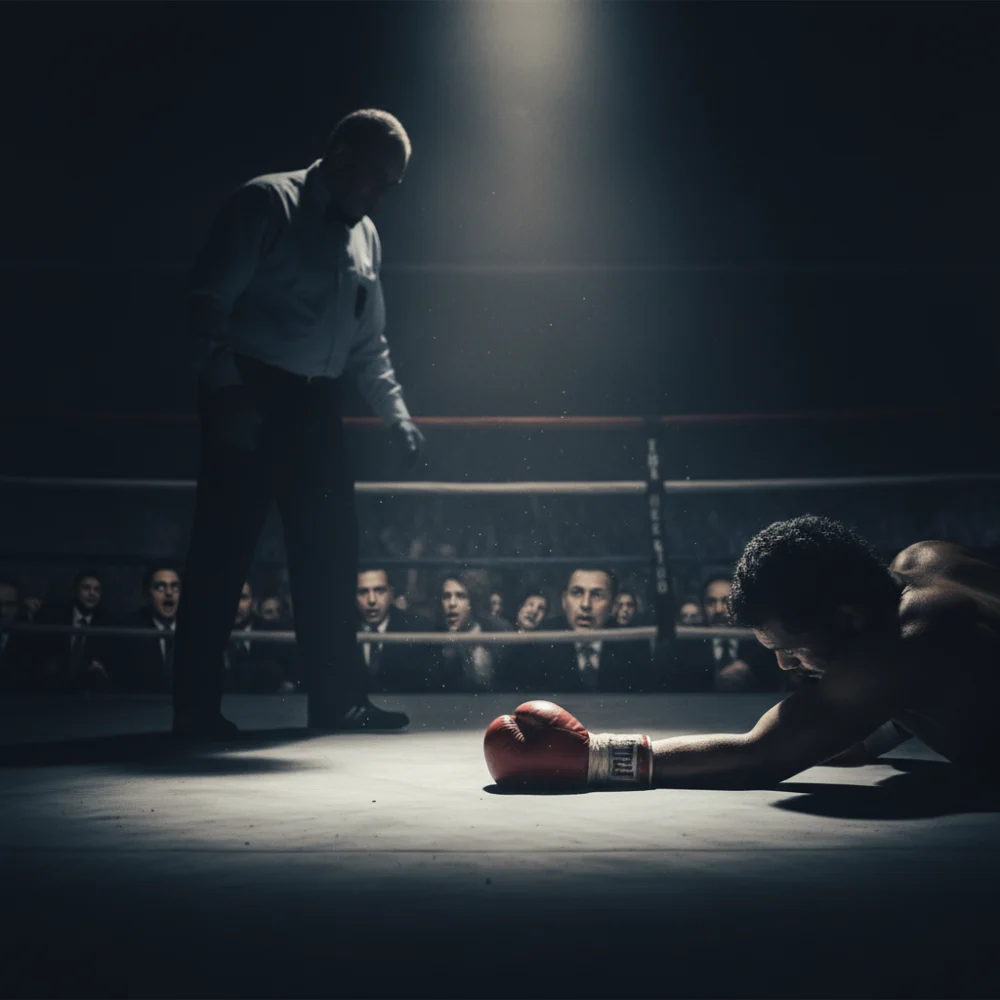
In the tenth round, Douglas unleashed a combination that culminated in a devastating uppercut and a series of follow-up punches. Tyson, for the first time in his professional life, was knocked down and unable to regain his footing in time. The image of Tyson fumbling for his mouthpiece remains one of the most iconic and shocking visuals in sports. It signaled the end of an era and the destruction of the myth that Tyson was invincible.
The Shift in Boxing Economics and Promotion
The immediate aftermath of the fight sent shockwaves through the financial structures of boxing. The planned multi-million dollar showdown between Tyson and Holyfield was thrown into chaos. Promoters like Don King had to pivot quickly, as the marketability of a defeated Tyson was suddenly in question. This loss proved that the invincibility factor was a fragile commodity, and it forced promoters to diversify their stables rather than relying on a single dominant superstar.
Furthermore, the loss impacted the betting industry forever. The 42-to-1 odds became a cautionary tale for oddsmakers. It served as a reminder that in heavyweight boxing, one punch can change everything. Since that night in Tokyo, betting lines for heavy-hitting champions have often been more conservative, reflecting the inherent volatility of the sport that Douglas so dramatically exposed.
A New Era for the Heavyweight Division
Tyson’s first loss blew the heavyweight division wide open. During Tyson’s reign, the division was often criticized for being top-heavy and predictable. After Douglas won the belts, a new wave of contenders realized that the throne was attainable. This led to one of the most exciting eras in boxing history, featuring legends like:
- Evander Holyfield: Who eventually defeated Douglas to become champion.
- Lennox Lewis: Who would go on to dominate the late 90s.
- Riddick Bowe: Who emerged as a major force in the early 90s.
The psychological barrier had been broken. Fighters no longer stepped into the ring with Tyson believing they were destined to lose. This shift in mentality meant that Tyson’s subsequent fights were much more competitive and physically demanding. The ‘fear factor’ that had won Tyson many fights before they even started was gone, forcing him to rely purely on his skill and conditioning, which were often inconsistent in the years that followed.
Impact on Tyson’s Personal and Professional Legacy
For Mike Tyson, the loss was the beginning of a turbulent decade. While he would eventually regain portions of the heavyweight title, he never quite recaptured the same aura of total dominance. The defeat in Tokyo was followed by legal troubles and a prison sentence, further complicating his career. Historians often divide Tyson’s career into Pre-Douglas and Post-Douglas eras, with the former representing his peak as a disciplined, focused destroyer under the guidance of Cus D’Amato’s principles.
The loss also highlighted the importance of a strong support system. By 1990, many of the mentors who had guided Tyson’s early career were gone. The lack of a strategic corner during the Douglas fight was evident. This served as a lesson for future champions about the dangers of surrounding oneself with ‘yes-men’ and the necessity of maintaining a rigorous training environment regardless of the opponent’s perceived skill level.
The Cultural Legacy of the Buster Douglas Moment
Beyond the ring, the term ‘Buster Douglas’ entered the popular lexicon as a metaphor for the ultimate underdog victory. It transcended boxing, being used in politics, business, and other sports to describe a situation where a seemingly unbeatable incumbent is toppled by a dismissed challenger. This fight proved that human spirit and preparation could overcome raw talent and reputation.
The fight also helped globalize boxing further. Holding such a massive event in the Tokyo Dome demonstrated that major championship fights could be successful outside of Las Vegas or Atlantic City. It paved the way for the internationalization of the sport, encouraging promoters to seek out global venues and audiences, a trend that continues today with major bouts in the Middle East and Europe.
In conclusion, the night Mike Tyson lost to Buster Douglas was the night boxing changed forever. It humbled a giant, empowered the underdog, and reshaped the competitive landscape of the heavyweight division for years to come. While Tyson remains one of the most famous figures in sports history, that 1990 defeat serves as a permanent reminder of the unpredictability and drama that makes boxing the ‘Sweet Science.’