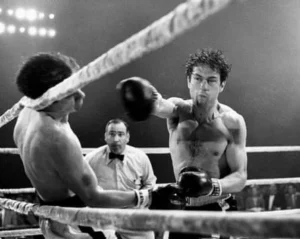



In the high-stakes world of professional boxing, the fight often begins long before the opening bell rings. The ring walk serves as the first act of psychological warfare, a moment where a fighter can project invincibility while making their opponent feel small and vulnerable. Among all the legends who have graced the sport, Mike Tyson stands as the undisputed king of the intimidating entrance, utilizing a minimalist approach that felt more like a walk to an execution than a sporting event.
The Minimalism of Mike Tyson
Unlike his contemporaries who wore sequined robes and were surrounded by massive entourages, Mike Tyson’s approach was famously stripped back. He would often emerge from the tunnel wearing no socks, plain black trunks, and a simple white towel with a hole cut in the middle draped over his shoulders. This lack of traditional boxing attire sent a chilling message: Tyson was not there to put on a show; he was there to destroy. The absence of a robe highlighted his muscular, coiled physique, making him look like a gladiator from another era.
One of the most terrifying aspects of Tyson’s walk was the sound—or lack thereof. While other fighters preferred upbeat anthems or hip-hop tracks to energize the crowd, Tyson frequently walked out to ominous, industrial noises or even complete silence. In his 1988 bout against Michael Spinks, Tyson entered to a cacophony of clanking metal and low-frequency drones. The sound was psychological torture, designed to unsettle Spinks and anyone else in the arena, creating an atmosphere of impending doom.
The 1988 Michael Spinks Entrance
The fight against Michael Spinks is often cited as the pinnacle of ring-walk intimidation. Spinks, an undefeated champion in his own right, was visibly shaken before the fight even started. As Tyson walked toward the ring with an expression of pure, focused aggression, the clanking industrial soundtrack echoed through the Atlantic City Convention Center. Spinks’s trainer later admitted that his fighter lost the match in the dressing room and during that walk, paralyzed by the aura of the man known as Iron Mike.
The Role of the Death Stare
Once inside the ring, Tyson’s intimidation tactics continued. He would refuse to take his eyes off his opponent during the referee’s instructions. This death stare was legendary. He wasn’t just looking at his opponent; he was looking through them, searching for any sign of weakness or fear. Most fighters would blink or look away, and at that moment, Tyson knew the fight was already over. This psychological dominance allowed him to score many of his famous first-round knockouts.
Sonny Liston: The Original Intimidator
Before Tyson, there was Sonny Liston. Known as The Big Bear, Liston possessed a scowl that could freeze a man’s blood. His ring walk was slow and deliberate, designed to let the opponent soak in his massive reach and heavy hands. Liston didn’t need music or costumes; his reputation as a street-hardened enforcer was enough to make challengers question their career choices before the first jab was thrown.
George Foreman’s Stoic Presence
In the 1970s, George Foreman was a terrifying figure. His ring walk was characterized by a cold, robotic stoicism. He didn’t dance, he didn’t smile, and he didn’t acknowledge the crowd. He simply marched to the ring like an unstoppable force of nature. This version of Foreman was so intimidating that even the great Joe Frazier seemed overwhelmed by the sheer physical presence and power that Foreman projected during his entrance.
Theatrical Intimidation: Prince Naseem Hamed
Intimidation doesn’t always have to be dark and silent. Prince Naseem Hamed used extreme confidence and theatricality to unnerve his opponents. His walks could last ten minutes, involving flying carpets, elevators, and somersaults over the top rope. By making the entrance all about him, he made his opponents feel like mere props in his personal show, which often led them to fight emotionally and make tactical mistakes.
Deontay Wilder and the Bronze Bomber Persona
In the modern era, Deontay Wilder took ring walks to a cinematic level. Wearing elaborate, jewel-encrusted masks and armor that weighed dozens of pounds, Wilder looked like a villain from a comic book. The goal was to project a persona of the Bronze Bomber, a man possessed by a knockout spirit. While some found it over-the-top, the visual impact of a 6-foot-7 giant in glowing armor was undeniably imposing.
The Psychological Impact on Performance
Why does an intimidating ring walk work? From a sports psychology perspective, it triggers the fight-or-flight response in the opponent prematurely. If a boxer is intimidated during the walk, their body releases high levels of cortisol and adrenaline too early, leading to muscle tension and a loss of fine motor skills. By the time the bell rings, the intimidated fighter is already physically and mentally exhausted from the stress of the entrance.
The Elements of a Scary Walk
- Visual Identity: Using specific colors or lack of gear to create a brand of fear.
- Soundscapes: Using dissonant or heavy music to disrupt the opponent’s rhythm.
- Entourage Discipline: A silent, stone-faced team adds to the fighter’s aura.
- Pacing: A very slow or very fast walk can both be used to unsettle the waiting opponent.
Bernard Hopkins and The Executioner
Bernard Hopkins was a master of the psychological game. He often wore a hooded executioner’s mask and stayed perfectly still in his corner, staring at his opponent while they moved around. This stillness was a form of intimidation that suggested he was the hunter and his opponent was the prey. Hopkins used this aura to maintain longevity in the sport, proving that mental dominance is just as important as physical prowess.
The Crowd’s Role in Intimidation
The atmosphere of the arena plays a massive role in the ring walk. When Mike Tyson walked out, the crowd’s reaction was a mix of cheers and a palpable sense of awe. The collective energy of thousands of people reacting to a fighter’s presence can amplify the intimidation felt by the opponent. If the crowd treats one fighter like a god and the other like a sacrifice, it becomes very difficult for the underdog to maintain their composure.
Modern Trends in Ring Entrances
Today, we see a mix of Tyson’s minimalism and Hamed’s theatricality. Fighters like Tyson Fury use costumes and music to project a sense of fearlessness and unpredictability. However, many boxing purists still believe that nothing compares to the raw, visceral terror of a Mike Tyson entrance. In an age of social media and branding, the simplicity of a man walking to the ring ready for battle remains the most effective form of intimidation.
Conclusion: The Legacy of the Walk
The ring walk remains one of the most fascinating aspects of professional boxing. It is a bridge between the preparation of the gym and the reality of the fight. While many have tried to replicate the aura of Mike Tyson, his unique combination of speed, power, and psychological intensity during his walk to the ring remains the gold standard. He proved that you don’t need a million-dollar robe to be the most feared man on the planet; you just need the intent to win and the eyes of a predator.