


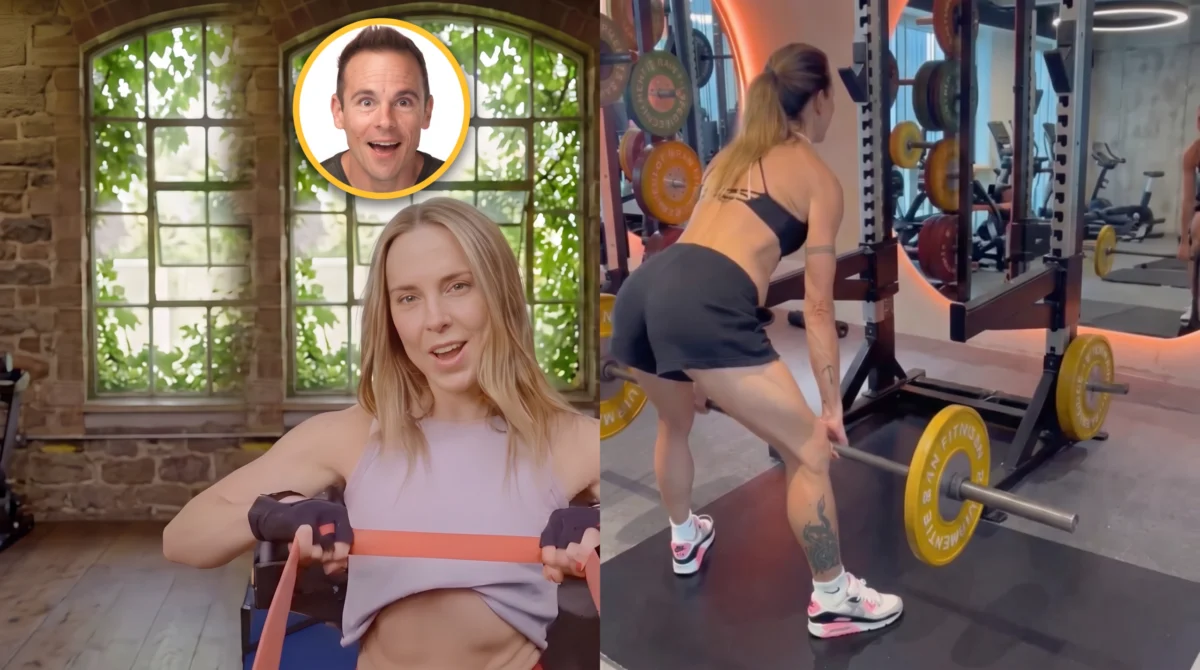
At 51, Melanie Chisholm continues to fully inhabit the moniker that introduced her to global pop stardom nearly three decades ago. The former Spice Girl, known universally to millions of fans as Sporty Spice, maintains a level of physical performance that reflects both decades of unbroken athletic consistency and a sophisticated evolution in how she approaches exercise science.
Appearing recently on BBC Breakfast, Chisholm offered rare insights into her personal wellness journey, shedding light on how a child track enthusiast and pop icon transitioned into a seasoned athlete whose physical feats continue to captivate observers worldwide. Far from relying on the natural athleticism of her youth, she detailed a modern philosophy grounded in longevity, intelligent resistance training, bodyweight calisthenics, and essential recovery practices. Her current capabilities, frequently documented on her social platforms, showcase a standard of conditioning and physical literacy that challenges performers and athletes half her age.
A Lifetime of Movement
Chisholm’s current functional strength is anchored in an uninterrupted relationship with athletic movement that began in early childhood. Speaking to the presenters on BBC Breakfast, she traced the roots of her enduring stamina directly back to her formative years, describing physical engagement as a constant thread running through every phase of her life.
"I think [my fitness reflects] many years of being active," Chisholm explained during the broadcast. "When I was a kid I did loads of sport. I’ve danced. I’ve just never stopped. Now we know so much more about what’s good for us, and we train smarter."
This lifelong connection to athletics was far more than casual participation. As an adolescent, Chisholm demonstrated notable natural talent, competitive focus, and discipline. In a previous interview with The Sun, she recalled setting her school’s high jump record at age 14, an accomplishment that signaled the explosive power and biomechanical coordination that would later define her dynamic stage presence.
Her introduction to structured resistance work and the weight room, however, emerged from an unexpected chapter of her music career. Back in 1994, during the formative era of the Spice Girls, bandmate Geri Halliwell first introduced Chisholm to traditional gym equipment and strength training. That foundational introduction ignited an enduring enthusiasm for progressive resistance, eventually transforming her into an advocate for strength work among women long before it became a mainstream wellness staple.
Strength Training Takes Center Stage
In recent months, Chisholm’s social media documentation has revealed a training environment that places progressive overload and complex compound lifting directly at the core of her schedule. Far from adhering to light, repetitive conditioning drills, her programming reflects a serious and structured weight-training methodology.
During recent summer training phases, her workouts featured disciplined sequences of forward lunges, lateral raises, overhead presses, rear delt flyes, and demanding indoor cycling intervals designed to stress multiple energy systems. Subsequent updates highlighted heavier strength components, including loaded back squats, hanging straight leg raise holds, wide-grip pull-ups, and heavy machine hip thrusts designed to optimize lower-body force production and core stability. Accompanying one particularly intense lifting reel, she summarized her philosophy plainly: "We train hard!"
According to lifestyle and fitness outlet Good to Know, Chisholm’s long-term regimen thoughtfully integrates compound squat patterns, explosive plyometric jumping, structured interval conditioning, and targeted indoor cycling sessions. This multi-angled approach provides a comprehensive full-body stimulus that sustains power, muscular density, and joint integrity well past the milestone age of 50.
Getting Stage-Ready With Smart Programming
The practical necessity of elite conditioning became particularly apparent during preparations for the high-profile 2019 Spice Girls stadium reunion tour. Faced with the athletic realities of delivering two-hour stadium performances featuring rigorous choreography and live vocal delivery across massive stages, Chisholm turned to renowned personal trainer James Collins to structure a targeted regimen.
During that phase, she credited specific athletic core movements, particularly the TRX suspended pike, as instrumental in refining the midsection strength, stability, and shoulder control required for the demands of the tour. For Chisholm, the objective of the programming transcended aesthetics. She explicitly aimed to embody the identity of being "the epitome of sporty" when stepping under the stadium lights, ensuring she met the expectations attached to her persona with authentic physical capability.
Her stage-ready conditioning earned industry recognition that same year when she appeared on the cover of Women’s Health UK. In that feature, she detailed the core mechanics and progressive conditioning structures that kept her performing without breakdown, reinforcing her reputation as an enduring athletic role model in popular culture.
Mastering Bodyweight Skills
Beyond conventional barbells, dumbbells, and gym machines, Chisholm has dedicated significant energy to mastering complex calisthenics disciplines. Her public training updates frequently showcase high-level gymnastics-inspired skills that require an exceptional strength-to-weight ratio, notably including inverted hangs executed with a single hand.
Outdoor workout environments, particularly municipal calisthenics parks, feature heavily in her schedule whenever she travels. During an extended spring stay in Australia, footage captured her executing advanced movement patterns on the outdoor bars of Sydney’s Bondi Beach. Her repertoire on the bars included hanging knee-tuck windshield wipers, deficit elevated push-ups, complete bar rollovers, and strict inverted horizontal rows, alongside the simple reflection: "Love an outdoor gym."
Biomechanically, these gymnastics and calisthenics patterns demand an extraordinary degree of core tension, scapular control, rotational stability, and proprioception. These are physical attributes that cannot be rapidly acquired through crash training; they represent the cumulative result of years of motor pattern reinforcement, consistent body composition management, and dedicated practice.
Embracing Endurance Challenges
Not content with confining her physical pursuits to the gym floor or the stage, Chisholm expanded her athletic horizons in 2011 by venturing into the demanding arena of multisport endurance racing. In an interview with Good to Know, she reflected on how triathlon entered her life and captured her competitive interest at a time when many individuals begin scaling back high-impact activities.
"I only started doing triathlons in 2011 and I was just bitten by the bug," she recalled. "It was something that I quite fancied having a go at, but I was scared of the unknown."
Embracing the multisport lifestyle required Chisholm to conquer that hesitation, committing to the technical demands of open-water swimming, road cycling, and sustained distance running. The multifaceted requirements of triathlon training fundamentally altered her physiological conditioning, building extensive aerobic capacity and mental resilience while proving her ability to adapt to entirely new athletic pursuits well into adulthood.
Recovery and Mindfulness Matter
While Chisholm’s athletic output remains intense, she openly balances hard-charging physical efforts with restorative practices. Over recent years, her public philosophy has shifted to highlight the non-negotiable role of tissue recovery, restorative movement, joint mobilization, and mental decompression.
In an honest reflection shared on social media alongside imagery of a waterfront yoga session, she addressed the challenges many dedicated athletes face when attempting to decelerate:
"Sometimes slowing down and being present is the part of my wellness routine that I neglect," she wrote. "It’s tempting to keep moving. I love a good sweat but as I get older I’ve realized recovery and mindfulness is important as getting PBs in the gym."
Chisholm noted that open water environments play an essential role in facilitating this restorative state, remarking that the acoustic rhythm of ocean tides serves as an effective mechanism for nervous system regulation, resetting her mental baseline between grueling training blocks.
Finding Calm Through Travel
Her extended stays abroad have frequently allowed Chisholm to merge physical movement with mental rejuvenation. While opening a recent year in Australia, she intentionally sought out remote coastal locations to execute unhurried mobility work, traditional sun salutations, and quiet contemplative time away from performance pressures.
"When the opportunity to start the year in Australia came up, I absolutely couldn’t WAIT to find a secluded spot by the sea to find a peaceful headspace," she shared with her followers. "I don’t know about you guys, but just hearing the water relaxes me."
This deliberate integration of nature and movement highlights a holistic evolution in her worldview. Rather than viewing exercise exclusively through the lens of exertion and caloric output, Chisholm treats movement as a mechanism for mental equilibrium and physical longevity, balancing parasympathetic recovery alongside high-threshold sympathetic training.
Training Smarter With Age
The distinguishing feature of Chisholm’s athletic longevity is not simply sheer grit or willpower, but an explicit willingness to modernize her protocols based on sports science. Her remarks on BBC Breakfast concerning the need to "train smarter" encapsulate an essential transition that athletes must navigate to sustain high performance through their fourth and fifth decades.
Rather than relying on the high-volume, punishing routines often embraced by younger performers, Chisholm emphasizes exercise selection that maximizes structural stimulation while preserving joint integrity. Modern programming frameworks stress that after age 40, deliberate periodization, structured deload phases, adequate sleep hygiene, targeted nutritional recovery, and movement variety become decisive factors in avoiding chronic overuse injuries.
Her contemporary routine encompasses multiple complementary disciplines: heavy resistance training to stimulate muscle protein synthesis and maintain bone mineral density; explosive jumps to sustain fast-twitch motor unit recruitment; calisthenics to enhance relative strength; endurance cycling and running to support cardiovascular health; and mobility-focused yoga to maintain functional range of motion. By targeting different physiological pathways and energy systems, Chisholm mitigates systemic wear and tear while building a well-rounded athletic profile.
Key Takeaways From Mel C’s Approach
An analysis of Chisholm’s decades-long fitness evolution reveals several foundational principles that explain her sustained physical capabilities:
- Unbroken Continuity Over Decades: Rather than cycling through erratic periods of intense exercise followed by months of sedentary living, Chisholm has maintained an uninterrupted commitment to daily movement since childhood, building a deep athletic base.
- Prioritizing Heavy Resistance: Embracing compound strength exercises—such as back squats, pull-ups, and hip thrusts—provides the structural foundation necessary to preserve muscle mass, support posture, and protect joint function as the body ages.
- Mastery of Calisthenics: Developing advanced bodyweight competence ensures that functional strength, grip capacity, and core control remain sharp, directly improving mobility and spatial awareness.
- Embracing New Challenges: Stepping outside comfortable training boundaries to conquer unfamiliar events, such as triathlons, cultivates mental adaptability and broadens physiological conditioning.
- Balancing Work with Deliberate Rest: Recognizing that performance gains occur during periods of recovery, Chisholm pairs high-intensity output with restorative yoga, breathwork, and time in nature to manage cumulative stress.
Building Sustainable Fitness Habits
Melanie Chisholm’s transition from a record-breaking school athlete to an international pop phenomenon and, ultimately, a 51-year-old fitness authority provides a practical blueprint for sustainable health. Her methodology avoids extreme dietary restrictions, unsustainable exercise fads, or self-punishing regimens in favor of a straightforward, enduring mandate: never stop moving.
That sustained engagement with physical activity, constantly refined through updated training principles and self-awareness, yields physical autonomy and durability that outlast any fleeting aesthetic goal. By lifting heavy weights, challenging herself on outdoor gymnastics bars, maintaining endurance stamina, and respecting the body’s need for stillness, she illustrates that athletic performance does not have an arbitrary expiration date. For individuals striving to retain functional capacity, strength, and vitality across their middle years, Chisholm’s lived philosophy remains grounded in simplicity: maintain curiosity, train intelligently, and keep moving.