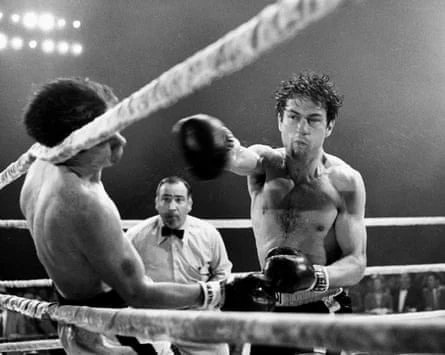



When discussing the history of the heavyweight division, the name Mike Tyson inevitably commands the conversation. During his prime in the mid-to-late 1980s, Tyson was not just a boxer; he was a force of nature. His explosiveness remains the gold standard for combat sports, characterized by a terrifying blend of speed, power, and precision that has rarely been seen since.
The concept of explosiveness in boxing is often misunderstood as mere raw power. However, Tyson demonstrated that true explosiveness is the ability to contract muscles with maximum force in the shortest possible time. This attribute allowed him to bridge the gap between him and taller opponents before they could even register his movement or intent.
The Foundation of the Peek-a-Boo Style
Under the tutelage of Cus D’Amato, Tyson mastered the Peek-a-Boo style. This system was specifically designed to maximize a shorter fighter’s explosiveness by using constant head movement and aggressive weight shifting. By keeping his hands high and his chin tucked, Tyson became a compact ball of kinetic energy, ready to uncoil at any moment.
The brilliance of the Peek-a-Boo style lay in its defensive-to-offensive transitions. Tyson did not just avoid punches; he used the momentum of his slips and ducks to load his hips. Every defensive move was a spring-loading mechanism for a counter-attack, making his responses feel instantaneous and overwhelming to his adversaries.
Biomechanical Superiority and Torque
One of the primary reasons Tyson’s explosiveness remains unmatched is the rotational power he generated. Unlike many heavyweights who rely on arm-punching, Tyson’s power originated in his calves and thighs. He would pivot his entire body into every hook and uppercut, resulting in a kinetic chain that delivered devastating force from the ground up.
Science tells us that force equals mass times acceleration. Tyson possessed the mass of a heavyweight but the acceleration of a featherweight. His ability to reach top speed in a fraction of a second made his punches nearly impossible to track, even for the most seasoned professional boxers of his era.
Closing the Distance with Velocity
The Tyson Dash was a hallmark of his early career. He possessed the unique ability to leap into range with a lead hook or a jab-cross combination that covered several feet in the blink of an eye. This explosive footwork negated the reach advantage of his opponents, forcing them into a phone-booth fight where his speed was lethal.
Most heavyweights move in a linear fashion, but Tyson moved in geometric patterns. He would use explosive side-steps to create angles, hitting his opponents from positions where they were vulnerable and unable to return fire. This lateral explosiveness was just as dangerous as his forward momentum.
The Role of Plyometric Strength
Tyson’s training was ahead of its time in terms of functional explosiveness. His routine focused heavily on calisthenics, neck bridges, and plyometric-style movements. This built the fast-twitch muscle fibers necessary for the sudden bursts of violence that defined his iconic highlight reels.
His neck strength, in particular, was legendary. A thick, powerful neck allowed him to absorb shots that would have wobbled others, but more importantly, it stabilized his head during high-velocity movements. This allowed him to maintain vision and balance while exploding into a multi-punch combination.
Psychological Impact of Explosive Violence
Explosiveness is not just physical; it is a psychological weapon. When an opponent knows that a single mistake can result in a three-punch combination landing within half a second, they often become paralyzed by indecision. Tyson used this freeze response to his advantage, further enhancing the perceived speed of his attacks.
- Hand Speed: Tyson’s hands moved at velocities typically reserved for middleweights or lightweights.
- Foot Speed: His ability to shuffle and pivot allowed him to reset his position and angle instantly.
- Reaction Time: His nervous system was tuned to react to the slightest twitch of an opponent’s shoulder.
- Core Strength: The essential bridge between his lower body power and his upper body delivery.
The Lethality of the Short Hook
The short hook is perhaps the most explosive punch in boxing, and Tyson was its undisputed master. By keeping the arc of the punch tight, he minimized the time the punch spent in the air. This reduced the opponent’s reaction window to near zero, often resulting in flash knockouts where the victim never saw the strike coming.
Modern Heavyweights vs. Prime Tyson
In the modern era, heavyweights have become even larger, often standing over 6 feet 6 inches. While they possess immense strength, they often lack the dynamic explosiveness of a prime Tyson. The sheer size of modern athletes frequently results in slower transition times between offense and defense, highlighting why Tyson’s 1980s form remains a historical anomaly.
Furthermore, the conditioning required to maintain that level of explosiveness over several rounds is immense. Tyson’s ability to maintain high-intensity bursts throughout the early rounds of a fight was a testament to his incredible cardiovascular and muscular endurance, specifically tailored for explosive output rather than steady-state cardio.
The Enduring Legacy of Iron Mike
Ultimately, Mike Tyson remains unmatched because he was the perfect storm of genetics, coaching, and discipline. His explosiveness was not an accident but a carefully crafted weapon designed to destroy the biggest men in the world. Decades later, boxing fans and analysts still look back at his prime as the ultimate manifestation of speed and power combined into one unstoppable force.