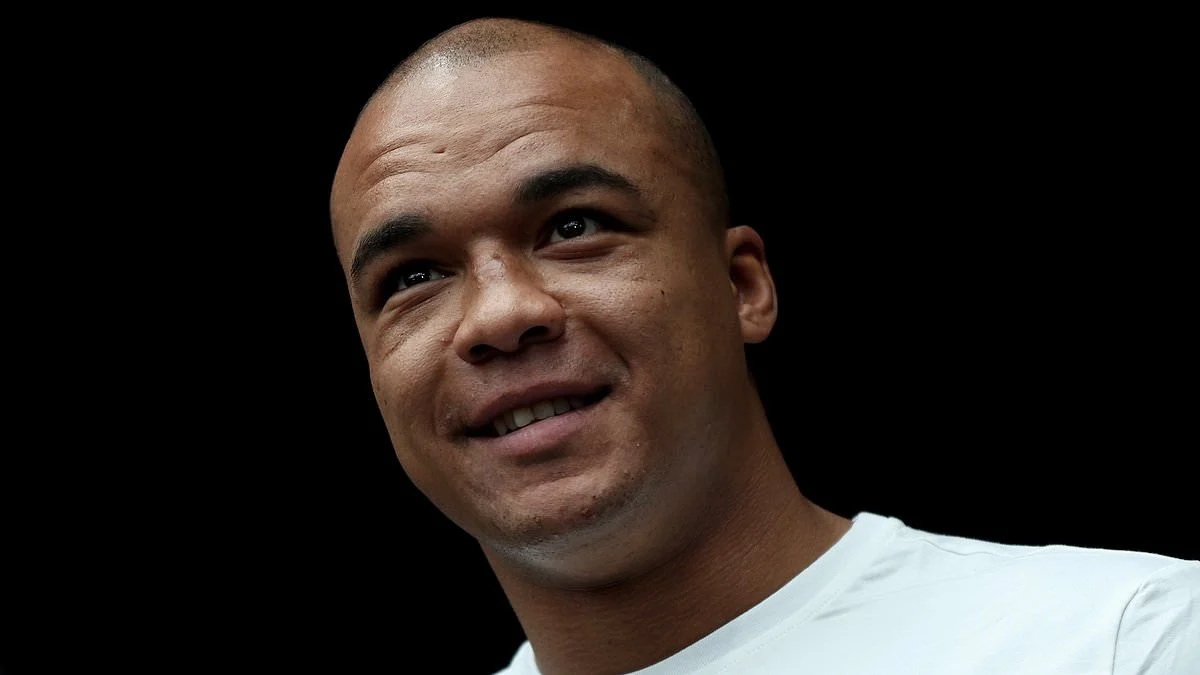
Fabio Wardley is not supposed to be here again so soon.
Not, at least, according to those who watched him endure 11 gruelling rounds against Daniel Dubois in Manchester in May. Not according to the critics who openly questioned whether his corner should have pulled him out earlier, as his face became increasingly battered and his right eye swelled shut under the relentless pressure of a two-time champion. And certainly not according to the skeptics who believe the sheer scale of the punishment he absorbed makes an immediate rematch a risk far too dangerous for any heavyweight to take.
Yet, as has so often been the case throughout his professional journey, Wardley has never been one to follow the script.
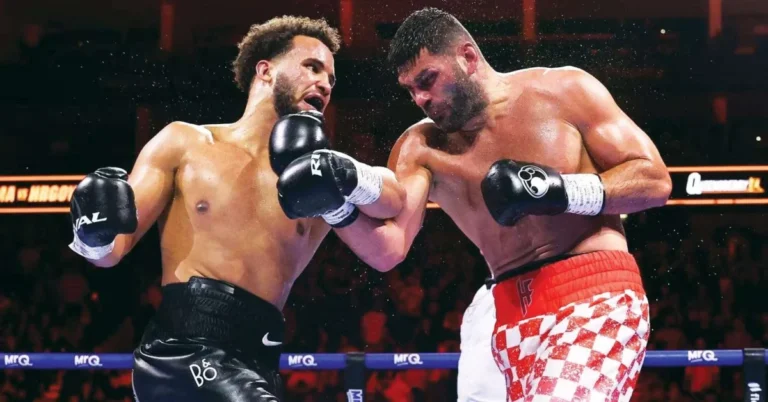
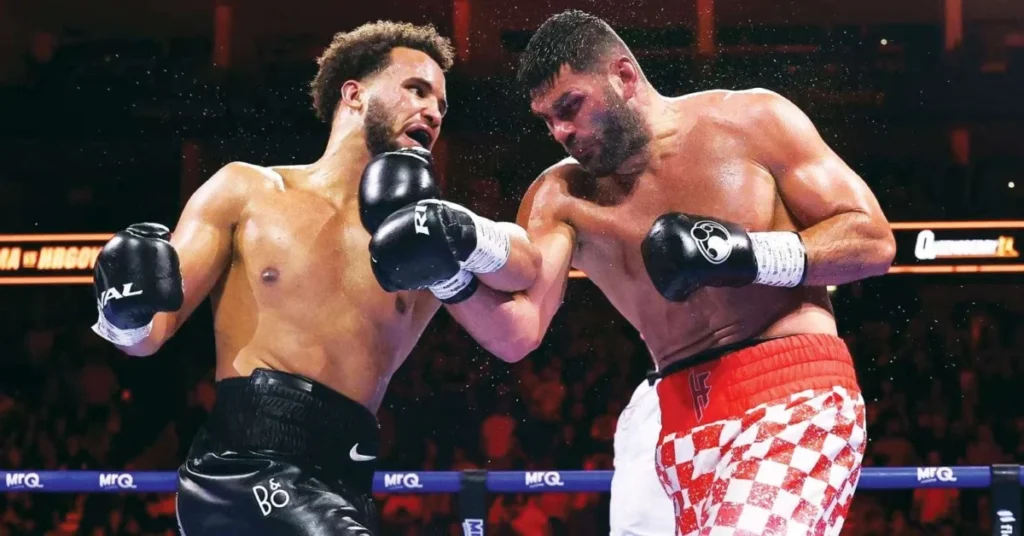
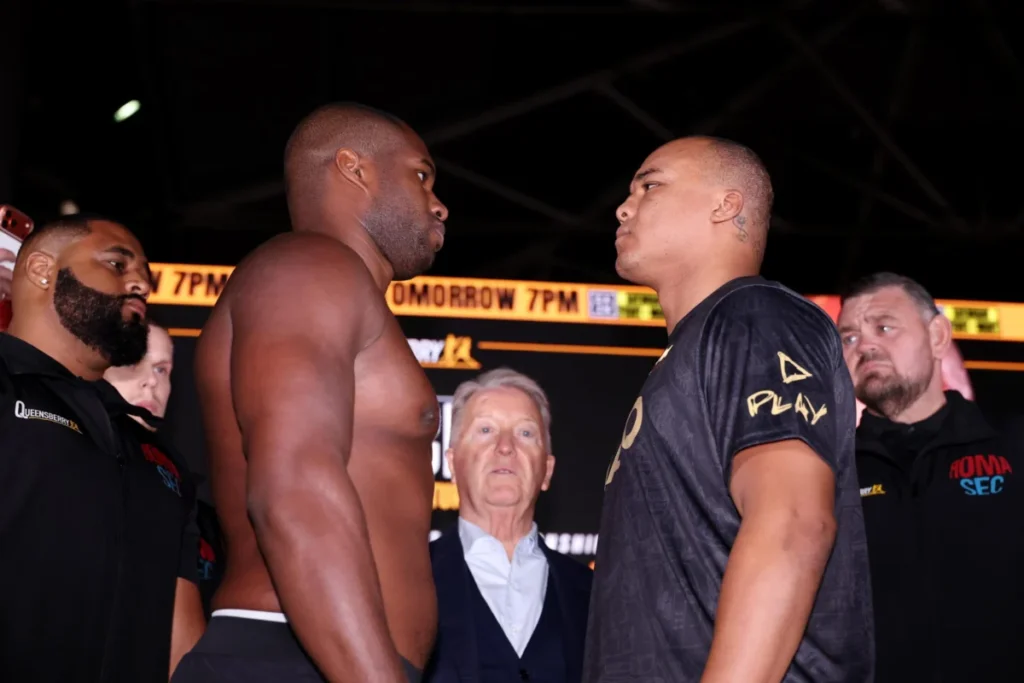
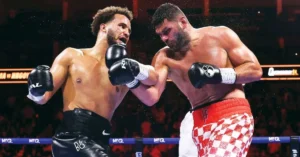
When the 31-year-old first shared the ring with Dubois back in May, he did so carrying the status of the WBO heavyweight champion. It was a remarkable, high-octane encounter from the opening bell. Wardley stunned the arena by dropping his opponent twice in the opening three rounds, coming tantalizingly close to producing what would have been the signature victory of his career. However, heavyweight boxing is a sport defined by fine margins and shifting momentum. Dubois showed his championship pedigree, weathering the early storm, working his way back into the contest step by step, and eventually overwhelming the champion to stop him in the 11th round.
Now, with the WBO title back on the line and the boxing world watching closely, Wardley finds himself in a familiar psychological and competitive territory. In one sense, he is right back where he started: he is once again the challenger, the betting underdog, and the man that a large portion of the boxing public expects to fall short a second time.
And, as he explains calmly when we sit down ahead of Saturday evening’s blockbuster rematch, he rather likes it that way.
"It’s been the staple of my career for as long as I can remember, well, since I started. It has been the main focal point," Wardley reflects. "After the first five or six fights, when I started to step up the level, even incrementally, even slightly, people were saying I was going to lose, that it was a step too far, and all the rest of it. It’s all the stuff everyone’s heard before."
"It’s a side of the coin I’m very much used to, and the pressure’s off. I’m the challenger here. I’m expected to lose and expected to go even quicker, and Daniel’s supposed to put on a better performance, and all the rest of it. So there’s no pressure on me. There’s nothing on my shoulders."
It is a strikingly relaxed assessment from a top-tier athlete preparing to walk back into a squared circle with the exact man who handed him the very first defeat of his professional career.
Wardley, however, insists that the setback has done little to fundamentally change who he is as a fighter or a person. He is far from pretending that losing a world title is an enjoyable experience, but nor does he regard it as a catastrophic, soul-defining moment that has derailed his trajectory.
"Not a lot has changed. I’m not that different. Don’t get me wrong, a loss is never fun. It’s never nice, it’s never enjoyable. But for me, at least, it wasn’t soul-crushing or devastating, and it hasn’t had any effect on me as a person, my character or anything else," he says candidly.
"The job’s the job, the game’s the game. From the very beginning, I’ve accepted that getting through heavyweight boxing unscathed isn’t guaranteed, especially given the way I compete at the highest level and my desire to take on the biggest challengers out there."
To understand Wardley’s mindset, one must look at how his career was constructed. He did not travel the traditional, hyper-protected amateur route that many modern prospects enjoy. Instead, he forced his way into the national conversation through sheer will, heavy hands, and an unshakeable appetite for risk. He points out a crucial detail that many observers tend to overlook when analyzing the first bout.
"I think people forget that the first time around, I picked Daniel. I asked for that fight because I looked at the crop of heavyweights and thought, ‘That’s the best one to challenge myself against,’" Wardley explains.
"Knowing that about myself, and knowing that’s my angle, was I ever going to get through this undefeated like Floyd Mayweather? Probably not. So, look, it comes how it comes. But as long as I’m happy with myself in terms of the performances, that I’ve given my all and all the rest of it, I can sleep at night."
It is precisely that unwavering willingness to put himself directly in the firing line that has turned Wardley into one of the most compelling and dramatic figures in the global heavyweight division. His fights rarely lack theatre, and the initial meeting with Dubois in Manchester was no exception. Wardley established a blistering pace right from the first bell, flooring Dubois within the opening 10 seconds. But the momentum of a heavyweight title fight can shift on a single punch, and as the rounds wore on, the physical toll began to pile up.
By the championship rounds, Wardley was absorbing immense punishment and displaying staggering resolve just to stay on his feet. His physical state between rounds sparked intense debate outside the ring, with pundits and former fighters openly questioning whether the contest should have been halted earlier. Particular scrutiny was aimed at his cornermen for allowing him to answer the bell for the 10th round as his face showed the brutal evidence of the battle.
Wardley, however, firmly rejects the narrative that his team let him down. He views the tight-knit group around him as family, placing absolute trust in their judgment and knowing that their primary concern is always his long-term welfare, regardless of how their decisions look from an outside perspective.
He is similarly dismissive of the public debate surrounding the timing of this rapid rematch. In his view, external critics lack the intimate knowledge required to assess his physical recovery and readiness. He and his team, who manage his training camp and monitor his health daily, are the only ones truly qualified to judge whether he is prepared to step back into battle.
For Wardley, the prospect of another punishing, grueling contest is not something he has avoided or swept under the rug. It is a stark reality that he has had to confront head-on, fully conscious of the fact that by agreeing to face Dubois again, he is willingly placing himself in a position where he might once more have to absorb a frightening amount of damage.
It requires a unique and heavy mental process to look at past trauma in the ring, acknowledge the distinct possibility of enduring it all over again, ask oneself whether one is truly prepared to go through that fire, and ultimately make peace with the answer before a single punch has even been thrown. Yet that is precisely what Wardley did.
"It’s a level of early acceptance. The second I triggered the rematch clause, even before that, I had to have a conversation with myself and ask, ‘This could go the exact same way. Are you ready for that? Are you OK with that?’" Wardley shares.
"As long as the answer is yes from me to me, then cool, let’s go. But by now, it’s nowhere near my brain as a question mark or something I’m having to deal with, battle with or anything else. It’s already been ticked off, boxed and put away. It is what it is."
There is a notable lack of melodrama in how Wardley delivers these assessments. When discussing the very real hazards of stepping back into the ring with a destructive puncher like Dubois, he does not posture as an untouchable warrior or pretend that the dangers do not exist. Instead, his stance is built on a clear-eyed realism about the brutal nature of combat sports.
"It’s an acceptance of the game and the sport we got into, and especially the way I fight as well," he notes.
That mentality is vividly demonstrated by his reactions during moments of crisis inside the ring. When Wardley is caught cleanly by a heavy shot, his instinct is never to retreat into his shell or look for a safe escape route. He believes strongly in letting his opponent know immediately that there will be a consequence for every punch landed.
"Especially in those moments, it’s about getting back at them. All right, you took one… let your hands go. Don’t just let them get away with it for free. At least let them know. Let them have it in their brain that if they get off a few shots, I’m not just going to take them, run away and roll over."
This fighting philosophy naturally creates unforgettable moments for spectators, but it also places intense demands on the cornermen tasked with guiding him through the storm. For Wardley, the precious 60 seconds of rest between rounds are far too valuable to waste on emotional reassurance or superficial check-ins. When the stool is pulled away and the clock is ticking down to the next round, he needs pure, unadulterated information.
"No, I think it’s 90 per cent tactical, 10 per cent everything else, because in those moments, compassion doesn’t need to come into it. That’s not where the compassion needs to be," Wardley explains, reflecting on the frantic atmosphere of the corner during the first fight.
"Those 60 seconds are so precious, such a small moment. It feels like a click. It feels like nothing. It feels like it’s done and gone so quickly that you’re on your stool, you’re off your stool and the next round has started."
"In that time, you need to get the information. It’s not time for, ‘Oh, a little rub on the shoulder. Are you doing OK, Fab? Is everything alright? Are you going to be alright, mate? Do you want me to dab your face a bit?’ No. Let me know what I need to know. Let’s get this going again."
Wardley enters Saturday night’s rematch fully aware that the task ahead of him is monumental. He knows that pundits will continue to question his durability, that critics will scrutinize every tactical decision, and that Dubois will step into the ring looking to secure an even more decisive victory as the reigning champion.
Yet, he also remains entirely clear on why he pushed for this immediate second chance in the first place. For Fabio Wardley, chasing the biggest challenges and testing his limits against the division’s elite will always matter far more than nursing an unblemished record. The first-round knockdowns, the grueling middle rounds, and the eventual defeat in Manchester have done nothing to alter that core philosophy.
He returns to the ring because, in his own mind, the worst-case scenario has already been confronted, evaluated, and accepted—leaving him free to fight without fear on Saturday evening.