


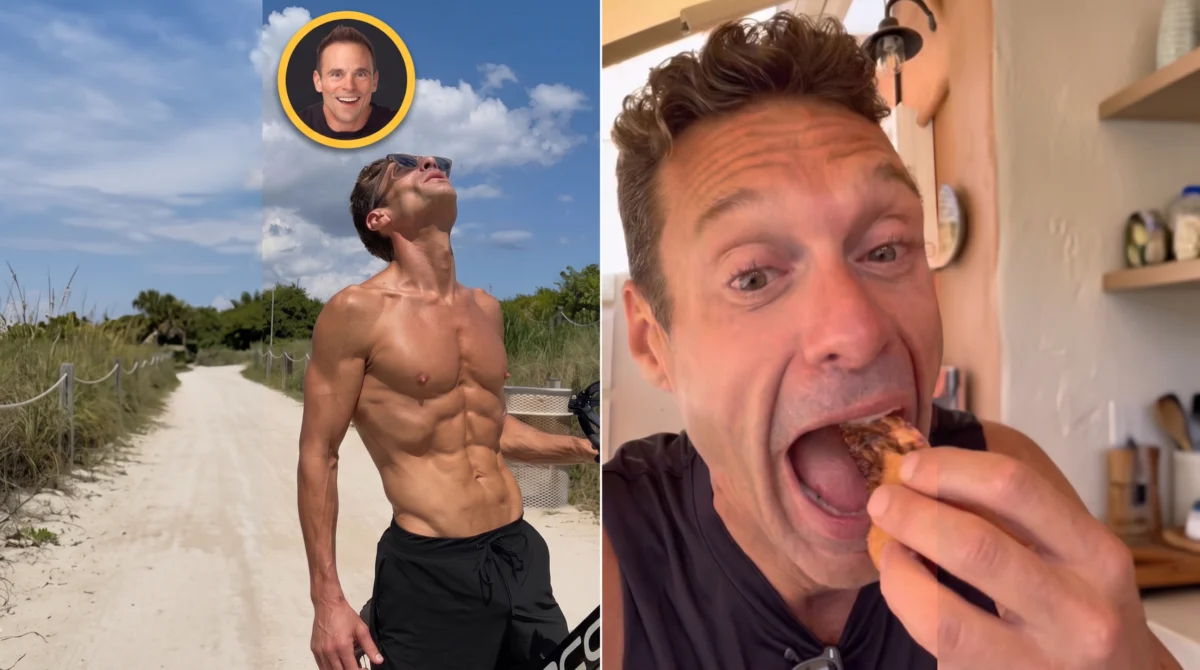
Ryan Seacrest recently offered his millions of followers an unexpected masterclass in sustainable fitness, proving that reaching peak physical condition in one’s fifties does not necessarily require monastic discipline or severe culinary deprivation.
The 51-year-old American Idol host sent social media into a frenzy after sharing a shirtless photograph on Instagram that highlighted a remarkably lean, sculpted physique. For an audience accustomed to seeing the veteran broadcaster clad in sharply tailored suits on national television, the candid glimpse into his personal fitness results was striking. Yet, it was the message accompanying his physical reveal that sparked an even wider conversation across the entertainment and wellness industries.
Rather than attributing his toned frame to grueling, joyless workouts or an uncompromising diet, Seacrest revealed an approach grounded firmly in lifestyle equilibrium. Far from eliminating carbohydrates, alcohol, or desserts, the host openly shared that he maintains his physique while regularly enjoying homemade pizza, quality wine, and what he affectionately terms his ultimate weakness: fresh cinnamon buns.
Balance Is Not a Given—It’s Created
The initial shirtless post quickly became a focal point for commentary from fans and fellow entertainment figures alike, many of whom expressed genuine astonishment at the broadcaster’s conditioning.
Among the high-profile responses was a comment from Dancing with the Stars professional dancer Gleb Savchenko, who enthusiastically wrote, “Let’s goo!!! Shredded.” Actor Nick Rashad Burroughs voiced the collective reaction of many longtime viewers when he commented, “This is what Ryan Seacrest looked like with a shirt off the whole time?!?”
Acknowledging the sudden wave of public curiosity, Seacrest followed up shortly thereafter with a reflective video on social media titled, “What’s your idea of a perfect day?” The clip documented the television personality stepping away from his demanding production schedule to embrace the simple rhythms of a sunlit morning outdoors.
Wearing casual athletic gear, Seacrest set out on a long, scenic bicycle ride along the coastline, accompanied by an upbeat soundtrack and a cup of coffee. The ride was not strictly confined to traditional cycling; at one point during the excursion, Seacrest pulled off to the side of the route to perform improvised curls and squats using heavy beachside rocks. The brief, spontaneous burst of resistance training underscored a pragmatic, opportunistic mindset toward physical activity: moving the body wherever one happens to be, rather than waiting for ideal gym conditions.
The Philosophy Behind the Physique
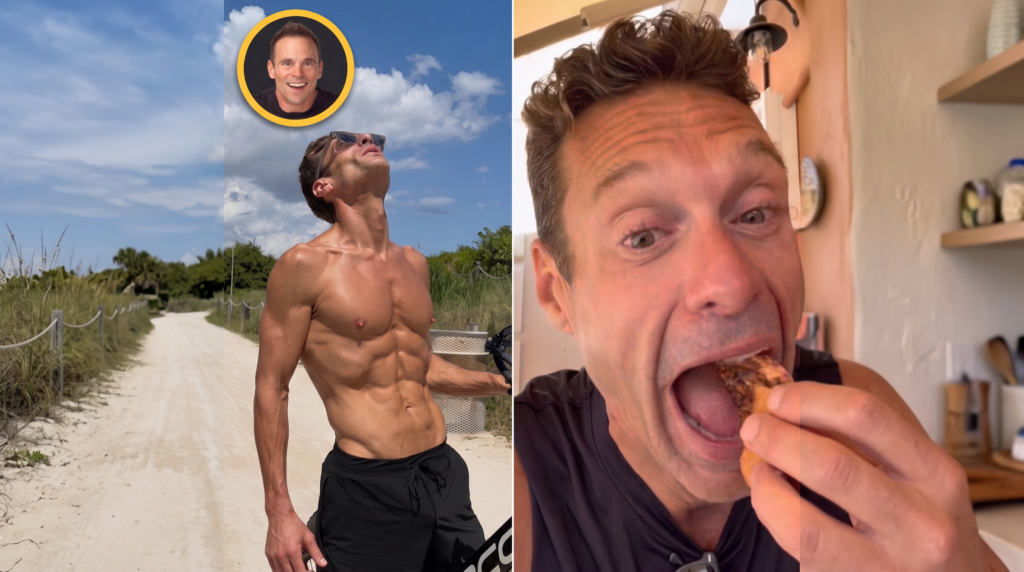
Following his oceanside ride and impromptu strength session, Seacrest made a deliberate detour to a local bakery, capturing the counter display on camera.
“Cinnamon buns are kind of my weakness,” he admitted candidly to his viewers.
The stop was not treated as a guilty lapse or an undisciplined cheat meal, but rather as an intentional, harmonious component of his personal lifestyle philosophy. For Seacrest, true wellness is defined by how well exercise coexists with life’s pleasures, rather than how successfully one denies them.
“When I get free time away from work, it looks a lot like this,” Seacrest explained. “It’s health and enjoyment wrapped into one.”
He went on to outline the practical coexistence of hard work and self-reward that guides his routine, which includes pedaling 30 miles on a bicycle and stopping off at the bakery on the journey home.
“It’s gardening the produce and homemaking the pizza,” Seacrest noted. “It’s drinking the wine, and still making my workout the next day. Balance is not always a given, but it’s created.”
This straightforward formulation cuts against the grain of prevailing modern fitness culture, which frequently promotes uncompromising regimens, hyper-restrictive meal tracking, and the notion that physical results require the elimination of social and sensory indulgences.
Consistency Over Perfection
Seacrest’s recent disclosures are far from an overnight reinvention or a temporary preparation for an upcoming media project. A review of his public routines reveals that he has quietly embraced functional movement and steady conditioning for years.
His social media feed frequently features dispatches from gyms, outdoor tracks, and coastal bike routes, demonstrating a lifestyle built around steady, predictable consistency rather than sporadic, exhausting bursts of overexertion.
Just a month prior to his viral post, Seacrest shared footage of an active training session while away on a beach vacation. Instead of complex machinery or elaborate gym setups, the footage showed him performing straightforward, highly effective compound exercises using modest equipment, including dumbbells and weight plates.
Among the movements featured were compound combinations such as deep squats transitioning directly into overhead dumbbell shoulder presses. In other sequences, he was seen performing barbell skull crushers paired with reverse crunches to engage both the upper arms and the abdominal core. These fundamental compound movements emphasize mechanical efficiency, stimulating multiple muscle groups simultaneously while maximizing time and caloric burn.
By relying on foundational weight training that can be executed on a patio, a hotel balcony, or a strip of coastline, Seacrest illustrates how maintaining an athletic frame past the age of 50 relies far more on habit and execution than on elaborate environments.
The Team Behind the Transformation
While Seacrest’s internal drive and active schedule carry the routine, he has been vocal in crediting his personal trainer, Dodd Romero, for shaping the framework of his regimen.
Romero is widely recognized in Hollywood for training some of the industry’s most enduring and physically conditioned stars, including Jennifer Lopez and Lenny Kravitz—both of whom are celebrated for maintaining exceptionally lean, functional physiques well into their fifties and sixties.
Although Romero and Seacrest have not published every granular detail of their customized daily workouts, the visible outcomes align closely with Romero’s hallmark style: functional fitness that prioritizes athletic capability, joint stability, and overall longevity rather than purely superficial aesthetics.
The combination of long-distance cardiovascular endurance, such as cycling 30 miles at a stretch, alongside structured resistance training provides a dual stimulus. The cardiovascular output supports heart health and stamina, while consistent resistance training preserves lean muscle tissue, protecting structural mobility and vital metabolic rates as the body ages.
Why This Approach Works
The broader relevance of Seacrest’s fitness message lies in how closely it mirrors what modern exercise scientists and wellness specialists increasingly emphasize: sustainable, long-term adherence consistently outperforms short-term dietary perfection.
Extremely rigid diets and punishing daily fitness obligations often yield rapid aesthetic transformations, but they frequently lead to psychological burnout, metabolic adaptation, and eventual abandonment. When an individual views exercise solely as a punishment for eating, or views nutrition purely through the lens of total denial, maintaining the routine over decades becomes extraordinarily difficult.
Conversely, Seacrest’s habit of allowing room for wine, homemade pizza, and bakery treats creates psychological latitude that makes long-term adherence realistic. By regularly undertaking high-output activities—such as 30-mile bike rides that demand substantial caloric expenditure—he creates a physiological buffer where calorie-dense foods can be incorporated without undermining body composition.
At the same time, maintaining regular resistance training is particularly crucial after 40, a stage when natural muscle atrophy and metabolic deceleration typically accelerate. Compound movements preserve muscle density, sustain daily energy expenditure, and keep functional strength intact, enabling individuals to remain robust and lean without living in a state of chronic restriction.
The Takeaway for Everyday Fitness
For an audience inundated with extreme fitness trends, conflicting diet fads, and social media protocols demanding total asceticism, Seacrest’s message delivers a grounded, accessible alternative: staying in exceptional shape does not require abandoning the pleasures of daily life.
The defining factor is deliberate intentionality. Rather than stumbling into poor nutritional habits or exercising haphazardly, balance is actively structured. Workouts provide the physiological foundation that allows personal indulgences to exist without guilt, while those very indulgences provide the mental refreshment needed to stay dedicated to demanding training sessions.
By pairing a 30-mile ride with a stop for pastry, or following a quiet evening of homemade pizza and wine with a focused resistance session the next morning, Seacrest demonstrates that the middle path in fitness is neither a compromise nor an excuse. At 51 years old, his shredded condition stands as tangible evidence that intentional balance can be as remarkably effective as it is enjoyable.