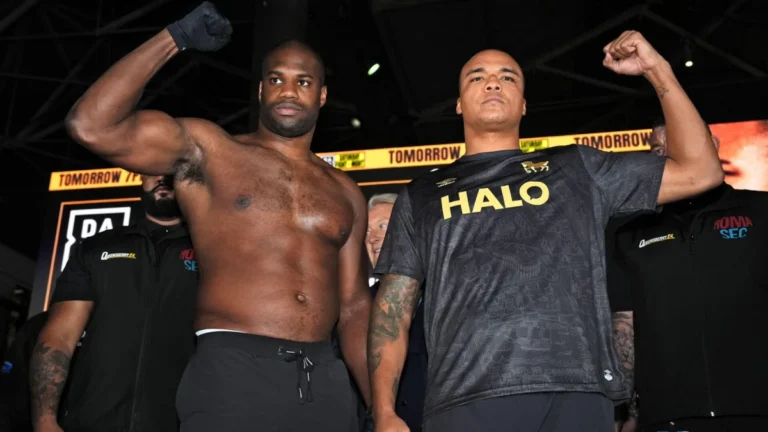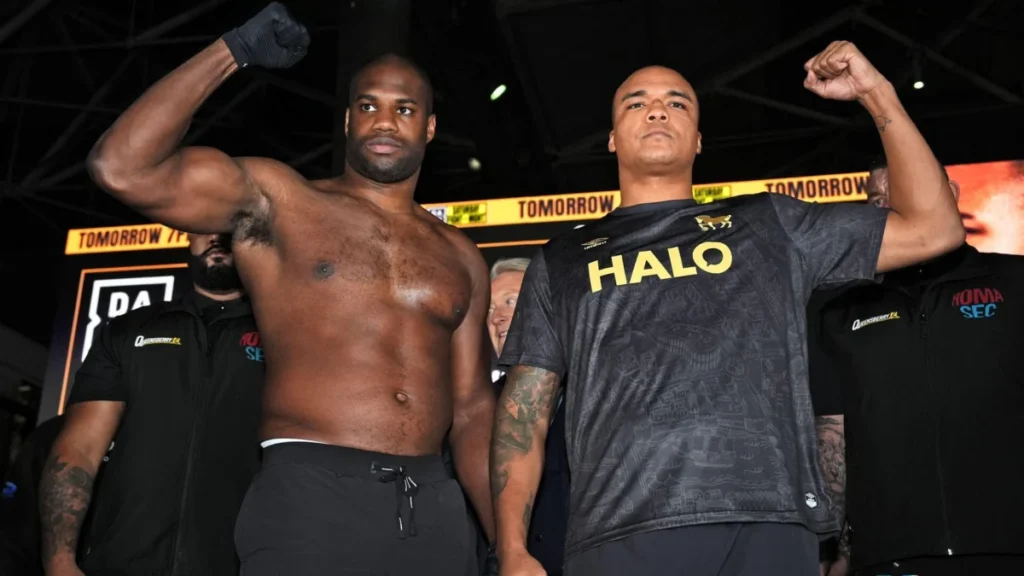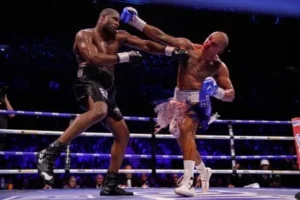
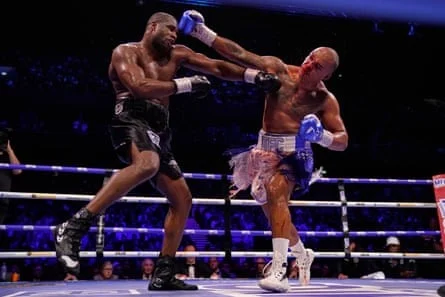
Five months ago, watching a thunderous contest that immediately staked its claim as a Fight of the Year between Daniel Dubois and Fabio Wardley in Manchester, a ringside seat offered a raw and initially thrilling insight into the uncompromising savagery of heavyweight boxing. It was intoxicatingly easy to become swept up in the high-stakes theatre as Wardley, defending his WBO heavyweight world title against a more seasoned and heavily favoured rival, produced a blistering start. Backed by an electric crowd, Wardley stunned Dubois, dropping the Londoner heavily in both the opening round and the third. For Dubois, whose heart and resolve under duress had been fiercely scrutinized and questioned earlier in his professional career, the prospect of total collapse seemed entirely possible. Yet instead of yielding to the incoming storm, Dubois hauled himself off the canvas on both occasions, bit down on his gumshield, and mounted a ferocious, methodical counter-offensive stamped with admirable courage.
Once Dubois regained his equilibrium, the tactical and physical complexion of the championship bout shifted irrevocably. Dubois systematically dismantled the champion’s momentum, taking authoritative command of the ring and administering a punishing, sustained beating that unfolded with grim relentlessness round after round. As the minutes ticked by, the initial thrill of an upset gave way to a mounting, palpable sense of concern for Wardley from observers at ringside. It became a deeply troubling spectacle to witness the reeling champion repeatedly refuse to succumb to the canvas, absorbing terrifying damage meted out by the concussive, bludgeoning power packed into Dubois’s heavy right hands and piercing jabs.
A horrific gash split open across the bridge of Wardley’s nose, coating his features in crimson, while severe swelling closed around his eyes and distorted his face. Still, Wardley marched into the fire, surviving purely on instinct, pride, and granite determination long after his legs had betrayed him. The end was mercifully confirmed in the eleventh round when the referee stepped between the fighters to halt the onslaught, rescuing Wardley from his own limitless bravery. It was an exhibition of sheer heroism, but boxing history demonstrates with chilling regularity that such sustained, punishing defeats inevitably extract a heavy toll, often shaving years off a fighter’s career and fundamentally altering their physical durability inside the ropes.
Given the sheer volume of head trauma and physical distress he endured on that harrowing night in Manchester, it remains startling that Wardley has insisted upon an immediate rematch just five months later at London’s O2 Arena this Saturday night. In an era where world-class fighters frequently spend long stretches away from active duty to rehabilitate after gruelling encounters, conventional ring wisdom dictated that a substantially longer sabbatical was not merely sensible, but essential. Taking extended time away to allow neurological and facial trauma to heal fully, followed by a calibrated, confidence-rebuilding return against a far less hazardous opponent, would have been an overwhelmingly prudent and pragmatic path. Instead, the 31-year-old from Ipswich, who saw his proud unbeaten professional record shattered in that fiery duel, has chosen to march straight back into the lion’s den against the very man who broke him.
Wardley has long established a reputation as one of the most articulate, intelligent, and self-aware personalities in contemporary British sports. Yet when addressing the physical aftermath of May’s brutal stoppage in the lead-up to Saturday’s return encounter, his public assessment carried an almost detached, cinematic levity that seemed strikingly disconnected from the carnage witnessed in Manchester. Rather than dwelling on the traumatic nature of the beatdown, Wardley attempted to reframe the entire encounter as a dramatic illusion heightened merely by cosmetic damage and theatrical optics.
The thought of that first fight, Wardley claimed during fight week, was vastly worse than the underlying reality of what occurred inside the ring. He argued that the optics had deceived the viewing public, suggesting that when bright red blood is mixed with water and sweat and then dispersed by the impact of incoming gloves, the ensuing spray makes the spectacle resemble a scene ripped straight out of a Quentin Tarantino film. To the onlookers, he acknowledged, the fight inevitably looked mental and horrifying, but he maintained that the actual physical destruction beneath the surface was negligible.
Wardley insisted that, aside from superficial facial damage and deep cuts, his nose had not sustained a fracture, his airways had remained entirely clear throughout the contest, and his physical functions were in perfect operating order despite the bleeding. In an effort to diminish the perceived impact of Dubois’s devastating punches, Wardley even claimed that he had been hit harder and shaken far more severely by opponents earlier in his career than by anything Dubois threw during their grueling eleven rounds. To Wardley’s mind, his eventual unraveling was primarily the result of acute exhaustion and tactical mismanagement in pacing rather than the sheer concussive impact of the challenger’s blows.
Such reflections, however, stand in stark contrast to the grim reality that unfolded in Manchester. Those who witnessed the latter half of the fight saw a fighter who was thoroughly broken down, visibly disoriented, weaving drunkenly under the ropes, and utterly defenseless against an opponent operating at the peak of his destructive powers. Wardley’s refusal to concede the true severity of the physical toll Dubois inflicted is understandable as a psychological defense mechanism, but it does little to alter the stark danger awaiting him beneath the lights in London.

Addressing the media at this week’s final pre-fight press conference, Wardley doubled down on his aggressive mentality, framing the rematch not as an act of recklessness, but as an indispensable test of his ambition. He argued that anyone seeking to navigate the upper echelons of heavyweight boxing with an undefeated record was engaged in an unrealistic enterprise, particularly when one’s desire is to consistently test oneself against the very best operators on the planet. Stepping into the ring with elite competition, he explained, inevitably places a fighter in immense jeopardy. Rather than lamenting the forfeiture of his undefeated status and the WBO belt, Wardley claimed that he viewed the rematch as an exhilarating opportunity to correct past mistakes, declaring that the preparatory hard work was done and that the coming battle was simply the fun part of the journey.
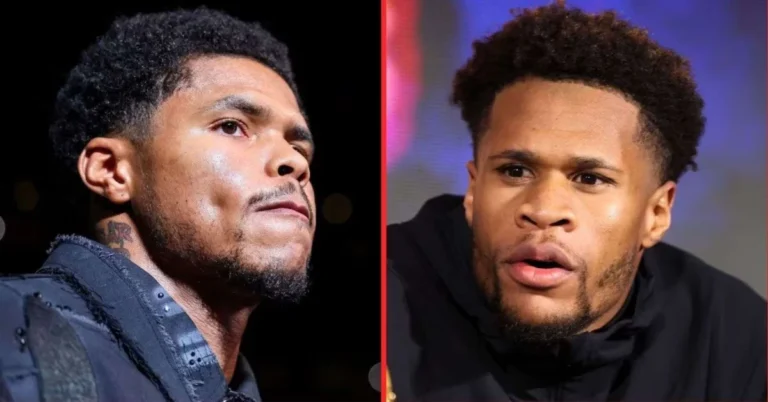
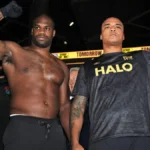
Dubois, seated across the stage, appeared entirely unmoved by Wardley’s upbeat philosophical reframing. The 29-year-old champion, whose brooding, understated demeanour often conceals a ruthless competitive edge, offered a characteristically blunt and dismissive response. Dubois made it abundantly clear that he had zero intention of engaging in rhetorical sparring or romanticizing their first meeting. Exuding an air of icy confidence, Dubois insisted that he is currently feeling stronger, exceptionally grounded, and single-mindedly prepared to complete his assignment. For the Londoner, Saturday’s headliner is neither a personal crusade nor an exercise in fun; it is a business transaction designed to dispose of Wardley definitively so he can advance toward even greater and more lucrative heavyweight opportunities.
Dubois enters the O2 Arena as an overwhelming, prohibitive favourite, bolstered by a run of form and an elite pedigree that underscores the vast gulf in classical ring schooling between the two fighters. Dubois has previously demolished former unified champion Anthony Joshua in an emphatic display of heavyweight power and overwhelmed Filip Hrgovic—who subsequently went on to capture the IBF world title by shocking Moses Itauma. Armed with an extensive and illustrious amateur background alongside battles against top-tier world heavyweights, Dubois is convinced that he has thoroughly solved the puzzle of Wardley’s awkward, explosive style.
Dubois has proclaimed himself a markedly improved fighter compared to the man who was dragged into deep waters in Manchester five months ago. Confident that he will finish the contest far more expeditiously this time, Dubois insisted he would provide another comprehensive boxing lesson. He cited his seasoned background and elite amateur pedigree—attributes he noted that money simply cannot purchase—as the decisive elements that ensure his superiority. Even without those advantages, Dubois firmly believes he already holds Wardley’s number, promising an even sharper, vastly more clinical stoppage in front of his home fans.
Given Dubois’s momentum and technical weaponry, Wardley’s most viable pathway to engineering a colossal upset appears decidedly narrow. His realistic hopes seem tethered to igniting another early, chaotic firefight, letting fly with his formidable natural punching power in the opening frames in the desperate hope that his blows will decisively crack Dubois’s chin before the champion can establish his rhythm. Wardley himself seemed to acknowledge as much when predicting a brief, explosive encounter, warning that the contest is destined to conclude early one way or another and urging the boxing public to brace for a wild, chaotic spectacle.
Yet there are many seasoned observers within British boxing who view Wardley’s rapid return to the ring with deep cynicism and dread. Veteran heavyweight contender Derek Chisora, a scarred campaigner intimately acquainted with the unforgiving brutality of heavyweight warfare, offered a blistering critique during a radio appearance this week. Chisora dismissed the idea that Wardley possesses the tools or longevity to sustain his current trajectory, suggesting that Saturday night will almost certainly mark the final appearance of Wardley’s professional career.
Chisora openly questioned Wardley’s long-term hunger for the sport, arguing that the former champion’s growing media presence and broadcast punditry commitments indicate his focus has already drifted away from the daily sacrifices demanded by the ring. Chisora bluntly characterized the immediate rematch as a lucrative cash-out exercise, predicting that while Wardley will undoubtedly attempt to swarm Dubois and unload everything in his arsenal across the opening three rounds, Dubois will simply weather the storm and execute another brutal, decisive knockout once the initial onslaught subsides.
To counter such grim forecasts, Wardley has repeatedly pointed to his previous rivalry with Frazer Clarke as definitive proof of his capacity to learn, adapt, and dramatically reverse fortunes across back-to-back encounters. In March 2024, Wardley and Clarke engaged in a savage, blood-soaked war of attrition at the O2 that pushed both men to the absolute brink of human endurance, ultimately resulting in a grueling split draw. Just seven months later, returning to the very same ring, Wardley shocked observers by eradicating Clarke inside just over two minutes of the first round, demonstrating an astonishing ability to recalibrate and deliver instantaneous devastation.
Wardley remains entirely convinced that he can draw upon that psychological blueprint to script an identical turnaround against Dubois. Yet boxing rarely allows history to repeat itself so obligingly against world-class opposition. Daniel Dubois is a vastly more dangerous, refined, and destructive force than Frazer Clarke, operating with a ruthless punch-selection that Wardley has already proven incapable of withstanding over the championship distance. While Wardley’s indomitable bravery and self-belief remain beyond question, the cold, unforgiving reality of elite heavyweight boxing strongly suggests that stepping back into the ring with Dubois so soon after such a catastrophic beating is less an act of calculated genius than a headlong plunge into perilous fantasy.