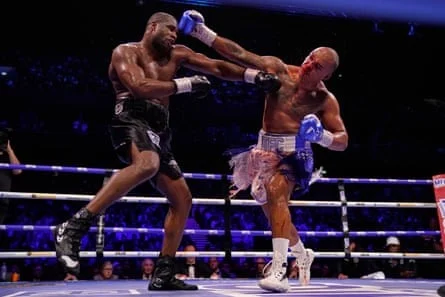


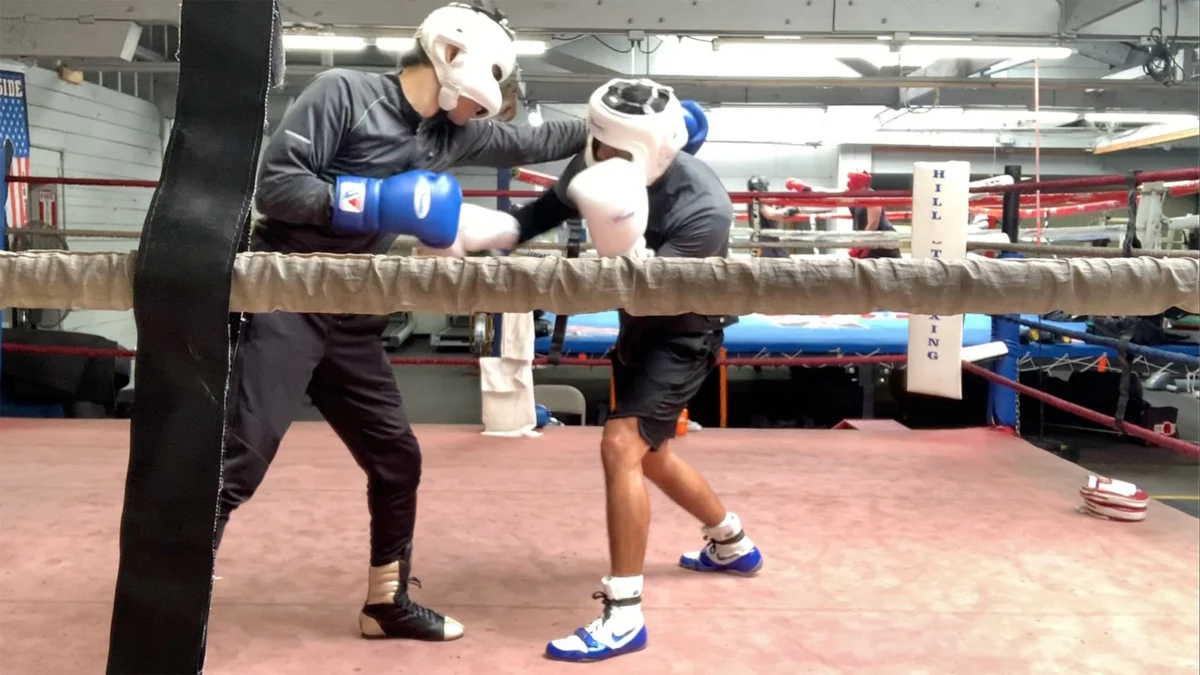
In gyms and arenas across the globe, an ostensibly novel defensive sequence has taken hold of training regimens and social media highlight reels. Spectators watch with fascination as modern technicians—most visibly pound-for-pound standout Vasyl Lomachenko alongside elite products of the Cuban and Soviet schools of boxing—glide seamlessly into the teeth of an opponent’s attack. By sliding their heads to the inside of incoming punches rather than retreating to the exterior, these fighters effortlessly dismantle opposing combinations, smother dangerous power shots, and pivot into unexpected counter-punching angles.
To the casual observer and many modern club fighters, this maneuver appears to be an avant-garde innovation born of twenty-first-century athleticism. Yet within the broader scope of sweet science history, slipping to the inside is neither an anomaly nor an invention of modern ring craft. Instead, it represents the revival of a forgotten defensive standard. For decades, the technique stood as an essential requirement of the sport before television aesthetics, regulatory adjustments, and shifting training philosophies nearly wiped it from foundational coaching curricula.
Now, as elite champions reintroduce this vintage approach to the grandest stages of professional boxing, the sweet science is undergoing a quiet reckoning with its own strategic lineage.
       [Opponent's Straight Right]

                    (Inside Slip Path)
                       <-- [Defender turns torso inward,
                            head dips safely inside punch]

                      * [Collision avoided / Space smothered]
The Historical Shift: From Fifteen-Round Wars to Olympic Flash
For the greater part of the early and mid-twentieth century, fighters did not prioritize slipping to the outside over slipping to the inside; they treated both movements as coequal halves of a comprehensive defensive repertoire. Archived footage of vintage operators reveals an unrelenting willingness to work within close quarters, where slipping inside an opponent’s punch served as a vital tool for survival and tactical positioning.
The eventual disappearance of the technique from standard gym pedagogy can be traced directly to structural evolutions in how boxing was both fought and officiated. One of the primary driving factors emerged from the amateur ranks. Over the past several decades, the amateur game transformed into a sport heavily dictated by three-round bouts and point-scoring criteria that rewarded clean, easily visible strikes from long range. In a three-round contest where explosive athleticism and high-tempo mobility dictate the scorecards, fighters naturally gravitated toward long-range "hit-and-run" tactics.
Under this format, slipping to the outside became the dominant convention. When a boxer slips to the outside of a punch, the action is unmistakable to judges and spectators alike; the fighter’s head visibly travels across the trajectory of the oncoming fist, producing clean lines and obvious separation.
Conversely, slipping to the inside often looks messy to the untrained eye. An inside slip frequently brings a fighter directly into the opponent’s chest, creating close-quarters clinches or compressed infighting that amateur point-scoring systems struggled to reward.
At the same time, professional boxing was undergoing its own profound structural transition. For decades, championship boxing demanded that athletes endure the grueling crucible of 15-round contests. The sheer physical toll of preparing for 45 minutes of combat forced fighters to embrace maximum energy efficiency. Long-distance running around the perimeter of the canvas was a luxury that few could afford over fifteen rounds; instead, fighters relied on inside defense to survive. By slipping inside, fighters conserved stamina, smothered their opponent’s punching room, and turned the engagement into a battle of attrition.
The end of that endurance era was cemented in 1987, when Mike Tyson defeated Tyrell Biggs in the sport’s final sanctioned 15-round championship bout. As professional bouts were universally capped at 12 rounds, the necessity for grueling, inside energy conservation diminished, making way for higher-octane, distance-based combatants.
The Cultural Impact: From the Tyson Blueprint to the Mayweather Doctrine
Beyond regulatory rule changes and scoring criteria, the defensive habits of everyday boxers are almost universally shaped by the reigning champions of their time. For roughly three decades, boxing fundamentals were radically rewritten in the image of Mike Tyson.
When Tyson captured the heavyweight crown in the late 1980s, he disrupted an era populated by aging, old-school stylists who favored patient jabbing, continuous movement, and inside clinching. Tyson stood out as an explosive anomaly. Employing the peek-a-boo system, he routinely slipped to the outside of heavy incoming punches before unleashing devastating, highlight-reel knockouts from mid-range angles. Tyson’s explosive slips to the outside were not only devastatingly effective; they were visually captivating and perfectly suited for the booming pay-per-view television business model.
In the aftermath of Tyson’s rise, trainers across the world sought to mold their fighters in his likeness. Gym curricula abandoned nuance in favor of outside-slipping patterns that set up emphatic power shots. For an entire generation of practitioners who entered the sport from the late 1980s through the 2000s, standard defensive instruction became remarkably uniform: coaches taught fighters to block, and then they taught them to slip to the outside. Rarely was an amateur athlete taught how to slip to the inside of a punch or how to integrate old-school shoulder deflections.
That cultural monopoly remained unchallenged until Floyd Mayweather Jr. established himself as the dominant financial and technical force of the modern era. Mayweather brought the forgotten artistry of the Michigan and Philadelphia shells back to the mainstream, reviving techniques that had once been dismissed by modern coaches as dangerous or undisciplined. Under Mayweather’s influence, lowering the lead hand and utilizing the shoulder roll—itself a direct technical relative of the inside slip—regained mainstream legitimacy.
Today, that evolutionary cycle continues at the sport’s highest levels. Even modern heavyweight champions such as Tyson Fury have abandoned rigid, purely outside-oriented defensive mechanics, regularly utilizing shoulder rolls, subtle upper-body deflections, and inside slips to neutralize elite punchers.
The Biomechanical Advantages of the Inside Slip
While many contemporary athletes view inside slipping with apprehension, the biomechanics of the movement actually make it more forgiving and natural than slipping to the outside. When executed correctly, the technique relies on the body’s innate protective reflexes rather than elite athletic twitch.
       OUTSIDE SLIP                         INSIDE SLIP
   (Moving Against Punch)              (Moving With Punch)

Opponent: [Right Cross] --->        Opponent: [Right Cross] --->
                                               /
               Head crosses path              / Head rolls inward
               v                                v
     [High Collision Risk]            [Impact Dissipated / Glanced]
1. Intuitive Torso Rotation and Vision
When slipping to the outside of a punch, a fighter must actively rotate their torso toward the incoming fist. For example, moving to the outside of an incoming orthodox right hand requires an athlete to turn their head and shoulders directly into the path of the firing arm—a counter-intuitive movement that runs directly counter to natural self-preservation instincts.
By contrast, slipping inside that same right hand asks the fighter to rotate their torso away from the blow. Accompanied by a subtle flexion of the hips and knees, the inside slip mimics the body’s natural flinch response, making it significantly easier to perform under physical duress and fatigue.
2. Energy Efficiency and Safety on Impact
Slipping to the outside requires extensive footwork, deep lower-body knee flexion, and large angular movements to completely clear an incoming fist. Because the athlete is resetting their range away from the opponent, they must expend tremendous energy to continuously break and remake distance over the course of a fight.
Inside slipping, however, is a game of millimeters. By dipping slightly inside a punch, an athlete immediately smothers the opponent’s punching room, taking away the leverage needed to fire subsequent blows.
Furthermore, the inside slip offers superior physical protection when an evasion is slightly mistimed. A fighter caught while trying to slip to the outside moves their head directly across the kinetic vector of the incoming strike, increasing the collision velocity and dramatically raising the likelihood of a concussive knockout.
In contrast, slipping to the inside moves the head and upper body with the trajectory of the strike. If contact occurs, the blow frequently glances off the forehead, shoulder, or upper back, dissipating the kinetic force and preventing maximum power transfer.
Strategic Execution: Closing Distance and Dictating Angles
Strategically, the choice between slipping inside or outside dictates whether a contest unfolds as an outside fencing match or an infighting war. For shorter fighters, pressure boxers, and tactical technicians, mastering the inside slip provides immediate access to tactical opportunities that outside slips actively eliminate.
- Neutralizing Height and Reach: Taller fighters thrive when their opponents continually try to slip to the outside of their lead jabs. Because slipping outside causes the head to travel laterally while staying within long-to-mid range, it leaves the shorter fighter stranded in space, positioned directly in the target zone of the tall fighter’s trailing right hand. Slipping inside the jab reverses this dynamic entirely. By stepping and slipping inside the path of the lead hand, the shorter fighter bypasses the opponent’s reach, instantly penetrating the pocket where the tall opponent’s long levers become a mechanical liability.
- Creating Exits and Pivots: Beyond simply closing distance, inside slipping serves as an elite mechanism for escaping pressure when backed against the ropes. When an aggressive puncher overcommits on forward-moving power shots, an inside slip enables the defending boxer to cut laterally through the vacated space. The defender can step cleanly through the blind spot of the punch, spinning the overextended attacker into the ropes or turning them off-balance to seize dominant offensive angles.
- Establishing an Offensive Rhythm: By establishing an inside rhythm, a boxer creates a mirrored physical alignment with their opponent. Instead of clashing head-to-head on opposite trajectories, the defending fighter naturally coordinates their counter-strikes to flow simultaneously alongside incoming strikes. The defender’s lead hook rolls beneath the incoming straight right, while their rear straight complements the opponent’s jab, locking the offensive and defensive phases of combat into a singular, cohesive motion.
+------------------+-----------------------------+-----------------------------+
| Tactical Factor  | Outside Slipping            | Inside Slipping             |
+------------------+-----------------------------+-----------------------------+
| Primary Objective| Distance creation & counters| Distance closing & smother  |
| Stamina Cost     | High (requires athleticism) | Low (economy of motion)     |
| Impact Risk      | Heavy head-on collision     | Glancing blow / deflection  |
| Ring Position    | Outer ring / perimeter      | Pocket / inside phone-booth |
+------------------+-----------------------------+-----------------------------+
Technical Mechanics: Reclaiming the Inside Canvas
Implementing the inside slip requires a departure from traditional defensive dogmas. It demands that a fighter abandon the instinct to continually leap to the perimeter, replacing it with disciplined, subtle adjustments in upper-body positioning and ring awareness.
Navigating the Lead Jab and Power Shots
The baseline foundation of the system begins with re-evaluating the opponent’s jab. Rather than executing a wide evasion to the outside, the practitioner focuses on an inside slip that allows the jab to whisper directly past the lead ear. The movement should be minimal, requiring only a gentle dip of the shoulders and a subtle inward weight shift. This compact displacement instantly places the defender in prime position to fire their own straight counters to the solar plexus or up through the opponent’s guard.
When dealing with arched power punches such as the rear cross, the inside slip transitions naturally into a duck or shoulder roll. Because power crosses travel on a curved, descending trajectory, slipping cleanly beneath them is often impossible without dropping the head dangerously low.
Instead, elite inside operators turn their torso away from the shot, utilizing the lead shoulder and back to absorb or deflect the arc of the punch while keeping their eyes locked on the opponent’s base. Once the shot clears overhead, the kinetic energy stored in the defender’s hips can be unleashed into devastating hooks to the body.
Footwork Transitions: Cut Steps and Circular Pivots
Elite practitioners differentiate between slipping inside a punch and slipping through an opponent’s attack. When slipping power punches, athletes have two primary avenues of execution:
- The Straight Cut Step: The boxer drives their lead foot forward on a linear path directly through the punch’s interior, effectively sliding their entire torso to the blind side of the striking arm. When executed precisely as the attacker steps forward with power, the strike finds empty air, pulling the attacker forward and leaving their defensive flank exposed.
- The Rotational Pivot: Rather than cutting directly through the attack, the fighter establishes a firm lead foot as a hinge and executes a sharp lateral pivot around the attacker’s shoulder. This rotational evasion is a hallmark of Vasyl Lomachenko’s tactical playbook; as the opponent fully commits their torso to a heavy strike, the pivot leaves them facing an empty corner while the counter-puncher lands flush from an uncontested 90-degree angle.
       (Attacker Overcommits)
             |
             v
         [Punch Path]


                * ---> [Defender pivots off lead foot]
                       [Emerges at flank / blind spot]
Rhythm Over Pure Speed
A pervasive misconception surrounding inside defense is that it requires superhuman hand and foot speed. In reality, successful inside slipping relies almost entirely on timing and anticipation rather than pure athleticism.
Fighters who attempt to execute inside slips based on visual reaction alone frequently find themselves beaten to the punch. Conversely, veteran operators focus on the broader rhythmic habits of the opposition—monitoring cadence, combination length, and the micro-pauses between attacks.
By paying attention to an opponent’s rhythm rather than tracking each individual glove, an athlete can begin their defensive rotations a fraction of a second before the punch is formally launched, gliding cleanly through incoming fire with minimal physical strain.
The Master Class: From Duran and Toney to the Modern Canvas
The historical longevity of the inside slip is validated by the caliber of champions who constructed their careers around its mastery. When looking for the apex practitioners of inside slipping, boxing historians consistently point to master technician Roberto Duran. During his prime, Duran’s terrifying infighting offense was enabled entirely by his subtle, defensive inside slips. Duran did not run; he walked down heavy punchers, rolling subtly inside their power shots at point-blank range, turning incoming strikes into glancing blows, and unleashing furious body assaults before his opponents could establish defensive balance.
Similarly, James "Lights Out" Toney operated as a generational virtuoso of inside pocket defense. Often fighting off the ropes against naturally larger men, Toney utilized shoulder rolls, inside ducks, and micro-slips to make world champions miss by fractions of an inch, converting those misses into pinpoint counter-striking clinics.
Bernard Hopkins built one of the longest championship tenures in boxing history by leaning heavily on the inside slip to survive long wars, systematically controlling the pace of younger, faster opponents while conserving his own energy over 12 championship rounds.
Defensive savants like Pernell Whitaker, alongside Cuban Olympic icons like Guillermo Rigondeaux and Erislandy Lara, further demonstrated that inside evasions and quick cut steps could serve defensive, elusive counter-punchers just as effectively as inside brawlers.
Today, what once seemed on the verge of extinction is reasserting itself at the core of elite boxing competition. The modern fighter who observes Lomachenko executing a razor-thin slip before stepping through to his opponent’s blind spot is not watching an unprecedented innovation; they are watching the re-emergence of an ancient sweet-science fundamental.
As more athletes and trainers look beyond the athletic outside-slipping patterns that dominated recent decades, boxing is rediscovering a timeless tactical truth: that the shortest, safest, and most devastating path to victory often requires stepping directly through the center of the storm.